
Tsingy’s Beauty, Madagascar’s Epic Stone Forests, Lemurs & Uncharted Adventure (2026)
While crowds flock to the beaches of Nosy Be, Tsingy de Bemaraha National Park delivers a landscape so alien and ancient it feels like another planet, without the sun loungers and souvenir stalls. Here, 200 million years of geological history have carved a 600-square-kilometer labyrinth of limestone needles, some soaring 70 meters high. The silence is broken only by the cry of a fossa or the rustle of a Decken’s sifaka lemur navigating a razor-sharp pinnacle. This is not a passive sightseeing stop; it’s a full-body, awe-inspiring expedition into the heart of Madagascar’s wild soul.
Why Tsingy’s Beauty, Madagascar Stands Out

Woman wearing green dress while walking, Tsingy’s Beauty, Madagascar
- Historic Architecture: The Grand Tsingy itself, a 200-million-year-old limestone cathedral formed by ancient seabeds and relentless erosion, stands as the world’s most dramatic stone forest.
- Cultural Scene: The annual Famadihana (turning of the bones) ceremonies practiced by the local Sakalava people offer a profound, if private, glimpse into ancestral veneration traditions.
- Local Specialties: Don’t miss Romazava, a hearty beef and leafy green stew, best enjoyed after a long day of hiking the stone cathedrals.
Pro Tip: The park is only accessible by 4×4 via a rough track from Morondava and is officially open from April to November. Aim for the late dry season (September-October) when the weather is cooler, river levels are low enough for crossing, and the lemurs are most active.
Map of Tsingy’s Beauty, Madagascar
Use these interactive maps to explore Tsingy’s Beauty, Madagascar and plan your route:
📍 View Tsingy’s Beauty, Madagascar on OpenStreetMap
🗺️ Open Tsingy’s Beauty, Madagascar in Google Maps
Planning Your Trip: Practical Essentials
Getting There and Around
- By Air: Fly into Antananarivo (Ivato Airport, TNR) or Morondava (MOQ). From there, it’s a mandatory 4×4 journey. Book flights at Skyscanner for best deals.
- By Train: No train service reaches this remote region. All travel is by road and river.
- By Car: The 8-10 hour drive from Morondava is an adventure itself, involving a ferry crossing on the Manambolo River. A 4×4 with an experienced driver is non-negotiable. Compare car rentals at RentalCars.com for Antananarivo, but consider a full tour package for this leg.
- Local Transport: Within the park, transport is your own two feet, a harness, and via ferrata. Local pirogues (canoes) are used for river sections.
Best Time to Visit
The timing is absolutely critical. The park is closed during the rainy season (December to March) when roads become impassable and the risk of malaria is higher. The narrow window of accessibility defines the entire experience.
| Season | Weather | Highlights |
|---|---|---|
| Dry Season (Apr–Nov) | Warm to hot (25-30°C/77-86°F), very low rainfall. | Park is open; ideal for hiking and climbing; wildlife is easier to spot near water sources. Peak crowds in July-August. |
| Shoulder (Apr–May/Oct–Nov) | Pleasant warmth, landscapes are greener post-rains. | The sweet spot. Fewer visitors, lush scenery, and comfortable temperatures. October is particularly recommended. |
| Rainy Season (Dec–Mar) | Hot, humid, with torrential daily rains. | Park is CLOSED. Roads are flooded and travel is dangerous. Not a viable option. |
Budgeting for Tsingy’s Beauty, Madagascar

Trees near pathway during daytime, Tsingy’s Beauty, Madagascar
| Category | Budget | Mid-range | Luxury |
|---|---|---|---|
| Accommodation | Camping or basic bungalow: $15-25/night | Comfortable lodge near park: $60-100/night | All-inclusive tour with premium lodges: $300+/night |
| Meals | Local street food/guesthouse meals: $5-10/day | Lodge restaurant meals: $20-35/day | Full-board at luxury camps: Included |
| Transport | Shared 4×4 taxi-brousse: $50-80 (one-way from Morondava) | Private 4×4 & driver: $150-250/day | Private charter flight + 4×4 convoy: $1000+ |
| Activities | Park entry & guide: ~$25/day | Guided multi-day trek with gear rental | Private guiding, exclusive canyon tours |
| Daily Total | $80-120/day | $200-350/day | $500+/day |
Top Attractions and Must-See Sights
| Attraction | Description | Hours | Entry Fee |
|---|---|---|---|
| Grand Tsingy Circuit | The iconic via ferrata climb across razor-sharp pinnacles, featuring suspension bridges and breathtaking canyon views. | Daylight hours, guided only | ~$25 + guide fee (~$15) |
| Petit Tsingy Circuit | A less strenuous but equally stunning walk through a forest of smaller limestone needles, perfect for wildlife spotting. | Daylight hours, guided only | ~$25 + guide fee (~$15) |
| Manambolo Gorge | A serene pirogue trip through towering canyon walls, visiting caves and spotting crocodiles and birds. | Morning tours recommended | ~$15 per person (boat fee) |
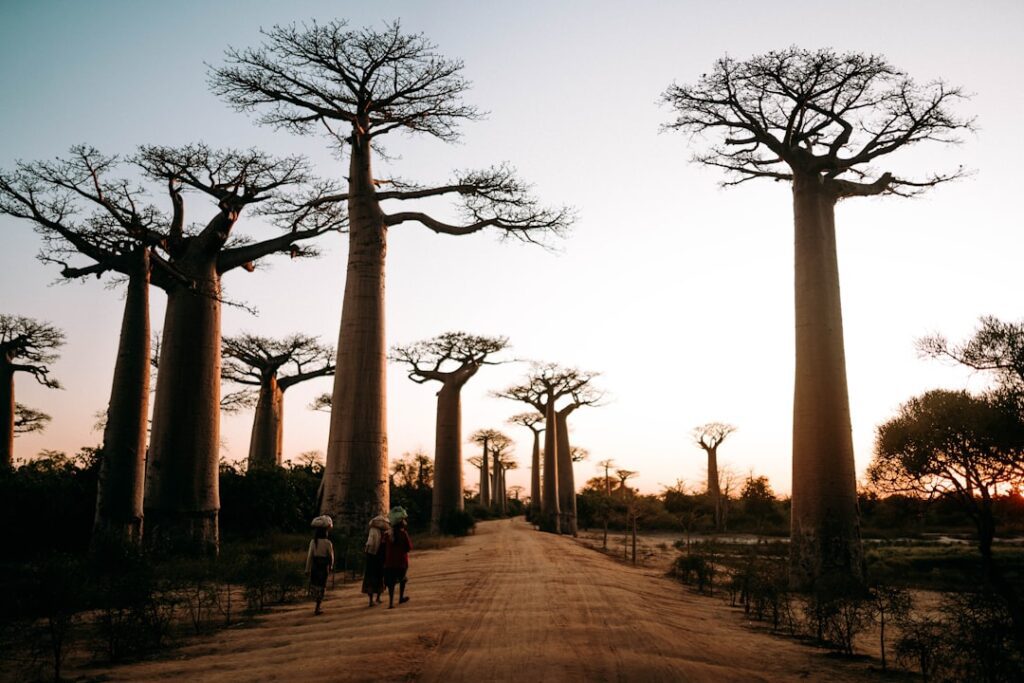
| Baobab Alley at Sunset | On the route from Morondava, these ancient, monumental trees create one of Madagascar’s most photographed scenes. | Accessible 24/7 | Free (small fee for parking) |
3-Day Itinerary: Tsingy’s Beauty, Madagascar’s Highlights & Hidden Gems
Day 1: Arrival & The Stone Labyrinth
- Morning (7-9 AM): Early start from your lodge near Bekopaka. After a quick breakfast, meet your certified park guide—mandatory for all visits—and head to the Petit Tsingy trailhead. The cool morning air is alive with bird calls and the chance to see lemurs before the heat of the day.
- Afternoon (12-3 PM): Tackle the Grand Tsingy circuit. You’ll be fitted with a harness for the via ferrata sections. The climb is physical but manageable, culminating in a heart-pounding crossing on a suspension bridge between two pinnacles. Lunch is a packed picnic enjoyed on a rocky plateau with unreal views.
- Evening (6-8 PM): Return to Bekopaka exhausted and exhilarated. Dinner at Relais des Tsingy for their well-earned Romazava stew. Listen to the sounds of the forest night descend.
Day 2: Canyons, Caves & Culture
- Morning (8 AM): Pirogue tour on the Manambolo River (~$15). Glide past nesting bee-eater birds, watch for Nile crocodiles, and visit the sacred caves adorned with Sakalava burial sites. Your guide will explain the local fady (taboos) associated with these places.
- Afternoon (1 PM): Visit a local village near Bekopaka. This isn’t a staged show; it’s a chance to see daily life, perhaps purchase direct-from-artist woodcarvings, and understand the community living alongside the park. Lunch on simple, fresh mofo gasy (rice cakes) and fruit.
- Evening: Sunset viewing point near the park entrance. Afterwards, dine at your lodge and swap stories with other travelers under a blanket of stars unobscured by light pollution.
Day 3: Baobabs & The Journey Back
- Morning (7 AM): Early 4×4 departure back towards Morondava. The journey is part of the adventure, fording rivers and traversing rough savanna.
- Afternoon (12 PM): Stop at the legendary Allée des Baobabs. Visit at midday for stark, dramatic photos, but savvy travelers know the magic happens later. Grab a simple lunch at a roadside stall.
- Evening (5:30 PM): If timing allows, return to the Baobab Alley for sunset. This is non-negotiable. The silhouettes of these 800-year-old giants against a fiery sky is a fitting, peaceful finale to your Tsingy adventure. Overnight in Morondava.
Cultural Insights & Etiquette
- Language: Malagasy and French. Key phrases: Manao ahoana (Hello), Misaotra (Thank you), Azafady (Excuse me/Please).
- Customs: Always ask permission before photographing people. Respect fady (taboos); your guide will advise (e.g., no pointing at tombs with your finger). Use your right hand for giving and receiving.
- Tipping: Appreciated for good service. For a park guide, 5,000-10,000 MGA (~$1-$2) per day is a good guideline. For a driver, consider 10,000-20,000 MGA per day.
- Dress Code: Modest, practical clothing. For hiking, sturdy boots, long tough pants (to protect from sharp rocks), and breathable layers are essential. Cover up in villages.
- Business Hours: Government offices and banks keep limited hours (approx. 8am-4pm). Shops and lodges are more flexible. Everything slows down in the heat of the afternoon.
Where to Eat: Tsingy’s Beauty, Madagascar’s Best Bites
Dining here is about sustenance and local flavor rather than fine dining. Meals are hearty, rice-based, and often feature zebu (Malagasy cattle), fresh river fish, or leafy greens. Lodges will provide most meals, but exploring local options adds authenticity.
Must-Try Local Specialties
- Romazava: The national dish, a slow-cooked stew of zebu meat with brèdes (leafy greens), often served with a mound of rice. Try it at any local hotely (small restaurant) in Bekopaka.
- Ravitoto: A rich, flavorful dish of shredded cassava leaves cooked with pork or zebu. A true comfort food.
- Fresh Fruit: Madagascar’s bounty includes lychees, pineapples, and dozens of banana varieties. Buy them from roadside stalls.
Restaurant Recommendations by Budget
| Type | Restaurant | Specialty | Price Range |
|---|---|---|---|
| Budget | Local Hotely in Bekopaka village | Simple, filling plates of rice with ravitoto or zebu stew. | $3-$7 per meal |
| Mid-range | Relais des Tsingy (Bekopaka) | Reliable Western & Malagasy dishes, cold drinks, and the best Romazava in town. | $10-$20 per meal |
| Lodge Dining | Le Soleil des Tsingy or Orchidée de Bemaraha | Set-menu dinners included in most stays, often a mix of international and local cuisine. | Included in lodging |
Where to Stay
Your base will be the small village of Bekopaka, right at the park entrance. Options range from basic camping to comfortable lodges. Booking far in advance for the peak season (July-October) is crucial. Compare prices and book at Booking.com or consider a full tour package that includes lodging.
Best Neighborhoods for Accommodation
- Bekopaka Village Center: Close to park offices and local eateries. Offers a mix of very basic bungalows and mid-range lodges. You’re right in the heart of the action, such as it is.
- Lodges on the Park’s Edge: Properties like Le Soleil des Tsingy are set slightly apart, offering more tranquility, often better facilities (like pools), and direct access to nature. Ideal for mid-range to luxury travelers.
- Camping: Designated campsites inside or near the park offer the most immersive (and budget) experience. You’ll need your own gear or to rent from a tour operator.

Avenue of the Baobabs, Madagascar during day, Tsingy’s Beauty, Madagascar
FAQs: Your Tsingy’s Beauty, Madagascar Questions Answered
1. Is Tsingy’s Beauty, Madagascar safe at night?
In the park and around Bekopaka, general crime is very low. The primary safety concerns are environmental: never hike without a guide due to the dangerous terrain and getting lost. In camp, secure food from curious wildlife. Use common sense with valuables.
2. What currency is used and are credit cards accepted?
The Malagasy Ariary (MGA) is the currency. Bring ample CASH in small denominations. Credit cards are virtually useless in Bekopaka and the park. ATMs are non-existent here; get cash in Morondava or Antananarivo before you travel.
3. How do I get from the airport to the park?
There is no direct route. You must first get to Morondava (by flight or long drive from Tana). From Morondava, it’s an 8-10 hour 4×4 journey to Bekopaka. Most travelers book this as part of a multi-day tour which includes transport, guide, and lodging. Book tours at GetYourGuide for convenience.
4. Do I need to speak the local language?
No, but it helps. Your park guide will speak French and basic English. Learning a few Malagasy greetings will earn you big smiles. In remote areas, patience and simple gestures go a long way.
5. What’s the appropriate dress code?
Utilitarian and modest. For the Tsingy: sturdy hiking boots with ankle support, thick socks, long durable pants (no shorts—the rock is sharp!), gloves for the via ferrata, and a hat. In villages, cover shoulders and knees. Quick-dry fabrics are ideal.

