
The Ultimate Siem Reap Guide: Temples, Traditions & Tropical Flavors
Siem Reap isn’t just a destination—it’s a living museum where ancient stones whisper secrets of forgotten empires. The air hangs thick with incense smoke and the scent of lemongrass, while saffron-robed monks move silently past intricate temple carvings that have watched over this land for centuries. It’s where history breathes through every stone and modern Cambodia thrives in vibrant markets.
Why Siem Reap Stands Out

People walking on park near trees and building during daytime, Siem Reap
- Historic Architecture: Angkor Wat (built 1113-1150 AD), the world’s largest religious monument, represents the pinnacle of Khmer architectural genius with its perfect symmetry and celestial symbolism.
- Cultural Scene: The annual Angkor Sangkran celebration transforms temple grounds into living cultural stages with traditional performances, blessing ceremonies, and martial arts demonstrations.
- Local Specialties: Fish amok, Cambodia’s national dish—steamed coconut fish curry wrapped in banana leaves—offers a perfect balance of lemongrass, turmeric, and kaffir lime flavors.
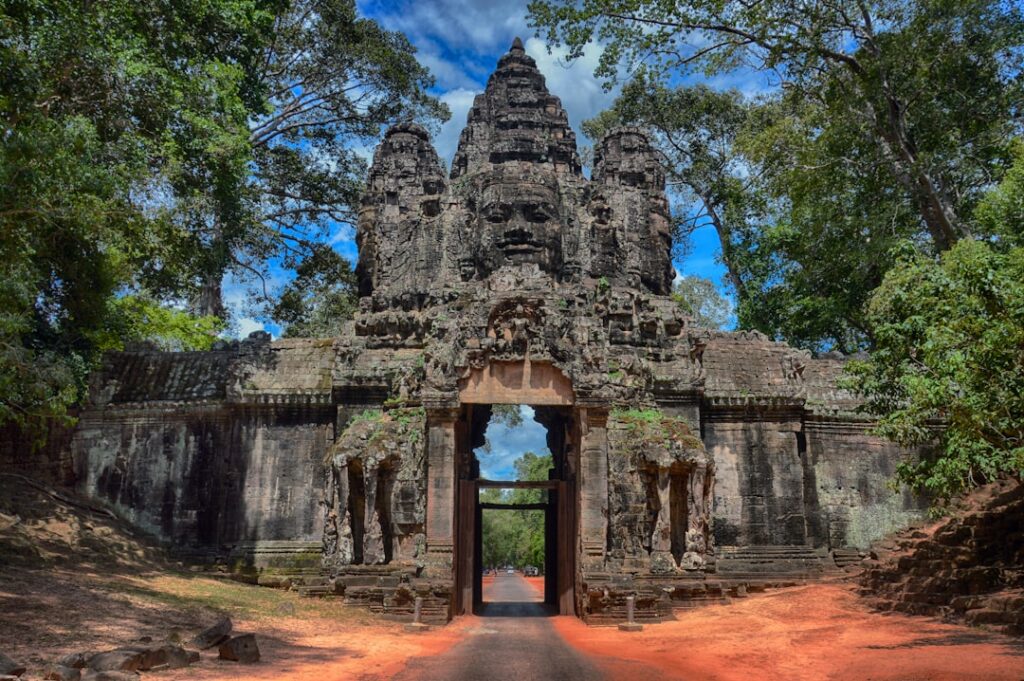
Pro Tip: Visit Angkor Wat at 5:15 AM for sunrise (avoiding the 6 AM crowds) and immediately proceed to Bayon Temple at 7:30 AM before tour buses arrive—you’ll have the famous stone faces nearly to yourself until 9 AM.
Map of Siem Reap
Use these interactive maps to explore Siem Reap and plan your route:
📍 View Siem Reap on OpenStreetMap
🗺️ Open Siem Reap in Google Maps
Planning Your Trip: Practical Essentials
Getting There and Around
- By Air: Siem Reap International Airport (REP) receives flights from Bangkok Airways, Singapore Airlines, and Cambodia Angkor Air. Taxis to city center cost $7, tuk-tuks $5. Book flights at Skyscanner for best deals.
- By Train: No direct rail service to Siem Reap—nearest station is in Phnom Penh (6-hour bus connection). Reserve tickets at Trainline or the national railway website.
- By Car: Highway 6 connects from Phnom Penh (5-6 hours). Rental cars with driver cost $45-60/day. Compare car rentals at RentalCars.com.
- Local Transport: Tuk-tuks are primary transport ($2-3 per ride within city). Angkor Archaeological Park requires hired tuk-tuk ($15-20/day) or bicycle ($3/day). Check official city transport websites for passes and schedules.
Best Time to Visit
November to February offers cool, dry weather perfect for temple exploration, while April brings scorching heat but smaller crowds at major sites.
| Season | Weather | Highlights |
|---|---|---|
| Dry Season (Nov–Feb) | 25-30°C, low humidity, no rain | Ideal temple exploring, busy but manageable crowds, perfect photography conditions |
| Hot Season (Mar–May) | 35-40°C, intense sun, low rainfall | Smallest crowds, early morning visits essential, hotel discounts up to 40% |
| Wet Season (Jun–Oct) | 30-35°C, daily afternoon showers | Lush green landscapes, dramatic stormy skies, lowest prices, fewer tourists |
Budgeting for Siem Reap

Green painted building, Siem Reap
| Category | Budget | Mid-range | Luxury |
|---|---|---|---|
| Accommodation | $10-20 (guesthouses) | $40-80 (boutique hotels) | $150-400 (5-star resorts) |
| Meals | $1-3 (street food) | $5-12 (restaurants) | $20-50 (fine dining) |
| Transport | $2-3 (tuk-tuks) | $15 (daily tuk-tuk hire) | $60 (private car with driver) |
| Activities | $37 (1-day Angkor pass) | $62 (3-day Angkor pass) | $300 (private guided tours) |
| Daily Total | $25-40 | $80-120 | $250-500+ |
Top Attractions and Must-See Sights
| Attraction | Description | Hours | Entry Fee |
|---|---|---|---|
| Angkor Wat | The magnificent centerpiece of Khmer architecture, featuring a 65-meter central tower representing Mount Meru | 5:00 AM-5:30 PM | 1-day $37, 3-day $62 |
| Bayon Temple | Known for its 216 massive stone faces smiling mysteriously from 54 towers, built in late 12th century | 7:30 AM-5:30 PM | Included in Angkor pass |
| Ta Prohm | The jungle-entwined temple where massive silk-cotton trees grow through ruins, famously featured in Tomb Raider | 7:30 AM-5:30 PM | Included in Angkor pass |
| Banteay Srei | 10th-century temple known as “Citadel of Women” featuring the most exquisite pink sandstone carvings in Cambodia | 7:30 AM-5:30 PM | Included in Angkor pass |
3-Day Itinerary: Siem Reap’s Highlights & Hidden Gems
Day 1: Temple Grandeur & Local Markets
- Morning: 5:15 AM sunrise at Angkor Wat (bring flashlight), then explore bas-relief galleries depicting Hindu epics. Hire guide ($25) for historical context.
- Afternoon: 12:30 PM lunch at Chanrey Tree ($15-20) for modern Khmer cuisine—try their signature fish amok. Then explore Psar Chas (Old Market) for silk scarves and carvings.
- Evening: 6:30 PM Phare Circus performance ($18) showcasing Cambodian stories through acrobatics, then dinner at Cuisine Wat Damnak ($45 tasting menu)—book weeks ahead.
Day 2: Jungle Temples & Floating Villages
- Morning: 7:00 AM arrival at Ta Prohm ($15 tuk-tuk) to experience jungle temple before crowds. Photograph tree roots swallowing stone walls in soft morning light.
- Afternoon: 1:00 PM boat tour to Kompong Phluk floating village ($20 including boat), see stilt houses and flooded forest. Lunch at local family’s house ($5) for authentic curry.
- Evening: 6:00 PM cocktails at Miss Wong Cocktail Bar (drinks $6-8) in French Quarter, then dinner at Marum ($12-18) supporting street children training program.
Day 3: Artisan Villages & Cultural Immersion
- Morning: 8:00 AM tuk-tuk ($12) to Artisans d’Angkor workshop (free tour) watching stone carvers and silk weavers, then purchase direct at fair prices.
- Afternoon: 1:30 PM cooking class at Le Tigre de Papier ($15) learning to make spring rolls and curry, then enjoy your creations for lunch.
- Evening: 6:30 PM dinner at Genevieve’s Restaurant ($20-30) supporting local charities, then traditional Apsara dance performance at Temple Club ($12 with drink).
Cultural Insights & Etiquette
- Language: Learn “Sous-dey” (hello), “Aw Kuhn” (thank you), “Som toh” (sorry). English widely spoken in tourist areas.
- Customs: Never touch someone’s head (sacred), don’t point feet at people or Buddha images, receive items with both hands.
- Tipping: Not expected but appreciated—10% in restaurants, $1-2 for tuk-tuk drivers, $5-10 for guides.
- Dress Code: Cover shoulders and knees at temples—carry scarf. Smart casual for nicer restaurants.
- Business Hours: Shops 8 AM-9 PM, temples 5 AM-5:30 PM, restaurants 11 AM-11 PM. Many close during Khmer New Year (April).
Where to Eat: Siem Reap’s Best Bites
Cambodian cuisine balances sweet, sour, salty, and bitter flavors with fresh herbs and complex spice pastes. Street food stalls offer incredible value while fine dining restaurants reinterpret traditional dishes with modern techniques.
Must-Try Local Specialties
- Fish Amok: Steamed coconut fish curry in banana leaves—best at Haven Training Restaurant (supporting vulnerable youth)
- Khmer Red Curry: Less spicy than Thai versions with lemongrass and kaffir lime—try at Sugar Palm (terrace with temple views)
- Beef Lok Lak: Marinated stir-fried beef with pepper sauce and fried egg—street food version at Night Market for $2
Restaurant Recommendations by Budget
| Type | Restaurant | Specialty | Price Range |
|---|---|---|---|
| Budget | Khmer Kitchen Restaurant (Old Market area) | Authentic curries and stir-fries | $3-6 per dish |
| Mid-range | Mie Cafe (near Royal Residence) | Modern Khmer tasting menus | $15-25 |
| Fine dining | Embassy Khmer Gastronomy (King’s Road) | Elevated traditional dishes with wine pairing | $45-75 |
Where to Stay
Accommodation ranges from $5 hostel dorms to $500/night luxury resorts with pool villas. The Old Market area offers walking access to restaurants and nightlife, while roads toward Angkor provide quieter retreats. Compare prices and book at Booking.com or Airbnb for apartments.
Best Neighborhoods for Accommodation
- Old Market Area: Vibrant and central with easy access to restaurants and night markets, can be noisy at night—ideal for budget travelers and socializers
- Wat Bo Road: Quieter than center but still walkable to amenities, numerous mid-range boutique hotels with pools—perfect for couples and families
- Road to Angkor: Luxury resorts with spacious grounds and tranquility, requires tuk-tuk to town—best for honeymooners and relaxation seekers

A tree growing out of the ruins of a temple, Siem Reap
FAQs: Your Siem Reap Questions Answered
1. Is Siem Reap safe at night?
Extremely safe—walking around central areas until midnight presents little risk. Use common sense: avoid dark alleys, don’t flash valuables, and agree tuk-tuk prices before riding. Petty theft is rare but keep bags secured in crowded markets.
2. What currency is used and are credit cards accepted?
US dollars are preferred (bring crisp, undamaged bills) and Cambodian riel for small transactions (4,000 riel = $1). Credit cards accepted at higher-end establishments but cash essential for markets, street food, and tuk-tuks. ATMs widely available with $4-5 withdrawal fees.
3. How do I get from the airport to the city center?
Official airport taxis cost $9, while tuk-tuks charge $5-7 for the 15-minute journey. Pre-book through your hotel for $5-7. Avoid touts inside terminal—official counters are immediately outside arrivals. Book airport transfers at GetYourGuide for convenience.
4. Do I need to speak the local language?
Not necessary—English is widely spoken in tourist areas. Learning basic Khmer phrases (hello, thank you, how much) is appreciated. Restaurant menus and signs are typically in English and Khmer. Guides speak excellent English if hiring for temples.
5. What’s the appropriate dress code?
Temples require covered shoulders and knees (light scarves acceptable). Elsewhere, lightweight clothing is fine—Cambodians dress modestly but understand tourist attire. Bring comfortable walking shoes, hat, and rain jacket (seasonal). Fancy restaurants expect smart casual wear.
Final Thoughts: Siem Reap Awaits
Siem Reap offers more than temple photos—it’s a profound cultural immersion where ancient glory meets vibrant modern life. From predawn temple explorations to evening market bargaining sessions, every moment connects you to Cambodia’s resilient spirit. The genuine warmth of its people, the complexity of its cuisine, and the sheer scale of its archaeological wonders create an experience that lingers long after you’ve left. Come for the temples, but leave transformed by the humanity, history, and haunting beauty of this extraordinary destination.
Keywords
Siem Reap travel guide, Siem Reap attractions, things to do in Siem Reap, Siem Reap itinerary, Siem Reap restaurants, Siem Reap hotels, visit Siem Reap, Siem Reap tourism, Siem Reap vacation, Siem Reap trip planning, Angkor Wat guide, Cambodia travel

