
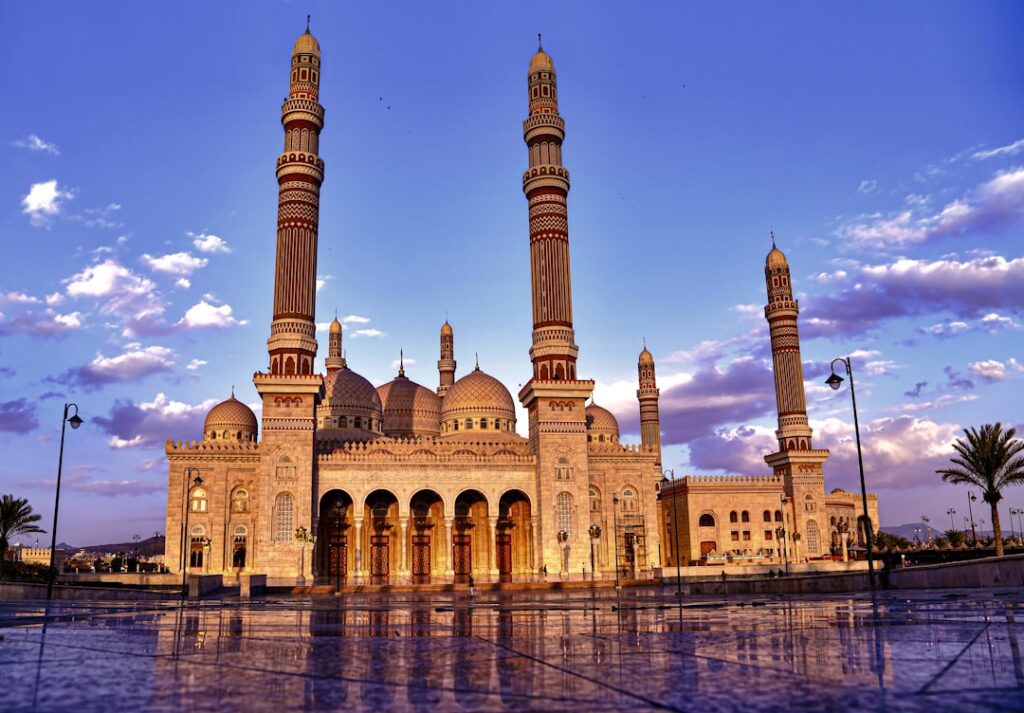
Sana’a, Yemen’s Incredible Ancient Skyscrapers, Spice Markets & Living History (2026)
Just before sunset, the honey-colored light of Sana’a bathes the Old City, illuminating the intricate geometric patterns of over 6,000 multi-story tower houses, some dating to the 11th century. The air fills with the scent of frankincense and the distant call to prayer, echoing through a labyrinth of alleys that has been a UNESCO World Heritage site since 1986. This isn’t a museum; it’s the world’s oldest continuously inhabited city, a living architectural masterpiece where daily life unfolds within ancient walls.
Why Sana’a, Yemen Stands Out

Brown wooden pathway near green grass field during daytime, Sana’a, Yemen
- Historic Architecture: The Great Mosque of Sana’a, founded in 630 AD, is one of the oldest mosques in the world and a cornerstone of Islamic architectural history.
- Cultural Scene: The weekly Al-Milh salt market transforms Bab al-Yemen into a vibrant spectacle of traditional dress, ancient bartering, and the trading of everything from spices to silver.
- Local Specialties: Saltah, a fiery stew of meat, vegetables, and hilbah (fenugreek froth), served in a stone pot, is the national dish you must try.
Pro Tip: The absolute best time for photography and comfortable exploration is during the shoulder seasons of March to April or October to November. The light is perfect, temperatures are mild (around 25°C/77°F), and you’ll avoid both the summer heat and the brief winter chill.
Map of Sana’a, Yemen
Use these interactive maps to explore Sana’a, Yemen and plan your route:
📍 View Sana’a, Yemen on OpenStreetMap
🗺️ Open Sana’a, Yemen in Google Maps
Planning Your Trip: Practical Essentials
Getting There and Around
- By Air: Sana’a International Airport (SAH) is the primary gateway. Due to the complex political situation, commercial flight schedules are extremely limited and change frequently. Travelers must check with the UN and their own government for current advisories and approved carriers. Book flights at Skyscanner for best deals, but verify operational status directly.
- By Train: Yemen has no passenger railway system. Long-distance travel is conducted by road, typically via shared taxis or buses.
- By Car: Driving in Yemen requires a local guide and extreme caution. Road conditions vary greatly. Rental cars with drivers can be arranged through reputable local tour operators for safety. Compare car rentals at RentalCars.com, but note self-drive is not recommended for foreign visitors.
- Local Transport: Within Sana’a, the most common transport is the “dabab” (shared minibus) for a few Yemeni Rials, or private taxis which should be negotiated before entry. Walking is the best way to explore the dense Old City.
Best Time to Visit
Sana’a’s high altitude (2,300 meters) gives it a surprisingly mild climate compared to the surrounding region, but timing is key for comfort. The city experiences two main seasons: a dry, mild period and a brief, cooler wet season.
| Season | Weather | Highlights |
|---|---|---|
| Summer (Jun–Aug) | Warm days (28-30°C/82-86°F), cool nights, very low chance of rain. | Clear skies, vibrant evening street life, but can be dusty. Ideal for exploring in the early mornings and late afternoons. |
| Winter (Dec–Feb) | Cool to cold (5-20°C/41-68°F), with occasional frost at night and sporadic rain. | Fewer visitors, dramatic clouds over the tower houses. Pack warm layers. Some rural roads may be difficult. |
| Shoulder (Apr–May/Sep–Oct) | The sweet spot: pleasant days (22-26°C/72-79°F), mild nights, minimal rain. | Perfect for all-day exploration, photography, and market visits. The most recommended and comfortable time for travel. |
Budgeting for Sana’a, Yemen

A city with many buildings, Sana’a, Yemen
| Category | Budget | Mid-range | Luxury |
|---|---|---|---|
| Accommodation | Simple local hotel: 5,000-8,000 YER ($20-$32) | Comfortable city hotel: 15,000-25,000 YER ($60-$100) | Historic boutique stay (rare): 40,000+ YER ($160+) |
| Meals | Street food & local cafes: 2,000-4,000 YER ($8-$16) | Restaurant meals: 5,000-8,000 YER ($20-$32) | Fine dining (limited): 15,000+ YER ($60+) |
| Transport | Dabab (minibus): 200 YER ($0.80) | Private taxi per day: 15,000 YER ($60) | Private car & driver: 30,000+ YER ($120+) |
| Activities | Mosque exteriors, market browsing, Old City walks: Free | Guided half-day tour: 10,000 YER ($40) | Multi-day guided cultural tour: 50,000+ YER ($200+) |
| Daily Total | 7,200-17,200 YER ($29-$69) | 45,000-58,000 YER ($180-$232) | 135,000+ YER ($540+) |
Note: Costs are estimates. The Yemeni Rial (YER) fluctuates significantly. USD is widely accepted and often preferred. Always carry cash.
Top Attractions and Must-See Sights
| Attraction | Description | Hours | Entry Fee |
|---|---|---|---|
| Old City of Sana’a | A breathtaking maze of 11th-century mud-brick skyscrapers with stained-glass *qamariya* windows, containing over 100 mosques and 14 public baths. | Always open (explore by day) | Free to walk |
| National Museum of Yemen (Al-Eshsh House) | Housed in a former royal palace, it showcases pre-Islamic artifacts, ancient manuscripts, and the history of the Sabaean and Himyarite kingdoms. | Sat-Thu, 9 AM – 1 PM | ~1,000 YER ($4) |
| Bab al-Yemen (Yemen Gate) | The iconic main gate to the Old City, a bustling hub where the past and present collide amid traders, storytellers, and daily life. | Always open | Free |
| Al Saleh Mosque | The largest and most modern mosque in Sana’a, opened in 2008, featuring six 100-meter minarets and magnificent interior domes. | Outside prayer times for non-Muslims (view exterior) | Free (exterior) |
3-Day Itinerary: Sana’a, Yemen’s Highlights & Hidden Gems
Day 1: Immersion in the Ancient Old City
- Morning (7-9 AM): Start at **Bab al-Yemen** as the city wakes. Walk straight into **Suq al-Milh**, the salt market, to see traders unloading goods. Your best bet is to hire a local guide here (approx. 10,000 YER for 3 hours) to navigate the labyrinth and explain the history of the distinct architectural districts like Al-Qaa and Bir al-Azab.
- Afternoon (12-3 PM): Explore the **craftsman souqs** – Suq al-Nahhas (copper), Suq al-Jambiya (for the curved daggers), and Suq al-Kattan (cotton). For lunch, find a simple stall serving **foul medames** (spiced fava beans) with fresh bread for about 500 YER.
- Evening (6-8 PM): As the sun sets, climb to the rooftop of a traditional house (some cafes offer access) to watch the tower houses glow. For dinner, seek out a local restaurant like **Hadda Restaurant** for an authentic **Saltah** experience (approx. 2,500 YER).
Day 2: History, Culture & Panoramic Views
- Morning (8 AM): Visit the **National Museum** in the Al-Eshsh House to understand Yemen’s ancient civilizations. Afterwards, walk to the **Great Mosque** (exterior viewing only for non-Muslims) to admire its foundational significance.
- Afternoon (1 PM): Take a taxi (approx. 3,000 YER) to **Dar al-Hajar**, the iconic Rock Palace in Wadi Dhahr, 15km from the city. This 1930s summer palace of Imam Yahya is built atop a dramatic rock pinnacle. Have lunch at the simple cafe with a view.
- Evening (6 PM): Return to Sana’a and experience **Shi’b al-‘Urr**, a traditional storytelling session sometimes held in old houses or public squares—ask your guide to find one. Dine on **Mandi** (slow-roasted lamb and rice) at **Al-Masbah Restaurant**.
Day 3: Local Life & Artistic Heritage
- Morning (9 AM): Visit a **qishr (coffee husk) vendor** for the local caffeine ritual. Then, explore the **Military Museum** (located in the Ottoman-era Qasr al-Silah) for insights into the city’s defensive history (approx. 500 YER entry).
- Afternoon (12 PM): Discover the art of **qamariya** (stained-glass gypsum windows). Visit a workshop in the Old City where artisans still craft these geometric masterpieces. For lunch, try **Aseed** (a savory porridge) at a small local eatery.
- Evening (5 PM): For your final evening, take a leisurely walk along the **old city walls**. Finish with a farewell dinner of **Zurbian** (spiced rice with meat) and share a hookah with locals at a traditional **mafraj** (sitting room) style cafe, savoring the unique atmosphere of this timeless city.
Cultural Insights & Etiquette
- Language: Arabic is essential. Learn basic greetings: “As-salamu alaykum” (Peace be upon you), “Shukran” (Thank you). English is not widely spoken.
- Customs: Always use your right hand for eating, greeting, and giving/receiving items. It is polite to refuse an offer of food or drink twice before accepting. Public displays of affection are frowned upon.
- Tipping: Not mandatory but appreciated. Round up taxi fares. In restaurants, 5-10% is generous if service isn’t included.
- Dress Code: Conservative dress is crucial. Men should avoid shorts. Women must cover their hair, arms, and legs; a loose abaya (cloak) is recommended. Dressing respectfully opens doors and shows cultural sensitivity.
- Business Hours: Government hours: Sat-Wed 8 AM-2 PM, Thu 8 AM-1 PM. Shops open 9 AM-1 PM, reopen 4-8 PM. Everything closes for Friday prayers. Major holidays like Eid al-Fitr and Eid al-Adha shut down the city for several days.
Where to Eat: Sana’a, Yemen’s Best Bites
Yemeni cuisine is a hearty, aromatic blend of flavors, heavily reliant on spices like cumin, cardamom, turmeric, and fenugreek. Dining is a social, often communal, affair. You’ll typically eat from a shared platter, using flatbread as your utensil.
Must-Try Local Specialties
- Saltah: The national dish, a hot, fenugreek-topped stew served bubbling in a stone pot. Best tried at any bustling local lunch spot in the Old City.
- Mandi: Tender lamb or chicken slow-roasted in a tandoor oven with spiced rice, infused with the smoky flavor of burning wood. **Al-Mandee Restaurant** is a popular spot.
- Bint al-Sahn: A “daughter of the plate,” this is a flaky, layered honey cake drenched with melted butter and honey, often eaten for breakfast or celebration. Find it in bakeries near the markets.
Restaurant Recommendations by Budget
| Type | Restaurant | Specialty | Price Range |
|---|---|---|---|
| Budget | Old City Market Stalls | Fresh foul, lentil soup, and roasted chicken | 500 – 2,000 YER ($2-$8) |
| Mid-range | Hadda Restaurant (Hadda Street) | Authentic Saltah and grilled meats | 2,500 – 6,000 YER ($10-$24) |
| Fine dining | Al-Masbah Restaurant (Az-Zubairy St) | Mandi and Zurbian in a more formal setting | 8,000 – 15,000 YER ($32-$60) |
Where to Stay
Accommodation in Sana’a ranges from basic local hotels to a few more comfortable modern options. Staying in or near the Old City provides an immersive experience, while the newer Hadda district offers more modern amenities. Compare prices and book at Booking.com or Airbnb for apartments, though listings are very limited and advance planning is essential.
Best Neighborhoods for Accommodation
- Old City: The most atmospheric choice. You’ll be steps from the souqs and ancient architecture, but amenities are basic, noise is common, and navigating with luggage can be difficult. Suits adventurous travelers seeking total immersion.
- Hadda District: A modern, diplomatic area with wider streets, international restaurants, and more comfortable hotels like the landmark Mövenpick. It’s quieter but requires taxis to reach the Old City (10-15 minutes). Suits those preferring modern comfort.
- City Center (near Tahrir Square): A practical compromise. You’ll find a mix of mid-range hotels, easier access to transport, and are within walking distance of the Old City’s edge. Offers a balance of convenience and local flavor.

A night view of a city with green lights, Sana’a, Yemen
FAQs: Your Sana’a, Yemen Questions Answered
1. Is Sana’a, Yemen safe at night?
Safety conditions in Yemen are extremely volatile and change daily. Any travel must be preceded by consulting your government’s travel advisories. Historically, within Sana’a, the Old City was generally safe to walk at night for locals, but foreigners should exercise extreme caution, avoid walking alone after dark, and always be accompanied by a trusted local guide. The security situation is paramount and the primary consideration for any visit.
2. What currency is used and are credit cards accepted?
The Yemeni Rial (YER) is the official currency, but U

