
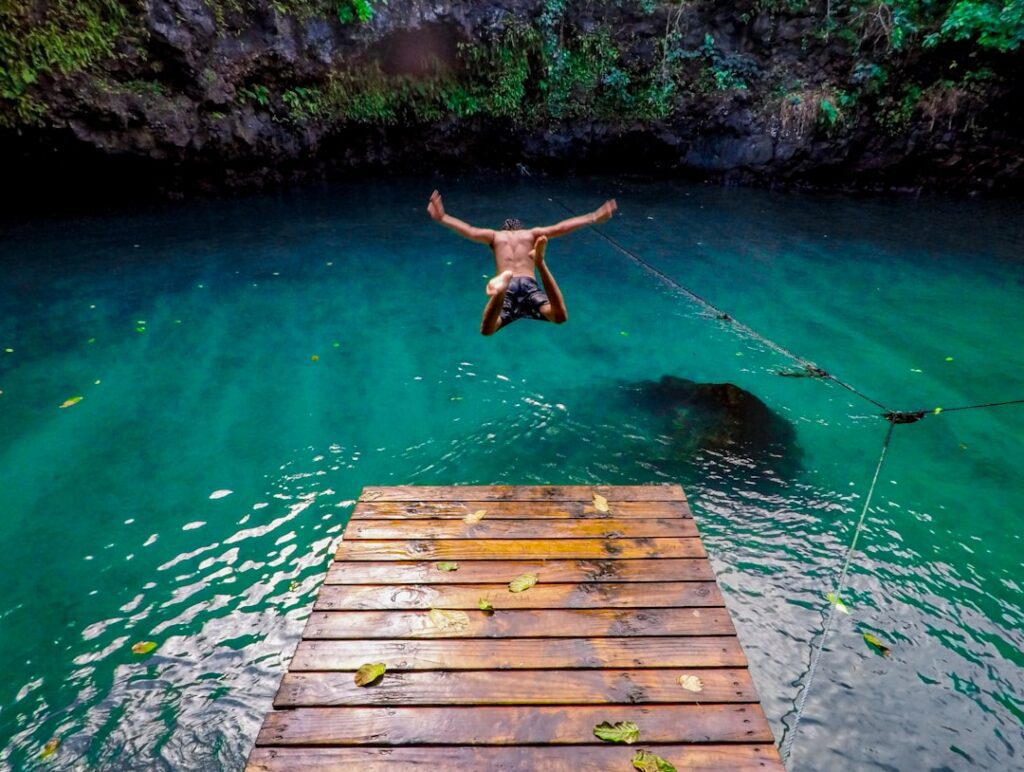
Samoa (Savai’i), Samoa’s Incredible Lava Fields, Fa’a Samoa & Untouched Reefs (2025)
While crowds flock to the resorts of Upolu, Savai’i, Samoa’s “Big Island,” offers a raw, authentic Polynesian heartbeat. With a population of just 44,000 spread across its 1,700 square kilometers, you’ll find more free-roaming pigs than traffic lights. Here, time is measured by the rhythm of the sea and the village *fono* (council meeting), not a tour bus schedule. This is where you experience *Fa’a Samoa*—the Samoan way of life—not as a performance, but as the fabric of daily existence.
Why Samoa (Savai’i), Samoa Stands Out

A woman is climbing up a palm tree, Samoa (Savai’i), Samoa
- Historic Architecture: The Pulemelei Mound, dating to 1100-1400 AD, is the largest ancient structure in Polynesia, a mysterious pyramid shrouded in jungle that speaks to the island’s sophisticated pre-European history.
- Cultural Scene: Witness the raw power and precision of the Siva Afi (fire knife dance), not in a hotel lobby, but at a local *fiafia* night where the dancers are village champions.
- Local Specialties: You must try *Palusami*—young taro leaves baked in coconut cream within an umu (earth oven)—a creamy, savory dish that is the soul of Samoan feasting.
Pro Tip: Visit during the dry season (May to October) for ideal hiking and swimming conditions, but for the most authentic cultural immersion, plan around a village *fa’alavelave* (ceremonial event) if invited—though remember, these are family occasions, not tourist attractions.
Map of Samoa (Savai’i), Samoa
Use these interactive maps to explore Samoa (Savai’i), Samoa and plan your route:
📍 View Samoa (Savai’i), Samoa on OpenStreetMap
🗺️ Open Samoa (Savai’i), Samoa in Google Maps
Planning Your Trip: Practical Essentials
Getting There and Around
- By Air: You’ll fly into Faleolo International Airport (APW) on Upolu. From there, take a 1-hour taxi (approx. 80-100 WST) to Mulifanua Wharf for the ferry. Book flights at Skyscanner for best deals.
- By Ferry: The reliable Lady Samoa III ferry crosses to Salelologa Wharf on Savai’i in about 90 minutes. A car and driver cost ~120 WST; foot passengers pay 11 WST. Book vehicles in advance in peak season.
- By Car: Renting a car (approx. 130-200 WST/day) is essential. The coastal road is mostly paved and circles the island. Drive slowly for pigs, dogs, and children. Compare car rentals at RentalCars.com.
- Local Transport: “Aiga” buses—colorful, open-sided trucks—are the public transport. Fares are cheap (2-5 WST), but routes are based on village schedules, not timetables. It’s an adventure.
Best Time to Visit
The best time for outdoor exploration is the dry season. The wet season brings lush greenery but also humidity, brief heavy downpours, and a higher chance of cyclones, though these are rare.
| Season | Weather | Highlights |
|---|---|---|
| Dry Season (May–Oct) | 24-29°C (75-84°F), lower humidity, less rain | Ideal for hiking, snorkeling, and road trips; peak tourist season with calm seas. |
| Wet Season (Nov–Apr) | 26-30°C (79-86°F), high humidity, frequent tropical showers | Lush, vibrant landscapes; fewer tourists; lower accommodation rates; risk of brief disruptions. |
| Shoulder (Apr/Oct-Nov) | Transitional, warm with sporadic rain | A good balance of decent weather and smaller crowds; great for cultural visits. |
Budgeting for Samoa (Savai’i), Samoa
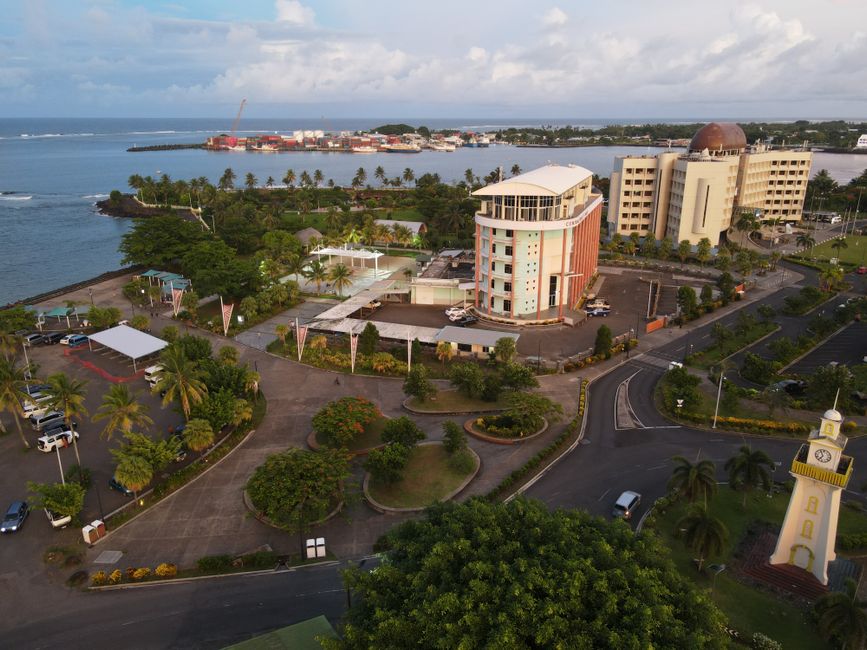
Stunning aerial view of Apia, Samoa featuring coastal cityscape and landmarks., Samoa (Savai’i), Samoa
| Category | Budget | Mid-range | Luxury |
|---|---|---|---|
| Accommodation | 80-120 WST (beach fale) | 150-300 WST (guesthouse/villa) | 400+ WST (boutique resort) |
| Meals | 15-25 WST (market/bakery) | 30-60 WST (local restaurant) | 80+ WST (resort dining) |
| Transport | 5-10 WST (bus) | 130-200 WST (rental car/day) | Private driver (250+ WST/day) |
| Activities | Free (beaches, blowholes) | 20-50 WST (waterfalls, tours) | 150+ WST (private boat charters) |
| Daily Total | 100-155 WST | 310-610 WST | 880+ WST |
Top Attractions and Must-See Sights
| Attraction | Description | Hours | Entry Fee |
|---|---|---|---|
| Alofaaga Blowholes (Taga) | Powerful geyser-like jets where the sea explodes through lava tubes—locals sometimes throw coconuts in for a spectacular launch. | Daylight hours | 5 WST (payable to village) |
| Saleaula Lava Field | Walk on the eerie, vast lava flow from Mt Matavanu’s 1905-1911 eruption, which buried villages and left a church skeleton. | Daylight hours | 10 WST |
| Afu Aau Waterfalls | A stunning tiered waterfall with a deep, crystal-clear swimming pool perfect for a refreshing dip in the jungle. | 8 AM – 5 PM | 10 WST |
| Falealupo Canopy Walkway | A 30-meter-high rope bridge suspended through a pristine rainforest canopy, leading to a giant banyan tree. | 8:30 AM – 4:30 PM | 20 WST |
3-Day Itinerary: Samoa (Savai’i), Samoa’s Highlights & Hidden Gems
Day 1: South Coast Lava & Legends
- Morning (7:30 AM): Start early from Salelologa and drive west to the **Saleaula Lava Field**. Explore the **Virgin’s Grave** and the lava-entombed church, a poignant reminder of the volcano’s power. Pay the 10 WST fee at the entrance.
- Afternoon (12:30 PM): Continue to **Taga** for the **Alofaaga Blowholes** (5 WST). Watch the spectacle, then have a fresh seafood lunch at **Taufua Beach Fale** right next door, trying the grilled *masimasi* (blue trevally).
- Evening (6:00 PM): Check into your beach fale accommodation. Enjoy a traditional *umu* dinner with your hosts and, if available, attend a low-key **fiafia** night with local singing and dance.
Day 2: Rainforest Canopies & Coastal Pools
- Morning (8:00 AM): Drive to the **Falealupo Canopy Walkway** (20 WST). Brave the swaying rope bridge for breathtaking views. Afterwards, visit the nearby **Falealupo Mata o le Afi** (Eyes of the Fire) lava tubes.
- Afternoon (1:00 PM): Head east to the **Afu Aau Waterfalls** (10 WST) for a swim. For lunch, stop at **Le Lagoto Resort’s restaurant** in Fagamalo for superb Pacific fusion with a view.
- Evening (5:30 PM): Catch the sunset at **Mauga Beach Fales** in Manase. Dine on the sand at **Stevenson’s Resort**, known for their excellent *oka* (Samoan raw fish in coconut cream).
Day 3: Ancient History & East Coast Serenity
- Morning (8:30 AM): Drive inland towards the **Pulemelei Mound**. The access road is rough; a 4WD is recommended or you can park and walk the last 20 minutes. Explore Polynesia’s largest ancient monument for free (always ask for permission at the nearest house).
- Afternoon (12:00 PM): Head to the east coast to **Lano Beach** for a secluded picnic. Grab takeaway *panipopo* (coconut buns) and fruit from Salelologa market on your way.
- Evening (4:00 PM): Return to Salelologa. If it’s a weekday, wander the market before it closes. Enjoy a final dinner at **Jone’s Pizza & Pasta**, a surprisingly fantastic local Italian spot, before your ferry or flight.
Cultural Insights & Etiquette
- Language: Samoan (Gagana Samoa) and English are spoken. Key phrases: *Talofa* (Hello), *Fa’afetai* (Thank you), *Tulou* (Excuse me, when passing someone).
- Customs: *Fa’a Samoa* is paramount. Always show respect to matai (chiefs) and elders. Dress modestly in villages. Sunday is sacred—most businesses are closed, and swimming or loud activities in villages are frowned upon.
- Tipping: Not expected or part of the culture. A heartfelt “fa’afetai tele” is preferred. In resorts, a small tip is sometimes accepted but not required.
- Dress Code: Swimwear is for the beach only. Cover shoulders and knees when walking through villages or visiting churches. A *lavalava* (sarong) is versatile and respectful.
- Business Hours: Shops: Mon-Fri 8am-5pm, Sat 8am-12pm. Closed Sunday. “Samoa Time” is real—patience is a virtue.
Where to Eat: Samoa (Savai’i), Samoa’s Best Bites
Dining on Savai’i is about fresh, local ingredients and simplicity. You’ll eat fish caught that morning, fruit picked from the backyard, and taro from the plantation. Resort restaurants offer more variety, but the true flavors are found in family-run *fale* meals and local eateries.
Must-Try Local Specialties
- Palusami: The ultimate comfort food. Taro leaves bundled around coconut cream and baked until melt-in-your-mouth tender. Best tried at a Sunday *to’ona’i* (family feast) if you’re invited.
- Oka I’a: Fresh raw fish (usually tuna or snapper) marinated in lemon or lime juice, coconut cream, onion, and chili. A refreshing lunch staple.
- Panipopo: Sweet, soft buns baked in a rich coconut milk syrup. Find them at any local bakery, like **Salelologa Market Bakery**, for a perfect breakfast or snack.
Restaurant Recommendations by Budget
| Type | Restaurant | Specialty | Price Range |
|---|---|---|---|
| Budget | Salelologa Market Stalls | Fresh fruit, *lolo buns*, and simple BBQ packs | 5-15 WST |
| Mid-range | Taufua Beach Fale Restaurant (Taga) | Grilled local fish and lobster with oceanfront views | 30-60 WST |
| Fine dining | Le Lagoto Resort Restaurant (Fagamalo) | Elegant Pacific Rim cuisine and an excellent wine list | 70-120 WST |
Where to Stay
Accommodation ranges from traditional open-sided beach fales (a must-try experience) to comfortable guesthouses and a few upscale resorts. Most are family-run, offering genuine hospitality. Compare prices and book at Booking.com or Airbnb for apartments.
Best Neighborhoods for Accommodation
- Manase (North Coast): The main tourist strip with a concentration of beach fales and resorts like Stevenson’s. Great for swimming, sunsets, and social travelers. Can feel busier by Savai’i standards.
- South West Coast (Taga/Fagamalo): More remote and dramatic, close to the blowholes and lava fields. Ideal for travelers seeking solitude and powerful landscapes. Options like **Taufua Beach Fales**.
- Salelologa & East Coast: Practical for ferry access and the market. A good base for exploring the island’s interior and eastern sites. More guesthouse-style accommodations like **Savaiian Hotel**.
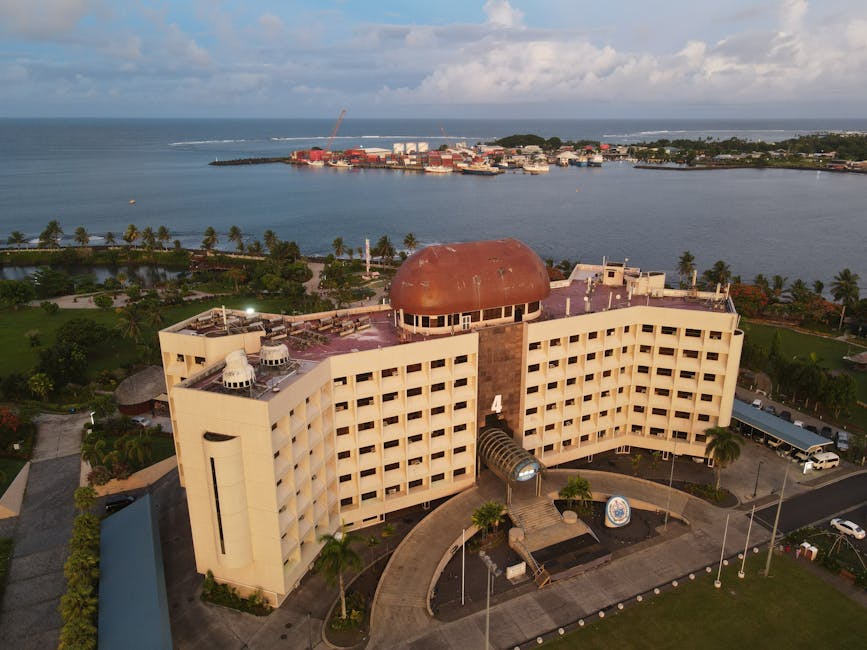
Aerial photograph of a prominent hotel by the seaside in Apia, Samoa., Samoa (Savai’i), Samoa
FAQs: Your Samoa (Savai’i), Samoa Questions Answered
1. Is Samoa (Savai’i), Samoa safe at night?
Savai’i is generally very safe. Violent crime is extremely rare. However, practice common sense: secure your belongings in your fale, avoid walking alone in very remote, unlit areas, and be mindful of stray dogs at night. The greatest “danger” is often uneven footpaths.
2. What currency is used and are credit cards accepted?
The Samoan Tala (WST) is the currency. As of mid-2024, 1 USD ≈ 2.75 WST. Credit cards (Visa/Mastercard) are accepted at most resorts, some restaurants, and rental agencies, but **cash is king** in villages, at markets, for buses, and for most entry fees. ATMs are only in Salelologa and a couple of other main villages.
3. How do I get from the airport to Savai’i?
From Faleolo Airport (APW), take a taxi (80-100 WST, 1 hour) to Mulifanua Wharf. Catch the ferry to Salelologa Wharf on Savai’i (90 mins, 11 WST foot passenger). From Salelologa, your pre-arranged accommodation transfer or a local taxi will take you to your final stop. Book airport transfers at GetYourGuide for convenience.
4. Do I need to speak the local language?
No. English is widely spoken, especially in tourism-related businesses. Learning a few basic Samoan phrases, however, is a sign of deep respect and will be met with warm smiles and appreciation, opening doors to more genuine interactions.
5. What’s the appropriate dress code?
Modesty is key. In villages and towns, wear a lavalava or pants/skirt below the knee and a top covering the shoulders. Swimwear is strictly for the beach or

