
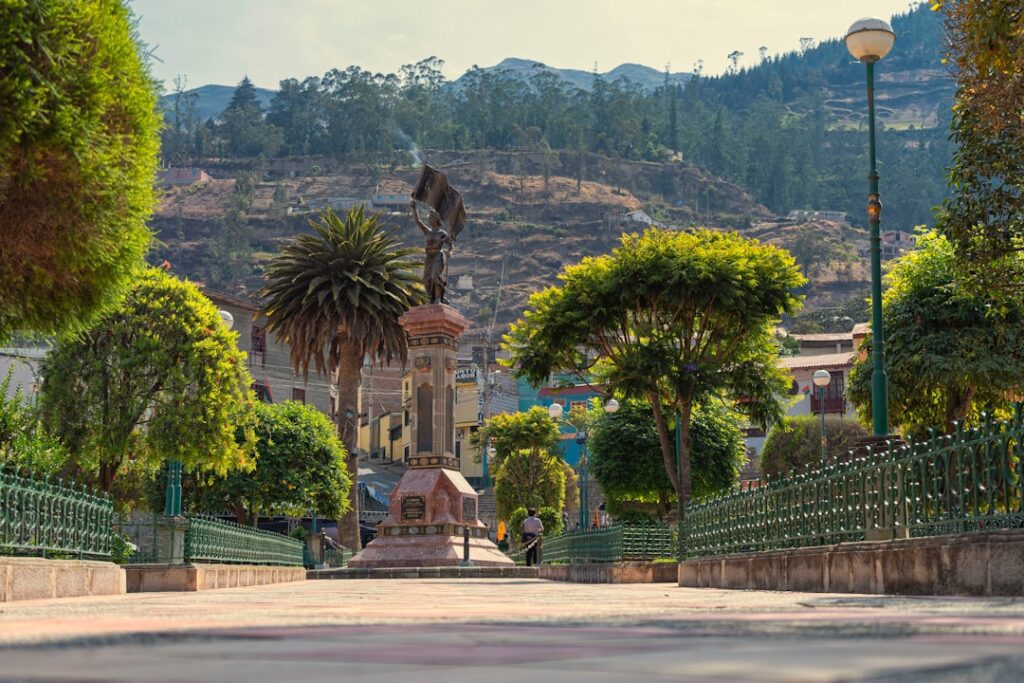
Riobamba, Ecuador’s Incredible Train Rides, Indigenous Markets & Andean Peaks (2026)
At 6:30 AM on a Saturday, the aroma of roasting *cuy* (guinea pig) and fresh *hornado* (roast pork) fills the air at Riobamba’s Mercado de la Concepción, a sensory prelude to the thunderous arrival of the “Devil’s Nose” train. While most visitors to Ecuador’s Avenue of the Volcanoes rush past to Baños or Cuenca, savvy travelers know Riobamba is the authentic, beating heart of the central highlands. Here, you can stand in the shadow of Chimborazo, the planet’s closest point to the sun, and ride a historic railway through impossible switchbacks, all for a fraction of the cost of more touristed towns.
Why Riobamba, Ecuador Stands Out

Metal swing over body of water, Riobamba, Ecuador
- Historic Architecture: The stunning, pastel-colored Catedral de Riobamba, built in the 1830s after the city was relocated following a devastating 1797 earthquake, showcases a unique blend of neoclassical and baroque styles.
- Cultural Scene: The Saturday market in the nearby indigenous village of Guamote is a profound, authentic immersion into Puruhá culture, far less commercialized than the famous Otavalo market.
- Local Specialties: You must try *hornado con llapingachos*—succulent roast pork served with potato-cheese patties, pickled onion, and avocado, best enjoyed at a bustling market stall.
Pro Tip: For the clearest views of the surrounding volcanoes, including the majestic Chimborazo, plan your visit for the dry season from June to September. Arrive at Parque 21 de Abril just after sunrise for a breathtaking, crowd-free panorama of the city framed by snow-capped peaks.
Map of Riobamba, Ecuador
Use these interactive maps to explore Riobamba, Ecuador and plan your route:
📍 View Riobamba, Ecuador on OpenStreetMap
🗺️ Open Riobamba, Ecuador in Google Maps
Planning Your Trip: Practical Essentials
Getting There and Around
- By Air: The closest major airport is Mariscal Sucre (UIO) in Quito, a 3.5-hour drive. From there, take a bus or private transfer. Book flights at Skyscanner for best deals.
- By Train: The famous “Tren del Hielo I” (Ice Train I) runs from Riobamba to Urbina, and the “Nariz del Diablo” (Devil’s Nose) route departs from nearby Alausí. Book tickets directly via the Ecuadorian Railway website or at the station. Reserve tickets at Trainline or the national railway website.
- By Car: Riobamba is on the Pan-American Highway. Driving offers flexibility for volcano visits, but parking in the city center can be tight. Compare car rentals at RentalCars.com.
- Local Transport: Taxis are inexpensive (around $2-3 for trips within the city). Colectivos (shared vans) are the local secret for trips to nearby towns like Baños or Guamote, costing just $1-2.
Best Time to Visit
Riobamba enjoys a spring-like climate year-round due to its altitude (2,750m/9,022ft), but the dry season offers the most reliable conditions for outdoor adventures and volcano gazing.
| Season | Weather | Highlights |
|---|---|---|
| Dry Season (Jun–Aug) | Sunny days, chilly nights (5-18°C / 41-64°F), minimal rain. | Optimal for climbing Chimborazo, clear volcano views, and train rides. Peak tourist season. |
| Wet Season (Dec–Apr) | Warmer, frequent afternoon showers (8-20°C / 46-68°F). | Lush green landscapes, fewer crowds, and vibrant local festivals like Carnaval (Feb/Mar). |
| Shoulder (May & Sep–Nov) | Mixed conditions, occasional showers, pleasant temperatures. | Best value for accommodation, decent weather windows for hiking, and authentic local atmosphere. |
Budgeting for Riobamba, Ecuador

A wide open field with trees and clouds in the background, Riobamba, Ecuador
| Category | Budget | Mid-range | Luxury |
|---|---|---|---|
| Accommodation | $15-25 (hostel/guesthouse) | $40-70 (comfortable hotel) | $100+ (boutique hacienda) |
| Meals | $5-8 (market/street food) | $10-15 (sit-down restaurant) | $25+ (fine dining) |
| Transport | $2-5 (colectivos/bus) | $10-20 (daily taxi use) | $50+ (private driver) |
| Activities | Free (parks, markets) | $20-40 (train ticket, museum entry) | $100+ (guided volcano climb) |
| Daily Total | $25-40 | $70-120 | $200+ |
Top Attractions and Must-See Sights
| Attraction | Description | Hours | Entry Fee |
|---|---|---|---|
| Chimborazo Volcano Refuge | Hike or drive to the Whymper Refuge at 5,000m for surreal, otherworldly views from Earth’s closest point to the sun. | Accessible 24/7, best 8 AM-3 PM | Free (park entry); $10-15 for guided hike from park entrance |
| Tren Nariz del Diablo | Experience one of the world’s most dramatic railway feats, descending 500m via tight switchbacks on a historic train. | Departs Alausí (1hr from Riobamba) Wed-Sun at 8 AM, returns by 1 PM | $35-45 |
| Museo de la Ciudad (CASA) | Housed in a beautiful colonial building, this museum details Riobamba’s seismic history and rich cultural heritage. | Mon-Fri 9 AM-5 PM, Sat 10 AM-2 PM | $2 |
| Parque 21 de Abril (Loma de Quito) | The city’s best mirador, offering a stunning 360-degree panorama of Riobamba and its encircling volcanoes. | Open 24/7 | Free |
3-Day Itinerary: Riobamba, Ecuador’s Highlights & Hidden Gems
Day 1: Historic Heart & Volcanic Vistas
- Morning (7-9 AM): Start at **Parque 21 de Abril** for sunrise photos of Chimborazo. Then, wander the **Plaza Roja** (Maldonado Park) and admire the pastel-colored facades of the **Catedral** and **Municipal Palace**.
- Afternoon (12-3 PM): Dive into local life at **Mercado de la Concepción**. Have lunch at **Hornado de Doña Esther** (stall #24) for the city’s best roast pork. Visit the **Museo de la Ciudad (CASA)** to understand the city’s 1797 earthquake and rebirth.
- Evening (6-8 PM): Enjoy a relaxed dinner at **El Delirio**, a cozy restaurant known for its trout and local craft beer. Stroll down **Calle Primera Constituyente**, the city’s charming pedestrian street.
Day 2: The Devil’s Nose & Indigenous Culture
- Morning (6 AM): Take a $2 colectivo for the 1-hour trip to **Alausí**. Board the **Tren Nariz del Diablo** at 8 AM ($40). The 2.5-hour round trip is an engineering marvel, with a stop in Sibambe for cultural performances.
- Afternoon (1 PM): Return to Alausí for a simple lunch of *llapingachos* at a local comedor. Catch a colectivo back to Riobamba.
- Evening (6 PM): For a special dinner, head to **Chirimoya** for creative Ecuadorian fusion in a rustic-chic setting. Try their *locro de papa* (potato soup) with avocado and cheese.
Day 3: Chimborazo & The Authentic Market
- Morning (7 AM): Hire a taxi ($25-30 round trip) or join a tour for the 1-hour drive to **Chimborazo Wildlife Reserve**. Drive to the first refuge at 4,800m, then hike to the **Whymper Refuge** at 5,000m. The views are humbling and spectacular.
- Afternoon (1 PM): On your return, ask the driver to stop in **Guamote** (if it’s a Thursday or Saturday) for its incredible, non-touristy indigenous market. Have a simple lunch of *fritada* (fried pork) from a market stall.
- Evening (6 PM): Your final evening calls for a celebration. Enjoy a hearty *seco de chivo* (goat stew) and a glass of *canelazo* (cinnamon-sugarcane liquor) at a traditional *peña* like **Peña Sarao**, where live Andean music often fills the air.
Cultural Insights & Etiquette
- Language: Spanish is essential. Key phrases: “Buenos días” (Good morning), “¿Cuánto cuesta?” (How much?), “Gracias” (Thank you). Kichwa is widely spoken in indigenous communities.
- Customs: Always greet shopkeepers when entering a small store. It’s polite to ask before taking photos of people, especially in indigenous markets. Punctuality is flexible (“Ecuadorian time”).
- Tipping: A 10% service charge is often included in restaurant bills. For exceptional service, an extra 5% is appreciated. Tip taxi drivers by rounding up the fare.
- Dress Code: Dress in layers for changeable mountain weather. Modest dress is respectful, especially when visiting churches or rural communities.
- Business Hours: Shops typically open 9 AM-7 PM, with a midday break. Banks close at 4 PM. Many businesses are closed on Sundays.
Where to Eat: Riobamba, Ecuador’s Best Bites
Riobamba’s food scene is proudly local and hearty, designed to fuel high-altitude living. Your best meals will often be in the bustling markets or family-run *comedores*, where recipes have been passed down for generations.
Must-Try Local Specialties
- Hornado: Whole roast pig, crispy-skinned and succulent, served with llapingachos, mote (hominy), and pickled onion. Find it at **Mercado de la Concepción** or **Hornado de Doña Esther**.
- Cuy Asado: A traditional Andean delicacy of whole roasted guinea pig, often cooked over an open fire. For the authentic experience, visit **Restaurant El Chagra** on the outskirts of town.
- Tortillas con Chancho: Thick, savory corn cakes served with roast pork. Best enjoyed as a mid-morning snack from street vendors around the markets.
Restaurant Recommendations by Budget
| Type | Restaurant | Specialty | Price Range |
|---|---|---|---|
| Budget | Mercado de la Concepción (Various Stalls) | Hornado, soups, fresh juices | $3-6 per meal |
| Mid-range | El Delirio (Av. Daniel León Borja) | Fresh trout, craft beer, pasta | $8-15 per main |
| Fine dining | Chirimoya (Calle Primera Constituyente) | Ecuadorian fusion, gourmet locro | $15-25 per main |
Where to Stay
Accommodation in Riobamba ranges from basic hostels to charming colonial-style hotels and luxurious countryside haciendas. Staying near the historic center gives you walkable access to most sights. Compare prices and book at Booking.com or Airbnb for apartments.
Best Neighborhoods for Accommodation
- Centro Histórico: The heart of the action, with easy access to parks, museums, and restaurants. Can be noisy at night. Perfect for first-time visitors and those without a car.
- North of the Center (near Veloz): A quieter, more residential area with several good mid-range hotels. You’ll need short taxi rides to reach the main sights.
- Countryside Haciendas: For a splurge, stay at a historic hacienda in the surrounding valleys, like Hacienda Abraspungo. Offers stunning volcano views, peace, and luxury, but requires a car or taxi to get into town.

Man in black jacket standing on snow covered ground during daytime, Riobamba, Ecuador
FAQs: Your Riobamba, Ecuador Questions Answered
1. Is Riobamba, Ecuador safe at night?
Riobamba is generally safe, but standard precautions apply. Stick to well-lit main streets like Calle Primera Constituyente in the evening. Avoid walking alone in deserted areas late at night and always use registered taxis (identified by license plates and registration numbers).
2. What currency is used and are credit cards accepted?
The US Dollar is Ecuador’s official currency. Carry small bills ($1, $5, $10) for markets, taxis, and colectivos. Credit cards (Visa/Mastercard) are accepted in hotels and larger restaurants, but cash is king in markets and for transportation.
3. How do I get from the airport to the city center?
The nearest major airport is in Quito (UIO). From there, take a 3.5-hour bus from Quito’s Terminal Terrestre Quitumbe to Riobamba’s bus terminal ($6-8). A private transfer costs $80-100. From Riobamba’s bus terminal, a taxi to your hotel costs $2-3. Book airport transfers at GetYourGuide for convenience.
4. Do I need to speak the local language?
Basic Spanish will vastly improve your experience. While staff at hotels and tour agencies may speak some English, in markets, taxis, and local restaurants, Spanish is essential. Learning a few key phrases is greatly appreciated by locals.
5. What’s the appropriate dress code?
Dress in layers—mornings are cold, midday can be warm, and evenings are chilly again. Wear sturdy, comfortable shoes for walking on cobblestones and hiking. When visiting churches or

