
Ribeira Brava, Cape Verde: Epic Mountain Majesty, Colonial Charm & Authentic Kriolu Culture (2026)
Ask locals about the best-kept secret on São Nicolau island, and they’ll tell you about the cool, green valley of Ribeira Brava. While most visitors to Cape Verde head straight for the beaches of Sal or the music of São Vicente, this historic town, nestled between dramatic volcanic peaks, offers a profound glimpse into the archipelago’s soul. Most guidebooks miss this completely, but here, you’ll find the rhythm of daily Kriolu life, where the chatter from a *tchuba* (backgammon) game in the square is as common as the sound of the rushing river that gives the town its name.
Why Ribeira Brava, Cape Verde Stands Out

Woman in black dress, Ribeira Brava, Cape Verde
- Historic Architecture: The Sé Catedral de Nossa Senhora da Conceição, built in the 1850s, stands as a testament to the town’s former status as the island’s religious and administrative capital, its twin bell towers framing the mountain skyline.
- Cultural Scene: The annual Festival do Bandeira de São João in June transforms the town with colorful flag processions, traditional *batuko* drumming, and communal feasts, a celebration untouched by mass tourism.
- Local Specialties: You must try *Cachupa Rica*, the national stew, here made with the freshest local corn, beans, and often fish or pork, simmered for hours for a uniquely rich flavor.
Pro Tip: For the perfect balance of good weather and cultural immersion, visit in late May or early June. You’ll catch the lush, green landscape before the dry season and have a chance to experience the vibrant build-up to the Festival de São João, all while avoiding the peak tourist months of December and January.
Map of Ribeira Brava, Cape Verde
Use these interactive maps to explore Ribeira Brava, Cape Verde and plan your route:
📍 View Ribeira Brava, Cape Verde on OpenStreetMap
🗺️ Open Ribeira Brava, Cape Verde in Google Maps
Planning Your Trip: Practical Essentials
Getting There and Around
- By Air: You’ll fly into Preguiça Airport (SNE) on São Nicolau. TACV Cabo Verde Airlines offers connecting flights from Praia, Sal, and São Vicente. A taxi from the airport to Ribeira Brava takes about 20 minutes and costs around 1,500 CVE ($15). Book flights at Skyscanner for best deals.
- By Ferry: There are no passenger trains in Cape Verde. The inter-island ferry, operated by CV Interilhas, connects São Nicolau to São Vicente and Santo Antão. The journey from Mindelo can be rough but scenic; book tickets directly at the port office and travel with sea-sickness remedies if needed.
- By Car: Renting a car (or more commonly, a 4×4) is the best way to explore the island’s rugged interior. The main road from the airport is well-paved. Compare car rentals at RentalCars.com or arrange one through your hotel.
- Local Transport: Within town, everything is walkable. For exploring further, *aluguer* (shared minibuses) are inexpensive (100-300 CVE) but run on informal schedules. Your best bet for day trips is to hire a local taxi driver for a negotiated half or full-day rate (approx. 5,000-8,000 CVE).
Best Time to Visit
São Nicolau enjoys a mild, dry climate year-round, but the timing of your visit dramatically changes the landscape, from arid browns to surprising greens.
| Season | Weather | Highlights |
|---|---|---|
| Summer (Jun–Aug) | Warm & dry (75-85°F/24-29°C). Stronger winds. | Festival season, great for hiking before the heat of the day, lively town atmosphere. |
| Winter (Dec–Feb) | Pleasant & sunny (70-80°F/21-27°C). Cooler evenings. | Peak tourist season for Cape Verde, ideal weather for all-day exploration, slightly busier. |
| Shoulder (Apr–May/Sep–Oct) | Perfect temperatures (72-82°F/22-28°C). Landscapes are greenest Apr-May. | The sweet spot: fewer visitors, lower prices, and excellent conditions for hiking and photography. |
Budgeting for Ribeira Brava, Cape Verde

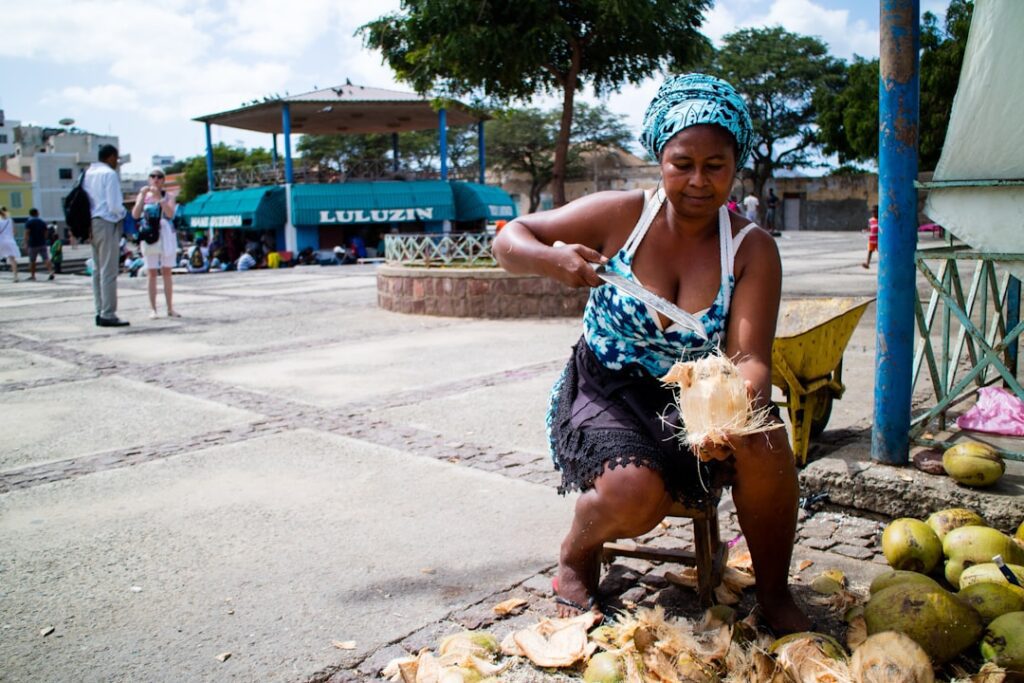
Woman in blue tank top sitting on green boat during daytime, Ribeira Brava, Cape Verde
| Category | Budget | Mid-range | Luxury |
|---|---|---|---|
| Accommodation | Guesthouse: 2,500-4,000 CVE/night | Boutique Hotel: 6,000-9,000 CVE/night | Full-service Hotel: 10,000+ CVE/night |
| Meals | Local *tasca* meal: 400-600 CVE | Restaurant dinner: 800-1,500 CVE | Fine dining (limited): 2,000+ CVE |
| Transport | *Aluguer* rides: 100-300 CVE | Taxi day hire: 5,000 CVE | Private driver/4×4 tours: 8,000+ CVE |
| Activities | Hiking, beach visits: Free | Guided hike: 2,500 CVE, Museum entry: 200 CVE | Private boat trip, bespoke cultural tours |
| Daily Total | 3,500 – 5,500 CVE ($35-$55) | 9,000 – 15,000 CVE ($90-$150) | 20,000+ CVE ($200+) |
Top Attractions and Must-See Sights
| Attraction | Description | Hours | Entry Fee |
|---|---|---|---|
| Sé Catedral & Town Square | The heart of Ribeira Brava, where you can admire colonial-era buildings and watch daily life unfold under the shade of large trees. | Always accessible; Cathedral varies. | Free (donation appreciated) |
| Museu do Mar | A small but fascinating museum detailing the island’s relationship with the Atlantic, from whaling history to fishing traditions. | Mon-Fri 9am-12pm & 2pm-5pm | 200 CVE (~$2) |
| Monte Gordo Natural Park | A breathtaking volcanic crater and the island’s highest peak (1,312m), offering panoramic hikes through unique endemic flora like the Dragon Tree. | Daylight hours | Free (Guide recommended: 2,500 CVE) |
| Praia da Luz | A beautiful black-and-white pebble beach a short drive away, perfect for a refreshing (and bracing) swim away from the crowds. | Always accessible | Free |
3-Day Itinerary: Ribeira Brava, Cape Verde’s Highlights & Hidden Gems
Day 1: Colonial Heart & Kriolu Rhythms
- Morning (7-9 AM): Start with a *pastel* (fried pastry) and coffee at a bakery like **Padaria Central**. Then, wander the quiet, cobbled streets around the **Sé Catedral**, photographing the pastel-colored colonial facades in the soft morning light.
- Afternoon (12-3 PM): Visit the **Museu do Mar** to understand the island’s seafaring soul. For lunch, head to **Restaurante Belo Horizonte** for a heaping plate of fresh grilled *garoupa* (grouper) with rice and beans for about 800 CVE.
- Evening (6-8 PM): Join locals for the evening *passeio* (stroll) in the main square. Enjoy a *Strela* beer at an outdoor table and listen for impromptu *morna* music. For dinner, try **Casa de Pasto Avenida** for a homestyle *Cachupa*.
Day 2: Mountain Majesty & Island Vistas
- Morning (8 AM): Hire a taxi (approx. 5,000 CVE round-trip with wait) for the drive up to **Monte Gordo Natural Park**. Hike the rim of the ancient crater – the views over the island and ocean are staggering. The air is cool and fragrant with wild herbs.
- Afternoon (1 PM): Descend and have your driver take you to **Fajãzinha**, a tiny hamlet clinging to cliffs. Enjoy a simple lunch of omelet and bread at a local family’s house (arrange through your driver).
- Evening (6 PM): Return to Ribeira Brava. For a special dinner, book a table at **Pensão Martinho**, known for its seafood and warm hospitality. Afterward, see if there’s a live music session at a local bar—ask around, as they’re rarely advertised.
Day 3: Coastal Escape & Cultural Immersion
- Morning (9 AM): Take a taxi to the striking **Praia da Luz** (20 mins, ~1,500 CVE). Swim in the clear waters and hunt for unique striped pebbles. The powerful Atlantic waves here are a sight to behold.
- Afternoon (12:30 PM): Head back towards town and stop at the **Ribeira Prata** agricultural valley for a walk among banana and sugar cane plantations. Have lunch at a roadside stall selling *cuscus* (steamed corn flour) with fresh goat cheese.
- Evening (5 PM): Back in town, visit the **Mercado Municipal** before it closes to see the day’s fresh produce. Your final evening calls for a *grogue* (local sugarcane spirit) at a simple bar like **Taberna Kriola**. Savor the slow pace and genuine smiles.
Cultural Insights & Etiquette
- Language: Portuguese is official, but Kriolu is spoken by all. Key phrases: “*Bon dia*” (Good day), “*Obrigadu/a*” (Thank you, m/f), “*Kuzê ku sta?*” (How are you?). Locals appreciate any effort.
- Customs: Greetings are important. Always say “bom dia” or “boa tarde” when entering a shop or cafe. Personal connections matter; a short, friendly chat is customary before business.
- Tipping: Not obligatory but appreciated. Round up taxi fares, leave 5-10% in sit-down restaurants if service was good. For guides, 500-1,000 CVE is a generous tip.
- Dress Code: Casual but modest is key, especially outside the town center. Swimwear is for the beach only. Cover shoulders and knees when visiting churches or rural villages.
- Business Hours: Shops typically open 8am-12:30pm and 3pm-7pm. Many close on Sunday. “Cape Verdean time” is relaxed; patience is a virtue.
Where to Eat: Ribeira Brava, Cape Verde’s Best Bites
Dining in Ribeira Brava is about hearty, honest food. You’ll find few fancy menus, but an abundance of flavor in family-run *tascas* (taverns) and *casas de pasto* (guesthouse restaurants). The focus is on fresh fish, slow-cooked stews, and locally grown produce.
Must-Try Local Specialties
- Cachupa Rica: The national dish, a slow-cooked stew of corn, beans, cassava, sweet potato, and fish or meat. For the best, find a *tasca* that has it simmering all day.
- Lagosta Grelhada: Grilled spiny lobster, often caught locally. It’s a seasonal treat, so ask if it’s available. **Pensão Martinho** often has the freshest catch.
- Grogue: The potent local spirit made from sugarcane. Try it neat, or as a *ponche* (with honey and lemon). Visit the **Grogue Factory** in nearby Ribeira Prata for a tasting.
Restaurant Recommendations by Budget
| Type | Restaurant | Specialty | Price Range |
|---|---|---|---|
| Budget | Casa de Pasto Avenida (Town Center) | Homestyle *Cachupa* and daily plates | 400-700 CVE |
| Mid-range | Restaurante Belo Horizonte (Near the square) | Superb grilled fish and seafood rice | 800-1,500 CVE |
| Fine dining | Pensão Martinho (Town Center) | Lobster, elegant local cuisine, best wine list | 1,500-2,500 CVE |
Where to Stay
Accommodation in Ribeira Brava is mostly small-scale, focusing on guesthouses and a few boutique hotels. Staying in the town center puts you within steps of everything. For more tranquility, look for *pensões* (guesthouses) on the quieter edges of town. Compare prices and book at Booking.com or Airbnb for apartments.
Best Neighborhoods for Accommodation
- Town Center (Centro): The most convenient location, steps from the cathedral, restaurants, and square. You’ll be in the heart of daily life. Can be livelier in the evenings. Perfect for first-time visitors who want to immerse themselves.
- Ribeira Brava Riverside: A quieter area along the riverbank, a 5-10 minute walk from the center. Offers peaceful sounds of nature and lovely garden settings. Ideal for travelers seeking relaxation after a day of exploration.
- Outskirts/Villages (e.g., Preguiça): For true seclusion, consider a rental in a nearby coastal village like Preguiça (near the airport). You’ll need a car, but you’ll get stunning ocean views and direct access to quieter beaches.

A group of people standing on top of a tarmac, Ribeira Brava, Cape Verde
FAQs: Your Ribeira Brava, Cape Verde Questions Answered
1. Is Ribeira Brava, Cape Verde safe at night?
Yes, it is generally very safe. Violent crime is rare. As in any town, practice basic common sense: avoid poorly lit, deserted areas late at night and keep valuables secure. The main square is often lively until late with locals, creating a natural, safe atmosphere.
2. What currency is used and are credit cards accepted?
The Cape Verdean Escudo (CVE) is the currency, pegged to the Euro (1 Euro = 110.265 CVE). Euros are sometimes accepted by larger hotels and tour operators, but you’ll get a better rate using escudos. Credit cards are accepted in some hotels and nicer restaurants

