
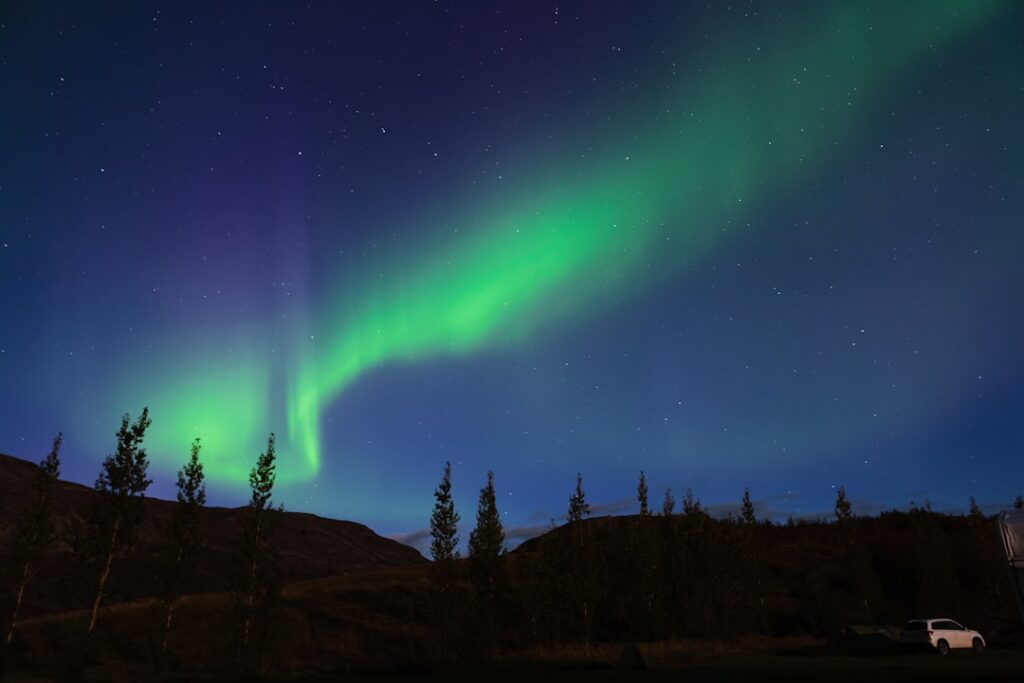
Northern Lights, Iceland’s Amazing Auroras, Geothermal Pools & Epic Landscapes (2026)
What if the most famous light show on Earth wasn’t the main event? Northern Lights, Iceland proves that chasing the Aurora Borealis is just the beginning. While visitors spend an average of 3 nights hunting the green ribbons, savvy travelers discover that Iceland’s true magic lies in the 20+ hours of daily adventure that fill the time between dusk and the celestial display. Here’s how to experience the full spectrum.
Why Northern Lights, Iceland Stands Out

Aurora borealis, Northern Lights, Iceland
- Historic Architecture: The turf-roofed Víðimýrarkirkja church, built in 1834, is a stunning example of traditional Icelandic architecture, blending seamlessly into the raw landscape.
- Cultural Scene: The annual Þorrablót mid-winter festival, held from late January to late February, features traditional foods like fermented shark and celebrates ancient Norse traditions under the dark skies.
- Local Specialties: You must try a steaming bowl of Kjötsúpa, a hearty lamb and vegetable soup that is the ultimate comfort food after a cold night of aurora hunting.
Pro Tip: For the optimal Northern Lights experience, plan your trip between late September and late March, but specifically target the weeks around the equinoxes in September and March. Solar activity is typically higher, and the weather is more volatile, which can actually help clear the skies. Book a multi-night stay to increase your odds—statistically, a 3-night stay gives you an 80% chance of a sighting.
Map of Northern Lights, Iceland
Use these interactive maps to explore Northern Lights, Iceland and plan your route:
📍 View Northern Lights, Iceland on OpenStreetMap
🗺️ Open Northern Lights, Iceland in Google Maps
Planning Your Trip: Practical Essentials
Getting There and Around
- By Air: You’ll fly into Keflavík International Airport (KEF), about 50 minutes from Reykjavík. Icelandair and PLAY are the main carriers, with many European and North American connections. The Flybus shuttle is your best bet for transfers to the capital. Book flights at Skyscanner for best deals.
- By Train: Iceland has no public railway system. Long-distance travel is by road, bus, or domestic air.
- By Car: Renting a 4×4 vehicle is highly recommended, especially in winter. The Ring Road (Route 1) circles the island. Always check Road.is for weather and road conditions. Compare car rentals at RentalCars.com.
- Local Transport: In Reykjavík, Strætó buses are reliable. For aurora hunting outside the city, you’ll need to join a tour or drive. Multi-day bus passes are available for city exploration.
Best Time to Visit
Your ideal time depends entirely on your priorities: midnight sun adventures or dark sky aurora chasing. The shoulder seasons offer a compelling mix of both worlds with fewer visitors.
| Season | Weather | Highlights |
|---|---|---|
| Summer (Jun–Aug) | 7°C to 13°C (45°F to 55°F), nearly 24-hour daylight, least precipitation. | Hiking, midnight sun, accessible highlands, puffin watching. No Northern Lights. Busy and expensive. |
| Winter (Dec–Feb) | -3°C to 3°C (27°F to 37°F), 4-5 hours of daylight, snow and storms common. | Prime Northern Lights viewing, ice caves, frozen waterfalls, cozy atmosphere. Challenging driving conditions. |
| Shoulder (Apr–May/Sep–Oct) | 0°C to 10°C (32°F to 50°F), more daylight than winter, unpredictable mix of sun/snow. | Good aurora potential, lower prices, fewer crowds, accessible landscapes. A savvy traveler’s sweet spot. |
Budgeting for Northern Lights, Iceland

Aurora borealis on night sky, Northern Lights, Iceland
| Category | Budget | Mid-range | Luxury |
|---|---|---|---|
| Accommodation | Hostel dorm: 5,000-8,000 ISK/night | Hotel/guesthouse double: 25,000-40,000 ISK/night | Boutique hotel/remote lodge: 60,000+ ISK/night |
| Meals | Hot dog or soup from a stall: 800-1,500 ISK | Restaurant main course: 3,500-6,000 ISK | Chef’s tasting menu: 15,000+ ISK |
| Transport | Bus day pass (Reykjavík): 1,900 ISK | Economy rental car: 10,000-15,000 ISK/day | 4×4 rental with insurance: 20,000+ ISK/day |
| Activities | Public pools: 1,200 ISK, free hiking | Guided aurora tour: 10,000 ISK, Blue Lagoon: 9,990 ISK | Private super jeep tour: 50,000+ ISK, helicopter flightseeing |
| Daily Total | 15,000-20,000 ISK (~$110-$145) | 50,000-70,000 ISK (~$360-$510) | 120,000+ ISK (~$870+) |
Top Attractions and Must-See Sights
| Attraction | Description | Hours | Entry Fee |
|---|---|---|---|
| The Blue Lagoon | A surreal, milky-blue geothermal spa set in a black lava field, perfect for pre-aurora relaxation. | Varies by season, typically 8:00-22:00 | From 9,990 ISK (Comfort Package) |
| Jökulsárlón Glacier Lagoon | Where giant icebergs calve from a glacier and float to sea, often with seals playing amongst them. | Open 24/7; boat tours 9:00-19:00 (summer) | Free to view; boat tours from 6,900 ISK |
| Thingvellir National Park | A UNESCO site where you can walk between the North American and Eurasian tectonic plates. | Visitor Center 9:00-17:00; park open 24/7 | Parking fee: 750 ISK per car |
| Skógafoss & Seljalandsfoss Waterfalls | Two iconic falls; walk behind the curtain of Seljalandsfoss or brave the spray at mighty Skógafoss. | Open 24/7 | Free |
3-Day Itinerary: Northern Lights, Iceland’s Highlights & Hidden Gems
Day 1: Reykjavík & The Golden Circle Warm-Up
- Morning (7-9 AM): Start at the iconic Hallgrímskirkja church (free entry to the hall, 1,300 ISK for the tower) for panoramic city views in the soft morning light.
- Afternoon (12-3 PM): Drive the Golden Circle. See Geysir erupt every 5-10 minutes, then walk the dramatic rift at Thingvellir. Grab lunch at Friðheimar greenhouse restaurant for tomato soup and fresh bread grown right beside your table (around 3,500 ISK).
- Evening (6-8 PM): Soak at the Secret Lagoon (3,000 ISK) in Flúðir, a less crowded geothermal pool. Have dinner at Messinn in Reykjavík for incredible pan-fried Arctic char (around 5,000 ISK), then join a guided Northern Lights bus tour from the city (approx. 10,000 ISK).
Day 2: South Coast Waterfalls & Black Sand Beaches
- Morning (8 AM): Drive east along Route 1. Your first stop is Seljalandsfoss (free, parking 800 ISK). Don a waterproof jacket and walk the path behind the powerful cascade.
- Afternoon (12-3 PM): Continue to Skógafoss, then visit the black sand beach at Reynisfjara. Respect the waves—they are deadly and unpredictable. For lunch, stop at Suður-Vík in Vík for a hearty burger or fish stew (around 3,000 ISK).
- Evening (6 PM): Check into a countryside guesthouse near Vík. After a local dinner, your best bet for auroras is to drive a short distance away from town lights to a spot like the Dyrhólaey peninsula (weather permitting).
Day 3: Glaciers & Glacial Lagoons
- Morning (7 AM): Drive to Jökulsárlón Glacier Lagoon (2.5 hours from Vík). Arrive early to see the icebergs glow in the sunrise. Book a 40-minute amphibious boat tour (6,900 ISK) to glide amongst the ice.
- Afternoon (12-3 PM): Walk across the road to the “Diamond Beach,” where icebergs wash ashore on black sand. For lunch, the Hali Country Hotel restaurant offers excellent soup and sandwiches with a view (around 2,500 ISK). On the drive back, consider a guided ice cave tour from Vatnajökull National Park (from 17,000 ISK, must be pre-booked).
- Evening (6 PM): Return towards Reykjavík. For a final, memorable dinner, book a table at Moss Restaurant at the Blue Lagoon for a high-end Icelandic tasting menu (from 19,900 ISK), or enjoy a more casual farewell meal in the capital.
Cultural Insights & Etiquette
- Language: Icelandic is the official language, but English is fluently spoken by almost everyone. Learning “Takk” (Thank you) and “Góðan daginn” (Good day) is appreciated.
- Customs: Icelanders value punctuality, humility, and direct communication. Always remove your shoes when entering someone’s home. The concept of “þetta reddast” (“it will all work out”) reflects a relaxed, resilient national attitude.
- Tipping: Tipping is not expected or customary in Iceland. Service charges are included in all prices. You can round up the bill for exceptional service, but it’s not required.
- Dress Code: Practical, warm, and waterproof layers are essential, not a fashion statement. For dining, even in nice restaurants, smart-casual is perfectly acceptable—comfort from a day of exploring is understood.
- Business Hours: Typical shop hours are 10:00-18:00 on weekdays, shorter on weekends. Grocery stores close earlier. Many attractions have reduced hours or close entirely in the deep winter, so always check ahead.
Where to Eat: Northern Lights, Iceland’s Best Bites
Icelandic cuisine is a story of survival and innovation, moving from preserved meats and fish to a vibrant New Nordic scene focused on pristine local ingredients like lamb, skyr, and Arctic char.
Must-Try Local Specialties
- Lamb: Icelandic free-roaming lamb is exceptionally tender and flavorful. Try it as a roast, in a soup (Kjötsúpa), or as a hearty stew. Íslenski Barinn in Reykjavík does an excellent lamb shank.
- Skyr: This thick, protein-rich dairy product is a staple breakfast or snack. Try it plain with berries or in a smoothie. Look for the Siggi’s brand or any local version.
- Hot Dog (Pylsa): The iconic Icelandic hot dog from Bæjarins Beztu Pylsur in Reykjavík, topped with crispy onions, raw onions, remoulade, ketchup, and mustard, is a rite of passage.
Restaurant Recommendations by Budget
| Type | Restaurant | Specialty | Price Range |
|---|---|---|---|
| Budget | Bæjarins Beztu Pylsur (Reykjavík) | Classic Icelandic hot dog with “the works” | 700 ISK |
| Mid-range | Messinn (Reykjavík) | Fresh, pan-fried fish and seafood served in skillets | 3,500-6,000 ISK |
| Fine dining | Dill (Reykjavík) | Innovative New Nordic tasting menus celebrating foraged and local ingredients | 15,900 ISK+ for tasting menu |
Where to Stay
Accommodation ranges from stylish city design hotels to remote farm stays and cozy countryside guesthouses. Booking well in advance is crucial, especially for summer and the Northern Lights season. Compare prices and book at Booking.com or Airbnb for apartments.
Best Neighborhoods for Accommodation
- Reykjavík 101 (Downtown): The historic heart, full of colorful houses, cafes, and bars. Perfect for first-time visitors who want to walk everywhere. Can be noisy on weekends.
- Countryside Guesthouses (South Coast/Vík): Offers peace, stunning views, and darker skies for aurora viewing from your doorstep. Requires a car and planning for meals.
- Mývatn Region (North Iceland): A geothermal wonderland with fewer crowds than the south. Ideal for a more rugged, nature-focused trip and excellent Northern Lights potential.

Aurora lights, Northern Lights, Iceland
FAQs: Your Northern Lights, Iceland Questions Answered
1. Is Northern Lights, Iceland safe at night?
Iceland is one of the safest countries in the world. Crime is extremely low. The primary dangers at night are natural: extreme weather, icy roads, and treacherous coastal waves. Never venture onto glaciers or close to the ocean’s edge without a guide, and always check the aurora and weather forecasts before driving into the darkness.
2. What currency is used and are credit cards accepted?
The currency is the Icelandic Króna (ISK). Credit and debit cards (especially Visa and Mastercard) are used for absolutely everything, even tiny purchases like a coffee or a public toilet. You can easily travel without ever taking out cash. Contactless payment is ubiquitous.
3. How do I get from the airport to the city center?
Keflavík Airport is 50km from Reykjavík. The most convenient options are the Flybus (approx. 4,000 ISK one-way) or the Airport Direct shuttle (similar price),

