
Nile River, Egypt: Best Timeless Monuments, Riverine Serenity & Living History (2026)
Just before dawn, the Nile’s surface transforms into a mirror of liquid gold, reflecting the first light as felucca sails begin to silhouette against the horizon. The air carries the scent of jasmine and baking bread from riverside villages, while the distant call to prayer mingles with the gentle lapping of water against ancient stone. This is the Nile’s daily rebirth, a 4,132-mile artery that has sustained a civilization for over 5,000 years, offering not just a journey through Egypt, but a voyage through time itself.
Why Nile River, Egypt Stands Out

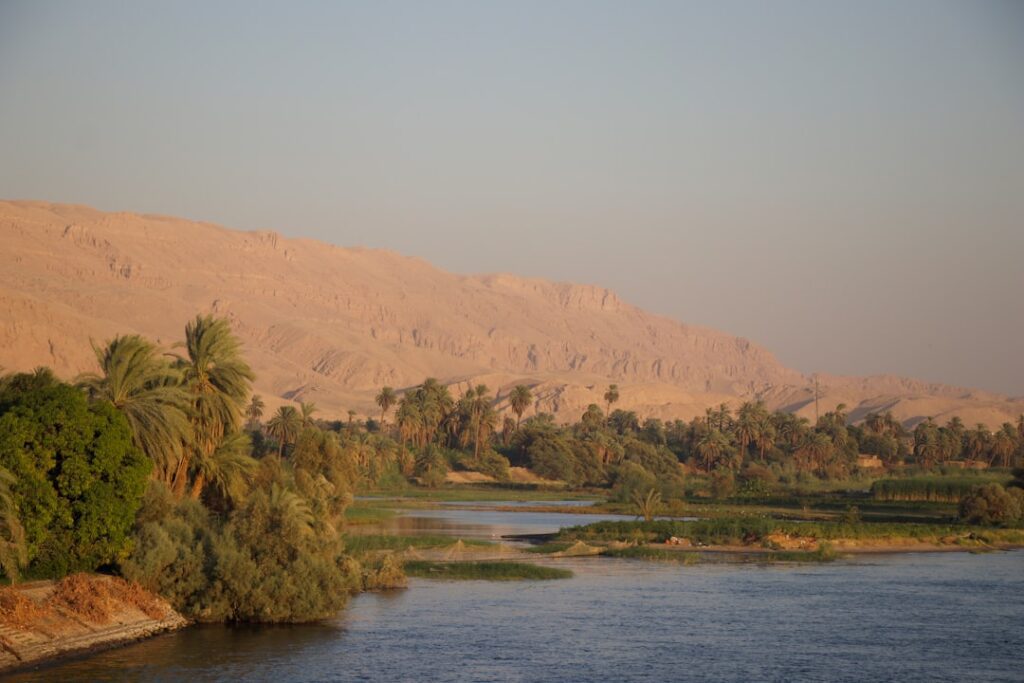
A body of water surrounded by palm trees, Nile River, Egypt
- Historic Architecture: The Temple of Karnak, constructed over 2,000 years starting in 2055 BC, is a vast open-air museum of obelisks, pylons, and hypostyle halls where you can literally walk through epochs of pharaonic ambition.
- Cultural Scene: The Abu Simbel Sun Festival, occurring twice a year on February 22 and October 22, illuminates the inner sanctum of Ramses II’s temple with a precise solar alignment, a 3,200-year-old astronomical feat celebrated with music and local Nubian culture.
- Local Specialties: You must try *Ful Medames*, a slow-cooked fava bean stew seasoned with cumin, garlic, and lemon, traditionally eaten for breakfast from communal copper pots in local *ahwas* (coffee shops).
Pro Tip: For the perfect Nile cruise, book the shoulder seasons of March-April or October-November. You’ll avoid the scorching summer heat and peak winter crowds. Savvy travelers book a south-to-north (Aswan to Luxor) cruise to follow the Nile’s current, making for a smoother, slightly faster journey.
Map of Nile River, Egypt
Use these interactive maps to explore Nile River, Egypt and plan your route:
📍 View Nile River, Egypt on OpenStreetMap
🗺️ Open Nile River, Egypt in Google Maps
Planning Your Trip: Practical Essentials
Getting There and Around
- By Air: Major international gateways are Cairo International (CAI) and Luxor International (LXR). EgyptAir offers domestic connections to Aswan (ASW). For Nile cruises, most travelers fly into Luxor or Aswan. Book flights at Skyscanner for best deals.
- By Train: The overnight Watania Sleeping Train connects Cairo to Aswan (12-13 hours) and Luxor (9-10 hours), offering private cabins. Daytime seated trains are cheaper but less comfortable. Reserve tickets at Trainline or the national railway website.
- By Car: Driving along the Nile Valley is possible but challenging due to local driving norms and checkpoints. Most visitors hire a private driver with a guide. A 3-day driver service from Luxor to Aswan costs ~$250. Compare car rentals at RentalCars.com.
- Local Transport: The most iconic transport is the felucca (traditional sailboat). A 2-hour sunset sail in Aswan costs ~100 EGP ($2). Between sites, use taxis (always agree on price first) or horse-drawn carriages (*hantours*) in Luxor for short trips (~50 EGP).
Best Time to Visit
The ideal time for a Nile journey balances pleasant weather with manageable crowds. Winter offers sunny days and cool nights, perfect for temple exploration, but draws the highest number of visitors. The sweet spot is the shoulder seasons.
| Season | Weather | Highlights |
|---|---|---|
| Summer (Jun–Aug) | Extremely hot, 95-104°F (35-40°C), dry, intense sun. | Lowest prices and crowds, but sightseeing is best done at dawn; pool time on cruise ships is essential. |
| Winter (Dec–Feb) | Mild & sunny, 65-75°F (18-24°C), cool nights. | Perfect daytime exploration weather; however, this is peak season with highest prices and crowds at major sites. |
| Shoulder (Mar–Apr/Oct–Nov) | Warm & pleasant, 75-88°F (24-31°C), low humidity. | The best balance: comfortable temperatures, thinner crowds, and good value on cruises and hotels. |
Budgeting for Nile River, Egypt

A large body of water with a city in the background, Nile River, Egypt
| Category | Budget | Mid-range | Luxury |
|---|---|---|---|
| Accommodation | Hostel/guesthouse: 300-600 EGP ($6-$12) | 3-4* Hotel: 1,200-2,500 EGP ($25-$50) | 5* Hotel/Dahabiya: 5,000+ EGP ($100+) |
| Meals | Street food/Koshary: 30-80 EGP ($0.60-$1.60) | Local restaurant: 150-300 EGP ($3-$6) | Fine dining/hotel: 800+ EGP ($16+) |
| Transport | Local trains/felucca: 50-150 EGP ($1-$3) | Taxis/private car for day: 600-1,000 EGP ($12-$20) | Private driver & guide: 2,000+ EGP ($40+) |
| Activities | Temple entry (avg): 200-300 EGP ($4-$6) | Guided half-day tour: 800 EGP ($16) | Private balloon ride + guide: 3,000 EGP ($60) |
| Daily Total | 600-1,200 EGP ($12-$25) | 3,000-5,000 EGP ($60-$100) | 10,000+ EGP ($200+) |
Top Attractions and Must-See Sights
| Attraction | Description | Hours | Entry Fee |
|---|---|---|---|
| Valley of the Kings (Luxor) | The burial ground of pharaohs like Tutankhamun, featuring elaborately painted tombs carved deep into desert mountains. | 6:00 AM – 5:00 PM (closes 4 PM in winter) | 260 EGP (Standard) + 300 EGP for Tut’s tomb |
| Temple of Philae (Aswan) | A stunning island temple dedicated to Isis, rescued from rising waters and meticulously relocated, showcasing Ptolemaic architecture. | 7:00 AM – 4:00 PM | 180 EGP + 100 EGP boat transfer |
| Karnak Temple Complex (Luxor) | The largest religious building ever constructed, a city of temples where you can wander for hours among colossal columns and obelisks. | 6:00 AM – 5:30 PM | 220 EGP |
| Abu Simbel Temples | Ramses II’s monumental Nubian cliff-face temples, an awe-inspiring feat of ancient engineering and modern archaeological rescue. | 5:00 AM – 6:00 PM | 275 EGP |
3-Day Itinerary: Nile River, Egypt’s Highlights & Hidden Gems
Day 1: Luxor’s East & West Banks
- Morning (5:30 AM): Hot air balloon ride over the West Bank (approx. $50). Seeing the Valley of the Kings and the Nile ribbon from the silent sky at sunrise is unforgettable.
- Afternoon (1:00 PM): Explore the Karnak Temple complex (allow 3 hours). For lunch, head to Snobs Restaurant on the Corniche for fresh Nile perch and a terrace view.
- Evening (6:00 PM): Sound and Light show at Karnak (200 EGP) followed by dinner at Sofra Restaurant & Café, a beautifully restored 1930s house serving authentic *molokhia* and stuffed pigeon.
Day 2: The Nile Journey & Esna
- Morning (8:00 AM): Check into your Nile cruise ship or traditional *dahabiya* sailboat. Settle in as you sail south, watching rural life unfold on the banks.
- Afternoon (2:00 PM): Disembark at Esna to visit the Temple of Khnum (100 EGP). Its beautifully preserved hypostyle hall, sunk 9 meters below modern street level, is a hidden gem often missed by larger ships.
- Evening (7:00 PM): Enjoy the captain’s welcome dinner on board as you moor overnight. Later, head to the top deck for stargazing—the desert sky is brilliantly clear.
Day 3: Edfu, Kom Ombo & Aswan Arrival
- Morning (7:00 AM): Horse carriage (20 EGP tip) to the magnificent Temple of Horus at Edfu (180 EGP), the best-preserved major temple in Egypt.
- Afternoon (1:00 PM): Sail to Kom Ombo, visiting the unique dual temple to Sobek and Horus (180 EGP) right on the riverbank. Visit the adjacent Crocodile Museum.
- Evening (6:00 PM): Arrive in Aswan. Disembark and take a sunset felucca ride around the botanical gardens on Kitchener’s Island. For dinner, try the legendary *kushari* at El-Tabiee Koshary downtown.
Cultural Insights & Etiquette
- Language: Arabic is official. Key phrases: *Shukran* (Thank you), *Salaam Alaikum* (Hello, peace be upon you), *La shukran* (No thank you). English is widely understood in tourist areas.
- Customs: Always use your right hand for eating and handing/receiving items. When invited for tea, it’s polite to accept at least one cup. Public displays of affection are frowned upon.
- Tipping: *Baksheesh* (tipping) is ingrained. Have small bills (5, 10, 20 EGP) for restroom attendants, anyone who offers a small service, or for photos where permitted. For guides/drivers, 10-15% is customary.
- Dress Code: Modesty is key. Cover shoulders and knees for both men and women, especially when visiting mosques or local villages. Light, loose, breathable fabrics are best.
- Business Hours: Many sites close for Friday prayers (11:30 AM – 1:30 PM). Government offices work Sunday-Thursday. Shops in bazaars often stay open late.
Where to Eat: Nile River, Egypt’s Best Bites
Egyptian cuisine is a hearty, flavorful blend of Mediterranean and Middle Eastern influences. Dining is a social affair. Don’t just eat—linger over tea, smoke a shisha (water pipe), and soak in the atmosphere.
Must-Try Local Specialties
- Koshary: Egypt’s national comfort food: a carb-lover’s dream of lentils, rice, pasta, chickpeas, crispy onions, and a spicy tomato-vinegar sauce. Best at dedicated *koshary* shops like Koshary Abou Tarek in Luxor.
- Molokhia: A savory green soup made from jute leaves, cooked with garlic and coriander, usually served with rabbit or chicken over rice. Find it at traditional restaurants like Luxor’s Sofra.
- Ta’ameya (Egyptian Falafel): Made with fava beans instead of chickpeas, resulting in a greener, fluffier interior. Grab it fresh from a street vendor for breakfast with *foul*.
Restaurant Recommendations by Budget
| Type | Restaurant | Specialty | Price Range |
|---|---|---|---|
| Budget | Koshary El-Tabei (Aswan) | The city’s best *koshary*, served fast and fresh. | 20-40 EGP ($0.40-$0.80) |
| Mid-range | Al-Sahaby Lane (Luxor) | Rooftop terrace with direct view of Luxor Temple, great for mixed grills and mezze. | 150-300 EGP ($3-$6) |
| Fine dining | 1902 Restaurant (Old Cataract Hotel, Aswan) | Opulent colonial-era dining room where Agatha Christie wrote; French-influenced fine dining. | 1,200+ EGP ($24+) |
Where to Stay
Your base defines your Nile experience. Luxor is the historical heart, Aswan offers Nubian culture and relaxation, and a cruise ship is your moving hotel. Compare prices and book at Booking.com or Airbnb for apartments.
Best Neighborhoods for Accommodation
- Luxor East Bank (Corniche): The main tourist hub, walking distance to Luxor Temple and the museum. You’ll find a range of hotels, but it can be bustling. Ideal for first-timers who want convenience.
- Aswan (Elephantine Island or City Center): Staying on Elephantine Island (e.g., Movenpick Resort) offers tranquility and stunning views. The city center is better for budget options and easy access to the souk.
- On the Nile (Cruise/Dahabiya): The most immersive option. Large cruise ships offer all amenities and fixed itineraries. For a more intimate, authentic sail, book a *dahabiya*—a traditional sailboat with fewer cabins.

A body of water with buildings along it, Nile River, Egypt
FAQs: Your Nile River, Egypt Questions Answered
1. Is Nile River, Egypt safe at night?
Major tourist areas like Luxor’s Corniche and Aswan’s waterfront are generally safe and well-patrolled at night. However, it’s always wise to stay in well-lit, populated areas. Avoid isolated streets. When taking taxis at night, use those recommended by your hotel. Solo travelers, especially women, should exercise standard precautions.
2. What currency is used and are credit cards accepted?
The Egyptian Pound (EGP or LE) is the local currency. While major hotels, cruise ships, and high-end restaurants accept credit cards (Visa/Mastercard), cash is king in the souks, for taxis, street food, and tipping. ATMs are widely available in cities. Always carry a mix of small bills for *baksheesh*.
3. How do I get from the airport to the city center?
From Luxor International (LXR), a pre-booked private transfer to hotels costs ~150-200 EGP ($3-$4). Official airport taxis use a fixed-fare system (posted). From Aswan Airport (ASW), a taxi to town is ~

