
New Hanover, Papua New Guinea: Essential Uncharted Islands, Ancient Cultures & Untouched Reefs (2026)
While crowds flock to Rabaul for its volcano or Kavieng for its diving, New Hanover, Papua New Guinea delivers a profound sense of discovery without a single souvenir shop in sight. Here, you won’t find a single traffic light, but you will find over 20 distinct languages spoken across its 460 square miles and a cultural tapestry woven from millennia of isolation. This is the real Papua New Guinea, where the concept of tourism is still being gently introduced by the welcoming Lavongai people.
Why New Hanover, Papua New Guinea Stands Out

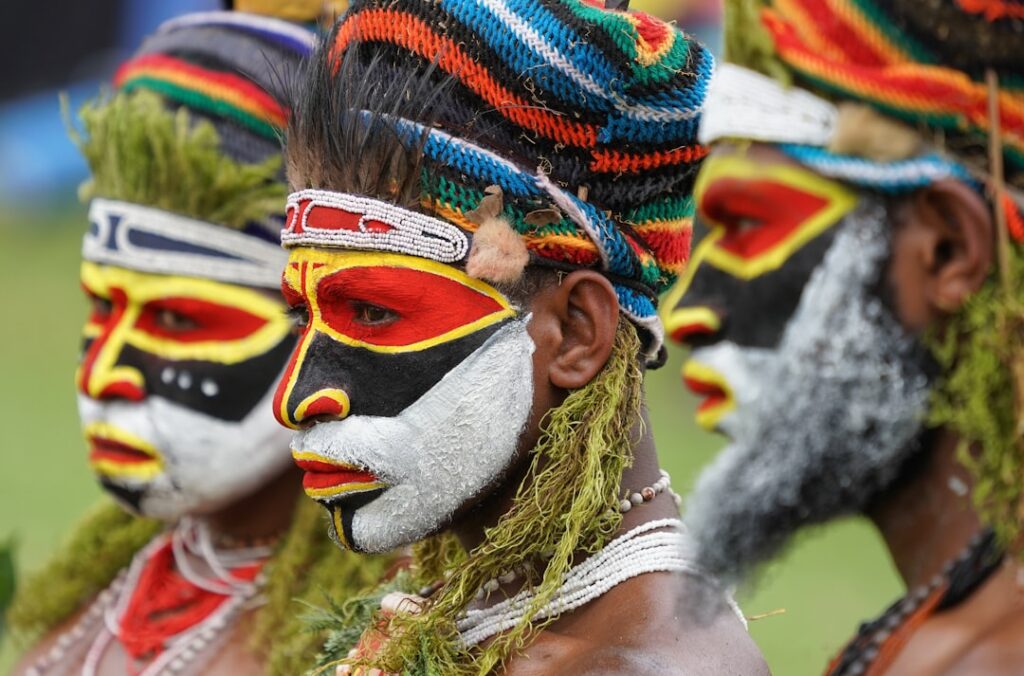
People in black and white costume, New Hanover, Papua New Guinea
- Historic Architecture: The 1908 St. Andrew’s Catholic Mission at Tiang, a remnant of German colonial influence, stands as a weathered sentinel overlooking the Bismarck Sea.
- Cultural Scene: The vibrant Malagan ceremonies, intricate funerary rites where towering, painted wood carvings honor the deceased, are a profound and visually stunning cultural experience.
- Local Specialties: You must try Mumu, a feast where pork, sweet potatoes, and greens are slow-cooked with hot stones in an earth oven, infusing a unique smoky flavor.
Pro Tip: The absolute best time to visit is during the drier months from May to October. For a truly special experience, coordinate with a local guide to align your trip with a village festival, which often occur around July and August; this requires planning months in advance through a reputable tour operator.
Map of New Hanover, Papua New Guinea
Use these interactive maps to explore New Hanover, Papua New Guinea and plan your route:
📍 View New Hanover, Papua New Guinea on OpenStreetMap
🗺️ Open New Hanover, Papua New Guinea in Google Maps
Planning Your Trip: Practical Essentials
Getting There and Around
- By Air: The main gateway is via Port Moresby (POM) to Kavieng (KVG) on Air Niugini. From Kavieng, you must take a small charter plane (Airlines PNG or MAF) to the grass airstrip at Lavongai, or arrange a 2-3 hour boat transfer. Book flights at Skyscanner for best deals.
- By Train: No train service exists in Papua New Guinea, let alone to the remote islands of New Ireland Province.
- By Car: There are no car rental agencies. Transport is by 4WD vehicle on rough logging tracks or by boat along the coast, arranged through your guesthouse or guide. Compare car rentals for mainland PNG at RentalCars.com.
- Local Transport: Your primary modes are walking, local PMVs (Public Motor Vehicles – often open-backed trucks), and outrigger canoes or motorized dinghies for coastal travel. A short PMV ride between villages may cost 5-10 PGK.
Best Time to Visit
New Hanover has a tropical climate. The key distinction is between the wet northwest monsoon (December to March) and the drier southeast trade wind season. Savvy travelers aim for the dry season for easier travel and clearer waters.
| Season | Weather | Highlights |
|---|---|---|
| Dry Season (May–Oct) | 26-30°C (79-86°F), lower humidity, less rain, calmer seas. | Ideal for diving, trekking, and village visits; peak festival period; reliable transport. |
| Wet Season (Dec–Mar) | 27-32°C (81-90°F), high humidity, daily heavy rainfall, rough seas. | Lush, vibrant greenery; fewer visitors; cultural life continues indoors; travel can be disrupted. |
| Shoulder (Apr/Nov) | Transitional weather, sporadic rain showers, variable winds. | Potential for good weather at lower prices; a quieter, more spontaneous experience. |
Budgeting for New Hanover, Papua New Guinea

Green trees on island surrounded by water during daytime, New Hanover, Papua New Guinea
| Category | Budget | Mid-range | Luxury |
|---|---|---|---|
| Accommodation | 150-250 PGK/night (basic guesthouse) | 400-700 PGK/night (full-board lodge) | 800+ PGK/night (exclusive island camp) |
| Meals | 30-50 PGK (market food, simple guesthouse meals) | 70-120 PGK (lodge meals, village feast contribution) | 150+ PGK (private chef/catered experiences) |
| Transport | 10-30 PGK (local PMV/boat trips) | 200-500 PGK/day (private boat/guide hire) | 600+ PGK/day (private charter flights/boats) |
| Activities | Free (village walks, snorkeling from shore) | 100-300 PGK (guided trek, cultural show fee) | 400+ PGK (private dive trips, specialized tours) |
| Daily Total | 200-350 PGK | 800-1600 PGK | 2000+ PGK |
Note: 1 USD ≈ 3.8 PGK (Papua New Guinea Kina). Almost everything must be paid in cash. The “Mid-range” column reflects the most common and practical traveler experience here.
Top Attractions and Must-See Sights
| Attraction | Description | Hours | Entry Fee |
|---|---|---|---|
| The Lavongai (Tiger) Island Coastline | A stunning mix of black sand beaches, coral coves, and traditional stilt villages over turquoise water. | Daylight hours | Free (boat hire required) |
| Mount Deimling (Riverside) Trek | A challenging hike through pristine rainforest to a viewpoint offering panoramic island vistas. | Start by 7 AM | ~100 PGK (includes guide) |
| Numundo & Nusa Island Reefs | World-class snorkeling and diving on untouched coral walls teeming with pelagic fish and turtles. | Daylight hours | Free to snorkel (gear & boat extra) |
| Traditional Village (e.g., Patio, Kabil) | Experience daily life, see intricate carvings, and learn about the complex Tolai and Lavongai cultures. | Visit by invitation/arrangement | 50-100 PGK (customary gift/contribution) |
3-Day Itinerary: New Hanover, Papua New Guinea’s Highlights & Hidden Gems
Day 1: Arrival & Coastal Immersion
- Morning (7-9 AM): After arriving at Lavongai airstrip, transfer to your coastal lodge. Take a short walk to the black sand beach, where local fishermen are returning in their outrigger canoes. Your best bet is to simply observe and offer a friendly “Monin” (good morning in Tok Pisin).
- Afternoon (12-3 PM): Arrange a boat to the nearby stilt village of Patio. Witness the ingenious architecture over the water. For lunch, your lodge will pack a simple picnic of fresh fruit, cold taro, and perhaps some smoked fish.
- Evening (6-8 PM): Enjoy a sunset over the Bismarck Sea followed by your first lodge dinner, likely featuring freshly caught fish and local greens. Listen for the sounds of singing from a nearby village—a sign of community gathering.
Day 2: Culture & The Interior
- Morning (Early activity): With your guide, visit the Monday market at a central village like Lavongai. This is the social hub (~2 hours, free to browse). You’ll see baskets of bright betel nut, stacks of taro, and perhaps even rare shell money (Tabu).
- Afternoon: Travel inland to a village like Kabil for a curated cultural experience. You might see demonstrations of weaving or carving. A mumu feast may be prepared in your honor for lunch, a truly unforgettable culinary event.
- Evening: Return to your lodge. If arranged, local performers may put on a sing-sing (traditional dance) in the evening, a vibrant display of body paint, feathers, and rhythmic drumming.
Day 3: Marine Wonders & Departure
- Morning: Charter a motorized dinghy (~400 PGK for half-day) to the Numundo Reef area. Spend the morning snorkeling in crystal-clear water among giant clams, reef sharks, and kaleidoscopic coral gardens.
- Afternoon: Enjoy a final beachside lunch at your lodge. Take some time to purchase any directly offered handicrafts—carvings or baskets—from your guides or their families, ensuring your money supports the community.
- Evening: Transfer back to the airstrip for your charter flight to Kavieng, reflecting on the profound simplicity and genuine connection that defines a visit to New Hanover.
Cultural Insights & Etiquette
- Language: Tok Pisin is the lingua franca. Key phrases: “Tenkyu” (Thank you), “Plis” (Please), “Mi laik baim dispela” (I would like to buy this). English is understood by some, but not all.
- Customs: Always ask permission before taking photos of people. Respect is paramount. Entering villages often requires a small customary gift (like betel nut or a small cash contribution), arranged by your guide.
- Tipping: Not a standard practice. Instead, show appreciation through fair agreed-upon prices for services and small gifts (school supplies for children are often welcomed).
- Dress Code: Modest dress is essential. Women should wear skirts or dresses below the knee; men should avoid just wearing shorts in villages. Swimwear is only for the beach or boat.
- Business Hours: Follows “island time.” Shops are informal and may open based on need. Sunday is a day of rest and church; plan for very limited activity.
Where to Eat: New Hanover, Papua New Guinea’s Best Bites
Dining here is about experiencing local sustenance. There are no restaurants in the conventional sense. Meals are provided by your accommodation or shared in villages. The cuisine is simple, fresh, and based on what the land and sea provide: fish, root vegetables (taro, sweet potato, yam), greens (aibika), coconut, and tropical fruit like pawpaw (papaya) and pineapple.
Must-Try Local Specialties
- Mumu: The definitive feast. Pork, chicken, or fish is layered with root vegetables and greens, wrapped in banana leaves, and cooked for hours with hot stones in a pit. The flavor is uniquely earthy and smoky.
- Kokoda: PNG’s answer to ceviche. Fresh reef fish is “cooked” in lime juice and coconut cream, often with a hint of chili. It’s a refreshing, creamy delight.
- Saksak: A traditional pudding made from sago palm starch, mixed with coconut and often steamed in bamboo tubes. It has a gelatinous, comforting texture.
Restaurant Recommendations by Budget
| Type | Restaurant | Specialty | Price Range |
|---|---|---|---|
| Budget | Local Market Stalls (Lavongai) | Fresh fruit, roasted nuts, simple cooked bundles of taro. | 5-15 PGK |
| Mid-range | Lodge Meals (e.g., Lavongai Haven) | Daily set menus featuring the day’s catch and garden harvest. | 70-120 PGK per meal |
| Fine dining | Village Feast (by arrangement) | A full, ceremonial Mumu prepared specifically for guests. | 150-300 PGK (as a contribution) |
Where to Stay
Accommodation is basic, intimate, and often family-run. Options range from very simple guesthouses to a handful of comfortable, full-board lodges that act as your base for exploration. Electricity may be limited to generator hours. Compare prices and book at Booking.com for some listed lodges, but direct contact via phone/email is often more reliable.
Best Neighborhoods for Accommodation
- The Central West Coast (Near Lavongai Station): Offers the easiest access to the airstrip, basic supplies, and boat hire. It’s the logistical hub, though not the most scenic. Suits independent travelers and those on a tighter budget.
- The Northern Coastal Villages (e.g., Patio area): The most picturesque setting, with lodges overlooking stilt villages and reefs. Provides immediate access to snorkeling and a deep sense of place. Ideal for those seeking tranquility and beauty.
- Inland Guesthouses: A few families offer homestays further inland. This is for the true adventurer seeking deep cultural immersion, with very basic amenities. You’ll live as the family does.

A senior woman stands smiling amidst vibrant traditional Papua New Guinean …, New Hanover, Papua New Guinea
FAQs: Your New Hanover, Papua New Guinea Questions Answered
1. Is New Hanover, Papua New Guinea safe at night?
Personal safety from crime is generally very high in these remote villages, where community is everything. The primary safety concerns are environmental: using a flashlight at night to avoid snakes, being cautious on uneven paths, and respecting the power of the sea. Always travel with a trusted local guide after dark.
2. What currency is used and are credit cards accepted?
The currency is the Papua New Guinea Kina (PGK). You must bring all the cash you will need for your entire stay in small denominations. There are no ATMs and credit cards are not accepted anywhere on the island. Exchange money in Port Moresby or Kavieng before arriving.
3. How do I get from the airport to the city center?
From the Lavongai airstrip, you will be met by a representative from your pre-booked lodge or guide. They will provide transport via truck or boat to your accommodation, which is typically included in your stay package. Independent travel from the airstrip is not practical. For complex multi-destination tours in PNG, you can book services at GetYourGuide for convenience.
4. Do I need to speak the local language?
No, but it helps immensely to know basic Tok Pisin. English is spoken by lodge operators and some guides, but not by most villagers. Learning a few phrases (“Tenkyu,” “Em i hamas?” for “How much is this?”) demonstrates respect and greatly enriches interactions. A smile is a universal language.
5. What’s the appropriate dress code?
Modesty is non-negotiable. For village visits, women should wear loose-fitting dresses or skirts below the knee with shoulders covered. Men should wear trousers or long shorts and a shirt. Swimwear is strictly for private beach areas or on the boat. Pack quick-dry, lightweight fabrics and sturdy sandals or shoes.
Final Thoughts: New Hanover, Papua New Guinea Awaits
New Hanover is not a

