
New Britain, Papua New Guinea’s Incredible Diving, Volcanoes & Living Culture (2026)
While crowds flock to Bali or Cairns for their Pacific fix, New Britain, Papua New Guinea delivers some of the planet’s most pristine coral reefs and raw cultural encounters without the souvenir shops and backpacker bars. Here, you’ll find WWII wrecks overgrown by soft corals in crystal visibility, active volcanoes you can hike to the rim of, and vibrant Baining fire dancers whose traditions remain fiercely authentic. This is adventure travel in its purest, most unvarnished form.
Why New Britain, Papua New Guinea Stands Out

Colorful festival parade featuring participants in traditional attire and h…, New Britain, Papua New Guinea
- Historic Architecture: The hauntingly beautiful St. Mary’s Cathedral in Vunapope, built by German missionaries in 1904, stands as a testament to the island’s complex colonial past.
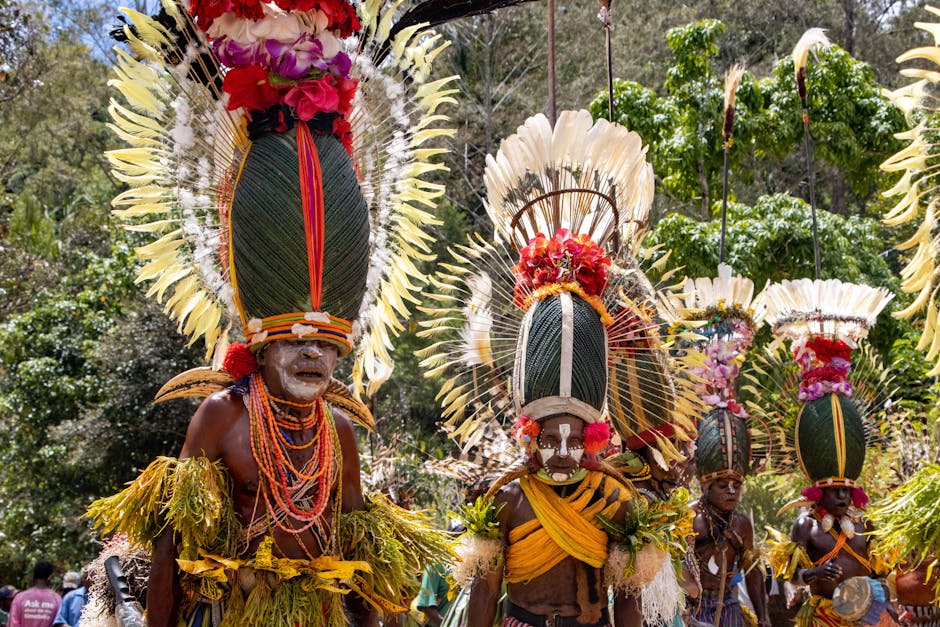
- Cultural Scene: The mesmerizing Baining Fire Dance, where dancers perform on hot coals wearing elaborate, towering masks made of bark and leaves, is a profound spiritual spectacle.
- Local Specialties: You must try a “mumu,” a traditional feast where chicken, pork, and root vegetables are slow-cooked with hot stones in an underground pit, infusing incredible smoky flavor.
Pro Tip: The absolute best time to visit is during the dry season, from May to October. For cultural immersion, aim for July to coincide with the National Mask Festival in Kokopo, but book accommodations a year in advance. Avoid the wet season (December to March) when heavy rains can disrupt road access and diving conditions.
Map of New Britain, Papua New Guinea
Use these interactive maps to explore New Britain, Papua New Guinea and plan your route:
📍 View New Britain, Papua New Guinea on OpenStreetMap
🗺️ Open New Britain, Papua New Guinea in Google Maps
Planning Your Trip: Practical Essentials
Getting There and Around
- By Air: The main international gateway is Tokua Airport (RAB), near Kokopo. Air Niugini and PNG Air connect from Port Moresby (1.5-hour flight). Book flights at Skyscanner for best deals.
- By Train: There are no passenger train services in Papua New Guinea. All long-distance travel is by air or sea.
- By Car: Renting a 4WD is essential for exploring beyond towns. Roads are often rough. Drivers require a local permit arranged by rental agencies. Compare car rentals at RentalCars.com.
- Local Transport: “PMVs” (Public Motor Vehicles) are shared minibuses and trucks, but schedules are erratic. For reliability, hire a private vehicle with a driver-guide through your lodge, which is the recommended option for most travelers.
Best Time to Visit
New Britain has a tropical climate. The key is timing your visit for optimal weather and cultural events, balancing drier conditions with the chance to witness unique festivals.
| Season | Weather | Highlights |
|---|---|---|
| Dry Season (May–Oct) | 24°C – 30°C (75°F – 86°F), lower humidity, minimal rain. | Best for diving, hiking, and general exploration. Peak season with higher prices. The National Mask Festival is in July. |
| Wet Season (Dec–Mar) | 25°C – 32°C (77°F – 90°F), high humidity, daily heavy downpours. | Lush scenery, fewer tourists, and lower prices. However, diving visibility can be reduced, and road travel often becomes difficult or impossible. |
| Shoulder (Apr & Nov) | Transitional weather; warm with increasing or decreasing showers. | A good compromise for fewer crowds and decent weather, though you may experience some rain. Ideal for travelers seeking a balance. |
Budgeting for New Britain, Papua New Guinea
Colorful tribal dancers in traditional attire at a cultural festival in Pap…, New Britain, Papua New Guinea
| Category | Budget | Mid-range | Luxury |
|---|---|---|---|
| Accommodation | PGK 150-250/night (basic guesthouse) | PGK 400-800/night (comfortable lodge/resort) | PGK 1000+/night (premium dive resort) |
| Meals | PGK 30-50 (market food, simple eateries) | PGK 70-120 (lodge restaurant meal) | PGK 150+ (fine dining at top resorts) |
| Transport | PGK 20-50 (PMV rides) | PGK 300-500/day (private 4WD with driver) | PGK 800+/day (private transfers & charters) |
| Activities | PGK 50 (village entry fee) | PGK 400-600 (two-tank dive) | PGK 1000+ (private guided volcano trek) |
| Daily Total | PGK 250-400 (~$70-110 USD) | PGK 1200-2000 (~$340-570 USD) | PGK 3000+ (~$850+ USD) |
Top Attractions and Must-See Sights
| Attraction | Description | Hours | Entry Fee |
|---|---|---|---|
| SS *President Coolidge* Dive | Explore the world’s largest accessible wreck, a WWII troopship teeming with marine life, in the Solomon Sea. | Dive trips depart 8 AM | ~PGK 600 for 2-tank dive |
| Mount Tavurvur Volcano | Hike to the rim of this famously active volcano near Rabaul for views into its steaming crater and over the dramatic caldera. | Accessible dawn to dusk; guide essential | PGK 100-200 guide fee + PGK 50 landowner fee |
| Baining Fire Dance | Witness this powerful, ancient ritual performed on glowing embers, usually arranged as a cultural show for visitors. | Evening performances by arrangement | PGK 150-300 per person |
| Rabaul (Kokopo) War & Volcano Museum | A poignant collection of WWII relics and volcanic memorabilia detailing the dual disasters that shaped the region. | Mon-Fri 9 AM – 4 PM | PGK 20 |
3-Day Itinerary: New Britain, Papua New Guinea’s Highlights & Hidden Gems
Day 1: Rabaul’s Volcanic Legacy & History
- Morning (7-9 AM): Depart early for the hike up Mount Tavurvur with a local guide (PGK 250). The cool morning air makes the climb more comfortable, and the views into the active crater are unforgettable.
- Afternoon (12-3 PM): Visit the buried WWII aircraft at the Vulcanology Observatory site, then have lunch at **Queen Elizabeth Restaurant** in Kokopo for their excellent grilled barramundi and views of the harbor.
- Evening (6-8 PM): Tour the compact but fascinating Rabaul (Kokopo) War & Volcano Museum before a relaxed dinner at **Kaivuna Restaurant**, known for its fresh seafood and local atmosphere.
Day 2: World-Class Wreck Diving
- Morning (7 AM): Board a dive boat from Kokopo for the 45-minute trip to the SS *President Coolidge*. Your first dive (PGK 600 for two tanks) often focuses on the iconic “Lady” statue and promenade deck, where coral gardens thrive.
- Afternoon: Surface interval lunch on the boat, followed by a second dive on another section of the wreck, like the engine room or the holds filled with WWII trucks and jeeps.
- Evening: After returning to shore, enjoy a well-earned drink and share stories with fellow divers at the bar of your resort. Dinner can be a simple, hearty meal at your lodge.
Day 3: Cultural Immersion & Inland Beauty
- Morning (8 AM): Take a 4WD (PGK 400 for transport) to a Baining village in the interior mountains. You’ll see mask-making demonstrations and learn about the significance of the designs, which represent spirits and animals.
- Afternoon: Enjoy a traditional “mumu” feast prepared by the village. Afterwards, visit the stunning Vunapope Cathedral and its peaceful grounds.
- Evening: If arranged, experience the breathtaking Baining Fire Dance as a night-time cultural performance—a truly powerful and mesmerizing finale to your journey.
Cultural Insights & Etiquette
- Language: Tok Pisin is the lingua franca. English is spoken in tourist areas. Useful phrases: “Tenkyu” (Thank you), “Gude” (Hello), “Mi laik baim dispela” (I would like to buy this).
- Customs: Always ask permission before taking photos of people. Respect “tabu” (forbidden) signs. When visiting villages, a small gift for the chief (like store-bought rice or sugar) is a respectful gesture.
- Tipping: Not a traditional practice, but a small tip (PGK 10-20) for exceptional service from a guide or driver is greatly appreciated.
- Dress Code: Modesty is key, especially for women. Cover shoulders and knees when in villages or towns. Swimwear is only for the beach or resort pool.
- Business Hours: Shops typically open 8 AM – 5 PM, Monday to Friday, with shorter hours on Saturday. Almost everything is closed on Sunday.
Where to Eat: New Britain, Papua New Guinea’s Best Bites
Dining revolves around fresh seafood, tropical fruits, and the hearty, earthy flavors of traditional “mumu” and “aigir” (food cooked in bamboo). Most exceptional meals are had at resort restaurants or through arranged village visits.
Must-Try Local Specialties
- Mumu: The ultimate celebratory dish. Pork, chicken, sweet potato, taro, and greens are wrapped in banana leaves and cooked for hours with hot stones in a pit. Best experienced in a village setting.
- Kokoda: PNG’s answer to ceviche. Fresh raw fish (often Spanish mackerel) is “cooked” in lime juice and coconut cream, mixed with chili and onion. Served at most lodges.
- Saksak: A traditional pudding made from sago palm starch, often steamed in banana leaves with coconut. It’s a staple carbohydrate with a neutral, chewy texture.
Restaurant Recommendations by Budget
| Type | Restaurant | Specialty | Price Range |
|---|---|---|---|
| Budget | Kokopo Market Stalls | Fresh fruit, fried fish & sweet potato | PGK 10-25 |
| Mid-range | Queen Elizabeth Restaurant, Kokopo | Grilled local fish & steak with harbor views | PGK 50-80 |
| Fine dining | Rapopo Plantation Resort Restaurant | Elegant international & seafood dishes | PGK 100-180 |
Where to Stay
Accommodation is primarily found in the Kokopo/Rabaul area and at specialized dive resorts. Options range from basic guesthouses to luxurious, full-service dive lodges. Compare prices and book at Booking.com or Airbnb for apartments (limited availability).
Best Neighborhoods for Accommodation
- Kokopo Town: The main commercial hub with the widest range of lodging, restaurants, and tour operators. It’s your best base for organizing day trips and has reliable infrastructure. Suits independent travelers and those on a mid-range budget.
- Rabaul Area: Closer to the volcano and many WWII sites. Has a more atmospheric, somber feel as it’s slowly being reclaimed by nature after the 1994 eruption. Accommodation here is more basic but deeply historical.
- Coastal Dive Resorts (e.g., Walindi, Loloata): Isolated, purpose-built for divers, with direct beach or jetty access. Includes meals and dive packages. Ideal for serious divers seeking convenience and immersion, but less ideal for exploring inland culture.

Portrait of an elderly man wearing a hat, sitting outdoors in Papua New Guinea., New Britain, Papua New Guinea
FAQs: Your New Britain, Papua New Guinea Questions Answered
1. Is New Britain, Papua New Guinea safe at night?
Exercise common sense. Avoid walking alone at night in towns, especially after dark. Petty crime like bag-snatching can occur. Your safest bet is to take transport arranged by your accommodation after sunset. Village areas are generally very safe but always follow your guide’s advice.
2. What currency is used and are credit cards accepted?
The currency is the Papua New Guinean Kina (PGK). Carry ample cash, as credit cards are only accepted at larger hotels, resorts, and some restaurants in Kokopo. ATMs are available in Kokopo but can be unreliable. Travelers’ cheques are difficult to cash.
3. How do I get from Tokua Airport to Kokopo?
The airport is about a 30-minute drive from Kokopo. Pre-arranging a transfer with your hotel is highly recommended (cost: PGK 80-150). Taxis are available but agree on the price before getting in. Book airport transfers at GetYourGuide for convenience, though local lodge arrangements are often more reliable here.
4. Do I need to speak the local language?
No, but it helps. English is an official language and is spoken in tourist areas and by guides. Learning a few phrases in Tok Pisin will delight locals and is seen as a sign of great respect, opening doors to warmer interactions.
5. What’s the appropriate dress code?
Conservative and modest. For general travel, wear lightweight, loose-fitting clothing that covers shoulders and knees. For village visits, this is essential. For diving and resort areas, swimwear is fine. Always pack a rain jacket and sturdy, closed-toe shoes for hiking.
Final Thoughts: New Britain, Papua New Guinea Awaits
New Britain is not a destination for passive relaxation; it’s a call to active discovery. It rewards the intrepid traveler with experiences that feel genuine and profound—whether that’s floating beside a history-laden wreck, feeling the geothermal heat of an active volcano underfoot, or witnessing an ancient dance ceremony under a star-filled sky. The logistics require planning, and the comforts are sometimes basic, but the payoff is a connection to a place that remains fiercely authentic. Your best move is to engage a reputable local guide or tour operator; they are the key that unlocks the island’s true magic. Come with an open mind, respect for the culture, and a spirit of adventure. The memories you forge here will be unlike any other.

