
Nawabganj, Bangladesh’s Ultimate Heritage, Handlooms & Rural Serenity (2026)
Just after dawn in Nawabganj, the rhythmic clatter of wooden looms begins to echo from the courtyards of Shibganj, a sound that has defined this district for over 200 years. This isn’t a museum demonstration; it’s the daily soundtrack of a living craft heritage, where master weavers produce the legendary Jamdani muslin, a fabric so fine it was once called “woven air.” While most travelers head straight for Dhaka’s museums, here you can touch the thread, smell the dye, and witness the creation of UNESCO-listed intangible cultural heritage with your own eyes.
Why Nawabganj, Bangladesh Stands Out
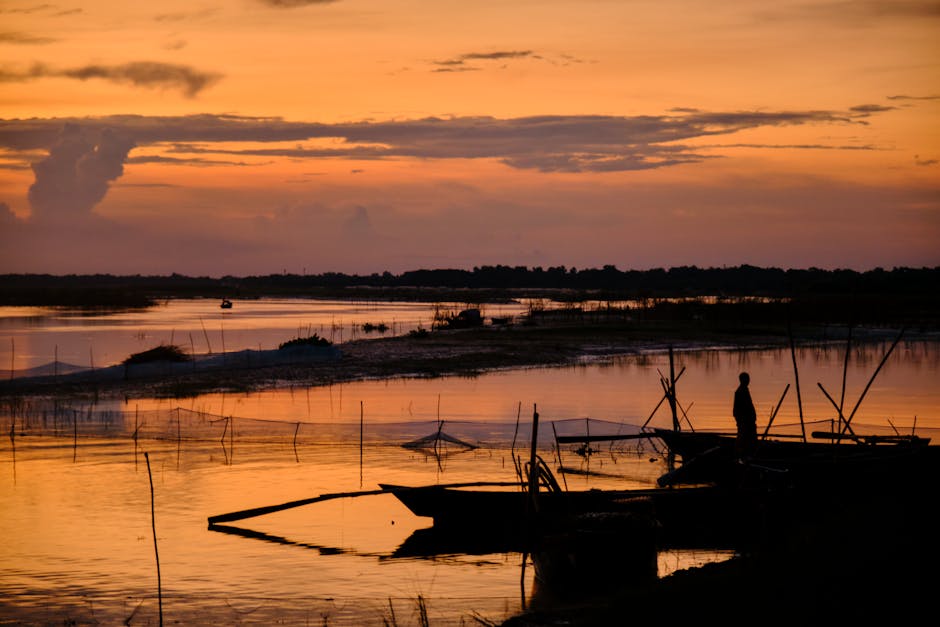
Silhouette of boats and person at sunset in Chapai Nawabganj, Bangladesh harbor.
- Historic Architecture: The 15th-century Choto Sona Mosque, built in 1493 under Sultan Hussain Shah, is a masterpiece of early Bengal architecture with its 15 domes and intricate terracotta ornamentation.
- Cultural Scene: The annual Rash Mela festival at Dighir Par, a vibrant Hindu fair held in November, transforms the riverbanks with devotional music, colorful markets, and thousands of pilgrims.
- Local Specialties: You must try “Chhanar Jilapi,” a unique local sweet made from fresh cottage cheese, fried and soaked in syrup, found at confectioners like Mithai Ghar near the bus stand.
Pro Tip: Visit between November and February. The winter weather is mild and pleasant (18-25°C), perfect for exploring archaeological sites. Crucially, this is after the monsoon, so the rural roads to sites like the Kushumba Mosque are dry and accessible, and you’ll avoid the intense heat and humidity of the March-May period.
Map of Nawabganj, Bangladesh
Use these interactive maps to explore Nawabganj, Bangladesh and plan your route:
📍 View Nawabganj, Bangladesh on OpenStreetMap
🗺️ Open Nawabganj, Bangladesh in Google Maps
Planning Your Trip: Practical Essentials
Getting There and Around
- By Air: The nearest major airport is Shah Makhdum Airport (RJH) in Rajshahi, about 65 km away. Biman Bangladesh Airlines and US-Bangla operate flights from Dhaka. From the airport, a pre-booked taxi to Nawabganj costs 1,500-2,000 BDT. Book flights at Skyscanner for best deals.
- By Train: Nawabganj has its own railway station on the Abdulpur-Singra line. The “Sundarban Express” from Dhaka’s Kamalapur Station takes about 6-7 hours. A first-class seat costs around 600 BDT. Reserve tickets at Trainline or the national railway website.
- By Car: The drive from Dhaka via the N6 highway takes 5-6 hours. The roads are generally good. Parking is easy and often free at most sites. Compare car rentals at RentalCars.com.
- Local Transport: Cycle-rickshaws and auto-rickshaws (known as “CNGs”) are the primary modes. A short rickshaw ride within town costs 30-50 BDT. For visiting outlying sites, hiring a CNG for a half-day (3-4 hours) will cost 500-700 BDT. There are no formal transport passes.
Best Time to Visit
The climate dictates the ideal travel window here. Winter offers comfortable exploration, while the monsoon brings lush landscapes but challenging travel to remote sites.
| Season | Weather | Highlights |
|---|---|---|
| Summer (Jun–Aug) | Hot (28-35°C) and extremely humid with frequent, heavy monsoon rains. | Landscapes are vividly green, but travel to rural archaeological sites can be difficult due to muddy roads. Few tourists. |
| Winter (Dec–Feb) | Cool and dry, with pleasant temperatures ranging from 15-25°C. Little to no rain. | Perfect weather for full-day temple and mosque tours. The Rash Mela festival occurs in November. Peak, yet manageable, local tourism. |
| Shoulder (Apr–May/Sep–Oct) | Warm to hot (25-32°C). October is pleasant; April-May can be very warm before monsoon. | Good conditions in October. April-May is harvest time, offering vibrant rural scenes, but prepare for heat. |
Budgeting for Nawabganj, Bangladesh

Smiling fisherman holding a fish caught in a net in Chapai Nawabganj, Nawabganj, Bangladesh
| Category | Budget | Mid-range | Luxury |
|---|---|---|---|
| Accommodation | 800-1,200 BDT for a basic guesthouse | 2,500-4,000 BDT for a comfortable hotel with AC | 5,000+ BDT for the best hotel in town |
| Meals | 150-300 BDT per meal at local eateries | 400-700 BDT at decent restaurants | 1,000+ BDT for a multi-course feast |
| Transport | 200-300 BDT/day on rickshaws | 800-1,200 BDT/day for a hired CNG | 3,000+ BDT for a private car & driver |
| Activities | Most sites are free or under 50 BDT | Guided half-day tour ~1,000 BDT | Full-day private heritage tour ~3,500 BDT |
| Daily Total | 1,500-2,000 BDT ($14-$19) | 4,500-7,000 BDT ($42-$65) | 10,000+ BDT ($93+) |
Top Attractions and Must-See Sights
| Attraction | Description | Hours | Entry Fee |
|---|---|---|---|
| Choto Sona Mosque | A stunning 15th-century stone mosque with 15 domes and exquisite terracotta carvings, representing the golden age of Bengal Sultanate architecture. | Sunrise to Sunset | 20 BDT |
| Kushumba Mosque (Atia, Tangail) | Known as the “Black Gem,” this 16th-century mosque is famed for its intricate black stone carvings and is one of Bangladesh’s finest examples of Mughal-era design. | 9:00 AM – 5:00 PM | Free |
| Dighir Par Rash Mela Grounds | The sacred riverbank site of the annual Rash Mela, a spiritually charged location year-round with small temples and a serene atmosphere. | Always accessible | Free |
| Shibganj Handloom Village | Not a single site but a neighborhood where you can wander and observe master weavers creating legendary Jamdani and Tangail sarees on traditional looms. | Daylight hours; best 9 AM-1 PM | Free (purchases extra) |
3-Day Itinerary: Nawabganj, Bangladesh’s Highlights & Hidden Gems
Day 1: Ancient Stones & Architectural Wonders
- Morning (7-9 AM): Start early at the **Choto Sona Mosque**. The soft morning light beautifully highlights the terracotta carvings on its walls. Have a local guide (often available on-site for ~200 BDT) explain the stories in the stonework.
- Afternoon (12-3 PM): Head to **Kusumba Mosque** in nearby Naogaon (a 1-hour CNG ride, ~800 BDT round trip). Marvel at the black basalt carvings. For lunch, stop at **Nawabganj Town Restaurant** for a hearty plate of “Kacchi Biryani” (mutton biryani cooked with raw spices), a local favorite.
- Evening (6-8 PM): Return to Nawabganj town. Take a leisurely cycle-rickshaw ride to **Dighir Par**. Enjoy the sunset over the river before dinner at **Hotel Raj** for their excellent “Rui Maach Bhaja” (fried Rohu fish) with lentils.
Day 2: Living Culture & Craftsmanship
- Morning (8 AM): Dive into the living heritage of **Shibganj Handloom Village**. Visit a weaver’s cooperative (ask for “Mondal Weaving Shed”) to see Jamdani being made. You can purchase directly here; a fine cotton saree starts around 3,000 BDT.
- Afternoon (1 PM): Enjoy a simple lunch of “Dal Puri” (lentil-stuffed flatbread) from a street vendor. Then, visit the **Nawabganj Government Museum** (closed Sunday) to contextualize the artifacts from the region’s Pala and Sultanate periods. Entry is 10 BDT.
- Evening (6 PM): Experience local street food. Try “Fuchka” (pani puri) and “Chotpoti” (spicy chickpea mix) from the vendors near Cinema Hall. For a sit-down sweet, go to **Mithai Ghar** for that essential Chhanar Jilapi.
Day 3: Rural Excursion & Spiritual Serenity
- Morning (7 AM): Hire a CNG for the day (~1,500 BDT) to visit the **Paharpur Buddhist Vihara** (a UNESCO World Heritage Site) in Jaipurhat district, about a 90-minute drive. This 8th-century monastery is the largest single Buddhist monastery south of the Himalayas. Entry is 100 BDT for foreigners.
- Afternoon (1 PM): Have a packed lunch or eat at a simple local dhaba near Paharpur. On the return journey, stop at the lesser-known **Shatmatha Mosque** in Bagha, another superb terracotta-adorned 16th-century structure.
- Evening (6 PM): Your final evening calls for a celebratory meal. Head to **Red Chili Restaurant** in town for a full Bengali spread: “Hilsa fish curry,” “shorshe bata maach” (mustard fish), and “mishti doi” (sweet yogurt) for dessert.
Cultural Insights & Etiquette
- Language: Bengali (Bangla) is the language. Key phrases: “Salaam alaikum” (Hello, peace be upon you), “Dhonnobad” (Thank you), “Koto?” (How much?). English is understood in hotels and by some guides, but not widely.
- Customs: Use your right hand for eating and giving/receiving items. When visiting mosques, dress modestly and remove shoes. Always ask permission before photographing people, especially women and weavers at work.
- Tipping: Not mandatory but appreciated. In restaurants, rounding up the bill is fine. For a dedicated rickshaw/CNG driver for the day, 50-100 BDT is a good tip. For guides, 10% of their fee is generous.
- Dress Code: Modest dress is respectful. For both men and women, clothing covering shoulders and knees is advised, especially for religious sites. Light, breathable cotton is ideal for the climate.
- Business Hours: Government offices and museums are typically open 9 AM-5 PM, often closed Friday and sometimes Saturday. Shops open around 10 AM and close by 8-9 PM. Many close for a mid-day break (1-3 PM).
Where to Eat: Nawabganj, Bangladesh’s Best Bites
Nawabganj’s cuisine is classic North Bengal: hearty, flavorful, and river-centric. Meals are often centered on freshwater fish like Hilsa, Rui, and Katla, paired with an array of bhortas (mashes), lentils, and rice. Dining is a social, unhurried affair.
Must-Try Local Specialties
- Kacchi Biryani: Layers of fragrant rice and marinated mutton cooked together in a sealed pot. For an authentic taste, head to **Nawabganj Town Restaurant** near the main bazaar.
- Chhanar Jilapi: The local sweet superstar. These spirals are denser and richer than standard jilapi. **Mithai Ghar** and **Golap Sweetmeats** are the most famous vendors.
- Panta Ilish: A traditional dish of fermented rice served with fried Hilsa fish, raw onions, and green chilies. Best tried during monsoon (Hilsa season) at a local home or during festivals.
Restaurant Recommendations by Budget
| Type | Restaurant | Specialty | Price Range |
|---|---|---|---|
| Budget | Hotel Al-Amin (Station Road) | Daily “thali” set meals with fish, dal, and vegetables | 150-250 BDT |
| Mid-range | Red Chili Restaurant (Court Road) | Full Bengali feasts and excellent chicken roast | 400-700 BDT per person |
| Fine dining | Hotel Raj International Dining | The most upscale setting in town for formal dinners and Chinese-Bengali fusion | 800-1,500 BDT per person |
Where to Stay
Accommodation in Nawabganj is functional rather than luxurious, focusing on clean rooms and good hospitality. Most hotels are centrally located near the bus stand or court area, making exploration easy. Compare prices and book at Booking.com or Airbnb for apartments.
Best Neighborhoods for Accommodation
- Court Area/Central Town: The most convenient location, with easy access to rickshaws, main restaurants, and the bazaar. This area suits first-time visitors who want to be in the heart of things. It can be bustling during the day.
- Near Nawabganj Bus Stand: A practical choice for those arriving by or departing via bus. Hotels here are used to travelers and often have 24-hour front desks. The trade-off is some noise from transport.
- Quiet Residential Lanes off Main Roads: For more peace, look for guesthouses on side streets. You’ll get a more local feel and quieter nights, though you’ll be a short rickshaw ride from the main commercial spots.

Power lines crossing a river in Chapai Nawabganj, Nawabganj, Bangladesh
FAQs: Your Nawabganj, Bangladesh Questions Answered
1. Is Nawabganj, Bangladesh safe at night?
Nawabganj is generally a safe and peaceful district town. The main areas are safe to walk around at night, though streets quiet down early. As always, exercise standard precautions: avoid isolated, dark areas, keep valuables secure, and use a rickshaw or CNG if you’re traveling late. Locals are hospitable and will often help if you ask for directions.

