
Milford Sound, New Zealand: Incredible Fiords, Waterfalls & Rainforest Majesty (2026)
What if one of the wettest places on Earth is also one of the most stunningly beautiful? Milford Sound, New Zealand, receives over 6,800mm (268 inches) of rain annually, yet this deluge is its greatest gift. The downpours transform sheer granite cliffs into a cascading spectacle of thousands of temporary waterfalls, while the persistent mist creates an ethereal, primeval atmosphere. This isn’t just a scenic spot; it’s a living, breathing lesson in the raw power and artistry of nature.
Why Milford Sound, New Zealand Stands Out

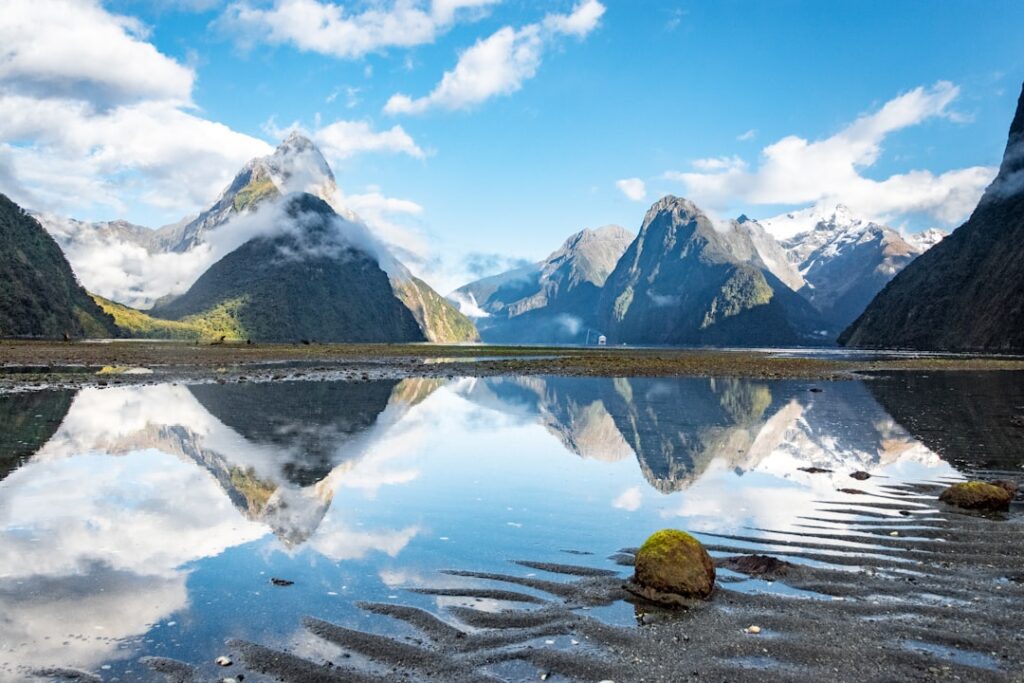
Photo of lake with reflection of mountains under cloudy sky, Milford Sound, New Zealand
- Geological Marvel: Carved by glaciers over 20,000 years ago, the fiord’s vertical cliffs rise 1,200 meters directly from dark, deep waters.
- Unique Ecosystem: A rare “permanent freshwater layer” allows deep-sea species like black coral to thrive in unusually shallow depths.
- Cultural Significance: Known as Piopiotahi to the Māori, its name honors a now-extinct native thrush and is woven with legends of the demigod Maui.
Pro Tip: Embrace the rain. The wettest days (often in December and January) create the most dramatic waterfalls. For a quieter experience, aim for the shoulder seasons of April-May or September-October, and book the first cruise of the day (typically 8:30 AM) to glide through the morning mist before the tour buses arrive.
Map of Milford Sound, New Zealand
Use these interactive maps to explore Milford Sound, New Zealand and plan your route:
📍 View Milford Sound, New Zealand on OpenStreetMap
🗺️ Open Milford Sound, New Zealand in Google Maps
Planning Your Trip: Practical Essentials
Getting There and Around
- By Air: The closest major airport is Queenstown (ZQN), a 4-hour drive away. From there, you can take a scenic flight directly to Milford Sound with operators like Air Milford or fly to the small Milford Sound Airport. Book flights at Skyscanner for best deals.
- By Train: There is no direct train service to Milford Sound. The famous TranzAlpine train runs from Christchurch to Greymouth on the West Coast, but you’ll need to connect via car or bus.
- By Car: The 119km Milford Road (SH94) from Te Anau is one of the world’s great drives, passing through the Homer Tunnel. The road is subject to closures due to avalanches in winter; chains may be required. Rental cars are available in Queenstown. Compare car rentals at RentalCars.com.
- Local Transport: Once at the sound, everything is centered around the small visitor terminal. Transport is primarily via cruise boats, kayaks, or on foot. Coach tours from Queenstown or Te Anau are the most common way for visitors to arrive.
Best Time to Visit
Milford Sound is a year-round destination where each season paints the landscape differently. The “best” time depends on whether you seek dramatic waterfalls, calmer weather, or winter snowscapes.
| Season | Weather | Highlights |
|---|---|---|
| Summer (Dec–Feb) | 10°C – 18°C (50°F – 64°F), highest rainfall, most variable conditions. | Peak waterfall activity, long daylight hours, but also peak tourist crowds. Ideal for kayaking and overnight cruises. |
| Winter (Jun–Aug) | 5°C – 12°C (41°F – 54°F), colder, less rain, occasional snow on peaks. | Dramatic snow-capped mountains, fewer visitors, and a serene, stark beauty. Some hiking tracks may be closed. |
| Shoulder (Apr–May/Sep–Oct) | 7°C – 15°C (45°F – 59°F), more settled weather, moderate rainfall. | The sweet spot for balancing good weather and smaller crowds. Excellent for photography and hiking the Milford Track. |
Budgeting for Milford Sound, New Zealand

Mountain near body of water, Milford Sound, New Zealand
| Category | Budget | Mid-range | Luxury |
|---|---|---|---|
| Accommodation | $30-$60 NZD (hostel/dorm in Te Anau) | $150-$300 NZD (motel/lodge in Te Anau or Milford Lodge) | $400-$1000+ NZD (Overnight cruise or luxury lodge) |
| Meals | $15-$25 NZD (self-catering or cafe meals) | $30-$60 NZD (pub/restaurant meal) | $80-$150+ NZD (fine dining on a cruise) |
| Transport | $50-$80 NZD (shared coach tour ex-Te Anau) | $120-$200 NZD (scenic coach ex-Queenstown) | $500-$800 NZD (scenic flight ex-Queenstown) |
| Activities | Free (walking, viewing platforms) | $70-$120 NZD (standard nature cruise) | $250-$500 NZD (small boat cruise, kayak tour, overnight cruise) |
| Daily Total | $95-$165 NZD | $370-$680 NZD | $1230-$2450+ NZD |
Top Attractions and Must-See Sights
| Attraction | Description | Hours | Entry Fee |
|---|---|---|---|
| Milford Sound Cruise | The essential experience, sailing past Mitre Peak, Stirling Falls, and playful fur seal colonies. | Departures from 8:30 AM to 3:30 PM, 1.5-2.5 hrs | $70-$140 NZD per adult |
| Milford Track (Great Walk) | A world-renowned 4-day, 53.5km hike from Lake Te Anau to Milford Sound, through pristine rainforest and valleys. | Seasonal (late Oct to late April), must book huts in advance | $70 NZD per night (hut fee) |
| Underwater Observatory | Descend 10 meters to view black coral, sea stars, and other deep-water life in their natural habitat. | Generally 10:00 AM – 4:00 PM, access via certain cruises | Included with specific cruise tickets (~$120 NZD) |
| Kayaking the Sound | Paddle silently beneath the cliffs for an intimate, water-level perspective on the fiord’s scale and serenity. | Tours at 9:30 AM, 1:30 PM; 2.5-4 hours | $120-$180 NZD per person |
3-Day Itinerary: Milford Sound, New Zealand’s Highlights & Hidden Gems
Day 1: The Journey In & First Impressions
- Morning (7-9 AM): Depart Te Anau early for the 2-hour drive along Milford Road. Stop at Mirror Lakes for a perfect reflection shot and at The Chasm for a 20-minute walk to see powerful river-sculpted rock formations.
- Afternoon (12-3 PM): Board a 1:30 PM small-boat nature cruise with a company like Southern Discoveries or Real Journeys. Your best bet is a boat with outdoor decks. Keep an eye out for dolphins and seals as you cruise to the Tasman Sea.
- Evening (6-8 PM): Enjoy a hearty post-cruise dinner at the Milford Sound Lodge’s Pio Pio Café. Stay overnight at the lodge or drive back to Te Anau, watching for nocturnal kea (alpine parrots) in the car park.
Day 2: Immersion & Adventure
- Morning (8 AM): Join a guided sea kayaking tour ($160 NZD). Paddling in the stillness of the morning, you’ll feel the immense scale of the cliffs and get close to shoreline waterfalls.
- Afternoon (1 PM): Take a shorter cruise that includes entry to the Underwater Observatory. Witness the unique “deep-water” environment without getting wet, a fascinating contrast to the landscape above.
- Evening: For the ultimate experience, embark on an overnight cruise with Mitre Peak Cruises or Real Journeys. You’ll enjoy a chef-prepared dinner, sleep anchored in a secluded cove, and wake up to the sound of waterfalls.
Day 3: Exploration & Departure
- Morning (9 AM): If you stayed overnight on a cruise, enjoy a final breakfast on the water before disembarking. If on land, hike part of the Foreshore Walk for different vantage points of the sound.
- Afternoon (12 PM): Drive back towards Te Anau, but take the side road to Lake Gunn for a peaceful picnic and a walk on the Nature Walk loop through ancient beech forest.
- Evening: Back in Te Anau, celebrate your trip with a classic Kiwi dinner at The Redcliff Café, known for its local lamb and venison, and perhaps a craft beer from the local lakefront.
Cultural Insights & Etiquette
- Language: English is universal. Learning a Māori greeting like “Kia ora” (hello) is appreciated. The correct pronunciation is “Pee-oh-pee-oh-tah-hee” for Piopiotahi.
- Customs: There is a strong “leave no trace” ethic. Respect all signs, stay on marked tracks to protect fragile ecosystems, and take all rubbish with you.
- Tipping: Tipping is not expected in New Zealand. However, for exceptional service on a tour or cruise, a small tip is a kind gesture.
- Dress Code: Practical, layered, and waterproof is the only dress code. Sturdy walking shoes, a waterproof jacket, and warm layers are non-negotiable, regardless of the forecast.
- Business Hours: The Milford Sound terminal operates around cruise schedules. Facilities in Te Anau keep more standard hours, but it’s a small town, so don’t expect late-night services.
Where to Eat: Milford Sound, New Zealand’s Best Bites
Dining in Milford Sound itself is limited to the visitor terminal and the lodge, focusing on convenience. The nearby town of Te Anau is your hub for more varied meals, offering everything from casual pubs to fine dining with local ingredients.
Must-Try Local Specialties
- Fiordland Venison: Lean, flavorful meat from local deer, often served as a steak or in a pie. Try it at The Redcliff Café in Te Anau.
- Green-Lipped Mussels: A New Zealand classic, these large, sweet mussels are often served steamed in a white wine and garlic broth. Available on many cruise boat buffets.
- Bluff Oysters: If visiting in season (March-August), these are considered some of the finest oysters in the world. Ask at restaurants in Te Anau.
Restaurant Recommendations by Budget
| Type | Restaurant | Specialty | Price Range |
|---|---|---|---|
| Budget | Milford Sound Lodge – Pio Pio Café (Milford Sound) | Solid burgers, sandwiches, and coffee for refueling. | $15-$25 NZD |
| Mid-range | The Sandfly Café (Te Anau) | Renowned for its fresh, generous seafood platters and casual lakefront vibe. | $25-$45 NZD |
| Fine dining | Kepler’s (Te Anau) | Modern New Zealand cuisine with an elegant twist, using the best Fiordland produce. | $45-$85 NZD |
Where to Stay
There are only a handful of places to stay within Milford Sound itself, making advance booking essential. Most travelers base themselves in Te Anau (a 2-hour drive away), which offers a full range of accommodations and services. Compare prices and book at Booking.com or Airbnb for apartments.
Best Neighborhoods for Accommodation
- Milford Sound Terminal Area: Offers unparalleled convenience for early/late activities. Options are limited to the Milford Sound Lodge (cabins & chalets) and the historic, no-frills Milford Lodge. Perfect for avoiding the long drive.
- Te Anau Town Centre: The main hub with motels, hotels, B&Bs, and hostels. You’ll have walking access to restaurants, supermarkets, and tour departure points. Ideal for most travelers.
- Te Anau Lakefront: Properties along the shore offer beautiful views of the lake and mountains. It’s a short stroll into town and provides a more serene setting. Best for those seeking views and tranquility.

Body of water surrounded by mountains, Milford Sound, New Zealand
FAQs: Your Milford Sound, New Zealand Questions Answered
1. Is Milford Sound, New Zealand safe at night?
Yes, it is extremely safe. The primary considerations are environmental, not criminal. If driving the Milford Road at night, be extra cautious for wildlife like possums or deer on the road. If walking, use a torch (flashlight) as there are no street lights. The biggest safety tip is to always inform someone of your hiking plans and check weather and track conditions with the Department of Conservation (DOC) before heading out.
2. What currency is used and are credit cards accepted?
New Zealand Dollars (NZD) are the currency. Credit and debit cards (Visa, Mastercard) are widely accepted everywhere, including on cruise boats and at the remote Milford Sound terminal. It’s still wise to carry some cash for small purchases at roadside stands or in case of rare terminal issues, but you can comfortably operate without it.
3. How do I get from the airport to the city center?
From Queenstown Airport (ZQN), you’ll need to transfer to Milford Sound via road or air. The most common option is a pre-booked coach tour that includes pickup from your Queenstown accommodation, the scenic drive, the cruise, and return. A one-way shuttle to Te Anau takes about 2.5 hours. For a direct, breathtaking transfer, book a scenic flight. Book airport transfers and tours at GetYourGuide for convenience.
4. Do I need to speak the local language?
No. English is the primary language and all tours, signs, and information are in English. Māori is an official language, and you’ll see place names in Māori, but there is no language barrier for English speakers. Learning a few basic Māori words is a respectful way to engage with the culture.
5. What’s the appropriate dress code?
Forget fashion; think function. The dress code is strictly practical outdoor gear. You must pack a waterproof and windproof jacket, warm layers (fleece, merino wool), sturdy, broken-in hiking shoes or

