
M’hamid, Morocco’s Amazing Silence, Stars & Saharan Soul (2026)
Just before dawn, the silence in M’hamid is so profound you can hear the sand shifting. The last village before the Algerian border, it’s the true end of the paved road—a place where 4×4 tracks dissolve into the 52,000-square-kilometer expanse of the Erg Chigaga dunes. While thousands head to the more accessible Merzouga, savvy travelers journey an extra 5 hours southwest to find a Sahara untouched by mass tourism, where the only soundtrack is the wind and the crackle of a campfire under a blanket of stars visible down to the Milky Way’s core.
Why M’hamid, Morocco Stands Out

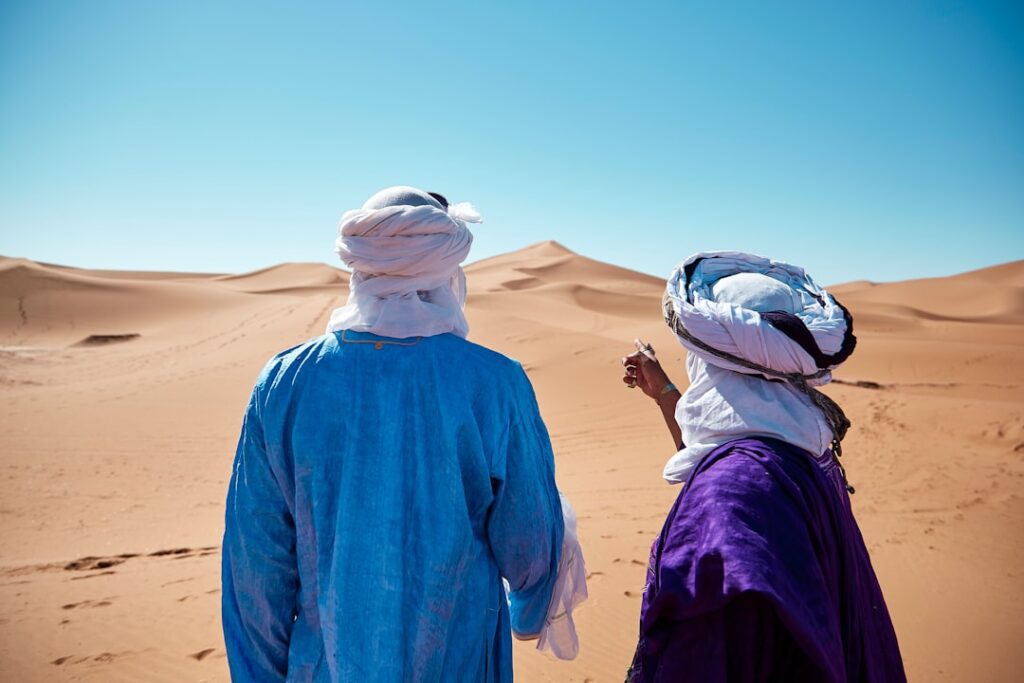
A sandy area with a blue sky in the background, M’hamid, Morocco
- Historic Architecture: The crumbling Ksar El Khorbat, a fortified mud-brick village dating to the 17th century, stands as a silent testament to the caravan trade routes that once thrived here.
- Cultural Scene: The annual International Nomads Festival each March transforms the desert with music, poetry, and camel races, celebrating the enduring culture of the Blue Men.
- Local Specialties: You must try Medfouna, the “Berber pizza”—a savory stuffed bread cooked in the hot desert sand, a culinary tradition of the nomadic tribes.
Pro Tip: The absolute best time for a desert trek is late October to November or March to early April. Daytime temperatures are a pleasant 25-30°C (77-86°F), nights are cool but not freezing, and you’ll avoid both the scorching summer heat and the crowded winter holiday period. For the clearest stargazing, plan your trip around the new moon.
Map of M’hamid, Morocco
Use these interactive maps to explore M’hamid, Morocco and plan your route:
📍 View M’hamid, Morocco on OpenStreetMap
🗺️ Open M’hamid, Morocco in Google Maps
Planning Your Trip: Practical Essentials
Getting There and Around
- By Air: The nearest major airport is in Ouarzazate (OZZ), a 5-6 hour drive away. Most international travelers fly into Marrakech (RAK). From there, it’s a long but stunning journey south. Book flights at Skyscanner for best deals.
- By Train: Morocco’s rail network ends in Marrakech. From there, you’ll need to continue by bus or private transfer. Reserve any train tickets for the northern part of your journey at Trainline or the national railway website.
- By Car: The drive from Marrakech via the Tizi n’Tichka pass and through Ouarzazate is an epic 8-9 hour journey on well-maintained roads (until the final stretch to M’hamid). A 4×4 is recommended, especially if you plan to self-drive into the desert. Compare car rentals at RentalCars.com.
- Local Transport: In M’hamid village, you walk. For desert excursions, transport is exclusively via 4×4 vehicles or camels, arranged through your accommodation or a local guide. Shared grands taxis connect M’hamid to Zagora (2 hours), but schedules are informal.
Best Time to Visit
Timing is everything in the deep Sahara. Your experience hinges on avoiding extreme temperatures while maximizing the magical moments of calm and celestial beauty.
| Season | Weather | Highlights |
|---|---|---|
| Summer (Jun–Aug) | Extremely hot, 40-50°C (104-122°F). Scorching sun, warm nights. | Few visitors; stark, intense desert beauty. Only for the heat-tolerant; activities are limited to early morning and late evening. |
| Winter (Dec–Feb) | Chilly days 15-20°C (59-68°F), very cold nights often below freezing. | Clear skies, busy with tourists around holidays. Perfect for midday sun, but requires serious cold-weather gear for overnight desert camps. |
| Shoulder (Apr–May/Sep–Oct) | Ideal, 25-35°C (77-95°F) days, cool 10-15°C (50-59°F) nights. | The sweet spot. Comfortable for trekking, perfect for camping, and optimal for photography with gentle light. The March Nomads Festival is a major draw. |
Budgeting for M’hamid, Morocco
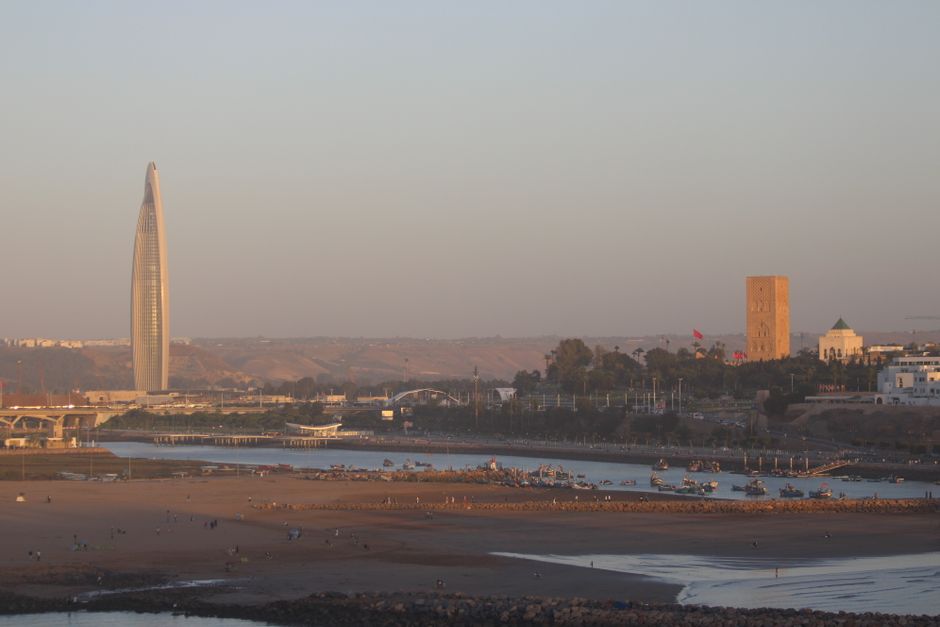
Dramatic sunset view of the Rabat skyline featuring Hassan Tower and the Mo…, M’hamid, Morocco
| Category | Budget | Mid-range | Luxury |
|---|---|---|---|
| Accommodation | 150-250 MAD/night (basic auberge) | 400-700 MAD/night (comfortable guesthouse) | 1000+ MAD/night (luxury desert camp) |
| Meals | 40-60 MAD (street food, tagine at local cafe) | 80-150 MAD (set menu at good guesthouse) | 200+ MAD (private dining in desert camp) |
| Transport | 80 MAD (shared taxi to Zagora) | 300-500 MAD/day (shared 4×4 excursion) | 800+ MAD/day (private 4×4 with guide) |
| Activities | Free (walking, village exploration) | 200-400 MAD (camel trek, half-day) | 600+ MAD (private guided astronomy tour) |
| Daily Total | 270-450 MAD | 980-1750 MAD | 2600+ MAD |
Top Attractions and Must-See Sights
| Attraction | Description | Hours | Entry Fee |
|---|---|---|---|
| Erg Chigaga Dunes | Vast, remote sea of golden dunes reaching 300m high, offering unparalleled solitude and sunset views. | Accessible 24/7 via guided tour | Free, but transport/guide required (from 300 MAD) |
| Oasis of M’hamid | A lush, palm-filled haven along the Draa River, showcasing ancient irrigation (khettara) systems and traditional agriculture. | Daylight hours | Free to explore |
| La Dune Blanche (The White Dune) | A unique, smaller dune of strikingly pale sand located closer to the village, perfect for a shorter visit. | Daylight hours | Free |
| Old Ksar of M’hamid | The abandoned, crumbling mud-brick fortress that was the original village, whispering stories of the caravan era. | Daylight hours | Free, tip expected if a local shows you around |
3-Day Itinerary: M’hamid, Morocco’s Highlights & Hidden Gems
Day 1: Arrival & Desert Thresholds
- Morning (7-9 AM): After breakfast at your guesthouse like Chez Le Pacha, take a guided walk through the working palm oasis. Your guide will explain the fragile ecosystem and the ancient *khettara* water channels that make life possible here.
- Afternoon (12-3 PM): Enjoy a simple, delicious lamb tagine lunch at Restaurant Sahara in the village. Then, visit the Old Ksar. A local guardian might unlock a weathered door for a small tip, revealing rooms frozen in time.
- Evening (6-8 PM): Take a 4×4 or camel (approx. 200 MAD) to **La Dune Blanche** for your first Saharan sunset. The colors here are softer, a gentle introduction to the desert’s grandeur. Return for dinner at your guesthouse featuring local specialties like *zakouk* (cooked tomato and pepper salad).
Day 2: Deep Desert Immersion
- Morning (8 AM): Depart for a full-day excursion to **Erg Chigaga** (approx. 600-800 MAD per person for a shared 4×4, including lunch). The 2-hour drive across the rocky *hamada* and dried lake beds is an adventure in itself.
- Afternoon (12-3 PM): Arrive at the dunes. Your driver will prepare a picnic lunch in the shade of a 4×4. Then, climb the nearest dune ridge—the silence and scale are humbling. This is the real, untamed Sahara.
- Evening (6-8 PM): Check into your pre-booked desert camp. Watch the sunset paint the dunes crimson, then gather around the fire for a traditional Berber dinner of *medfouna* and music under a staggering canopy of stars.
Day 3: Culture & Departure
- Morning (7 AM): Witness the unforgettable desert sunrise, then enjoy a camp breakfast. Take a final camel walk (often included with camp stays) through the cool morning dunes before your 4×4 returns you to M’hamid village by late morning.
- Afternoon (12-2 PM): Visit a local women’s cooperative, like **Association Tighremt**, to see traditional rug-weaving and perhaps purchase a direct-from-artisan souvenir. Enjoy a farewell lunch of *berber omelette* with fresh mint tea.
- Evening (3 PM+): Begin your journey back to Zagora or Ouarzazate. If driving, plan to stop at the **Tinfou Dunes** near Zagora for a quick, final glimpse of Saharan beauty as the light turns golden.
Cultural Insights & Etiquette
- Language: Arabic and Tamazight (Berber) are spoken. French is widely understood in tourism. Learn a few phrases: “Salam alaykum” (hello), “Shukran” (thank you), “La, shukran” (no, thank you).
- Customs: Always use your right hand for eating, greeting, and accepting items. Public displays of affection are frowned upon. When invited for tea, it’s polite to accept at least the first glass.
- Tipping: Expected for guides, drivers, and camp staff. For a day guide, 50-100 MAD is appropriate. In restaurants, rounding up the bill or leaving 10% is generous.
- Dress Code: Modesty is key. For both men and women, loose-fitting clothing that covers shoulders and knees is respectful, especially in the village. In the desert camps, it’s more relaxed, but remain considerate.
- Business Hours: Shops may close for several hours in the afternoon (1-4 PM). Friday is the holy day; expect limited activity. During Ramadan, daytime services are minimal, but nights are vibrant.
Where to Eat: M’hamid, Morocco’s Best Bites
Dining in M’hamid is less about fancy restaurants and more about authentic, hearty sustenance. Most meals are served at your guesthouse or desert camp, featuring locally sourced ingredients and traditional recipes passed down through generations.
Must-Try Local Specialties
- Medfouna: The iconic “desert pizza.” A round bread stuffed with spiced meat, onions, and herbs, then sealed and baked in the hot sand or a clay oven. Best tried in a desert camp where it’s made traditionally.
- Berber Tagine: Unlike city versions, the desert tagine is often simpler, focusing on tender meat (lamb or chicken), local dates, and almonds, slow-cooked to perfection over coals.
- Mint Tea: More than a drink, it’s a ceremony. The strong green tea is loaded with fresh mint and a significant amount of sugar. Refusing an offer can be seen as rude.
Restaurant Recommendations by Budget
| Type | Restaurant | Specialty | Price Range |
|---|---|---|---|
| Budget | Restaurant Sahara (Village Center) | Simple, hearty tagines and brochettes | 40-70 MAD |
| Mid-range | Chez Le Pacha Guesthouse Restaurant | Multi-course set menus featuring local produce | 80-120 MAD |
| Fine dining | Private Dining at Azalai Desert Camp | Gourmet Berber cuisine under the stars, by reservation | 200+ MAD |
Where to Stay
Your choice of accommodation defines your M’hamid experience. Options range from basic village auberges to luxurious nomadic-style camps deep in Erg Chigaga. Most places offer full-board packages, which are highly recommended. Compare prices and book at Booking.com or Airbnb for apartments (though these are rare here).
Best Neighborhoods for Accommodation
- The Village Center: Staying in a guesthouse like Dar Azawad or Chez Le Pacha puts you within walking distance of the oasis and local life. It’s ideal for shorter stays and for feeling connected to the community. You’ll have modern comforts like en-suite bathrooms and Wi-Fi.
- The Desert Fringe: Camps like Camping La Dune Blanche are a short drive from the village but offer a immediate desert feel. This is a great compromise for those wanting the desert experience without a long transfer.
- Erg Chigaga Dunes: For true immersion, book a 2-3 night stay at a fixed luxury camp like Azalai Desert Camp or Desert Camp Chez Le Pacha. You trade modern amenities for unparalleled silence, darkness, and a direct connection with the Sahara’s soul.

View of the Amir Chakhmaq Complex in Yazd, M’hamid, Morocco
FAQs: Your M’hamid, Morocco Questions Answered
1. Is M’hamid, Morocco safe at night?
Yes, M’hamid is generally very safe. The village is small and community-oriented. In the desert, you are with your guide or camp staff. The primary safety concerns are environmental: dehydration, sunstroke, and getting lost. Always travel with a reputable guide, carry ample water, and inform someone of your plans if venturing out alone, even for a short walk.
2. What currency is used and are credit cards accepted?
The Moroccan Dirham (MAD) is the currency. You must bring enough cash for your entire stay in M’hamid. Credit cards are rarely accepted, and while there is one ATM in the village, it is unreliable and often out of service or cash. Withdraw money in Ouarzazate or Zagora before arriving.
3. How do I get from the airport to M’hamid?
There is no direct public transport. Your best options are: 1) Pre-book a private transfer through your accommodation (approx. 2500-3500 MAD from Marrakech, 1500-2000 MAD from Ouarzazate). 2) Take a CTM bus from Marrakech to Zagora (7 hours,

