
Mekong Delta, Vietnam: Amazing Floating Markets, Ancient Waterways & Tropical Fruit Forests (2025)
Sunrise on the Mekong reveals what 17 million residents already know: this isn’t just a river, but a liquid highway connecting 15,000 km of waterways where boats outnumber cars 3-to-1. The air carries the sweet-tart scent of ripening mangoes from orchards that produce 40% of Vietnam’s fruit, while wooden sampans glide past stilt houses that have stood for generations. This is Southeast Asia’s agricultural heartland, where life moves to the rhythm of tides and traditions unchanged by time.
Why Mekong Delta, Vietnam Stands Out

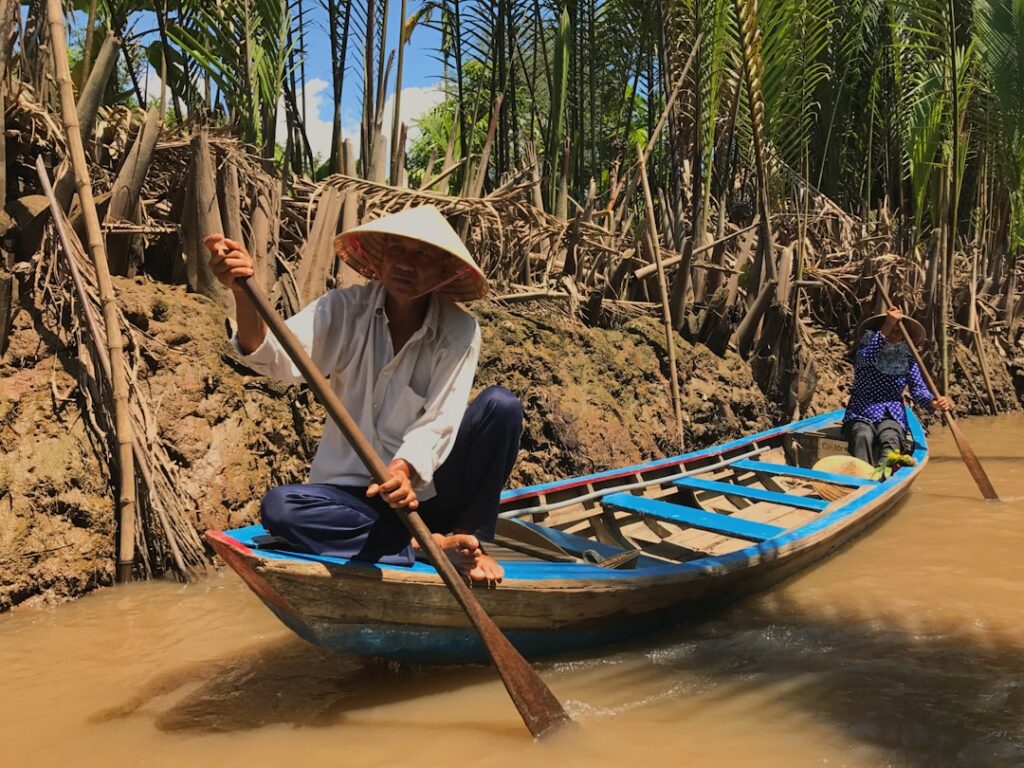
People aboard on boat, Mekong Delta, Vietnam
- Historic Architecture: Vinh Trang Pagoda (1849) blends Vietnamese, Chinese, and European styles with giant Buddha statues in lush gardens
- Cultural Scene: Don Ca Tai Tu folk music recognized by UNESCO as intangible cultural heritage, often performed in family gatherings
- Local Specialties: Elephant ear fish grilled tableside and wrapped in rice paper with fresh herbs and rice noodles
Pro Tip: Visit between December and April when water levels are ideal for boat tours and the weather is dry and comfortable, avoiding the September-November flood season when some areas become inaccessible.
Map of Mekong Delta, Vietnam
Use these interactive maps to explore Mekong Delta, Vietnam and plan your route:
📍 View Mekong Delta, Vietnam on OpenStreetMap
🗺️ Open Mekong Delta, Vietnam in Google Maps
Planning Your Trip: Practical Essentials
Getting There and Around
- By Air: Fly into Tan Son Nhat International Airport (SGN) in Ho Chi Minh City, then take a 2-hour bus to My Tho. Vietnam Airlines and Bamboo Airways offer domestic connections to Can Tho Airport (VCA). Book flights at Skyscanner for best deals.
- By Train: No direct rail service to the Delta, but trains from Hanoi to Ho Chi Minh City connect to bus routes. Reserve tickets at Trainline or the national railway website.
- By Car: National Highway 1A connects Ho Chi Minh City to My Tho in 2 hours; hire drivers through reputable companies for day trips. Compare car rentals at RentalCars.com.
- Local Transport: Boats are primary transport; public ferries cost 10,000-50,000 VND, while private boat hires run 300,000-800,000 VND for half-day tours. Check official city transport websites for passes and schedules.
Best Time to Visit
The Mekong Delta offers distinct seasonal experiences, with dry season (Dec-Apr) being most comfortable for exploration, while flood season (Sep-Nov) reveals unique floating landscapes.
| Season | Weather | Highlights |
|---|---|---|
| Dry Season (Dec–Apr) | 25-32°C, low humidity, minimal rain | Ideal for boat tours, floating markets active, comfortable exploration with moderate crowds |
| Flood Season (Sep–Nov) | 27-35°C, heavy afternoon rains, high humidity | Unique “floating season” where boats replace roads, lush landscapes, fewer tourists but some areas inaccessible |
| Shoulder (May–Aug) | 28-34°C, occasional showers, high humidity | Fruit harvest season, vibrant green scenery, good hotel rates though afternoon rains possible |
Budgeting for Mekong Delta, Vietnam

Blue rowboat on body of water surrounded of trees, Mekong Delta, Vietnam
| Category | Budget | Mid-range | Luxury |
|---|---|---|---|
| Accommodation | 250,000-500,000 VND/night (homestays) | 800,000-1,500,000 VND/night (3-4 star hotels) | 2,000,000+ VND/night (resorts/villas) |
| Meals | 50,000-100,000 VND (street food/local eateries) | 150,000-300,000 VND (restaurants) | 500,000+ VND (fine dining) |
| Transport | 100,000-200,000 VND (public boats/buses) | 400,000-800,000 VND (private boat tours) | 1,000,000+ VND (private car with driver) |
| Activities | Free walking tours, temple visits | 200,000-500,000 VND (guided tours) | 800,000+ VND (private guided experiences) |
| Daily Total | 400,000-800,000 VND | 1,500,000-3,000,000 VND | 4,300,000+ VND |
Top Attractions and Must-See Sights
| Attraction | Description | Hours | Entry Fee |
|---|---|---|---|
| Cai Rang Floating Market | Vietnam’s largest floating market where boats display goods on bamboo poles | 5:00 AM-12:00 PM | Free (boat tour 300,000 VND) |
| Vinh Trang Pagoda | Ornate 19th-century Buddhist temple blending Asian and European architectural styles | 7:30 AM-5:30 PM | 20,000 VND |
| Tra Su Bird Sanctuary | Magical flooded forest with wooden walkways through mangrove forests | 7:00 AM-5:00 PM | 100,000 VND + boat fee |
| Sam Mountain | Sacred hill with panoramic Delta views and dozens of temples and pagodas | 24 hours | Free |
3-Day Itinerary: Mekong Delta, Vietnam’s Highlights & Hidden Gems
Day 1: Floating Markets & Riverside Life
- Morning: 5:30 AM departure for Cai Rang Floating Market (300,000 VND boat tour) – arrive early to see boats trading wholesale fruits and vegetables from their masts.
- Afternoon: Visit a rice noodle factory and coconut candy workshop then lunch at Nam Bo Restaurant in Can Tho (try their caramelized claypot fish for 120,000 VND).
- Evening: Sunset cruise along the Hau River followed by dinner at Cua Hang An Ut Quan for authentic southern Vietnamese dishes (180,000 VND average).
Day 2: Island Hopping & Tropical Orchards
- Morning: 8:00 AM boat to Con Son Island (400,000 VND) – explore dragon fruit, mango and longan orchards with tastings included.
- Afternoon: Visit Vinh Trang Pagoda and nearby honey tea farm then lunch at Ut Trang home restaurant featuring elephant ear fish (250,000 VND).
- Evening: Traditional Don Ca Tai Tu music performance at a local cultural house (free, donations appreciated).
Day 3: Mangrove Forests & Borderlands
- Morning: 7:00 AM bus to Chau Doc (120,000 VND) then boat to Tra Su Bird Sanctuary (200,000 VND) – morning is best for bird watching.
- Afternoon: Visit Sam Mountain temples and lunch at Bay Bong floating restaurant specializing in fish hotpot (200,000 VND).
- Evening: Sunset from Sam Mountain summit followed by farewell dinner at Thanh Van restaurant known for their grilled snakehead fish (180,000 VND).
Cultural Insights & Etiquette
- Language: Learn “Xin chào” (hello), “Cám ơn” (thank you), “Bao nhiêu tiền?” (how much?) – locals appreciate the effort
- Customs: Remove shoes before entering homes and temples; use both hands when giving/receiving items; avoid public displays of affection
- Tipping: Not expected but appreciated – 5-10% in restaurants, 50,000-100,000 VND for guides, round up taxi fares
- Dress Code: Modest clothing covering shoulders and knees for temples; light, breathable fabrics for the humid climate
- Business Hours: Shops 7:00 AM-9:00 PM, government offices 7:30 AM-4:30 PM with 11:30 AM-1:30 PM lunch break; many close during Tet holiday
Where to Eat: Mekong Delta, Vietnam’s Best Bites
The Delta’s cuisine reflects its aquatic environment with freshwater fish, coconut, and tropical fruits featuring prominently. Meals typically include rice, fresh herbs, and fish sauce, with French colonial influences evident in baked goods and coffee culture.
Must-Try Local Specialties
- Ca Tai Tuong Chien Xu: Whole elephant ear fish deep-fried then reassembled to be wrapped in rice paper with herbs and rice noodles at Ut Trang home restaurant
- Banh Xeo: Crispy turmeric coconut crepes filled with shrimp and bean sprouts, best eaten wrapped in mustard leaves at street stalls throughout Can Tho
- Hu Tieu: Clear noodle soup with pork and seafood reflecting Chinese influences, perfected at Hu Tieu Nam Vang Thanh Xuan in My Tho
Restaurant Recommendations by Budget
| Type | Restaurant | Specialty | Price Range |
|---|---|---|---|
| Budget | Com Nieu Saigon – Can Tho riverside | Claypot rice with crispy bottom and fresh river fish dishes | 80,000-150,000 VND |
| Mid-range | Nam Bo Restaurant – Can Tho center | French-Vietnamese fusion using local ingredients | 200,000-400,000 VND |
| Fine dining | Mekong Rustic – Cai Be | Farm-to-table tasting menus in traditional stilt house setting | 500,000+ VND |
Where to Stay
Accommodation ranges from rustic homestays with local families to luxury riverside resorts. Can Tho offers the most options as the Delta’s largest city, while smaller towns provide more authentic experiences. Compare prices and book at Booking.com or Airbnb for apartments.
Best Neighborhoods for Accommodation
- Can Tho City Center: Convenient base for floating markets with hotels at all price levels, though less authentic than rural options
- My Tho Riverside: Gateway to island tours with good transport links to Ho Chi Minh City, ideal for shorter visits
- Chau Doc Countryside: Authentic homestays and eco-lodges near Cambodian border, perfect for nature and culture immersion

Group of people riding on canoe, Mekong Delta, Vietnam
FAQs: Your Mekong Delta, Vietnam Questions Answered
1. Is Mekong Delta, Vietnam safe at night?
Generally very safe, though take normal precautions in cities after dark. Rural areas are exceptionally safe. Boat travel after sunset isn’t recommended without experienced local guides due to unlit waterways.
2. What currency is used and are credit cards accepted?
Vietnamese Dong (VND) is the currency. Credit cards accepted at hotels and upscale restaurants in cities, but cash is essential for markets, small eateries, and rural areas. ATMs widely available in towns.
3. How do I get from the airport to the city center?
From Can Tho Airport, taxis to city center cost 150,000-200,000 VND (20 minutes). From Ho Chi Minh City, buses to My Tho take 2 hours and cost 120,000 VND. Book airport transfers at GetYourGuide for convenience.
4. Do I need to speak the local language?
Not necessary – basic English is spoken in tourist areas. Learning a few Vietnamese phrases will enhance your experience. Hotel staff and tour guides typically speak good English.
5. What’s the appropriate dress code?
Light, breathable clothing suitable for hot, humid weather. Cover shoulders and knees for temple visits. Quick-dry fabrics recommended for boat tours. Sandals or comfortable walking shoes are ideal.
Final Thoughts: Mekong Delta, Vietnam Awaits
The Mekong Delta offers one of Southeast Asia’s most authentic cultural experiences, where traditional river life continues largely unchanged. Travelers often discover that beyond the famous floating markets lies a deeper connection to Vietnam’s agricultural soul and incredibly warm hospitality. Your best bet is to embrace the slower pace – spend extra days in homestays, take bicycle tours through fruit orchards, and let the river’s rhythm guide your journey. Don’t miss waking before dawn just once to watch the floating markets come alive, when the morning mist rises off the water and the Delta reveals its true magic.

