
Meghalaya (Cherrapunji), India: Amazing Living Root Bridges, Waterfalls & Indigenous Culture (2025)
At dawn in Cherrapunji, mist rises from the Nohkalikai Falls as the world’s second-wettest place reveals its 11,777mm annual rainfall transforming into 1,493 waterfalls. You hear the Khasi language echoing through markets where women traders dominate, and smell smoked pork with bamboo shoots cooking in roadside stalls. This isn’t just rainfall statistics—it’s where nature and ancient Khasi traditions create bridges from living rubber tree roots that strengthen with time, some dating back 180 years and supporting 50 people simultaneously.
Why Meghalaya (Cherrapunji), India Stands Out

A large waterfall surrounded by lush green trees, Meghalaya (Cherrapunji), India
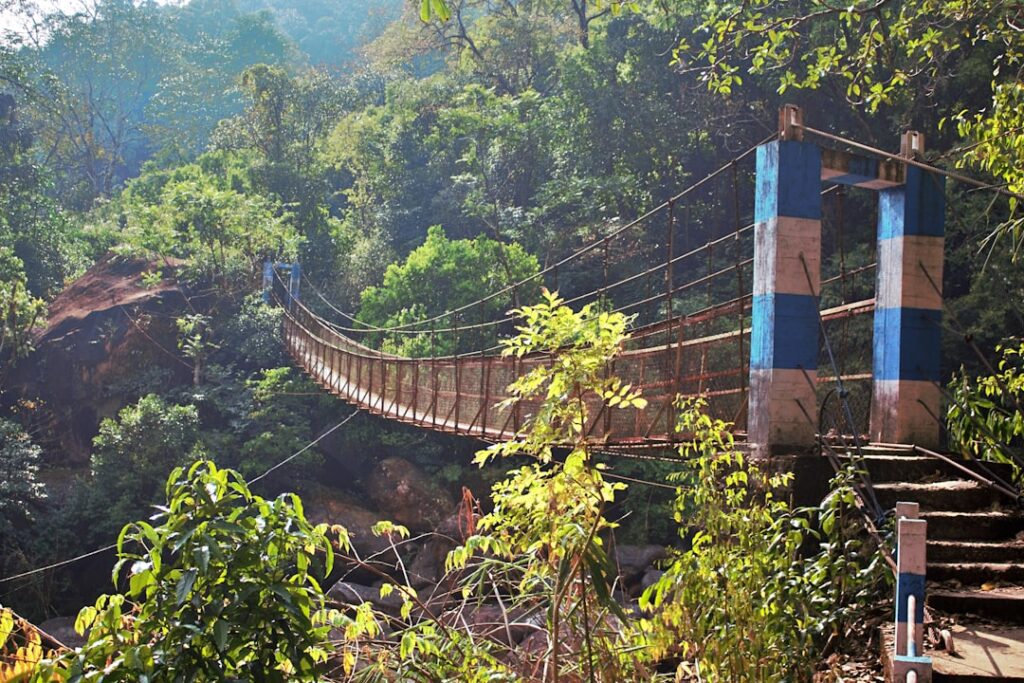
- Historic Architecture: The double-decker living root bridge in Nongriat Village, cultivated since 1840, represents centuries of Khasi environmental engineering wisdom.
- Cultural Scene: The Nongkrem Dance Festival each November features five days of traditional Khasi ceremonies with sacrificial goats and rhythmic movements to please the goddess Ka Blei Synshar.
- Local Specialties: Jadoh – red rice cooked with pork blood and meat, creating a rich, savory dish that fuels locals through the rainy seasons.
Pro Tip: Visit during October-November when rainfall decreases to 600mm monthly but waterfalls remain spectacular, avoiding both the monsoon deluge (June-September) and dry season (December-February) when some falls reduce to trickles.
Map of Meghalaya (Cherrapunji), India
Use these interactive maps to explore Meghalaya (Cherrapunji), India and plan your route:
📍 View Meghalaya (Cherrapunji), India on OpenStreetMap
🗺️ Open Meghalaya (Cherrapunji), India in Google Maps
Planning Your Trip: Practical Essentials
Getting There and Around
- By Air: Lokpriya Gopinath Bordoloi International Airport in Guwahati (180km away) connects to major Indian cities. From there, book a shared taxi (₹2,500) or take a bus to Shillong then onward to Cherrapunji. Book flights at Skyscanner for best deals.
- By Train: Guwahati Railway Station serves as the nearest major railhead with excellent connections from Kolkata (24 hours) and Delhi (36 hours). Reserve tickets at Trainline or the national railway website.
- By Car: The 3-hour drive from Shillong features 54km of stunning mountain roads with viewpoints. Hiring a local driver costs ₹2,000-3,000/day. Compare car rentals at RentalCars.com.
- Local Transport: Shared Sumo jeeps run between Shillong and Cherrapunji (₹150, 2.5 hours), while local taxis charge ₹1,500-2,000 for full-day sightseeing. Check official city transport websites for passes and schedules.
Best Time to Visit
Timing your visit carefully ensures you experience Cherrapunji’s legendary waterfalls at their peak while avoiding transportation disruptions during heavy monsoon downpours.
| Season | Weather | Highlights |
|---|---|---|
| Summer (Jun–Aug) | 18-25°C, extremely heavy rainfall (2,500mm+ monthly) | Waterfalls at maximum power, lush greenery, few tourists brave the rains |
| Winter (Dec–Feb) | 5-16°C, minimal rainfall (50mm monthly) | Clear skies perfect for photography, comfortable trekking conditions, some waterfalls reduced |
| Shoulder (Apr–May/Sep–Oct) | 15-23°C, moderate rainfall (600-800mm monthly) | Ideal balance of flowing waterfalls and manageable weather, best for root bridge visits |
Budgeting for Meghalaya (Cherrapunji), India

Green mountains under white sky during daytime, Meghalaya (Cherrapunji), India
| Category | Budget | Mid-range | Luxury |
|---|---|---|---|
| Accommodation | ₹800-1,500 homestays | ₹2,500-4,500 guesthouses | ₹6,000-12,000 resorts |
| Meals | ₹200-400 local eateries | ₹500-800 restaurant meals | ₹1,000-2,000 multi-course |
| Transport | ₹150 shared jeeps | ₹2,000 daily taxi | ₹4,000 private car+driver |
| Activities | Free viewpoints, ₹10-50 entry fees | ₹500 guided tours | ₹2,000 private guides |
| Daily Total | ₹1,200-2,500 | ₹5,000-8,000 | ₹12,000-20,000 |
Top Attractions and Must-See Sights
| Attraction | Description | Hours | Entry Fee |
|---|---|---|---|
| Nohkalikai Falls | India’s tallest plunge waterfall at 340m, with emerald pool and tragic local legend | Sunrise to sunset | ₹30 |
| Double Decker Root Bridge | Two-tiered living bridge spanning 50+ feet, requiring 3,000-step descent into Nongriat Valley | 6 AM to 4 PM | ₹10 |
| Mawsmai Cave | Illuminated limestone cave system with dramatic formations, the region’s most accessible spelunking | 9 AM to 5:30 PM | ₹100 |
| Seven Sisters Falls | Spectacular segmented waterfall visible from viewpoint, most powerful June-September | 24 hours (best light 10 AM-2 PM) | Free |
3-Day Itinerary: Meghalaya (Cherrapunji), India’s Highlights & Hidden Gems
Day 1: Waterfalls & Viewpoints
- Morning: Sunrise at Nohkalikai Falls (₹30) to catch morning light without crowds. Local legend says a woman named Ka Likai jumped here after discovering her husband cooked their daughter.
- Afternoon: Seven Sisters Falls viewpoint followed by lunch at Orange Roots Restaurant (try their pork with bamboo shoot curry for ₹350).
- Evening: Dainthlen Falls exploring the rock carving depicting the monster slain by locals, then dinner at Cherrapunjee Holiday Resort (thali meal ₹450).
Day 2: Root Bridges & Caves
- Morning: 6 AM start for Double Decker Root Bridge trek (₹10 entry) – the 3,000-step descent takes 90 minutes but rewards with ancient bio-engineering.
- Afternoon: Swim in natural pools near root bridges and simple lunch at Nongriat village homestay (₹200). Return ascent takes 2+ hours – pace yourself.
- Evening: Relax at resort with traditional Khasi music performance available at Cherrapunji Resort (₹500 including dinner).
Day 3: Cultural Immersion & Local Life
- Morning: Taxi to Mawsmai Cave (₹100, 45 minutes from town). Navigate the illuminated 150m limestone passage with dramatic stalactites.
- Afternoon: Local market visit in Sohra main market, then lunch at Polo Orchid Resort (Jadoh rice dish ₹400) with stunning valley views.
- Evening: Sunset at Bangladesh viewpoint watching lights appear across the border, final dinner at Sohra Plaza (authentic Khasi meal ₹300).
Cultural Insights & Etiquette
- Language: Khasi dominates; learn “Kumne” (hello), “Khublei” (thank you), “Phi long ja?” (how are you?). English works in tourist areas.
- Customs: Matrilineal society where youngest daughter inherits property; always ask permission before photographing people or sacred sites.
- Tipping: Not expected but appreciated – round up taxi fares, 5-10% in restaurants for good service.
- Dress Code: Modest clothing preferred; cover shoulders and knees, especially when visiting villages and sacred sites.
- Business Hours: Shops 9 AM-6 PM, government offices 10 AM-4 PM; Sundays see limited operations.
Where to Eat: Meghalaya (Cherrapunji), India’s Best Bites
Khasi cuisine centers around pork, rice, and local herbs with distinct smoked flavors from traditional cooking methods using bamboo tubes and minimal spices.
Must-Try Local Specialties
- Jadoh: Fragrant red rice cooked with pork blood and meat, creating a rich, savory dish best tried at local Sohra market stalls for ₹150.
- Doh Neiiong: Pork curry with black sesame seeds creating a nutty, aromatic gravy – the signature dish at Sohra Plaza restaurant.
- Tungrymbai: Fermented soybean chutney with pork that adventurous eaters seek out at homestays for its unique pungent flavor.
Restaurant Recommendations by Budget
| Type | Restaurant | Specialty | Price Range |
|---|---|---|---|
| Budget | Local Market Stalls, Sohra Main Market | Fresh Jadoh and pork snacks | ₹100-250 |
| Mid-range | Orange Roots, Near Police Point | Khasi thali with 6 dishes | ₹350-600 |
| Fine dining | Polo Orchid Resort, Laitkynsew | Gourmet Khasi fusion with views | ₹800-1,500 |
Where to Stay
Accommodation ranges from basic homestays with Khasi families to luxury resorts perched on cliff edges with breathtaking valley views. Book early October-March. Compare prices and book at Booking.com or Airbnb for apartments.
Best Neighborhoods for Accommodation
- Sohra Central: Walking distance to markets and restaurants, but can be noisy; ideal for budget travelers and short stays
- Laitkynsew: Resort area with spectacular valley views, 5km from town; perfect for couples and luxury seekers
- Mawkdok Valley:
Scattered homestays near root bridge trailheads; best for serious trekkers and nature immersion

A person bending over in a field, Meghalaya (Cherrapunji), India
FAQs: Your Meghalaya (Cherrapunji), India Questions Answered
1. Is Meghalaya (Cherrapunji), India safe at night?
Generally very safe with low crime rates, though trekking after dark is dangerous due to uneven terrain and wildlife. Stick to well-lit areas in town and avoid isolated viewpoint areas at night.
2. What currency is used and are credit cards accepted?
Indian Rupees (₹) are used everywhere. Carry substantial cash as only upscale hotels and a few restaurants in Sohra accept credit cards. ATMs exist but can run out of cash.
3. How do I get from the airport to the city center?
From Guwahati Airport, take a prepaid taxi (₹2,500, 4 hours) or shared Sumo jeep to Shillong (₹300, 3 hours) then another shared jeep to Cherrapunji (₹150, 2.5 hours). Book airport transfers at GetYourGuide for convenience.
4. Do I need to speak the local language?
English works fine in tourist areas, but learning basic Khasi phrases delights locals. Most younger residents speak English, while older villagers may only speak Khasi.
5. What’s the appropriate dress code?
Modest, comfortable clothing with good walking shoes essential. Pack rain gear year-round – even in “dry” season, sudden showers occur. Warm layers needed December-February.
Final Thoughts: Meghalaya (Cherrapunji), India Awaits
Cherrapunji delivers what few destinations can: living architecture that grows stronger with time, waterfalls that define scale, and cultural traditions preserved through geographical isolation. Travelers discover that beyond the rainfall records lies a landscape where nature and human ingenuity collaborate spectacularly. Your most lasting memory might be standing on a 180-year-old living bridge, understanding that some wonders can’t be rushed. Savvy visitors plan for October visits, break in hiking shoes beforehand, and come ready to embrace the rhythm of a place where water shapes everything.

