
Mbabane, Eswatini’s Incredible Mountain Air, Royal Culture & Crafted Souvenirs (2025)
While crowds flock to South Africa’s Kruger National Park, just a 90-minute drive away, Mbabane, Eswatini delivers an intimate, culturally rich highland escape without the tourist convoys. Perched at 1,200 meters in the Dlangeni Hills, this compact capital offers crisp mornings scented with pine, streets where you’re greeted with a gentle “Sawubona,” and a pace of life that allows you to truly connect with the heart of the last absolute monarchy in Africa. Here’s why savvy travelers choose differently.
Why Mbabane, Eswatini Stands Out

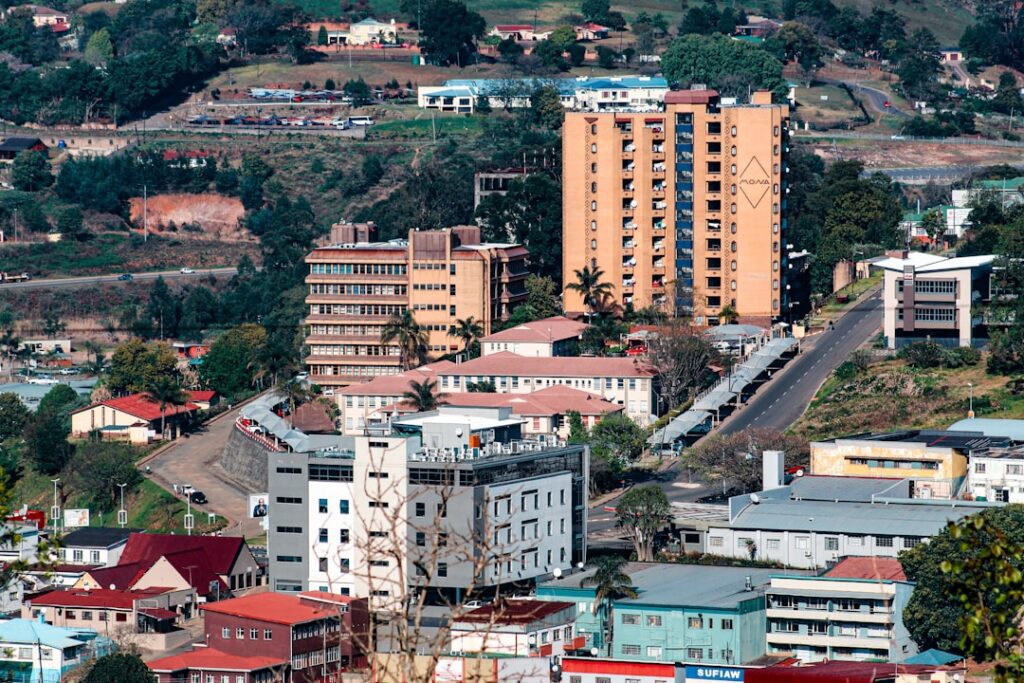
Buildings nestled in a green, hilly landscape., Mbabane, Eswatini
- Historic Architecture: The Swazi Parliament Building, constructed in 1968, is a striking example of modernist African architecture, featuring a distinctive thatched roof that honors traditional Swazi design.
- Cultural Scene: The annual Incwala Ceremony, the “First Fruits” festival held in December/January, is a sacred national event of deep spiritual significance, though respectful observation from a distance is key.
- Local Specialties: You must try a hearty plate of *Sishwala*, a thick maize porridge served with a rich, spinach-like *ligusha* stew and meat, a true staple of Swazi cuisine.
Pro Tip: Visit during the shoulder months of April-May or September-October. You’ll avoid the summer rains and the peak chill of winter, securing the most comfortable weather for exploring on foot. This is also when hotel rates are most favorable.
Map of Mbabane, Eswatini
Use these interactive maps to explore Mbabane, Eswatini and plan your route:
📍 View Mbabane, Eswatini on OpenStreetMap
🗺️ Open Mbabane, Eswatini in Google Maps
Planning Your Trip: Practical Essentials
Getting There and Around
- By Air: Most travelers fly into King Mswati III International Airport (SHO) near Manzini, about 40km from Mbabane. Airlink offers connections from Johannesburg. A pre-booked taxi to Mbabane costs around E500-600 ($27-$33). Book flights at Skyscanner for best deals.
- By Train: There are no direct passenger rail services to Mbabane. The nearest major rail hub is in Johannesburg, South Africa, from where you’d continue by bus or car.
- By Car: Driving from Johannesburg takes about 3.5-4 hours via the Oshoek/Ngwenya border post. Roads in Mbabane are well-signposted. Compare car rentals at RentalCars.com.
- Local Transport: Minibus taxis are the primary public transport, cheap but crowded. For convenience, use metered taxis (call +268 2404 2424) or ride-hailing app inDrive. Walking is viable in the city center.
Best Time to Visit
Mbabane’s highland location gives it a mild, temperate climate year-round, but the timing of your visit shapes the experience.
| Season | Weather | Highlights |
|---|---|---|
| Summer (Oct–Mar) | 18°C to 25°C (64°F-77°F). Warm, humid afternoons with frequent, dramatic thunderstorms. | Lush green landscapes, vibrant cultural festivals. Can be rainy for outdoor plans. |
| Winter (May–Aug) | 10°C to 22°C (50°F-72°F). Dry, sunny days and crisp, cold nights. Frost possible. | Perfect for hiking, clear mountain views. Pack warm layers for mornings and evenings. |
| Shoulder (Apr & Sep) | 15°C to 24°C (59°F-75°F). Minimal rain, comfortable temperatures, low humidity. | Ideal for all activities, fewer visitors, and the best overall conditions for exploration. |
Budgeting for Mbabane, Eswatini

A man in a black suit standing in the dark, Mbabane, Eswatini
| Category | Budget | Mid-range | Luxury |
|---|---|---|---|
| Accommodation | E400-700 ($22-$38) for a guesthouse | E800-1500 ($44-$82) for a comfortable hotel | E2000+ ($109+) for a premier lodge or resort |
| Meals | E60-100 ($3-$5) for street food/simple cafe | E150-300 ($8-$16) for a restaurant meal | E500+ ($27+) for fine dining |
| Transport | E10-20 ($0.50-$1) for minibus taxi rides | E50-150 ($3-$8) for metered taxis/day | E800+ ($44+) for private driver/day |
| Activities | Free hikes, market browsing | E100-250 ($5-$14) for museum entry or craft tours | E500+ ($27+) for private guided tours |
| Daily Total | E500-900 ($27-$49) | E1100-2200 ($60-$120) | E3500+ ($191+) |
Top Attractions and Must-See Sights
| Attraction | Description | Hours | Entry Fee |
|---|---|---|---|
| Swazi Market (Mbabane Market) | A vibrant, sprawling market for authentic crafts, from intricate sisal baskets and wooden carvings to colorful shweshwe fabric. | Mon-Sat, 7:30 AM – 5 PM | Free to browse |
| Mantenga Nature Reserve & Cultural Village | A short drive from the city, this reserve offers stunning waterfalls, hiking trails, and a living Swazi cultural village with traditional dance performances. | 8 AM – 5 PM daily | ~E100 ($5.50) for reserve & village |
| National Museum | Offers insightful exhibits on Swazi history, from prehistoric times through the colonial era to modern independence, housed in the old parliament building. | Mon-Fri 8 AM – 4:30 PM, Sat 9 AM – 1 PM | ~E20 ($1) |
| Mbabane Art Gallery | A small but excellent gallery showcasing contemporary Swazi art, including paintings, sculptures, and ceramics by local artists. | Mon-Fri 9 AM – 5 PM, Sat 9 AM – 1 PM | Free (donations welcome) |
3-Day Itinerary: Mbabane, Eswatini’s Highlights & Hidden Gems
Day 1: Capital Culture & Craft
- Morning (7-9 AM): Start with a walk through the peaceful Pine Valley, breathing in the fresh mountain air. Then, head to the Swazi Market as it opens to see the best selection of crafts before the midday heat.
- Afternoon (12-3 PM): Enjoy a traditional lunch at Ramblas Restaurant on Gwamile Street, trying their grilled chicken with *Sishwala*. Afterwards, visit the National Museum for a historical primer.
- Evening (6-8 PM): Watch the sunset from the viewpoint near the Hilltop Hotel, followed by dinner at Calabash Restaurant for their excellent game meat platter in a cozy setting.
Day 2: Nature & Tradition
- Morning (8 AM): Take a 30-minute taxi (E150/$8) to Mantenga Nature Reserve. Hike to the majestic Mantenga Falls and tour the authentic Cultural Village, catching the 11:15 AM traditional dance performance.
- Afternoon (1 PM): Have a picnic lunch by the river or eat at the reserve’s simple cafe. Return to Mbabane and visit the Mbabane Art Gallery to see modern Swazi creativity.
- Evening (7 PM): Dine at Lihawu Restaurant at the Mountain Inn, known for its panoramic views and a mix of international and local dishes like oxtail stew.
Day 3: Royal Legacy & Local Flavors
- Morning (9 AM): Take a guided tour (bookable through your hotel, ~E250/$14) to the nearby Lobamba area to see the Royal Enclosure (from outside) and the impressive Somhlolo National Stadium.
- Afternoon (12:30 PM): Enjoy lunch at a local favorite like eDladleni for a true taste of home-style Swazi cooking. Then, do final souvenir shopping at the Gone Rural boutique, which sells high-quality woven goods supporting rural women.
- Evening (6 PM): For your final night, experience the lively atmosphere at Why Not? Pub & Grill on Dzeliwe Street, a popular spot for both locals and expats, for a relaxed dinner and a local Sibebe beer.
Cultural Insights & Etiquette
- Language: SiSwati and English are official. Learn greetings: “Sawubona” (Hello to one), “Sanibonani” (Hello to many), “Ngiyabonga” (Thank you). English is widely understood in town.
- Customs: Always greet before asking questions or requests. Use your right hand for giving/receiving items. Ask permission before photographing people, especially in rural areas or of cultural events.
- Tipping: 10% is appreciated in restaurants if service charge isn’t included. Tip taxi drivers by rounding up the fare. Small tips for guides and porters are customary.
- Dress Code: Modesty is respected. Avoid very short shorts or revealing tops in the city center. Smart-casual is fine for most restaurants. Pack a light jacket or shawl for cooler evenings.
- Business Hours: Shops typically open Mon-Fri 8:30 AM-5 PM, Sat 8:30 AM-1 PM. Many businesses close on Sunday. Government offices often close for lunch from 1-2 PM.
Where to Eat: Mbabane, Eswatini’s Best Bites
Dining in Mbabane is a delightful mix of hearty traditional fare, excellent South African-style braais (barbecues), and a surprising variety of international cuisine. Portions are generous, and the hospitality is warm.
Must-Try Local Specialties
- Sishwala ne Lidvubu: The ultimate comfort food: stiff maize porridge served with a rich, slow-cooked pumpkin stew. Best tried at a local eatery like eDladleni.
- Braaied Meat (Nyama yeKosi): Expertly grilled beef, chicken, or boerewors sausage, often served with “pap” (maize porridge) and chakalaka relish. Ramblas Restaurant does a great version.
- Emasi etinkhobe temmbila: A traditional sour milk mixed with crushed maize, a refreshing and probiotic dish often eaten in summer. Look for it at the fresh produce section of the market.
Restaurant Recommendations by Budget
| Type | Restaurant | Specialty | Price Range |
|---|---|---|---|
| Budget | Bombay Palace (Allister Miller St) | Surprisingly good and affordable Indian curries and rotis. | E80-150 ($4-$8) |
| Mid-range | Ramblas Restaurant (Gwamile St) | Reliable for Swazi staples and grilled meats in a casual setting. | E150-300 ($8-$16) |
| Fine dining | Lihawu Restaurant (Mountain Inn) | Elegant dining with stunning views and a fusion menu featuring local game. | E350+ ($19+) |
Where to Stay
Accommodation ranges from simple guesthouses to comfortable business hotels and a few luxurious lodges on the city’s outskirts. Staying centrally puts you within walking distance of markets and restaurants. Compare prices and book at Booking.com or Airbnb for apartments.
Best Neighborhoods for Accommodation
- City Centre: The most convenient location for markets, museums, and restaurants. Can be noisy during the day. Ideal for first-time visitors and those without a car.
- Mbabane Heights/Mill Park: Upscale residential areas on the hillsides offering quieter stays, stunning views, and larger guesthouses. You’ll need taxis to get downtown.
- Ezulwini Valley (nearby): While not in Mbabane proper, this “Valley of Heaven,” a 20-minute drive away, hosts many of the country’s top resorts, spas, and casinos, perfect for a luxurious retreat.

A tree that has some rocks on it, Mbabane, Eswatini
FAQs: Your Mbabane, Eswatini Questions Answered
1. Is Mbabane, Eswatini safe at night?
Mbabane is generally safe, but standard precautions apply. Avoid walking alone in poorly lit areas at night. Use registered taxis for evening transport. Petty crime like pickpocketing can occur in crowded markets, so keep valuables secure. The city center is quiet after business hours.
2. What currency is used and are credit cards accepted?
The local currency is the Swazi Lilangeni (E), pegged 1:1 to the South African Rand (ZAR), which is also widely accepted. Credit cards (Visa/Mastercard) are accepted at most hotels, larger restaurants, and shops. However, you should always carry some cash for markets, minibus taxis, and smaller establishments. ATMs are readily available.
3. How do I get from the airport to the city center?
King Mswati III International Airport (SHO) is 40km away. Your best options are a pre-arranged hotel shuttle, a metered taxi from the rank (approx. E500-600/$27-$33), or a rental car. There is no reliable public bus service. Book airport transfers at GetYourGuide for convenience.
4. Do I need to speak the local language?
No. English is an official language and is used in government, business, and tourism. You’ll have no trouble communicating in hotels, restaurants, and shops. Learning a few basic SiSwati greetings, however, is greatly appreciated and will earn you warm smiles.
5. What’s the appropriate dress code?
Dress is generally conservative but casual. For daily sightseeing, comfortable walking shoes and layers are key due to temperature shifts. For nicer restaurants, smart-casual attire is appropriate. If visiting rural communities or cultural sites, avoid very short shorts or sleeveless tops to show respect.</

