
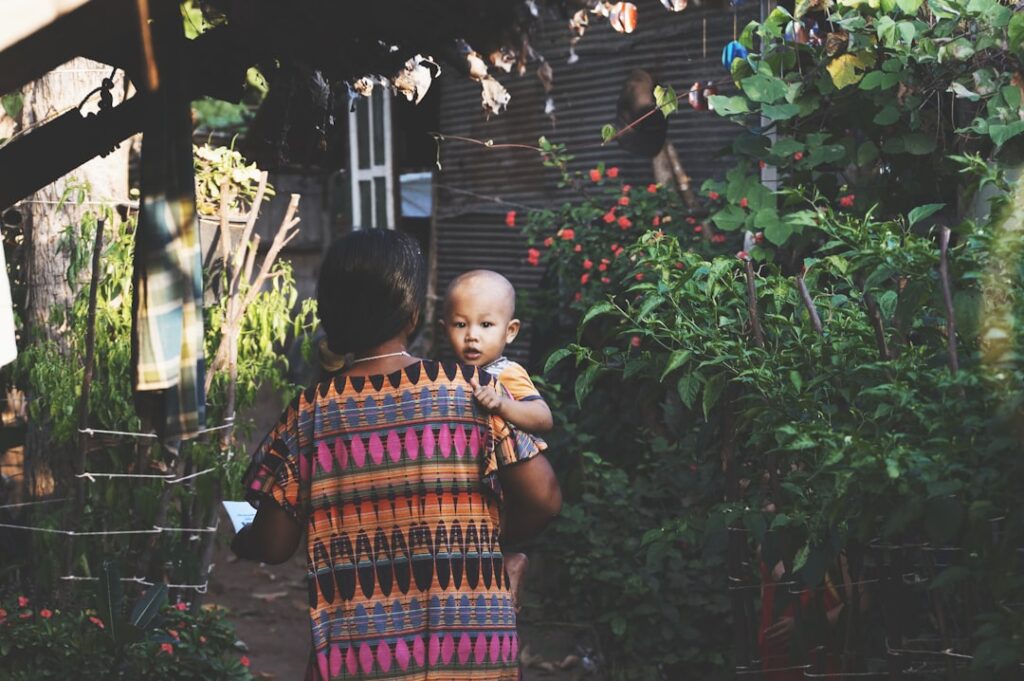
Mae Sot, Thailand: Stunning Border Markets, Burmese Culture & Mountain Temples (2025)
At 6 AM, the Friendship Bridge connecting Thailand and Myanmar comes alive with the rhythmic footsteps of border traders carrying everything from jade to textiles. The air fills with the scent of Burmese tea leaf salad and the melodic chatter of Karen, Burmese, and Thai languages blending together. This is Mae Sot’s daily reality – a town where 200,000 migrants and refugees have created Southeast Asia’s most fascinating cultural crossroads, yet fewer than 50,000 international tourists discover it annually.
Why Mae Sot, Thailand Stands Out

Man standing between two boys, Mae Sot, Thailand
- Historic Architecture: Wat Thai Wattanaram (built 1952) features stunning Burmese-style architecture with intricate wood carvings rarely seen in Thailand.
- Cultural Scene: The annual Karen New Year in January showcases traditional bamboo dances and long-neck women’s weaving demonstrations.
- Local Specialties: Mohinga – Myanmar’s national fish noodle soup – served authentically at border tea shops for just 40 baht.
Pro Tip: Visit between November and February when temperatures hover around 25°C and the morning mist creates magical photography conditions at hilltop temples. Arrive at markets before 8 AM to watch the border trading action before tourist groups appear.
Map of Mae Sot, Thailand
Use these interactive maps to explore Mae Sot, Thailand and plan your route:
📍 View Mae Sot, Thailand on OpenStreetMap
🗺️ Open Mae Sot, Thailand in Google Maps
Planning Your Trip: Practical Essentials
Getting There and Around
- By Air: Mae Sot Airport (MAQ) connects to Bangkok via Nok Air and Air Asia with 3 daily flights (90 minutes, 1,500-2,500 baht). Book flights at Skyscanner for best deals.
- By Train: No direct rail service – the nearest station is 5 hours away in Tak. Reserve tickets at Trainline or the national railway website.
- By Car: Highway 12 from Sukhothai (4 hours) or Tak (2 hours) offers scenic mountain routes. Compare car rentals at RentalCars.com.
- Local Transport: Red songthaews (shared taxis) cost 20 baht anywhere in town, while motorcycle taxis charge 40-60 baht for shorter trips.
Best Time to Visit
Mae Sot’s climate divides into three distinct seasons, with the cool winter months offering ideal exploration conditions and the rainy season creating lush green landscapes perfect for photography.
| Season | Weather | Highlights |
|---|---|---|
| Summer (Jun–Aug) | 28-35°C, heavy afternoon rains | Lush countryside, fewer tourists, vibrant green rice fields |
| Winter (Dec–Feb) | 18-28°C, cool mornings, clear skies | Perfect temple viewing, comfortable market exploring, festival season |
| Shoulder (Apr–May/Sep–Oct) | 25-33°C, occasional showers | Lower accommodation rates, beautiful sunsets, local harvest festivals |
Budgeting for Mae Sot, Thailand

Stainless steel pitcher on brown wooden table, Mae Sot, Thailand
| Category | Budget | Mid-range | Luxury |
|---|---|---|---|
| Accommodation | 400-600 baht/night | 1,200-2,000 baht/night | 3,500-5,000 baht/night |
| Meals | 150-250 baht/day | 400-600 baht/day | 800-1,200 baht/day |
| Transport | 100 baht/day | 300 baht/day | 800 baht/day |
| Activities | 200 baht/day | 500 baht/day | 1,000 baht/day |
| Daily Total | 850-1,150 baht | 2,400-3,400 baht | 6,100-8,000 baht |
Top Attractions and Must-See Sights
| Attraction | Description | Hours | Entry Fee |
|---|---|---|---|
| Wat Phra That Doi Din Kiu | Dramatic hilltop temple with panoramic views and a leaning chedi perched on a rock pinnacle | 6 AM-6 PM | Free (donation) |
| Mae Sot Market (Rim Moei) | Vibrant border market where you can find Burmese lacquerware, traditional medicines, and exotic fruits | 5 AM-6 PM | Free |
| Heritage Walking Street | Colonial-era shophouses converted into art galleries and cafes showcasing local migrant communities’ crafts | 9 AM-9 PM | Free |
| Mae Tao Clinic | Famous medical clinic founded by Dr. Cynthia Maung providing free healthcare to border communities | 8 AM-4 PM (tours) | Free (donation) |
3-Day Itinerary: Mae Sot, Thailand’s Highlights & Hidden Gems
Day 1: Border Culture & Markets
- Morning: 7 AM border market tour watching traders cross Friendship Bridge (free). Arrive early to see the most authentic trading action before crowds form.
- Afternoon: Burmese lunch at Aye Myit Tar (120 baht for mohinga) followed by exploring the gemstone market where you can find jade and rubies from Myanmar mines.
- Evening: Sunset drinks at Rim Moei Restaurant overlooking the Moei River followed by dinner at Borderline Tea Garden (350 baht for tea leaf salad set).
Day 2: Temple Hopping & Hill Tribes
- Morning: 6:30 AM sunrise at Wat Phra That Doi Din Kiu (free) – the morning light creates spectacular photo opportunities of the leaning chedi.
- Afternoon: Visit Wat Mani Phraison (Burmese-style temple) and lunch at Khaomao-Khaofang Restaurant (450 baht) surrounded by tropical gardens and waterfalls.
- Evening: Karen weaving demonstration at Baan Tor Mor (150 baht) followed by dinner at Krua Canadian (280 baht for authentic Thai-Burmese fusion).
Day 3: Rural Exploration & Local Crafts
- Morning: Motorcycle taxi to Umphang Wildlife Sanctuary (600 baht round trip) for hiking to Thi Lo Su Waterfall, Southeast Asia’s largest tiered waterfall.
- Afternoon: Traditional Karen lunch at Borderline Collective Cafe (180 baht) and wood carving workshop at Baan Doi Ngam (300 baht for 2-hour session).
- Evening: Final market shopping for Burmese lacquerware and dinner at Jaytorn Restaurant (320 baht for their famous tom yum with river prawns).
Cultural Insights & Etiquette
- Language: Basic Thai phrases like “sawasdee” (hello) and “kop khun krap/ka” (thank you) are appreciated, though many border traders speak Burmese
- Customs: Remove shoes before entering temples and homes, avoid touching anyone’s head, and never point your feet at Buddha images
- Tipping: Not expected but 20-40 baht appreciated for good service; round up taxi fares to nearest 10 baht
- Dress Code: Shoulders and knees covered in temples; light cotton clothing ideal for humid climate with a scarf for sudden temple visits
- Business Hours: Shops 8 AM-8 PM, government offices 8:30 AM-4:30 PM, markets 5 AM-6 PM; most businesses closed on Thai national holidays
Where to Eat: Mae Sot, Thailand’s Best Bites
Mae Sot’s culinary scene reflects its border location with exceptional Thai-Burmese fusion cuisine, street food stalls serving dishes you won’t find elsewhere in Thailand, and tea shops that feel transported straight from Yangon.
Must-Try Local Specialties
- Mohinga: Myanmar’s national dish of rice noodles in fish broth with banana stem – best at Aye Myit Tar near the border (40 baht)
- Tea Leaf Salad (Lahpet Thoke): Fermented tea leaves with nuts and beans – Borderline Tea Garden serves the most authentic version (80 baht)
- Khao Soi Mae Sot: The local version of Northern Thai curry noodles with influences from Myanmar – try at Khao Soi Mae Sot Restaurant (60 baht)
Restaurant Recommendations by Budget
| Type | Restaurant | Specialty | Price Range |
|---|---|---|---|
| Budget | Night Market Food Stalls | Various Thai-Burmese street food | 30-80 baht/dish |
| Mid-range | Krua Canadian | Fusion dishes and fresh salads | 150-350 baht/dish |
| Fine dining | Khaomao-Khaofang | Garden setting with traditional Thai | 300-600 baht/dish |
Where to Stay
Accommodation in Mae Sot ranges from basic guesthouses catering to NGO workers to comfortable resorts with mountain views. The town center offers walking access to markets, while riverside properties provide tranquility. Compare prices and book at Booking.com or Airbnb for apartments.
Best Neighborhoods for Accommodation
- City Center: Walking distance to markets and restaurants, but can be noisy – ideal for short stays and market enthusiasts
- Riverside: Peaceful views of Moei River and Myanmar, slightly removed from action – perfect for relaxation and photography
- Highway 12 Corridor: Modern hotels with easy parking and access to transportation – best for road trippers and families

A street sign in a foreign language in front of a building, Mae Sot, Thailand
FAQs: Your Mae Sot, Thailand Questions Answered
1. Is Mae Sot, Thailand safe at night?
The town center remains safe for evening exploration, though travelers should avoid the border area after dark. Stick to well-lit main streets and use registered taxi services rather than walking alone in remote areas.
2. What currency is used and are credit cards accepted?
Thai baht is the primary currency, though some border traders accept Myanmar kyat. Credit cards work at larger hotels and restaurants, but you’ll need cash for markets, taxis, and smaller establishments.
3. How do I get from the airport to the city center?
Mae Sot Airport is only 3km from town – take a taxi (150 baht) or songthaew (40 baht shared). The journey takes 10-15 minutes depending on traffic. Book airport transfers at GetYourGuide for convenience.
4. Do I need to speak the local language?
Basic English suffices in tourist areas, though learning a few Thai phrases enhances your experience. Many border traders speak Burmese, and you’ll find English menus at most restaurants.
5. What’s the appropriate dress code?
Light, modest clothing works best – cover shoulders and knees for temple visits. Pack a scarf for impromptu temple stops and comfortable walking shoes for market exploration.
Final Thoughts: Mae Sot, Thailand Awaits
Mae Sot offers what few Thai destinations can – an authentic cultural crossroads where Thailand meets Myanmar in markets, temples, and tea shops. Travelers discover not just another tourist town but a living border community where ancient traditions continue daily. The morning mist over Wat Phra That Doi Din Kiu, the vibrant chaos of the border market, and the complex flavors of Thai-Burmese cuisine create memories that linger long after you’ve left. Savvy visitors know to allocate at least three days to fully appreciate this unique destination – your best bet is to arrive with an open mind and leave room in your suitcase for the exceptional Burmese crafts you’ll inevitably want to bring home.

