
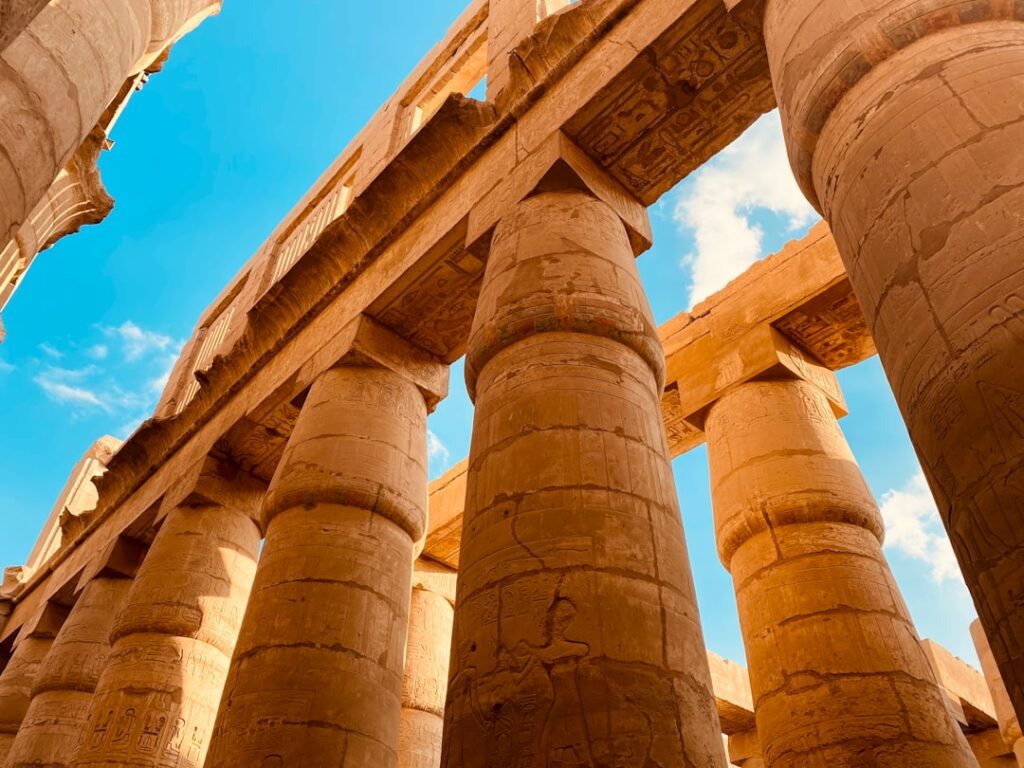
Luxor, Egypt’s Epic Temples, Tombs & Timeless Nile Views (2025)
Luxor, Egypt isn’t just a destination—it’s an open-air museum where ancient pharaohs still whisper their stories. The scent of dust and history hangs in the air as felucca sails flutter against the Nile’s current, while colossal stone columns catch the golden morning light. This is where you walk in the footsteps of kings and queens across 4,000 years of civilization.
Why Luxor, Egypt Stands Out

Brown concrete statue of man and woman, Luxor, Egypt
- Historic Architecture: Karnak Temple (2055 BC onward) – the largest religious building ever constructed, featuring 134 massive columns in the Great Hypostyle Hall.
- Cultural Scene: Sound and Light Show at Karnak Temple – an atmospheric evening experience where recorded voices recount temple history amid dramatic lighting.
- Local Specialties: Koshary – Egypt’s beloved comfort food of rice, lentils, chickpeas, and pasta topped with spicy tomato sauce and crispy onions.
Pro Tip: Visit temples at opening (6 AM) to avoid crowds and heat, and purchase the Luxor Pass (available at the Tourist Office) for comprehensive site access – the premium version includes tombs normally requiring separate tickets.
Map of Luxor, Egypt
Use these interactive maps to explore Luxor, Egypt and plan your route:
📍 View Luxor, Egypt on OpenStreetMap
🗺️ Open Luxor, Egypt in Google Maps
Planning Your Trip: Practical Essentials
Getting There and Around
- By Air: Luxor International Airport (LXR) receives flights from Cairo, European hubs; taxis to city center cost 150-200 EGP. Book flights at Skyscanner for best deals.
- By Train: Overnight sleeper from Cairo (9 hours, $80-100) or daytime seating (10 hours, $15-25); book first class for comfort. Reserve tickets at Trainline or the national railway website.
- By Car: Desert roads from Hurghada (4 hours) or Aswan (3 hours); rental cars available but hiring driver recommended (~$50/day). Compare car rentals at RentalCars.com.
- Local Transport: Taxis (short trips 30-50 EGP), horse carriages (200 EGP/hour), or bicycle rentals (100 EGP/day); Nile ferries cross between East and West Banks for 5 EGP.
Best Time to Visit
Winter offers ideal temperatures for temple exploration, while shoulder seasons provide good weather with fewer crowds. Summer requires early mornings and strategic planning to beat the heat.
| Season | Weather | Highlights |
|---|---|---|
| Summer (Jun–Aug) | 95-110°F (35-43°C), intense sun, minimal rain | Fewer crowds, lower prices, essential to visit sites at opening |
| Winter (Dec–Feb) | 65-80°F (18-27°C), sunny days, cool evenings | Perfect temple weather, peak season with higher prices and crowds |
| Shoulder (Apr–May/Sep–Oct) | 75-95°F (24-35°C), warm but manageable | Good balance of weather and moderate crowds, ideal for photography |
Budgeting for Luxor, Egypt

A low angle view of a factory, Luxor, Egypt
| Category | Budget | Mid-range | Luxury |
|---|---|---|---|
| Accommodation | $15-30/night (hostels, budget hotels) | $50-120/night (4-star Nile view) | $200-500/night (5-star resorts) |
| Meals | $5-10/day (street food, local cafes) | $15-30/day (restaurants) | $50-100/day (fine dining) |
| Transport | $5/day (public, bicycle) | $15-25/day (taxis, tours) | $50+/day (private driver) |
| Activities | $10-20/day (basic tickets) | $30-50/day (multiple sites) | $75+/day (private guides, premium access) |
| Daily Total | $35-65 | $110-225 | $375-675+ |
Top Attractions and Must-See Sights
| Attraction | Description | Hours | Entry Fee |
|---|---|---|---|
| Valley of the Kings | Ancient royal burial site with exquisitely painted tombs including Tutankhamun’s | 6 AM-5 PM (summer), 6 AM-4 PM (winter) | 260 EGP + separate tomb fees |
| Karnak Temple | Vast complex of decayed temples and colossal statues built over 2,000 years | 6 AM-5:30 PM | 200 EGP |
| Luxor Temple | Majestic temple complex beautifully illuminated at night along the Nile corniche | 6 AM-10 PM | 180 EGP |
| Hatshepsut Temple | Striking three-tiered mortuary temple built into dramatic limestone cliffs | 6 AM-5 PM | 140 EGP |
3-Day Itinerary: Luxor, Egypt’s Highlights & Hidden Gems
Day 1: East Bank Temples & Local Life
- Morning: 7 AM entry at Karnak Temple (200 EGP) to experience the Hypostyle Hall in soft morning light. Don’t miss the sacred lake where priests once purified themselves.
- Afternoon: Explore Luxor Temple (180 EGP) and lunch at Sofra Restaurant (25 El Mahatta Street) for authentic molokhia soup and grilled meats (150 EGP).
- Evening: 6:30 PM Sound and Light Show at Karnak Temple (250 EGP) followed by dinner at Nile Valley Hotel rooftop with panoramic views.
Day 2: West Bank Royal Tombs & Local Villages
- Morning: 6 AM ferry to West Bank (5 EGP) then Valley of the Kings (260 EGP + 300 EGP for Tutankhamun) – prioritize KV62 (Tut), KV17 (Seti I), and KV11 (Ramses III).
- Afternoon: Hatshepsut Temple (140 EGP) and lunch at Maratonga Cafe near Medinet Habu with fresh juices and traditional dishes (80 EGP).
- Evening: Sunset felucca ride on the Nile (100 EGP/hour) followed by dinner at Al-Sahaby Lane restaurant with live music.
Day 3: Hidden Gems & Cultural Immersion
- Morning: Taxi to Dendera Temple (1 hour, 400 EGP round trip + 100 EGP entry) to see the famous ceiling zodiac and crypts.
- Afternoon: Luxor Museum (180 EGP) showcasing carefully curated artifacts and lunch at Jamboree Restaurant near the ferry.
- Evening: Final shopping at Luxor Market for spices and papyrus paintings followed by farewell dinner at 1886 Restaurant in Winter Palace Hotel.
Cultural Insights & Etiquette
- Language: Arabic; learn “shukran” (thank you), “salaam alaikum” (hello), “ma’is salaama” (goodbye); English widely spoken in tourist areas
- Customs: Remove shoes before entering mosques; avoid public displays of affection; always use right hand for eating and greetings
- Tipping: Expected for services: 10-15% restaurants, 5-10 EGP bathroom attendants, 50-100 EGP guides, 20-30 EGP drivers
- Dress Code: Conservative clothing covering shoulders and knees; light fabrics for heat; comfortable walking shoes essential
- Business Hours: Shops 10 AM-10 PM (often close 2-5 PM); government offices 8 AM-3 PM; Friday is weekly holiday
Where to Eat: Luxor, Egypt’s Best Bites
Luxor’s cuisine reflects its Nile Valley location with fresh vegetables, legumes, and river fish, featuring aromatic spices like cumin, coriander, and cinnamon in hearty, flavorful dishes.
Must-Try Local Specialties
- Koshary: Carb-lover’s dream of rice, lentils, chickpeas, pasta with tomato sauce and crispy onions; best at Aboudi Koshary near train station
- Ful Medames: Slow-cooked fava beans with garlic, lemon, and olive oil; traditional breakfast at local cafes like Al-Hussein Restaurant
- Sayadeya: White fish baked with rice, onions, and spices in tomato sauce; riverside restaurants like El-Kababgy serve excellent versions
Restaurant Recommendations by Budget
| Type | Restaurant | Specialty | Price Range |
|---|---|---|---|
| Budget | Aboudi Koshary (Station Street) | Authentic koshary and falafel | 20-50 EGP |
| Mid-range | Sofra (El Mahatta Street) | Traditional Egyptian meze and grills | 100-200 EGP |
| Fine dining | 1886 Restaurant (Winter Palace Hotel) | French-Egyptian fusion with Nile views | 500-800 EGP |
Where to Stay
East Bank offers convenience to temples and restaurants, while West Bank provides quieter, more authentic village experiences. Nile view rooms command premium prices but offer unforgettable sunrise and sunset experiences. Compare prices and book at Booking.com or Airbnb for apartments.
Best Neighborhoods for Accommodation
- East Bank City Center: Walking distance to Luxor Temple, numerous restaurants, bustling atmosphere; ideal for first-time visitors
- East Bank Corniche: Nile-front properties with stunning views, quieter than center, easy ferry access to West Bank
- West Bank Villages: Authentic local experience, closer to Valley of the Kings, peaceful evenings; requires transport to city

A couple of hot air balloons flying over a desert, Luxor, Egypt
FAQs: Your Luxor, Egypt Questions Answered
1. Is Luxor, Egypt safe at night?
Yes, Luxor is generally safe at night in tourist areas. Stick to well-lit main streets, avoid isolated areas, and use registered taxis after dark. Petty theft can occur in crowded markets, so keep valuables secure.
2. What currency is used and are credit cards accepted?
Egyptian Pound (EGP) is the local currency. Credit cards accepted at hotels and upscale restaurants, but carry cash for markets, taxis, and smaller establishments. ATMs widely available in city center.
3. How do I get from the airport to the city center?
Official airport taxis cost 150-200 EGP to city center (20 minutes). No public buses serve the airport. Pre-booked transfers through your hotel cost 250-300 EGP. Book airport transfers at GetYourGuide for convenience.
4. Do I need to speak the local language?
No, English is widely spoken in tourist areas. Learning basic Arabic phrases (hello, thank you, numbers) enhances interactions and is appreciated by locals. Hotel staff and guides speak excellent English.
5. What’s the appropriate dress code?
Conservative clothing covering shoulders and knees for both genders. Light, breathable fabrics essential for heat. More flexibility at resort pools and beaches, but modest dress expected in cities and religious sites.
Final Thoughts: Luxor, Egypt Awaits
Luxor offers one of the world’s most profound encounters with ancient civilization, where you can literally touch 4,000-year-old hieroglyphs and stand where pharaohs ruled. The scale of preservation and accessibility of these monumental sites is unmatched anywhere else. With strategic planning for heat and crowds, your visit becomes not just sightseeing but time travel. Come prepared for awe, bring comfortable shoes, and leave ready to recount stories that will resonate for years.
Keywords
Luxor, Egypt travel guide, Luxor, Egypt attractions, things to do in Luxor, Egypt, Luxor, Egypt itinerary, Luxor, Egypt restaurants, Luxor, Egypt hotels, visit Luxor, Egypt, Luxor, Egypt tourism, Luxor, Egypt vacation, Luxor, Egypt trip planning

