
The Ultimate Lagos Guide: Beaches, Culture & Vibrant Energy
Lagos isn’t just a destination—it’s a pulsating rhythm that courses through your veins. The scent of sizzling suya spice mingles with salty ocean air as colorful danfo buses weave through traffic to the soundtrack of Afrobeat and market chatter. This is Nigeria’s economic heartbeat where ancient traditions meet modern ambition in an unforgettable urban symphony.
Why Lagos Stands Out

Brown and white concrete building under blue sky during daytime, Lagos
- Historic Architecture: Brazilian Quarter’s pastel-colored houses built by returnee slaves in the 19th century showcase unique Afro-Brazilian architectural fusion.
- Cultural Scene: The annual Eyo Festival transforms the island into a spectacular procession of white-clad masquerades honoring departed community leaders.
- Local Specialties: Jollof rice—the iconic West African one-pot dish featuring seasoned rice, tomatoes, and spices—is a must-try culinary experience.
Pro Tip: Visit between November and February during the dry season when temperatures are cooler (25-30°C) and humidity lower. Avoid Friday afternoons when traffic becomes gridlocked as residents head out for the weekend.
Map of Lagos
Use these interactive maps to explore Lagos and plan your route:
📍 View Lagos on OpenStreetMap
🗺️ Open Lagos in Google Maps
Planning Your Trip: Practical Essentials
Getting There and Around
- By Air: Murtala Muhammed International Airport (LOS) serves international carriers including British Airways, Emirates, and Ethiopian Airlines. Taxis to Victoria Island cost ₦5,000-₦7,000 ($6-9). Book flights at Skyscanner for best deals.
- By Train: The new Lagos-Ibadan railway connects to the city center (₦3,500-₦6,000/$4-7). Reserve tickets at Trainline or the national railway website.
- By Car: Driving from Abuja takes 8-10 hours via the A2 highway. Parking in business districts costs ₦500-₦1,000 per hour. Compare car rentals at RentalCars.com.
- Local Transport: Danfo buses (₦200-₦500), ride-hailing apps (Bolt, Uber: ₦1,500-₦4,000 per trip), and ferries between islands (₦500-₦1,500). Check LAMATA website for BRT bus routes.
Best Time to Visit
Lagos offers distinct seasonal experiences, with the dry season (November-March) providing the most comfortable conditions for exploration.
| Season | Weather | Highlights |
|---|---|---|
| Summer (Jun–Aug) | 26-32°C, heavy rainfall, high humidity | Lush greenery, fewer tourists, but frequent afternoon thunderstorms disrupt outdoor plans |
| Winter (Dec–Feb) | 24-29°C, low rainfall, moderate humidity | Ideal beach weather, vibrant Christmas celebrations, perfect for city exploration |
| Shoulder (Apr–May/Sep–Oct) | 27-31°C, moderate rainfall, transitioning seasons | Good hotel rates, cultural events, occasional rain but generally pleasant for sightseeing |
Budgeting for Lagos

An aerial view of a busy city., Lagos
| Category | Budget | Mid-range | Luxury |
|---|---|---|---|
| Accommodation | ₦15,000-₦25,000 ($18-30) guesthouses | ₦45,000-₦80,000 ($55-100) hotels | ₦120,000+ ($150+) luxury resorts |
| Meals | ₦1,500-₦3,000 street food | ₦5,000-₦10,000 restaurants | ₦15,000+ fine dining |
| Transport | ₦2,000 daily public transport | ₦8,000 daily ride-hailing | ₦20,000+ private driver |
| Activities | Free beaches, markets | ₦5,000 museum entries | ₦25,000+ private boat tours |
| Daily Total | ₦18,500-₦30,000 ($23-37) | ₦63,000-₦103,000 ($78-128) | ₦180,000+ ($225+) |
Top Attractions and Must-See Sights
| Attraction | Description | Hours | Entry Fee |
|---|---|---|---|
| Nike Art Gallery | Four-floor showcase of Nigerian art with over 8,000 pieces including textiles, sculptures, and paintings | 10 AM-6 PM daily | Free (tours ₦2,000) |
| Lekki Conservation Centre | 78-hectare nature reserve featuring Africa’s longest canopy walkway at 401 meters through pristine rainforest | 8:30 AM-5 PM Tue-Sun | ₦1,500-₦3,000 |
| Freedom Park Lagos | Former colonial prison transformed into cultural hub with live music, art installations, and historical exhibitions | 10 AM-10 PM daily | ₦500-₦1,000 |
| Tarkwa Bay Beach | Protected island beach accessible only by boat, perfect for swimming, surfing, and watching sunset over the Atlantic | 24 hours | Free (boat ₦2,000) |
3-Day Itinerary: Lagos’s Highlights & Hidden Gems
Day 1: Island Culture & Coastal Charm
- Morning: 7:30 AM beach walk at Elegushi Beach before crowds arrive. Watch local fishermen launch their boats while enjoying fresh coconut water (₦500).
- Afternoon: 12 PM exploration of Nike Art Gallery followed by lunch at Yellow Chili (₦6,500) for their famous pepper soup and grilled fish.
- Evening: 6 PM sunset drinks at La Vie (₦4,000 cocktails) overlooking the lagoon, then dinner at Sky Restaurant (₦12,000) for panoramic city views.
Day 2: History & Markets
- Morning: 8 AM tour of Freedom Park (₦1,000) learning about its prison history, then visit the nearby Cathedral Church of Christ (free).
- Afternoon: 1 PM exploration of Balogun Market – hire a guide (₦2,000) to navigate the labyrinth of textiles and crafts. Lunch at market stalls (₦1,500).
- Evening: 7 PM cultural performance at Terra Kulture (₦5,000) featuring traditional dance and drama, followed by Nigerian buffet dinner.
Day 3: Nature & Relaxation
- Morning: 8 AM ferry to Tarkwa Bay (₦2,000 roundtrip). Snorkel in calm waters and relax on pristine sand away from city bustle.
- Afternoon: 1 PM visit Lekki Conservation Centre (₦3,000) walking the canopy bridge and spotting monkeys. Lunch at The Garden (₦4,500).
- Evening: 6 PM farewell dinner at RSVP Lagos (₦8,000) for modern Nigerian cuisine, then experience live music at The Jazzhole.
Cultural Insights & Etiquette
- Language: English is official language, but learning Yoruba phrases like “Ẹ káàbọ” (welcome) and “Ẹ ṣé” (thank you) delights locals
- Customs: Always greet elders first, use right hand for eating and exchanging items, avoid direct criticism in public
- Tipping: 10% in restaurants if service charge not included, ₦200-₦500 for drivers, porters expect ₦200-₦500 per bag
- Dress Code: Conservative dress recommended (knees and shoulders covered) except at beaches and resorts
- Business Hours: Shops 8 AM-6 PM, offices 8 AM-4 PM, banks 8 AM-3 PM Monday-Friday. Many businesses close between 1-2 PM for lunch
Where to Eat: Lagos’s Best Bites
Lagos offers an incredible culinary journey from street food stalls serving spicy suya to fine dining establishments reimagining traditional Nigerian dishes. The city’s food scene reflects its status as a melting pot of cultures from across Nigeria and West Africa.
Must-Try Local Specialties
- Jollof Rice: The legendary one-pot rice dish cooked with tomatoes, peppers, and spices. Best at Iya Basira Eko Hotel (₦2,500) or upscale version at Nkoyo (₦4,500)
- Suya: Spicy skewered grilled meat with peanut spice mix. Find the best at Mallam Gambo’s stand in Ikeja (₦1,000 per stick) after 6 PM
- Pepper Soup: Fiery broth with fish or meat, perfect for Lagos’ humid evenings. Try at Yellow Chili (₦3,500) or local bukas (₦1,200)
Restaurant Recommendations by Budget
| Type | Restaurant | Specialty | Price Range |
|---|---|---|---|
| Budget | Mama Put (Various locations) | Authentic Nigerian “swallow” with soups | ₦1,500-₦3,000 |
| Mid-range | Cactus Restaurant (Victoria Island) | Contemporary Nigerian fusion cuisine | ₦6,000-₦12,000 |
| Fine dining | Sky Restaurant (Lekki) | Modern African with panoramic views | ₦15,000-₦25,000 |
Where to Stay
Lagos offers diverse accommodation from budget guesthouses to luxury beach resorts. Victoria Island and Ikoyi provide convenient access to business and dining, while Lekki offers newer developments and beach proximity. Compare prices and book at Booking.com or Airbnb for apartments.
Best Neighborhoods for Accommodation
- Victoria Island: Business district with luxury hotels, fine dining, and proximity to business centers. Best for business travelers and luxury seekers, though traffic can be challenging
- Lekki: Modern residential area with shopping malls, beach access, and newer hotels. Ideal for families and longer stays with more space and amenities
- Ikoyi: Upscale residential neighborhood with colonial architecture, quiet streets, and boutique hotels. Perfect for travelers seeking tranquility while staying central

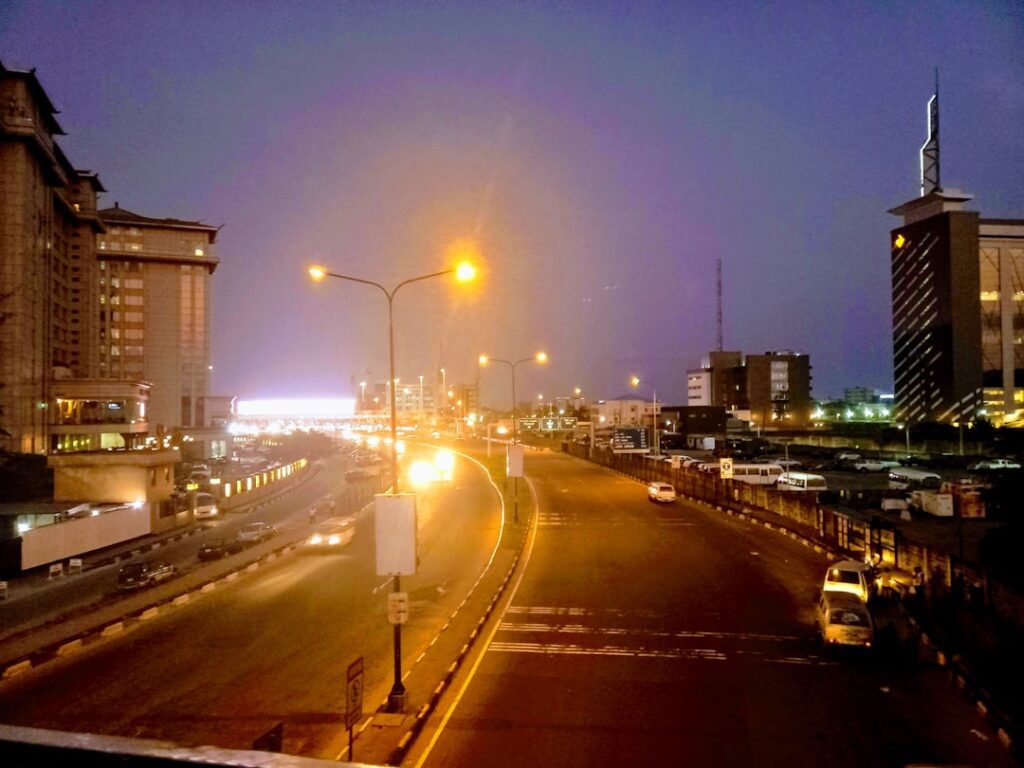
A street with cars and buildings along it, Lagos
FAQs: Your Lagos Questions Answered
1. Is Lagos safe at night?
Stick to well-lit areas in Victoria Island, Ikoyi, and Lekki after dark. Avoid isolated areas and use registered taxis or ride-hailing services. Most restaurants and venues in business districts are safe until midnight. Keep valuables discreet and avoid displaying expensive electronics in public.
2. What currency is used and are credit cards accepted?
Nigerian Naira (₦) is the local currency. Credit cards are accepted at hotels, larger restaurants, and shopping malls, but carry cash for markets, transportation, and smaller establishments. ATMs are widely available but may have withdrawal limits of ₦20,000-₦40,000 per transaction.
3. How do I get from the airport to the city center?
Official airport taxis cost ₦5,000-₦7,000 to Victoria Island (45-90 minutes depending on traffic). Ride-hailing apps (Bolt, Uber) charge similar rates. Avoid unauthorized taxis. Book airport transfers at GetYourGuide for convenience.
4. Do I need to speak the local language?
English is widely spoken in business and tourist areas. Learning basic Yoruba phrases like “Ẹ káàbọ” (hello), “Ẹ ṣé” (thank you), and “Bawo ni?” (how are you?) will be appreciated but not essential. Most signs and menus are in English.
5. What’s the appropriate dress code?
Lightweight natural fabrics are essential due to heat and humidity. Conservative dress (covering knees and shoulders) is expected except at beaches and pools. Business casual for nicer restaurants and hotels. Pack rain gear during rainy season (April-October).
Final Thoughts: Lagos Awaits
Lagos delivers an authentic African urban experience unlike any other—a city of contrasts where luxury high-rises tower over vibrant street markets, where traditional drumming rhythms blend with contemporary Afrobeat, and where warm hospitality meets relentless energy. Despite its challenges with infrastructure and traffic, those who embrace Lagos’s chaotic charm discover a city pulsing with creativity, ambition, and cultural richness. Come prepared for sensory overload, stay open to unexpected adventures, and you’ll leave with memories of Africa’s most dynamic metropolis that will linger long after you’ve departed its shores.
Keywords
Lagos travel guide, Lagos attractions, things to do in Lagos, Lagos itinerary, Lagos restaurants, Lagos hotels, visit Lagos, Lagos tourism, Lagos vacation, Lagos trip planning, Nigeria travel, African city guide, Lagos beaches, Eyo Festival, Nigerian cuisine

