
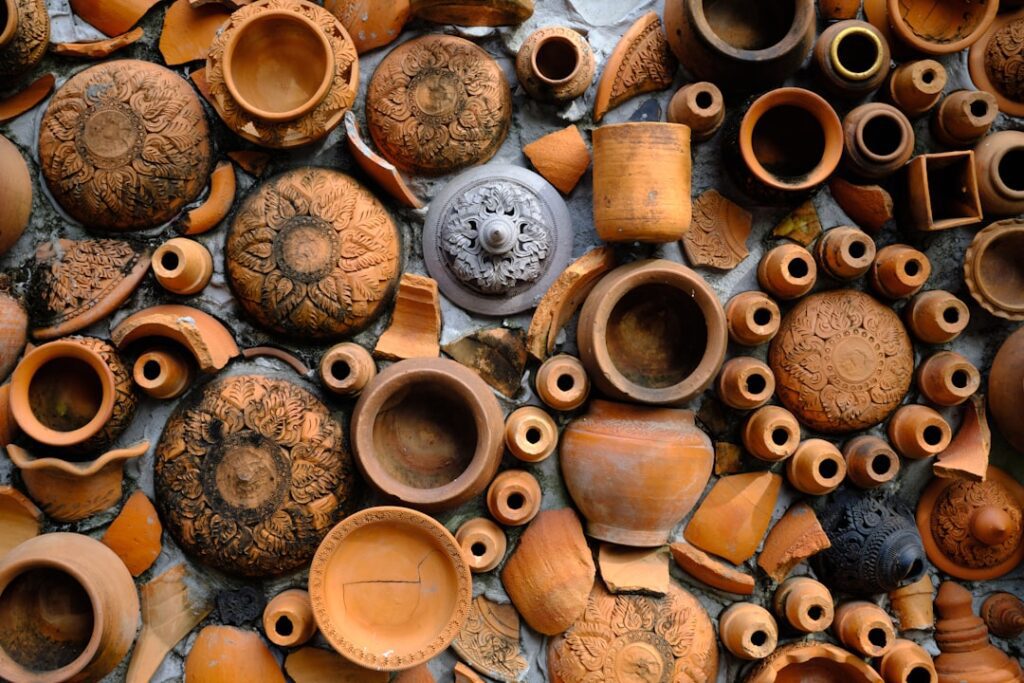
Koh Kret, Thailand’s Essential Pottery, River Life & Mon Heritage (2025)
Just 20 kilometers north of Bangkok’s chaos, a 2-kilometer-wide island in the Chao Phraya River preserves traditions that date back to 1722. While 16 million tourists crowd Bangkok’s temples annually, fewer than 200,000 discover Koh Kret annually, where the Mon people have maintained their distinctive pottery techniques and Buddhist practices for generations. Here, electric tuk-tuks are replaced by bicycle paths, high-rises by single-story homes, and the scent of river water mingles with wood-fired kilns. This isn’t Thailand as you know it—it’s a living cultural preserve where time moves to the rhythm of the tides.
Why Koh Kret, Thailand Stands Out

A street sign in a foreign language in front of a building, Koh Kret, Thailand
- Historic Architecture: Wat Paramaiyik’s 19th-century Burmese-style chedi houses ancient Mon Buddha images rarely seen elsewhere in Thailand
- Cultural Scene: The Koh Kret Pottery Festival each February showcases traditional Mon ceramic techniques passed down through seven generations
- Local Specialties: Khao Chae, fragrant rice served in jasmine-scented ice water with traditional side dishes, a royal Mon recipe surviving only here
Pro Tip: Arrive on weekday mornings before 10 AM when the island feels entirely yours—weekends draw Bangkok crowds that triple wait times and diminish the tranquil atmosphere. The sweet spot? Tuesday through Thursday, when artisans have fresh stock but visitors are scarce.
Map of Koh Kret, Thailand
Use these interactive maps to explore Koh Kret, Thailand and plan your route:
📍 View Koh Kret, Thailand on OpenStreetMap
🗺️ Open Koh Kret, Thailand in Google Maps
Planning Your Trip: Practical Essentials
Getting There and Around
- By Air: Fly into Bangkok’s Suvarnabhumi Airport (BKK), then take the Airport Rail Link to Mo Chit station (45 minutes, 45 baht), followed by taxi to Wat Sanam Nuea pier (30 minutes, 150 baht). Book flights at Skyscanner for best deals.
- By Train: From Bangkok’s Hua Lamphong station, take trains to Rangsit station (1 hour, 10-30 baht), then local taxi to pier. Reserve tickets at Trainline or the national railway website.
- By Car: Drive north on Highway 304, exit at Pak Kret, park at Wat Sanam Nuea (40 baht/day). Compare car rentals at RentalCars.com.
- Local Transport: Cross to Koh Kret by orange-crossed ferry (5 baht, 3 minutes), then rent bicycles (50 baht/hour) or walk the 6-kilometer loop. No cars permitted on island.
Best Time to Visit
Koh Kret’s tropical climate means you’ll want to time your visit carefully—the island can flood during monsoon season, while cool season offers perfect cycling weather. Savvy travelers target November through February when temperatures are mild and rainfall minimal.
| Season | Weather | Highlights |
|---|---|---|
| Cool (Nov–Feb) | 25-32°C, low humidity, minimal rain | Perfect cycling conditions, outdoor pottery demonstrations, weekend markets in full swing |
| Hot (Mar–May) | 30-38°C, high humidity, occasional storms | Fewer crowds, early morning visits essential, indoor museum visits comfortable |
| Rainy (Jun–Oct) | 25-33°C, heavy afternoon rains, possible flooding | Lush greenery, dramatic river views, some areas inaccessible during high water |
Budgeting for Koh Kret, Thailand

A monk in orange robes walking down a street, Koh Kret, Thailand
| Category | Budget | Mid-range | Luxury |
|---|---|---|---|
| Accommodation | 400-800 baht/night (off-island guesthouses) | 1,200-2,500 baht/night (riverside hotels) | 3,000+ baht/night (boutique resorts) |
| Meals | 50-100 baht/meal (street food, market stalls) | 150-300 baht/meal (restaurants with river views) | 500+ baht/meal (private dining experiences) |
| Transport | 100 baht/day (ferry + bicycle rental) | 300 baht/day (taxi + bicycle + boat taxi) | 1,000+ baht/day (private longtail boat charter) |
| Activities | Free-200 baht (temples, walking tours) | 300-600 baht (pottery classes, guided tours) | 800-1,500 baht (private cultural workshops) |
| Daily Total | 650-1,200 baht | 1,950-3,700 baht | 5,300+ baht |
Top Attractions and Must-See Sights
| Attraction | Description | Hours | Entry Fee |
|---|---|---|---|
| Wat Paramaiyik | Historic Mon temple with distinctive Burmese-style architecture and ancient Buddha images | 8 AM-5 PM daily | Free (donations welcome) |
| Koh Kret Pottery Village | Working studios where you can watch artisans create traditional Mon pottery using ancient techniques | 9 AM-4 PM (closed Mon) | Free to observe, 200 baht workshops |
| Mon Cultural Learning Center | Museum detailing Mon history, migration patterns, and cultural preservation efforts | 10 AM-4 PM (Wed-Sun) | 50 baht |
| Weekend Walking Street | Vibrant market featuring local crafts, traditional Mon snacks, and live cultural performances | Sat-Sun 8 AM-5 PM | Free entry |
3-Day Itinerary: Koh Kret, Thailand’s Highlights & Hidden Gems
Day 1: Mon Heritage & Riverside Life
- Morning: Catch the 8 AM ferry from Wat Sanam Nuea (5 baht) and rent bicycles immediately upon arrival (50 baht/hour). Cycle to Wat Paramaiyik to see the morning alms ceremony and explore the temple before crowds arrive.
- Afternoon: Lunch at Baan Suan Rim Nam (120-250 baht dishes) for their legendary fried fish with mango salad, then visit the Mon Cultural Learning Center to understand the community’s 300-year history on the island.
- Evening: Return bicycles and take a sunset longtail boat tour (400 baht/hour) to see the island from the water, followed by dinner at Koh Kret Homestay Restaurant for authentic Mon family recipes.
Day 2: Pottery & Local Crafts
- Morning: Arrive at Koh Kret Pottery Village by 9 AM for a 2-hour pottery workshop (350 baht) where you’ll learn traditional coil techniques from fourth-generation artisans.
- Afternoon: Explore the smaller family-run studios along the back lanes where you’ll find unique pieces not available in main shops, then enjoy lunch at Rim Nam Café with their famous khao chae (85 baht).
- Evening: Join the locals at Wat Sao Thong Thong for evening meditation (6 PM daily, free), then sample street food along the main path—don’t miss the coconut pancakes (20 baht) at the stall near the 7-Eleven.
Day 3: Island Exploration & Departure
- Morning: Walk the northern forest path (free) to discover the island’s agricultural side—fruit orchards, herb gardens, and the last remaining traditional Mon houses built on stilts.
- Afternoon: Final souvenir shopping at the smaller craft shops near the ferry pier where prices are 20-30% lower than main tourist areas, with lunch at Mae Sri Ruen for their exceptional green curry (95 baht).
- Evening: Take the 5 PM ferry back to mainland, then arrange transport to Bangkok or your next destination—the BTS Skytrain from Mo Chit station connects to most city areas.
Cultural Insights & Etiquette
- Language: Basic Thai phrases work, but learn “Sawasdee” (hello) and “Khop khun” (thank you)—the Mon community appreciates the effort even though most speak Thai
- Customs: Remove shoes before entering homes and temples, never touch anyone’s head, and avoid public displays of affection—the Mon are traditionally conservative Buddhists
- Tipping: Not expected but appreciated—round up taxi fares, leave 20-40 baht at restaurants, 50-100 baht for tour guides
- Dress Code: Shoulders and knees covered in temples, lightweight natural fabrics recommended for the humid climate, comfortable walking shoes essential
- Business Hours: Most shops 9 AM-5 PM, temples 8 AM-6 PM, restaurants 10 AM-8 PM—many close Mondays when tourist numbers are lowest
Where to Eat: Koh Kret, Thailand’s Best Bites
Koh Kret’s food scene reflects its Mon heritage—lighter, less spicy than central Thai cuisine, with distinctive rice-based dishes and freshwater fish preparations. You’ll find exceptional family-run kitchens rather than fancy restaurants, with most seating overlooking the river.
Must-Try Local Specialties
- Khao Chae: Fragrant rice served in jasmine-scented iced water with traditional side dishes—find the authentic version at Rim Nam Café for 85 baht
- Khanom Tom: Sweet rice flour balls filled with palm sugar and coconut, best from the vendor near Wat Paramaiyik’s entrance (30 baht/5 pieces)
- Pla Pao: Salt-crusted river fish grilled over charcoal, stuffed with lemongrass—Baan Suan Rim Nam prepares it perfectly for 180 baht
Restaurant Recommendations by Budget
| Type | Restaurant | Specialty | Price Range |
|---|---|---|---|
| Budget | Koh Kret Street Food Stalls (main path) | Fresh coconut ice cream, grilled skewers, noodle soups | 20-60 baht per item |
| Mid-range | Baan Suan Rim Nam (riverside) | Traditional Mon curries, grilled river fish, homemade desserts | 120-280 baht per dish |
| Fine dining | Koh Kret Homestay Restaurant (western island) | Multi-course Mon tasting menus, private river view tables | 500-800 baht per person |
Where to Stay
Most visitors day-trip from Bangkok, but staying overnight reveals Koh Kret’s magical early mornings and peaceful evenings. Options range from basic homestays to comfortable riverside resorts. Compare prices and book at Booking.com or Airbnb for apartments.
Best Neighborhoods for Accommodation
- Near Ferry Pier: Most convenient for exploring, with several guesthouses and the island’s only small hotel—ideal for first-time visitors wanting easy access
- Western Riverside: Quieter area with homestays offering authentic Mon family experiences—perfect for cultural immersion and sunset views
- Pak Kret Mainland: More hotel options just across the river, 5-minute ferry ride to island—best for those wanting modern amenities

A group of boats floating on top of a river, Koh Kret, Thailand
FAQs: Your Koh Kret, Thailand Questions Answered
1. Is Koh Kret, Thailand safe at night?
Extremely safe—the island has very low crime rates, and the small community looks out for visitors. Still, take normal precautions: stick to lit paths, avoid isolated areas after dark, and keep valuables secure. The main paths remain active until about 9 PM when restaurants close.
2. What currency is used and are credit cards accepted?
Thai baht is the currency, and cash is essential—most small shops, food stalls, and bicycle rentals don’t accept cards. ATMs are available on the mainland near the ferry pier, but it’s wise to bring sufficient cash from Bangkok. Larger restaurants may accept credit cards, but assume cash-only for most transactions.
3. How do I get from the airport to Koh Kret?
From Suvarnabhumi Airport (BKK), take the Airport Rail Link to Phaya Thai (45 minutes, 45 baht), transfer to BTS to Mo Chit (20 minutes, 42 baht), then taxi to Wat Sanam Nuea pier (30 minutes, 150-200 baht). Total travel time: 2 hours. Book airport transfers at GetYourGuide for convenience.
4. Do I need to speak the local language?
Not essential—basic English works at tourist spots, and locals are patient with gestures. Learning a few Thai phrases enhances your experience significantly. The Mon community speaks Thai primarily, though older generations may use Mon language among themselves.
5. What’s the appropriate dress code?
Modest, lightweight clothing covering shoulders and knees for temple visits—carry a scarf for quick cover-ups. Otherwise, comfortable walking clothes and shoes are fine. The island is casual, but respectful attire shows cultural sensitivity, especially when visiting religious sites or family homes.
Final Thoughts: Koh Kret, Thailand Awaits
Koh Kret offers something increasingly rare in Thailand—an authentic cultural experience untouched by mass tourism. Here, you’re not just observing traditions; you’re participating in a living culture that has maintained its identity against modern pressures. The island’s magic lies in its subtle details: the scent of clay from morning pottery sessions, the taste of jasmine-infused rice, the sound of bicycle bells on empty paths. Travelers often discover that their most memorable Thailand moments happened not in crowded temples, but in quiet conversations with Mon artisans or during golden-hour cycles along the river. Your best bet? Visit mid-week, come with curiosity rather than expectations, and leave room in your luggage for pottery—these handmade pieces will remind you of Koh Kret’s unique spirit long after you’ve returned home.

