
Isla del Sol, Bolivia: Essential Ancient Ruins, Sacred Waters & Mountain Trails (2025)
Sunrise at 6:15 AM reveals what makes Isla del Sol extraordinary: the Andes reflected in Lake Titicaca’s mirror-still waters at 12,507 feet elevation. Fishermen’s wooden boats slice through cobalt blue while the morning air carries the scent of burning eucalyptus from Aymara villages. This isn’t just scenery—it’s the birthplace of Inca civilization according to Andean cosmology, where ancient stone pathways connect ruins that predate Machu Picchu by centuries.
Why Isla del Sol, Bolivia Stands Out

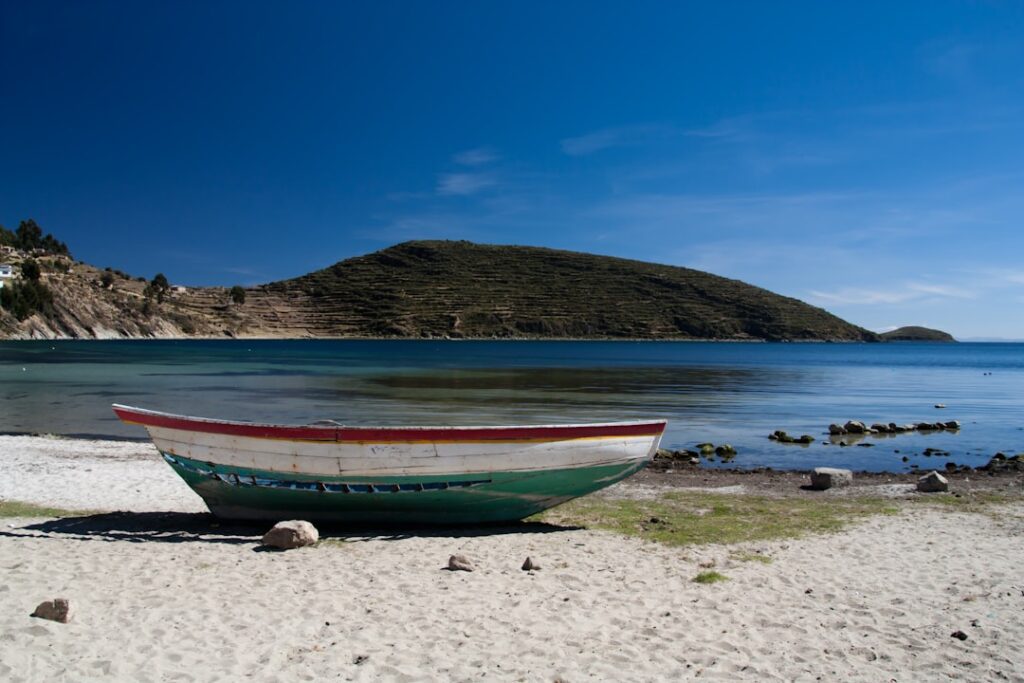
Calm body of water, Isla del Sol, Bolivia
- Historic Architecture: The Inca Palace (Pilko Kaina) built around 1450 AD served as a royal retreat with perfect stone masonry still intact.
- Cultural Scene: The annual Fiesta del Sol each June features traditional Aymara music and offerings to Pachamama (Mother Earth).
- Local Specialties: Fresh-caught trucha (trout) from Lake Titicaca grilled with local herbs and served with quinoa.
Pro Tip: Arrive on the 8:30 AM ferry from Copacabana to beat the day-tripper crowds that descend after 11 AM—you’ll have the sacred sites to yourself for golden morning photography.
Map of Isla del Sol, Bolivia
Use these interactive maps to explore Isla del Sol, Bolivia and plan your route:
📍 View Isla del Sol, Bolivia on OpenStreetMap
🗺️ Open Isla del Sol, Bolivia in Google Maps
Planning Your Trip: Practical Essentials
Getting There and Around
- By Air: Fly into El Alto International Airport (LPB) in La Paz, then take a 3.5-hour bus to Copacabana (30 BOB/$4.50). Book flights at Skyscanner for best deals.
- By Train: No direct rail service to Isla del Sol—travelers typically bus from La Paz or Puno, Peru to reach departure points.
- By Car: Drive from La Paz to Copacabana (150 km, 3.5 hours), then park near the ferry terminal (10 BOB/$1.50 daily). Compare car rentals at RentalCars.com.
- Local Transport: Ferries from Copacabana (25 BOB/$3.60 each way) run at 8:30 AM and 1:30 PM—no cars on the island, only walking trails connect villages.
Best Time to Visit
The dry season from May to October offers crystal-clear days perfect for hiking, though nights can drop below freezing. Travelers often discover the shoulder months provide the ideal balance of comfortable temperatures and thinner crowds.
| Season | Weather | Highlights |
|---|---|---|
| Dry Season (May–Oct) | 45-65°F days, 25-35°F nights, minimal rain | Optimal hiking conditions, festival season, busy with tourists |
| Wet Season (Nov–Apr) | 50-68°F days, 35-45°F nights, frequent showers | Lush landscapes, fewer visitors, challenging trail conditions |
| Shoulder (Apr/Oct) | 48-62°F days, 30-40°F nights, occasional rain | Perfect balance of weather and solitude, ideal for photography |
Budgeting for Isla del Sol, Bolivia

Coastal village nestled beside a vast blue lake under clouds., Isla del Sol, Bolivia
| Category | Budget | Mid-range | Luxury |
|---|---|---|---|
| Accommodation | 50-80 BOB/$7-12 (basic hostel) | 150-250 BOB/$22-36 (private room) | 300+ BOB/$43+ (lakeview eco-lodge) |
| Meals | 15-25 BOB/$2-4 (market meals) | 35-60 BOB/$5-9 (restaurant dining) | 80+ BOB/$12+ (multi-course dinners) |
| Transport | 50 BOB/$7 (ferry round-trip) | 100 BOB/$14 (private boat transfers) | 200+ BOB/$29 (guided boat tours) |
| Activities | 10 BOB/$1.50 (site entry fees) | 50 BOB/$7 (guided hikes) | 150+ BOB/$22 (private guides) |
| Daily Total | 125-165 BOB/$18-24 | 335-460 BOB/$48-66 | 730+ BOB/$105+ |
Top Attractions and Must-See Sights
| Attraction | Description | Hours | Entry Fee |
|---|---|---|---|
| Chincana Labyrinth | Ancient stone maze complex where Inca creation myths say the sun god was born | Sunrise to sunset | 15 BOB/$2.20 |
| Sacred Rock (Titi Khar’ka) | Massive puma-shaped stone where Manco Cápac and Mama Ocllo emerged to found the Inca Empire | Always accessible | 10 BOB/$1.50 |
| Yumani Steps | 206 stone steps connecting the dock to the Fountain of Youth with panoramic lake views | Always accessible | Free |
| Pilko Kaina Palace | Two-story Inca complex with original thatched roof and ceremonial niches overlooking the lake | 8 AM-5 PM | 10 BOB/$1.50 |
3-Day Itinerary: Isla del Sol, Bolivia’s Highlights & Hidden Gems
Day 1: Northern Ruins & Inca Mythology
- Morning: Catch the 8:30 AM ferry from Copacabana (25 BOB) to Cha’llapampa, then hike to Chincana Labyrinth—the morning light makes the stone formations glow.
- Afternoon: Visit the Museo de Oro Oro (Gold Museum) showcasing pre-Columbian artifacts, then lunch at Restaurant Inti Kala featuring fresh lake trout (35 BOB).
- Evening: Hike the coastal trail to Cha’lla village for sunset photography, then overnight at Hostal Cha’lla with lakeside rooms (80 BOB).
Day 2: Southern Sacred Sites & Local Culture
- Morning: Early boat transfer to Yumani (15 BOB) to climb the famous staircase before crowds arrive—stop at the three natural springs believed to grant eternal youth.
- Afternoon: Explore Pilko Kaina Palace and the Garden of the Inca, then enjoy lunch at Las Velas Restaurant with their signature quinoa soup (25 BOB).
- Evening: Join a local family for a traditional pachamanca dinner (earth oven cooking) arranged through your hostel (60 BOB including meal).
Day 3: Hiking the Ridge & Island Life
- Morning: Trek the island’s spine from Yumani to Cha’llapampa (4 hours, free), passing through traditional Aymara farming communities with 360-degree lake views.
- Afternoon: Picnic lunch purchased from local vendors (15 BOB) at Mirador Marka Pampa, the island’s highest viewpoint at 4,075 meters.
- Evening: Return ferry to Copacabana at 4:30 PM, timing your departure for golden hour photography across Lake Titicaca.
Cultural Insights & Etiquette
- Language: Spanish and Aymara spoken—learn “Jallalla” (cheers/to life) and “Yuspagara” (thank you) to connect with locals.
- Customs: Always ask permission before photographing people—many believe cameras can capture part of their soul.
- Tipping: Not expected but appreciated—round up restaurant bills or give 10-20 BOB to exceptional guides.
- Dress Code: Modest clothing respects local traditions—cover shoulders and knees when visiting villages.
- Business Hours: Shops open 8 AM-6 PM, but many close for siesta between 1-3 PM—plan meals and purchases accordingly.
Where to Eat: Isla del Sol, Bolivia’s Best Bites
Dining here means simple, hearty meals using ingredients sourced from the lake and terraced hillsides. You won’t find fancy international cuisine—instead, embrace the authentic Aymara cooking that has sustained islanders for generations.
Must-Try Local Specialties
- Trucha a la Plancha: Fresh lake trout grilled with local muña mint—best at Restaurant Inti Wasi in Yumani
- Sajta de Pollo: Spicy chicken stew with potatoes and yellow chili—Las Velas makes an exceptional version
- Quinua Real: Royal quinoa grown locally and served as soup or side—purer flavor than exported varieties
Restaurant Recommendations by Budget
| Type | Restaurant | Specialty | Price Range |
|---|---|---|---|
| Budget | Comedor Yumani (Yumani village) | Set menu lunches with lake views | 20-30 BOB/$3-4 |
| Mid-range | Restaurant Palacio del Inca (near ruins) | Traditional pachamanca feasts | 40-70 BOB/$6-10 |
| Fine dining | Las Velas (southern ridge) | Candlelit dinners with sunset views | 80-120 BOB/$12-17 |
Where to Stay
Accommodation ranges from basic family-run hostels to comfortable eco-lodges—book ahead during peak season as options are limited. Compare prices and book at Booking.com or Airbnb for apartments.
Best Neighborhoods for Accommodation
- Yumani (South Island): Most services and restaurants, stunning sunset views, but can get crowded with day-trippers
- Cha’llapampa (North Island): Quieter atmosphere, closer to major ruins, but limited dining options
- Cha’lla (East Coast): Peaceful fishing village vibe, beautiful beaches, ideal for travelers seeking solitude

A wide expanse of white sand with a blue sky in the background, Isla del Sol, Bolivia
FAQs: Your Isla del Sol, Bolivia Questions Answered
1. Is Isla del Sol, Bolivia safe at night?
Extremely safe—the island has virtually no crime. However, trails are unlit after dark, so always carry a flashlight or headlamp when walking between villages at night.
2. What currency is used and are credit cards accepted?
Bolivian Bolivianos (BOB) are the currency—bring plenty of cash as only a few places in Yumani accept credit cards, and ATMs are nonexistent on the island.
3. How do I get from the airport to the island?
From La Paz airport, take a taxi to the bus station (50 BOB), then a bus to Copacabana (30 BOB), followed by a ferry (25 BOB)—total journey takes 5-6 hours. Book airport transfers at GetYourGuide for convenience.
4. Do I need to speak the local language?
Basic Spanish helps tremendously—while some tourism workers speak English, most island residents only speak Spanish and Aymara. Learn key phrases for ordering food and asking directions.
5. What’s the appropriate dress code?
Layered clothing is essential—days can be warm but temperatures drop sharply at night. Sturdy hiking shoes are mandatory for the rocky trails, and don’t forget sunscreen and a hat at this altitude.
Final Thoughts: Isla del Sol, Bolivia Awaits
Isla del Sol delivers what many travelers seek but rarely find: authentic connection to both ancient history and living culture. While Machu Picchu draws millions, here you can walk Inca trails in relative solitude, hearing only the lake’s waves and distant Quechua conversations. The magic isn’t just in the ruins—it’s in watching sunset from 4,000 meters, sharing mate de coca with local families, and understanding why this place remains sacred after centuries. Savvy visitors know to spend at least one night on the island to experience the profound stillness that descends after the last ferry departs—that’s when Isla del Sol truly reveals its soul.

