
Incheon, South Korea’s Epic Ports, Palaces & Perfect Noodles (2026)
While 95% of visitors to Incheon International Airport rush straight to Seoul, they’re bypassing a city with its own 600-year history, a UNESCO-listed Chinatown, and 168 islands. Incheon isn’t just a transit hub; it’s where modern Korea was arguably born with the 1883 opening of its port, creating a layered city of historic treaty ports, vibrant waterfronts, and culinary traditions you won’t find anywhere else. Here’s what you’re missing by not stopping.
Why Incheon, South Korea Stands Out

Four flying gull birds, Incheon, South Korea
- Historic Architecture: The Jemulpo Gurakbu (1894), a former exclusive social club for foreign traders, is a stunning red-brick Western building that symbolizes the opening of Korea to the world.
- Cultural Scene: The annual Incheon Pentaport Rock Festival in August draws top international and Korean acts, transforming Songdo into a massive three-day music celebration.
- Local Specialties: You must try Jajangmyeon, the iconic black bean noodle dish invented right here in Incheon’s Chinatown in 1905.
Pro Tip: Visit on a weekday to avoid the weekend crowds from Seoul that descend on Chinatown and Wolmido. For the best weather and fewer people, aim for the shoulder months of April-May or September-October.
Map of Incheon, South Korea
Use these interactive maps to explore Incheon, South Korea and plan your route:
📍 View Incheon, South Korea on OpenStreetMap
🗺️ Open Incheon, South Korea in Google Maps
Planning Your Trip: Practical Essentials
Getting There and Around
- By Air: Incheon International Airport (ICN) is a global hub served by most major airlines. From the airport, take the AREX All-Stop Train (approx. 60 mins, ₩5,000) or a limousine bus directly to downtown Incheon. Book flights at Skyscanner for best deals.
- By Train: The AREX express train connects Seoul Station to Incheon Airport in 43 minutes. For downtown Incheon, use Seoul Metro Line 1. Reserve tickets at Trainline or the national railway website.
- By Car: Driving from Seoul takes about 1-1.5 hours via the Olympic Highway. Parking can be tight in older districts like Chinatown. Compare car rentals at RentalCars.com.
- Local Transport: Incheon’s subway (Lines 1, 2, Suin-Bundang) and extensive bus network are efficient. Use a T-money card (₩2,500 base bus fare, ₩1,500 subway). Check official city transport websites for passes and schedules.
Best Time to Visit
Incheon experiences four distinct seasons. Spring and autumn offer the most pleasant conditions for exploration, while summer is vibrant but humid, and winter is cold and crisp.
| Season | Weather | Highlights |
|---|---|---|
| Summer (Jun–Aug) | Warm to hot, 23-29°C (73-84°F), humid with monsoon rains in July. | Beach trips to Eurwangni, Pentaport Rock Festival, bustling night markets. Peak crowds. |
| Winter (Dec–Feb) | Cold, -5 to 3°C (23-37°F), occasional snow. | Fewer tourists, stark beauty at Songdo Central Park, hearty stews (jjigae) in local eateries. |
| Shoulder (Apr–May/Sep–Oct) | Mild, 10-22°C (50-72°F), low rainfall, sunny days. | Ideal for walking tours of Open Port area, island hopping, and outdoor dining. The sweet spot for travel. |
Budgeting for Incheon, South Korea

Red and brown windmill on brown field, Incheon, South Korea
| Category | Budget | Mid-range | Luxury |
|---|---|---|---|
| Accommodation | Hostel/Guesthouse: ₩30,000-₩60,000 | Business Hotel: ₩80,000-₩150,000 | 5-Star (Songdo): ₩250,000+ |
| Meals | Street food/market meals: ₩5,000-₩10,000 | Local restaurant: ₩15,000-₩25,000 | Fine dining/hotel buffet: ₩50,000+ |
| Transport | Subway/Bus (T-money): ₩5,000/day | Taxis: ₩15,000-₩30,000/day | Private driver: ₩200,000+/day |
| Activities | Parks, temples, free museums | Museum entries, ferry rides: ₩10,000-₩20,000 | Private island tours, spa packages |
| Daily Total | ₩50,000-₩80,000 | ₩120,000-₩200,000 | ₩400,000+ |
Top Attractions and Must-See Sights
| Attraction | Description | Hours | Entry Fee |
|---|---|---|---|
| Incheon Open Port Area & Chinatown | Walk the historic streets where Korea opened to the world, lined with museums, old banks, and the birthplace of Jajangmyeon. | 24/7 (Museums 9 AM-6 PM) | Free (Museums ~₩1,000) |
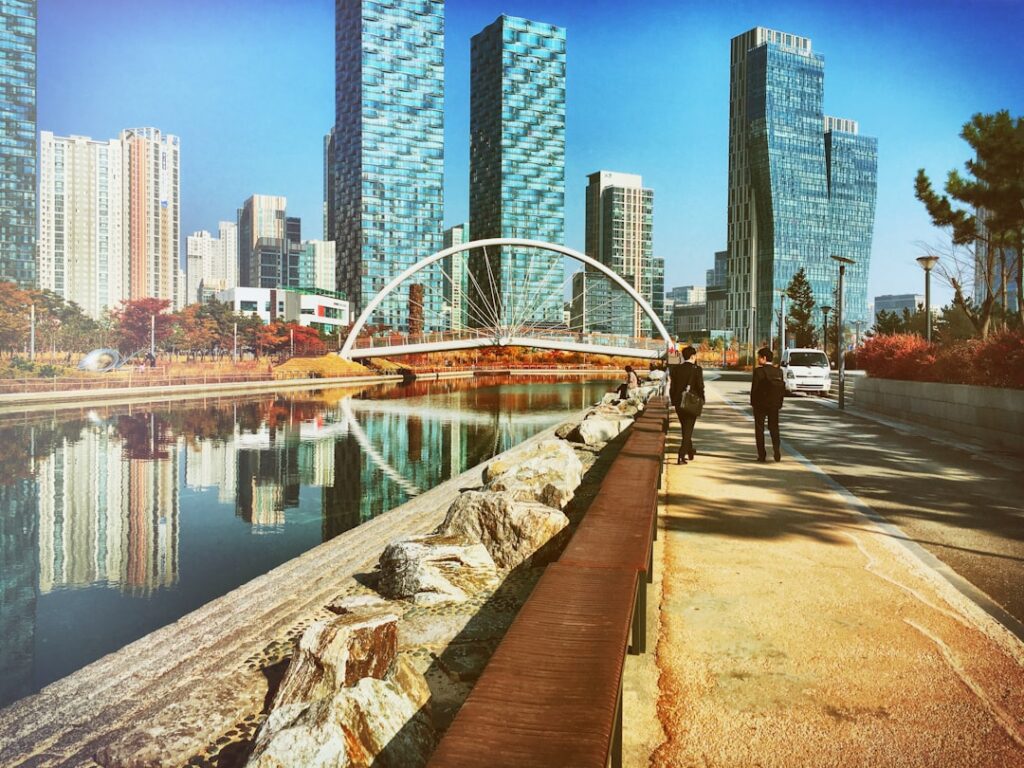
| Songdo Central Park | A futuristic 100-acre park with a seawater canal, rentable kayaks and swan boats, and stunning views of the Songdo skyline. | Open 24 hours | Free (Boat rental ₩15,000/30min) |
| Wolmido Island & Theme Street | A coastal promenade with an old-school amusement park, seaside raw fish restaurants, and fantastic sunset views over the Yellow Sea. | 24/7 (Rides 10 AM-10 PM) | Free (Ride tickets ₩5,000 each) |
| Sinpo International Market | A bustling traditional market famous as the birthplace of “dakgangjeong” (sweet crispy chicken) and a sensory overload of food and goods. | 8 AM – 10 PM (Varies by stall) | Free (Pay for food) |
3-Day Itinerary: Incheon, South Korea’s Highlights & Hidden Gems
Day 1: Historic Ports & The Original Chinatown
- Morning (9 AM): Start at Incheon Station (Metro Line 1) and walk up the famous Chinatown Jajangmyeon Museum Street. Visit the museum (₩1,000) to learn the history of the iconic noodle dish.
- Afternoon (1 PM): Enjoy lunch at Gonghwachun, one of the oldest restaurants serving Jajangmyeon (₩7,000). Then explore the Open Port Museum and the picturesque Jayu Park with its statue of General MacArthur.
- Evening (7 PM): Take a short taxi to Wolmido for a seafood dinner at a waterside restaurant like Wolmido Suminine (assorted raw fish platter for two ~₩60,000) and a stroll along the lit-up promenade.
Day 2: Modern Marvels & Market Bites
- Morning (10 AM): Head to futuristic Songdo. Rent a bike (₩3,000/hour) or a pedal swan boat at Songdo Central Park. Visit the Tri-bowl, an iconic cultural space.
- Afternoon (1 PM): Have lunch at the Songdo Convensia food court for variety. Then, take a taxi to Sinpo International Market. Your mission: try the legendary Sinpo Dakgangjeong (sweet crispy chicken, ₩15,000).
- Evening (6 PM): Experience the Songdo Canal Walk at night, with its beautiful LED light displays. For dinner, try a modern Korean barbecue place in the G-Tower area.
Day 3: Island Escape & Cultural Finale
- Morning (9 AM): Take a bus or taxi to Yeongjongdo Island (near the airport) to visit the serene Jeondeungsa Temple (₩2,000), nestled in a fortress and over 1,000 years old.
- Afternoon (1 PM): Have a temple-style vegetarian lunch near Jeondeungsa. Return to mainland Incheon and visit the Incheon Art Platform, a complex of artist studios and galleries in renovated historic warehouses.
- Evening (7 PM): For your final meal, savor a bowl of spicy Janchi Guksu (banquet noodles) at a local spot in the Bupyeong Market area, a less-touristy market loved by locals.
Cultural Insights & Etiquette
- Language: Basic Korean greetings go a long way. Say “Annyeonghaseyo” (Hello) and “Gamsahamnida” (Thank you). In Chinatown, many signs are in Chinese and Korean.
- Customs: Receive items with both hands. Avoid writing names in red ink. When dining, wait for the eldest to start eating.
- Tipping: Tipping is not customary in Korea. A simple thank you is sufficient. High-end hotels or Western-style restaurants may add a service charge.
- Dress Code: Smart-casual is fine. Cover shoulders and knees when visiting temples. Remove shoes when entering a traditional restaurant with floor seating.
- Business Hours: Most shops open 10 AM-8 PM. Museums often close on Mondays. Major holidays like Seollal (Lunar New Year) and Chuseok (Thanksgiving) see many closures.
Where to Eat: Incheon, South Korea’s Best Bites
Incheon’s cuisine tells its history. From the Chinese-Korean fusion of its Chinatown to the fresh seafood of its islands and the street food of its markets, it’s a food lover’s paradise where dishes have a unique local twist.
Must-Try Local Specialties
- Jajangmyeon: The must-eat. Thick wheat noodles smothered in a savory black bean sauce with pork and vegetables. For the authentic experience, head to any of the original restaurants on Chinatown’s main street.
- Sinpo Dakgangjeong: Deep-fried chicken pieces coated in a sweet, spicy, and sticky glaze. The original stall in Sinpo International Market always has a line for good reason.
- Hwe (회 – Raw Fish): Incredibly fresh from the Yellow Sea. Wolmido’s many “Hwe Jib” (raw fish houses) offer multi-course meals starting with sashimi and ending with a spicy fish stew (maeuntang).
Restaurant Recommendations by Budget
| Type | Restaurant | Specialty | Price Range |
|---|---|---|---|
| Budget | Sinpo Dakgangjeong (Sinpo Market) | The original sweet crispy chicken | ₩15,000 per serving |
| Mid-range | Wolmido Suminine (Wolmido) | Fresh assorted raw fish platters | ₩30,000-₩70,000 per person |
| Fine dining | Bistro The King (Songdo) | Modern French-Korean fusion with views | ₩80,000+ per person |
Where to Stay
Incheon offers diverse stays, from historic areas to futuristic business hubs. For culture, stay near the Open Port; for modernity, choose Songdo; for airport convenience, look at Yeongjongdo. Compare prices and book at Booking.com or Airbnb for apartments.
Best Neighborhoods for Accommodation
- Open Port/Jung-gu: The historic heart. You’re steps from Chinatown, museums, and charming old streets. Best for culture buffs, but hotels can be older. Great local vibe.
- Songdo: The futuristic, planned international business district. Features sleek high-rise hotels, Central Park, and modern amenities. Ideal for business travelers or those who prefer a newer, quieter base.
- Yeongjongdo (Near Airport): Packed with major chain hotels and resorts offering free airport shuttles. Perfect for very early flights, layovers, or a peaceful resort-style stay by the sea.

A city street with a lot of tall buildings, Incheon, South Korea
FAQs: Your Incheon, South Korea Questions Answered
1. Is Incheon, South Korea safe at night?
Yes, Incheon is generally very safe. Violent crime is rare. Standard precautions apply: be aware of your belongings in crowded markets, and well-lit main areas like Wolmido Promenade or Songdo are perfectly fine for evening strolls.
2. What currency is used and are credit cards accepted?
The South Korean Won (₩) is the currency. Credit cards (Visa, Mastercard) are widely accepted in hotels, restaurants, and larger shops. However, always carry some cash for markets, street food stalls, and small family-run eateries, as they may only accept cash.
3. How do I get from the airport to the city center?
From Incheon Airport (ICN), the AREX All-Stop Train to Incheon Station takes about 60 minutes and costs ₩5,000. Airport Limousine Buses (routes 111, 306) go to various points in the city in 60-90 mins for ₩10,000-₩15,000. A taxi to downtown takes 30-50 mins and costs ₩35,000-₩55,000. Book airport transfers at GetYourGuide for convenience.
4. Do I need to speak the local language?
Not necessarily.

