

Huambo, Angola’s Hidden High-Plateau Charm, Colonial Echoes & Coffee Culture (2025)
While crowds flock to Luanda’s Atlantic coast, Huambo, Angola delivers a serene, high-altitude escape at 1,700 meters without the capital’s frenetic pace and high prices. Here, the air is crisp, the pace is measured, and the legacy of being the former “New Lisbon” is etched into wide, tree-lined avenues and sun-bleached colonial facades. Savvy travelers choose differently to discover the country’s agricultural heartland, where a single day can span exploring a 20th-century cathedral, sipping world-class local coffee, and hiking to ancient granite formations.
Why Huambo, Angola Stands Out

A jubilant graduate celebrating outside Huambo’s university with a gown and…, Huambo, Angola
- Historic Architecture: The Sé Catedral de Huambo, consecrated in 1945, is a monumental pink-and-white landmark showcasing the city’s former ambition as Portugal’s central African capital.
- Cultural Scene: The vibrant Mercado Central is a sensory immersion where you can witness daily commerce, from colorful capulana fabrics to traditional pottery, all set to the hum of Umbundu and Portuguese.
- Local Specialties: You must try Muamba de Galinha, a rich, slow-cooked chicken stew with palm oil, garlic, and okra, best enjoyed with funge (cassava porridge).
Pro Tip: Plan your visit for the dry season, from May to October. The skies are clear, the days are pleasantly warm (around 25°C/77°F), and the roads to outlying natural attractions like the Caála Lakes are most accessible. Avoid the heavy rains of January to March.
Map of Huambo, Angola
Use these interactive maps to explore Huambo, Angola and plan your route:
📍 View Huambo, Angola on OpenStreetMap
🗺️ Open Huambo, Angola in Google Maps
Planning Your Trip: Practical Essentials
Getting There and Around
- By Air: Albano Machado Airport (NOV) connects to Luanda via TAAG Angola Airlines, with flights taking about 1.5 hours. A taxi to the city center costs approximately 5,000-7,000 AOA. Book flights at Skyscanner for best deals.
- By Train: The Benguela Railway offers a scenic, historic journey from Lobito on the coast; the trip can take 12+ hours but is an adventure in itself. Services are infrequent, so check locally. Reserve tickets at Trainline or the national railway website.
- By Car: The EN-250 from Luanda is a major but long (about 600km) route. In-town parking is generally easy. For rentals, a 4×4 is recommended for excursions. Compare car rentals at RentalCars.com.
- Local Transport: Shared taxis (known as *candongueiros*) and motorcycle taxis are the most common and affordable ways to get around. Agree on a fare before departing. For more comfort, private taxis can be hired by the hour (approx. 10,000 AOA/hr).
Best Time to Visit
Huambo’s high altitude gives it a mild, subtropical climate with distinct wet and dry seasons. The dry winter months offer the most comfortable and reliable conditions for exploration.
| Season | Weather | Highlights |
|---|---|---|
| Dry Season (May–Oct) | Sunny, warm days (20-25°C/68-77°F), cool nights, virtually no rain. | Ideal for hiking, all-day city tours, and road trips. Peak clarity for photography. |
| Rainy Season (Nov–Apr) | Warm, humid with heavy afternoon thunderstorms (Jan-Mar is peak). | Lush, green landscapes. Fewer tourists, but some rural roads become impassable. |
| Shoulder (May & Oct) | Pleasant temperatures, transitioning between seasons. | Good balance of weather and potential for lower accommodation rates as seasons change. |
Budgeting for Huambo, Angola

Aerial view of Lubango city with a prominent church in Huíla, Huambo, Angola
| Category | Budget | Mid-range | Luxury |
|---|---|---|---|
| Accommodation | Guesthouse: 15,000-25,000 AOA/night | Local hotel: 35,000-60,000 AOA/night | Top city hotel: 80,000+ AOA/night |
| Meals | Market stall/street food: 1,500-3,000 AOA | Local restaurant: 5,000-10,000 AOA | Fine dining (limited): 15,000+ AOA |
| Transport | Candongueiros: 500 AOA/ride | Private taxi for half-day: ~30,000 AOA | Private car with driver: 60,000+ AOA/day |
| Activities | Cathedral visit, market exploring (free) | Museum entry: ~2,000 AOA | Guided day trip to Caála: 40,000+ AOA |
| Daily Total | 20,000-35,000 AOA | 50,000-90,000 AOA | 120,000+ AOA |
Top Attractions and Must-See Sights
| Attraction | Description | Hours | Entry Fee |
|---|---|---|---|
| Sé Catedral de Huambo | The city’s iconic twin-towered cathedral, offering a glimpse into its colonial-era ambition and architectural grandeur. | Daily, 9 AM – 5 PM | Free (donation appreciated) |
| Mercado Central | A bustling, colorful central market where you can experience local life, crafts, and fresh produce. | Mon-Sat, 7 AM – 6 PM | Free |
| Monumento à Paz | A striking modern monument commemorating the end of Angola’s civil war, symbolizing hope and renewal. | 24/7 (exterior) | Free |
| Chiva Rocks (Pedras de Chiva) | Ancient, dramatic granite rock formations located a short drive from the city, perfect for hiking and photography. | Daylight hours | ~1,000 AOA (informal local fee) |
3-Day Itinerary: Huambo, Angola’s Highlights & Hidden Gems
Day 1: Colonial Heart & Market Pulse
- Morning (7-9 AM): Start with a walk along Avenida Dr. Agostinho Neto to admire the grand, if faded, colonial architecture. Your best bet is to grab a fresh *pão* (bread roll) and local coffee from a street vendor.
- Afternoon (12-3 PM): Explore the vast **Mercado Central**. For lunch, head to **Restaurante Nossa Chapa** nearby for a hearty plate of grilled fish with rice and beans (approx. 4,500 AOA).
- Evening (6-8 PM): Visit the illuminated **Sé Catedral**. Afterwards, enjoy dinner at **Churrascaria Moçâmedes** for excellent Angolan-style barbecue (expect to spend around 8,000 AOA).
Day 2: History, Art & Local Flavors
- Morning (8 AM): Take a taxi to the **Monumento à Paz** (free) – the abstract, wing-like structure is most impressive in the morning light. Then, visit the small but insightful **Museu Regional do Huambo** (2,000 AOA) to understand the province’s ethnography.
- Afternoon (1 PM): Have lunch at **Café por do Sol**, known for its views and Portuguese-Angolan fusion. Try the *caldeirada de peixe* (fish stew) for about 6,000 AOA.
- Evening (5 PM): Experience local social life at a *cervejaria* (beer hall). **Cervejaria Ngolome** is a popular spot to enjoy a National beer and watch the day wind down.
Day 3: Natural Escapes
- Morning (7 AM): Hire a private taxi for the day (approx. 40,000 AOA) for the 45-minute drive to the **Chiva Rocks**. Hike around the massive granite formations—locals recommend a guide for the best routes.
- Afternoon (12 PM): On the return journey, stop at the **Caála Lakes** for a picnic lunch (pack supplies from the market). The serene landscape is a perfect contrast to the city.
- Evening (7 PM): For your final dinner, seek out a local *quintal* (home restaurant) for an authentic *Muamba de Galinha*. Ask your hotel to recommend one for a truly memorable meal.
Cultural Insights & Etiquette
- Language: Portuguese is the official language. Learning a few Umbundu phrases like “Wakolapo?” (How are you?) and “Yangele” (Thank you) will delight locals. English is not widely spoken.
- Customs: Greetings are important. Always offer a handshake and a polite “Bom dia” (Good day). Asking for permission before photographing people is essential.
- Tipping: Not mandatory but appreciated. In restaurants, rounding up the bill or leaving 5-10% is fine. For guides and drivers, a tip of 1,000-5,000 AOA is customary for good service.
- Dress Code: Dress modestly and smartly. Avoid overly revealing clothing. For churches, covered shoulders and knees are respectful.
- Business Hours: Shops generally open 8 AM-12 PM and 2 PM-6 PM, closing for a long lunch. Government offices keep similar hours. Many businesses are closed on Sunday.
Where to Eat: Huambo, Angola’s Best Bites
Huambo’s cuisine is a hearty blend of Portuguese influences and local staples like cassava, beans, and palm oil. Dining is a social affair, and you’ll find the best flavors in local *churrascarias* and family-run spots.
Must-Try Local Specialties
- Muamba de Galinha: The national dish: a fragrant, oily stew of chicken, palm pulp, okra, and garlic. For an authentic version, ask your accommodation to point you to a local *quintal*.
- Calulu: Dried fish or meat stewed with tomatoes, onions, okra, and sweet potato leaves. Try it at **Restaurante Kapossoca**.
- Funge: The ubiquitous side of sticky cassava porridge, perfect for scooping up stews. Any local eatery will serve it.
Restaurant Recommendations by Budget
| Type | Restaurant | Specialty | Price Range |
|---|---|---|---|
| Budget | Mercado Central Food Stalls | Fresh grilled meats, fish, and beans with rice | 1,500 – 3,000 AOA |
| Mid-range | Churrascaria Moçâmedes (Av. 1º Congresso) | Extensive charcoal-grilled meats and fish | 6,000 – 12,000 AOA |
| Fine dining | Restaurante do Hotel Lúbia | Upscale international and Angolan dishes in a formal setting | 15,000+ AOA |
Where to Stay
Accommodation in Huambo ranges from basic guesthouses to a few comfortable business hotels. The city center is compact, making most places convenient for exploration. Compare prices and book at Booking.com or Airbnb for apartments.
Best Neighborhoods for Accommodation
- City Center (Baixa): Close to the cathedral, main avenues, and markets. The most convenient location, but can be noisy. Best for first-time visitors who want to be in the heart of things.
- Bairro São João: A quieter, more residential area with some of the city’s better hotels and guesthouses. You’ll need taxis to reach the center, but it offers more tranquility.
- Near Albano Machado Airport: Practical for very short stays or early flights, but not ideal for experiencing the city’s atmosphere.
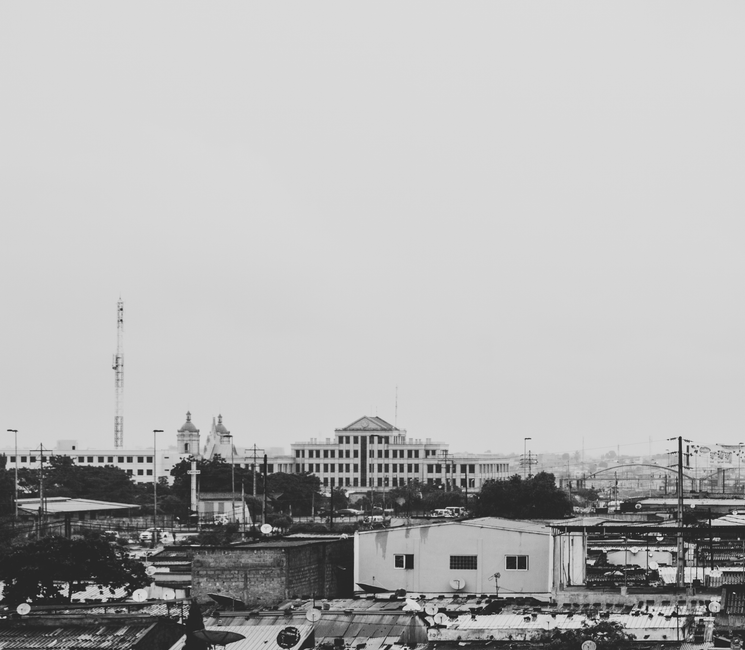
Black and white view of Angola’s urban cityscape with distinctive architecture., Huambo, Angola
FAQs: Your Huambo, Angola Questions Answered
1. Is Huambo, Angola safe at night?
Huambo is generally calmer than larger Angolan cities. Standard precautions apply: avoid walking alone in poorly lit areas at night, use registered taxis after dark, and keep valuables discreet. The city center is often lively until early evening. Always follow local advice from your hotel.
2. What currency is used and are credit cards accepted?
The Angolan Kwanza (AOA) is the currency. Carry ample cash, as credit cards are rarely accepted outside major hotels. ATMs are available in the city center but can be unreliable. Bring USD or EUR to exchange at banks (Banco de Fomento Angola or BAI are reliable).
3. How do I get from the airport to the city center?
Albano Machado Airport is about 4km from the center. Your only realistic options are taxis. The fixed fare is around 5,000-7,000 AOA. Agree on the price before getting in. For peace of mind, you can book airport transfers at GetYourGuide for convenience, though local pre-booking options are limited.
4. Do I need to speak the local language?
Portuguese is essential for basic navigation. Very little English is spoken. Learning key phrases for greetings, directions, and ordering food will vastly improve your experience. A translation app is highly recommended.
5. What’s the appropriate dress code?
Smart-casual and modest is the rule. Men rarely wear shorts. For women, knee-length skirts or trousers are advisable. The high altitude means evenings are cool, so a light jacket is useful year-round. For hiking to sites like Chiva Rocks, wear sturdy shoes.
Final Thoughts: Huambo, Angola Awaits
Huambo offers a travel experience defined by authenticity and subtle discovery. This is not a destination of blockbuster attractions, but of atmospheric streets, profound history, and genuine warmth. You’ll discover a city rebuilding with quiet pride, set against a stunning highland backdrop. For the traveler seeking to move beyond the coast and understand Angola’s diverse heart, Huambo is an essential chapter. Your best closing memory might just be a simple one: sipping a rich, locally-grown coffee in a sun-drenched plaza, watching daily life unfold at its

