
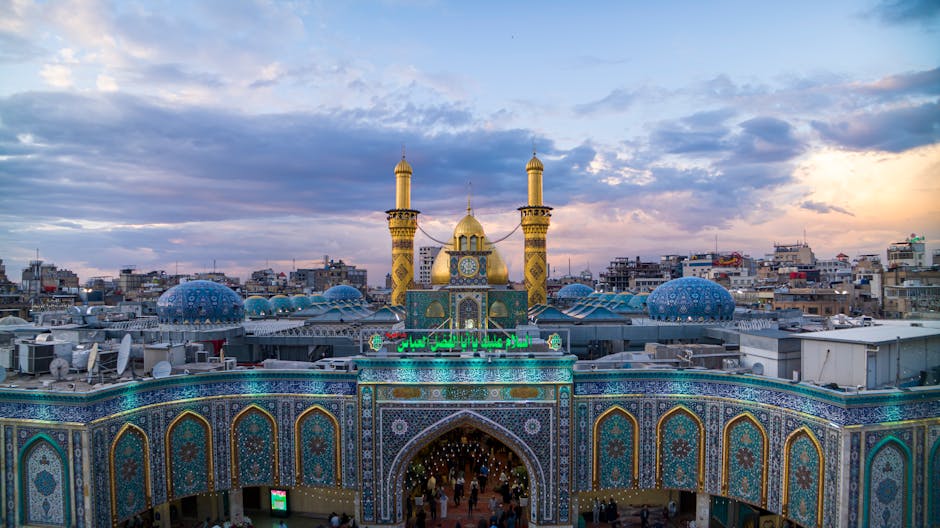
Hillah, Iraq’s Hidden Babylon, Bazaars & The Euphrates (2026)
While crowds flock to the reconstructed ruins of Persepolis, Hillah, Iraq delivers the raw, foundational stones of human civilization at the ancient city of Babylon, where the Code of Hammurabi was proclaimed and the Hanging Gardens were said to bloom. Here, you can trace the original 2,600-year-old Processional Way with your own hands, a tactile connection to history that few modern reconstructions can offer. This is where legend walks beside you on sun-baked bricks.
Why Hillah, Iraq Stands Out
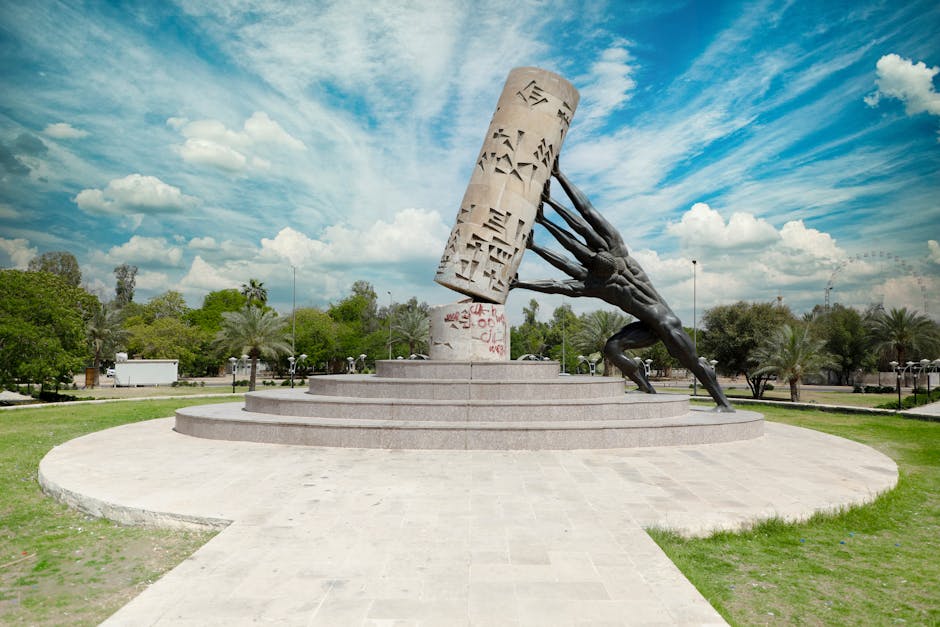
Vandalized sculpture in a Baghdad park under a vibrant blue sky., Hillah, Iraq
- Historic Architecture: The partially reconstructed Ishtar Gate (c. 575 BCE), a dazzling vision of glazed blue bricks adorned with bulls and dragons, offers a glimpse into Nebuchadnezzar II’s imperial grandeur.
- Cultural Scene: The annual Babylon International Festival, when the ancient city becomes a stage for music and theater, transforms millennia-old ruins into a living cultural venue.
- Local Specialties: You must try Masgouf, the national dish of Iraq, where seasoned carp is butterflied and slow-grilled over an open flame, best enjoyed by the banks of the Euphrates.
Pro Tip: Your best bet for avoiding both crowds and extreme heat is to visit the Babylon Archaeological Site as soon as it opens at 8 AM, especially during the shoulder seasons of March-April or October-November. The light for photography is sublime, and you’ll have the Lion of Babylon virtually to yourself.
Map of Hillah, Iraq
Use these interactive maps to explore Hillah, Iraq and plan your route:
📍 View Hillah, Iraq on OpenStreetMap
🗺️ Open Hillah, Iraq in Google Maps
Planning Your Trip: Practical Essentials
Getting There and Around
- By Air: Most travelers fly into Baghdad International Airport (BGW), approximately 100km north. From there, pre-booked private taxis are the most reliable transfer, taking about 1.5 hours. Book flights at Skyscanner for best deals.
- By Train: While Iraq’s rail network is limited, there are occasional services from Baghdad to Hillah. The journey is an experience in itself, but schedules are irregular. For regional travel, check Trainline for international connections into Iraq.
- By Car: Driving from Baghdad via Highway 8 is straightforward. Renting a car with a driver is highly recommended for ease and local knowledge. Compare car rentals at RentalCars.com.
- Local Transport: Within Hillah, taxis are the primary mode. Always agree on a fare before setting off. For trips to the Babylon site (about 5km north), hiring a taxi for a few hours is the most practical option.
Best Time to Visit
Hillah experiences a desert climate with extreme seasonal variations. Savvy travelers target the shoulder seasons for ideal conditions—warm, sunny days perfect for exploration without the punishing summer heat.
| Season | Weather | Highlights |
|---|---|---|
| Summer (Jun–Aug) | Extremely hot, 40°C–48°C (104°F–118°F), dry | Very few tourists; indoor museums are quiet, but outdoor exploration is challenging after mid-morning. |
| Winter (Dec–Feb) | Cool, 8°C–18°C (46°F–64°F), occasional rain | Pleasant for daytime ruins visits; evenings require a jacket. A good time for in-depth historical exploration. |
| Shoulder (Mar–May/Sep–Nov) | Warm & mild, 20°C–32°C (68°F–90°F), low humidity | The absolute best time. Perfect weather for walking the ruins, enjoying riverfront cafes, and attending local festivals. |
Budgeting for Hillah, Iraq

Stunning view of an ancient Greek amphitheater with classical columns under…, Hillah, Iraq
| Category | Budget | Mid-range | Luxury |
|---|---|---|---|
| Accommodation | $25-$40/night (local guesthouse) | $60-$100/night (3-4 star hotel) | $150+/night (best hotel in city) |
| Meals | $5-$10 (street food, local kebab shops) | $12-$25 (restaurant meals with drinks) | $30+ (hotel dining) |
| Transport | $5-$10/day (shared taxis) | $20-$40/day (private taxi for site tours) | $80+/day (private car & driver) |
| Activities | $10 (Babylon site entry) | $30 (entry + guided tour) | $100+ (private archaeologist-led tour) |
| Daily Total | $45-$65 | $120-$200 | $350+ |
Top Attractions and Must-See Sights
| Attraction | Description | Hours | Entry Fee |
|---|---|---|---|
| Babylon Archaeological Site | Walk the original Processional Way, see the Lion of Babylon statue, and explore the foundations of Nebuchadnezzar’s palace. | 8:00 AM – 4:00 PM | 10,000 IQD (~$7) |
| The Ishtar Gate (Hillah Museum) | While the larger reconstruction is in Berlin, a stunning, smaller-scale version stands at the site entrance, showcasing the iconic blue glazed bricks. | 8:00 AM – 4:00 PM | Included in site ticket |
| Hillah Museum | Home to a superb collection of cuneiform tablets, cylinder seals, and artifacts excavated from the ancient city. | 9:00 AM – 2:00 PM (Sat-Thu) | 5,000 IQD (~$3.50) |
| Bani Hassan Shrines | An important Shi’a pilgrimage site with stunning, reflective golden domes and intricate tile work, offering insight into modern Iraqi spirituality. | All day | Free (donations welcome) |
3-Day Itinerary: Hillah, Iraq’s Highlights & Hidden Gems
Day 1: The Heart of Ancient Babylon
- Morning (8:00 AM): Be at the gates of the Babylon Archaeological Site (10,000 IQD). Head straight to the Processional Way and the reconstructed Ishtar Gate to beat the heat and crowds. A local guide (approx. 25,000 IQD) here is invaluable for context.
- Afternoon (1:00 PM): Lunch at Al-Maseef Restaurant near the site for authentic Masgouf. Then, visit the Hillah Museum to see the detailed artifacts that put the ruins into perspective.
- Evening (6:30 PM): Stroll along the Corniche by the Euphrates River. For dinner, try Abu Ali Kabab in the city center for exceptional lamb kebabs and local flatbread.
Day 2: Culture, Commerce & Spirituality
- Morning (9:00 AM): Explore the bustling Hillah Central Market (Souq). This isn’t a tourist bazaar; it’s a vibrant hub for spices, textiles, and daily life. Practice your haggling politely.
- Afternoon (12:30 PM): Enjoy a simple lunch of falafel and fresh juice from a market vendor. Then, visit the Bani Hassan Shrines. Remember to dress modestly and observe quiet respect.
- Evening (7:00 PM): Experience a local chaikhana (teahouse) like Chaikhana Al-Rafidayn for sweet tea, backgammon, and conversation. Dinner at Al-Saada Restaurant for a mixed grill feast.
Day 3: Beyond the City Limits
- Morning (8:00 AM): Hire a taxi for the day (approx. 80,000 IQD) to visit Borsippa (Birs Nimrud), the ruins of a ziggurat dedicated to Nabu, 20km southwest. It’s a haunting, less-visited site.
- Afternoon (1:00 PM): Return towards Hillah and stop at a riverside farmhouse restaurant for a late lunch of Quzi (slow-roasted lamb with rice and nuts).
- Evening (5:00 PM): Your final evening calls for reflection. Return to the outskirts of the Babylon site at sunset—the walls glow a deep gold. Enjoy a farewell dinner at your hotel or a recommended local favorite.
Cultural Insights & Etiquette
- Language: Arabic is key. Learn basics: Marhaba (Hello), Shukran (Thank you), Ma’assalama (Goodbye). English is limited but spoken in hotels and at major sites.
- Customs: Hospitality (karam) is sacred. Accept offers of tea or coffee. Use your right hand for eating and greeting. Public displays of affection are frowned upon.
- Tipping: Not mandatory but appreciated. Round up taxi fares. In restaurants, 5-10% is generous if service isn’t included.
- Dress Code: Modesty is essential. For all, cover shoulders and knees. Women should carry a scarf for religious sites. Loose, lightweight clothing is both respectful and practical.
- Business Hours: Government sites/museums: 8/9 AM-2/3 PM, Sat-Thu. Shops: 9 AM-1 PM, 4 PM-9 PM, often closed Friday. Expect reduced hours during Ramadan.
Where to Eat: Hillah, Iraq’s Best Bites
Dining in Hillah is a celebration of Mesopotamian flavors—rich, aromatic, and deeply satisfying. Meals are social events, often centered around shared platters of grilled meats, rice, and fresh herbs. Don’t just eat; engage. Ask about the dishes; locals are proud of their culinary heritage.
Must-Try Local Specialties
- Masgouf: The iconic Iraqi carp, butterflied, marinated with tamarind and spices, and slow-grilled beside an open fire. For the best, head to dedicated masgoufiyat restaurants by the Euphrates.
- Quzi: A festive dish of whole lamb, slow-roasted over rice with raisins, almonds, and spices. It’s a masterpiece of flavor and tenderness, often served for gatherings.
- Dolma: A family favorite of vegetables (vine leaves, peppers, onions) stuffed with a savory mix of rice, herbs, and sometimes minced meat, then simmered in a tangy broth.
Restaurant Recommendations by Budget
| Type | Restaurant | Specialty | Price Range |
|---|---|---|---|
| Budget | Al-Maseef (near Babylon site) | Fresh, riverside Masgouf and grilled chicken | $6-$12 per person |
| Mid-range | Al-Saada Restaurant (City Center) | Extensive mixed grills and local stews | $12-$20 per person |
| Fine dining | Babylon Hotel Restaurant | International & Iraqi cuisine in a formal setting | $25+ per person |
Where to Stay
Accommodation in Hillah ranges from functional local guesthouses to a few modern hotels. Most visitors choose a city-center hotel for convenience to restaurants and transport. For a unique experience, some farms on the city’s outskirts offer stays. Compare prices and book at Booking.com or Airbnb for apartments.
Best Neighborhoods for Accommodation
- City Center: The most practical base. You’ll be close to restaurants, the souq, and transport hubs. It’s lively and offers the most options. Best for first-time visitors.
- Near the Euphrates Corniche: Offers pleasant river views and a slightly quieter atmosphere. A good choice for evening strolls, though you may rely more on taxis.
- Outskirts/Farm Stays: For a truly immersive and peaceful experience, some agricultural estates offer basic rooms. Ideal for travelers seeking deep cultural connection over luxury.

A striking black and white aerial view showcasing Erbil’s town square, Hillah, Iraq
FAQs: Your Hillah, Iraq Questions Answered
1. Is Hillah, Iraq safe at night?
General safety in Hillah has improved significantly. As with any travel, situational awareness is key. Locals recommend sticking to well-lit, populated areas in the evening, using registered taxis for transport after dark, and avoiding political discussions. Travelers often discover the local community to be incredibly welcoming and protective of visitors.
2. What currency is used and are credit cards accepted?
The Iraqi Dinar (IQD) is the currency. Carry ample cash in smaller denominations, as credit cards are rarely accepted outside major hotels. ATMs are available in the city center but can be unreliable for international cards. Your best bet is to exchange money in Baghdad before arriving or at authorized exchange offices in Hillah.
3. How do I get from the airport to the city center?
From Baghdad International Airport (BGW), pre-booking a private taxi transfer is the most reliable and safe option. The journey takes about 1.5 hours and costs approximately 60,000-80,000 IQD ($40-$55). Negotiate the fare beforehand. Book airport transfers at GetYourGuide for convenience.
4. Do I need to speak the local language?
While Arabic is essential for deep interaction, you can manage with basic phrases and gestures. English is understood at hotels, the Babylon ticket office, and by some guides. Learning a few Arabic words will greatly enhance your experience and is met with genuine appreciation.
5. What’s the appropriate dress code?
Modest, loose-fitting clothing is non-negotiable. For everyone: cover shoulders and knees. For women, a headscarf is required inside mosques and shrines (carry one at all times). Lightweight, long-sleeved shirts and full-length trousers or skirts are ideal for both respect and sun protection.
Final Thoughts: Hillah, Iraq Awaits
Hillah is not a destination of luxury resorts or curated tourist trails. It is a journey to the bedrock of history, a place where the stories of Hammurabi, Nebuchadnezzar, and Alexander the Great cease to be myths and become tangible reality under your feet. You come here to connect, to stand where empires rose and fell, and to experience the enduring warmth of Iraqi hospitality that thrives along the ancient Euphrates. For the thoughtful traveler, the

