
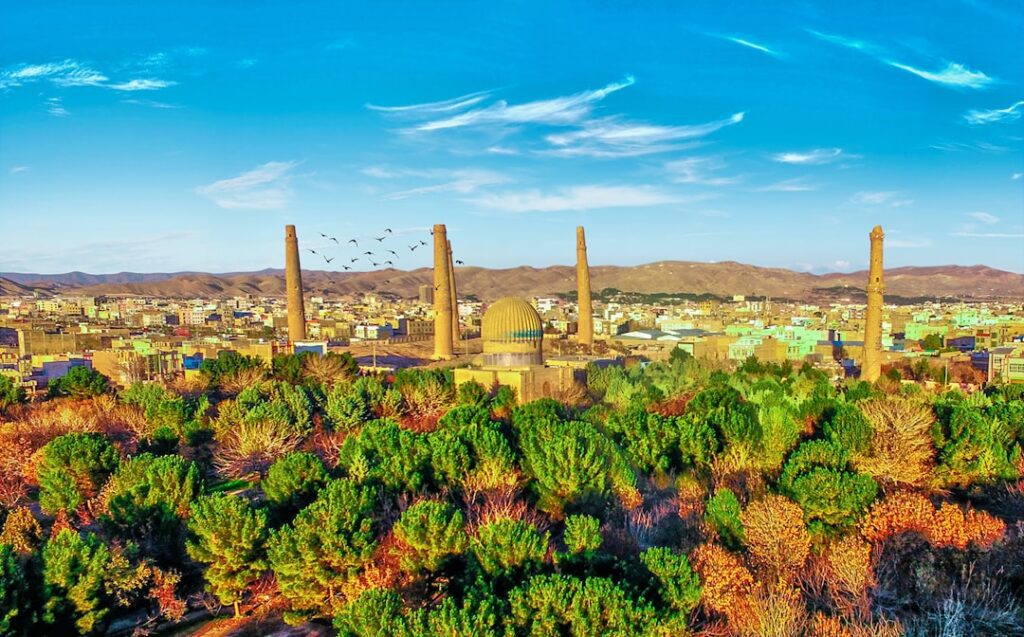
Herat, Afghanistan’s Hidden Minarets, Manuscripts & Silk Road Soul (2026)
Sunset in Herat reveals the city’s true color: a deep, glowing Persian blue. As the light fades, the intricate tilework of the Friday Mosque transforms from turquoise to indigo, while the scent of rosewater and kebabs drifts from the old bazaars. This is the sensory signature of a city that was once the unrivaled pearl of Khorasan, a center of art, science, and poetry whose legacy is etched into every brick and whispered in every winding alley.
Why Herat, Afghanistan Stands Out

Black and white trees under white sky, Herat, Afghanistan
- Historic Architecture: The Herat Citadel (Qala Ikhtyaruddin), dating back to 330 BC and rebuilt by Timur in the 15th century, offers panoramic views over a city shaped by empires.
- Cultural Scene: The annual Silk Road Festival, though modest, celebrates Herat’s history with traditional music, miniature painting demonstrations, and poetry readings in the shadow of ancient monuments.
- Local Specialties: You must try *Ashak*, delicate scallion-filled dumplings topped with minty yogurt and a rich meat sauce, a dish that perfectly embodies Herat’s refined culinary heritage.
Pro Tip: Your best bet for pleasant weather and fewer logistical challenges is during the shoulder seasons. Aim for late March to early May or late September to October, when daytime temperatures are a comfortable 20-25°C (68-77°F), perfect for exploring on foot.
Map of Herat, Afghanistan
Use these interactive maps to explore Herat, Afghanistan and plan your route:
📍 View Herat, Afghanistan on OpenStreetMap
🗺️ Open Herat, Afghanistan in Google Maps
Planning Your Trip: Practical Essentials
Getting There and Around
- By Air: Herat International Airport (HEA) receives domestic flights from Kabul via Kam Air and Ariana Afghan Airlines. International connections are extremely limited and subject to change. Book flights at Skyscanner for best deals, but always double-check with airlines directly due to volatility.
- By Train: Afghanistan has no functional passenger rail network connecting to Herat. Overland travel by road is the historical norm, but currently not advised for tourists due to severe safety concerns.
- By Car: Driving to Herat from neighboring countries like Iran was once possible via the Islam Qala border crossing, but the security situation makes this highly dangerous and not recommended. Compare car rentals at RentalCars.com for local hire, but you’ll need a local driver familiar with the area.
- Local Transport: Within the city, yellow taxis are the primary mode of transport. Always negotiate the fare before getting in; a short trip within the center should cost around 100-200 AFN. There is no formal public bus system for tourists.
Best Time to Visit
Timing is crucial in Herat due to its extreme continental climate. The brief, mild shoulder seasons offer the only comfortable window for extensive exploration.
| Season | Weather | Highlights |
|---|---|---|
| Summer (Jun–Aug) | Extremely hot and dry, 35-40°C (95-104°F). Dusty winds common. | Indoor museums and early morning visits are your only option. Very few tourists. |
| Winter (Dec–Feb) | Cold, with temperatures often dropping below freezing at night. Occasional rain and snow. | Crisp, clear days can be beautiful for photography, but some sites may have limited access. |
| Shoulder (Apr–May/Sep–Oct) | Mild and pleasant, 15-25°C (59-77°F). Low chance of rain. | Ideal for all sightseeing. The light is perfect for photographing the tilework. Optimal travel window. |
Budgeting for Herat, Afghanistan

Women harvest saffron in a field., Herat, Afghanistan
| Category | Budget | Mid-range | Luxury |
|---|---|---|---|
| Accommodation | Simple guesthouse: 800-1,500 AFN ($10-$18) | Local hotel with AC: 2,500-4,000 AFN ($30-$48) | International-standard hotel: 6,000+ AFN ($72+) |
| Meals | Street food & local cafes: 150-300 AFN ($2-$4) per meal | Restaurant meals: 400-800 AFN ($5-$10) per meal | Fine dining (limited): 1,500+ AFN ($18+) |
| Transport | Shared taxi/walking: 100-200 AFN ($1-$2.5) per trip | Private taxi for half-day: 1,500-2,500 AFN ($18-$30) | Private car & driver all day: 4,000+ AFN ($48+) |
| Activities | Mosque visits, bazaar exploring (free) | Citadel entry, museum fees: 200-500 AFN ($2.5-$6) | Private guided historical tour: 3,000+ AFN ($36+) |
| Daily Total | 1,500-2,500 AFN ($18-$30) | 5,000-8,000 AFN ($60-$96) | 15,000+ AFN ($180+) |
Top Attractions and Must-See Sights
| Attraction | Description | Hours | Entry Fee |
|---|---|---|---|
| Herat Friday Mosque (Jami Masjid) | A stunning masterpiece of Islamic architecture, entirely covered in dazzling blue mosaic and marble tilework laid over 800 years. | Sunrise to sunset, outside prayer times | Free (donation expected) |
| Herat Citadel (Qala Ikhtyaruddin) | The ancient fortress offering the city’s best views and housing a museum with Timurid-era artifacts. | 8:00 AM – 4:00 PM | 500 AFN (approx. $6) |
| Musalla Complex & Minarets | The haunting remains of a 15th-century theological school, with five towering, tilting minarets decorated in exquisite brickwork. | Daylight hours | Free |
| Gazar Gah Shrine | A serene, revered Sufi shrine complex with a beautiful garden, the tomb of poet Khwaja Abdullah Ansari, and a palpable spiritual atmosphere. | All day | Free |
3-Day Itinerary: Herat, Afghanistan’s Highlights & Hidden Gems
Day 1: The Heart of the Old City
- Morning (7-9 AM): Start at the **Herat Friday Mosque** just after sunrise when the tiles glow and crowds are minimal. Spend time deciphering the intricate Kufic calligraphy. Your best bet is to hire the on-site caretaker for a brief explanation (tip 200 AFN).
- Afternoon (12-3 PM): Dive into the **Qaysari Bazaar** adjacent to the mosque. Navigate the covered lanes selling everything from spices and jewelry to Herati carpets. For lunch, find a simple stall serving *Mantu* (steamed dumplings) for about 250 AFN.
- Evening (6-8 PM): Take a taxi to the **Musalla Complex** for sunset. The fading light on the lonely minarets is unforgettable. For dinner, head to **Firoozi Restaurant** near the park for a reliable and delicious plate of *Kabab-e Herati* (lamb kebabs) for 600 AFN.
Day 2: Fortresses & Artisans
- Morning (8 AM): Visit the **Herat Citadel**. The 500 AFN entry fee includes the small museum inside. Climb to the top of the walls for a 360-degree view and imagine the armies of Alexander and Timur that once garrisoned here.
- Afternoon (1 PM): Seek out the **Herat Traditional Crafts Center**. Locals recommend visiting the woodworking and miniature painting workshops where you can see masters practicing arts unchanged since the Timurid Renaissance. Enjoy a simple lunch of noodle soup at a nearby chaikhana (tea house).
- Evening (5 PM): Experience the local pace at **Park-e Taraki**. Families stroll, men play chess, and the atmosphere is wonderfully communal. For dinner, try **Aryub Restaurant** for their specialty *Qabili Palau* (rice with carrots, raisins, and lamb) for 700 AFN.
Day 3: Spirituality & Gardens
- Morning (9 AM): Take a taxi (approx. 150 AFN) to the **Gazar Gah Shrine**. This is a deeply spiritual site, so move quietly and respectfully. Observe the pilgrims and the beautiful calligraphy on the tomb.
- Afternoon (12 PM): Return to the city center and visit the **Herat National Museum** (if security and opening hours permit) to see a condensed history of the region. For a final lunch, savor *Ashak* at a local eatery like **Karwan Sara Restaurant**.
- Evening (4 PM): Your final stop is the **Tomb of Queen Goharshad**, the powerful Timurid queen who patronized much of Herat’s grandeur. It’s a quieter, more contemplative site. Spend your last evening with a final walk through the old city lanes as the call to prayer echoes.
Cultural Insights & Etiquette
- Language: The primary language is Dari (Afghan Persian). Key phrases: *Salam* (Hello), *Tashakor* (Thank you), *Chand ast?* (How much?). Some basic English is understood in hotels and bazaars.
- Customs: Always use your right hand for eating, greeting, and giving/receiving items. It’s polite to accept at least one cup of tea when offered. Avoid public displays of affection.
- Tipping: Not universally expected but appreciated. Round up taxi fares. In restaurants, 5-10% is generous if service isn’t included. Tip guides and hotel porters 200-500 AFN.
- Dress Code: Conservative dress is mandatory. Men should wear long trousers. Women must wear a headscarf, loose clothing covering arms and legs, and a long tunic or coat (a *chador* or *abaya* is highly advisable).
- Business Hours: Government hours are typically Sat-Wed, 8 AM – 4 PM. Shops open earlier and close later, with a break in the afternoon. Friday is the holy day, so many things are closed in the morning.
Where to Eat: Herat, Afghanistan’s Best Bites
Herati cuisine is considered one of the most sophisticated in Afghanistan, with subtle Persian influences. Dining is often a communal, hearty affair centered around shared platters of rice and meat.
Must-Try Local Specialties
- Ashak: Herat’s signature dish: delicate leek or scallion dumplings topped with a garlic-mint yogurt sauce and a savory meat and bean sauce. Find it at traditional restaurants like Karwan Sara.
- Kabab-e Herati: Distinctly marinated lamb kebabs, often served with naan and raw onions. Firoozi Restaurant is a classic spot for these.
- Sholeh Herati: A hearty, slow-cooked wheat and meat porridge, flavored with cinnamon and other spices, traditionally eaten for breakfast or during colder months. Ask at local chaikhanas.
Restaurant Recommendations by Budget
| Type | Restaurant | Specialty | Price Range |
|---|---|---|---|
| Budget | Qaysari Bazaar Food Stalls | Fresh naan, mantu, kebabs | 100-300 AFN per item |
| Mid-range | Firoozi Restaurant (city center) | Mixed grill platters, Qabili Palau | 400-800 AFN per main |
| Fine dining | Marcopolo Restaurant (in the Marcopolo Hotel) | International & Afghan dishes in a formal setting | 1,500+ AFN per main |
Where to Stay
Accommodation in Herat ranges from basic guesthouses to a few secure, business-oriented hotels. Staying near the city center offers the easiest access to major sights. Compare prices and book at Booking.com or Airbnb for apartments, though local booking via phone is often necessary.
Best Neighborhoods for Accommodation
- City Center (near the Friday Mosque): The most convenient location for sightseeing, with a mix of older hotels and guesthouses. You can walk to the bazaar and mosque. Can be noisy and busy.
- Shahr-e Naw (New City): Features more modern buildings, some international hotels (like Marcopolo), and better security infrastructure. Requires taxis to reach the old city but offers more comfort.
- Around Park-e Taraki: A greener, slightly more residential area that’s pleasant for evening strolls. Has a few mid-range hotel options and is a short taxi ride from everything.

A garden filled with lots of colorful flowers, Herat, Afghanistan
FAQs: Your Herat, Afghanistan Questions Answered
1. Is Herat, Afghanistan safe at night?
Security conditions are volatile and can change rapidly. While Herat has historically been calmer than other regions, the overall situation in Afghanistan is extremely dangerous. The UK, US, and other governments advise against all travel. If you are present, movement at night is strongly discouraged. Always consult real-time security advice from your embassy, use trusted local drivers, and avoid any large gatherings.
2. What currency is used and are credit cards accepted?
The Afghan Afghani (AFN) is the currency. Carry all the cash you will need, as credit cards are virtually never accepted. ATMs are unreliable. Bring US dollars or Euros in crisp, new bills to exchange at licensed money changers (sarafi) in the bazaar. Keep small denominations of Afghani for daily expenses.
3. How do I get from the airport to the city center?
Herat International Airport is about 10km from the city center. Your only reliable options are pre-arranged transport through your hotel or a taxi negotiated upon arrival. Expect to pay 500-800 AFN for the trip. Book airport transfers at GetYourGuide for convenience, but confirm availability for Herat specifically.
4. Do I need to speak the local language?
You do not need to be fluent, but knowing basic Dari phrases is essential and shows great respect. English is spoken by some staff in larger hotels and a few shopkeepers in the bazaar, but not widely. A translation app and a phrasebook are invaluable tools for navigating and building rapport.

