
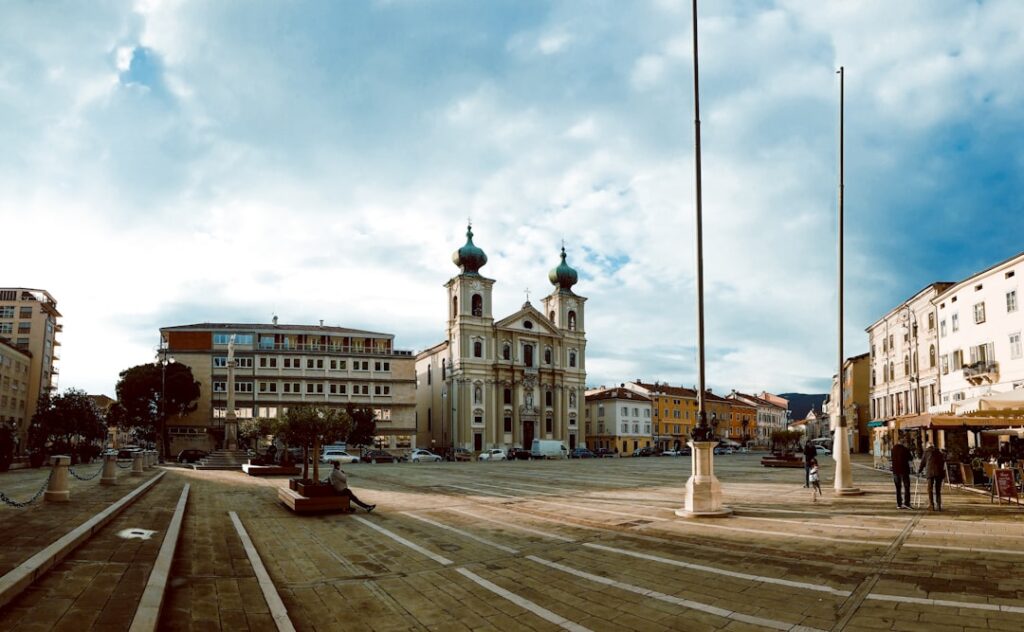
Gorizia, Italy’s Essential Cross-Border Charm, Castles & Culinary Fusion (2026)
Ask locals about Gorizia, and they’ll tell you about the quiet, profound moment of walking across the Transalpina Square, where a simple line of stones once marked the Iron Curtain. Most guidebooks miss this completely, focusing on larger neighbors. Here, you can have a cappuccino in Italy and, with a five-minute stroll, be enjoying a *kremšnita* cream cake in Slovenia’s twin town of Nova Gorica—a living lesson in European history that you can taste.
Why Gorizia, Italy Stands Out

A building with a fountain in front of it, Gorizia, Italy
- Historic Architecture: The 11th-century Gorizia Castle, rebuilt in the 16th century, offers panoramic views and houses a museum detailing the town’s complex medieval and Habsburg past.
- Cultural Scene: The Mitteleuropa Festival each autumn celebrates the city’s Central European soul with concerts, theater, and art that bridge Italian, Slavic, and Germanic traditions.
- Local Specialties: You must try *Gubana*, a spiral-shaped nut and dried fruit pastry soaked in grappa, best enjoyed with a glass of local Terrano wine.
Pro Tip: Visit in late September or early October. The summer crowds have dissipated, the weather is ideal for walking, and you can catch the beginning of the Mitteleuropa Festival. For the best castle views without the midday sun, aim for a late afternoon visit around 4 PM.
Map of Gorizia, Italy
Use these interactive maps to explore Gorizia, Italy and plan your route:
📍 View Gorizia, Italy on OpenStreetMap
🗺️ Open Gorizia, Italy in Google Maps
Planning Your Trip: Practical Essentials
Getting There and Around
- By Air: The closest airports are Trieste–Friuli Venezia Giulia (TRS, 35km) and Ljubljana Jože Pučnik (LJU, 75km). Ryanair and Volotea serve Trieste; transfer by bus or train. Book flights at Skyscanner for best deals.
- By Train: Gorizia is well-connected via regional trains from Trieste (1 hour) and Udine (45 mins). Direct trains from Venice take about 2.5 hours. Reserve tickets at Trainline or the national railway website.
- By Car: The A4 motorway connects Gorizia to Trieste and Venice. Parking is available at Piazza della Vittoria. For exploring the Collio wine region, a car is ideal. Compare car rentals at RentalCars.com.
- Local Transport: The town is very walkable. Local buses (APT) serve the wider province; a single ticket costs about €1.30. To visit Nova Goricia, you can simply walk or take a quick local bus.
Best Time to Visit
Gorizia enjoys a continental climate with alpine influences. The shoulder seasons offer the perfect balance of pleasant weather, cultural events, and manageable tourist numbers.
| Season | Weather | Highlights |
|---|---|---|
| Summer (Jun–Aug) | Warm, 25-30°C (77-86°F), occasional afternoon thunderstorms. | Vibrant outdoor café life, day trips to the Adriatic coast (45 mins away), but can be humid with more tourists. |
| Winter (Dec–Feb) | Cold, 0-8°C (32-46°F), potential for fog and some snow. | Atmospheric Christmas markets with a Mitteleuropean feel, cozy wine taverns, very few crowds. |
| Shoulder (Apr–May/Sep–Oct) | Mild, 15-22°C (59-72°F), sunny and comfortable. | Ideal for hiking to San Floriano del Collio, wine harvesting tours, and attending cultural festivals with perfect walking weather. |
Budgeting for Gorizia, Italy

Body of water under blue sky during daytime, Gorizia, Italy
| Category | Budget | Mid-range | Luxury |
|---|---|---|---|
| Accommodation | Hostel/B&B: €50-70/night | 3-4 star hotel: €90-140/night | Boutique castle hotel: €200+/night |
| Meals | Panino/pizza: €5-8, *Osteria* lunch: €15 | Restaurant dinner: €25-40/person | Fine dining with wine pairing: €70+/person |
| Transport | Local buses/walking: €3-5/day | Regional train day trips: €10-20, occasional taxi | Private driver for Collio tour: €200+/day |
| Activities | Castle grounds (free), walking tours, Piazza Transalpina | Castle museum: €6, wine tasting: €15-25 | Private guided history & wine tour: €150+/person |
| Daily Total | €70-90 | €130-180 | €300+ |
Top Attractions and Must-See Sights
| Attraction | Description | Hours | Entry Fee |
|---|---|---|---|
| Gorizia Castle | A majestic hilltop fortress with armories, historic apartments, and the best panoramic views over two countries. | 10 AM – 7 PM (Summer), 10 AM – 5 PM (Winter) | €6 (Museum access) |
| Piazza della Transalpina/Evropa | The symbolic square bisected by the former Italo-Yugoslav border, now a unified space between Italy and Slovenia. | Always open | Free |
| Palazzo Coronini Cronberg | A stunning 16th-century villa with an extensive English garden and an art collection showcasing Gorizia’s aristocratic heritage. | 10 AM – 6 PM (Gardens), Museum hours vary | Gardens: €5, Full visit: €10 |
| Sacrario Militare di Oslavia | A poignant WWI ossuary just outside town, holding the remains of 57,000 Italian and Austro-Hungarian soldiers. | 9 AM – 12 PM, 2 PM – 5 PM | Free |
3-Day Itinerary: Gorizia, Italy’s Highlights & Hidden Gems
Day 1: History & The Borderline
- Morning (9 AM): Start at **Gorizia Castle**. Walk up from the town center (15 mins) and explore the museum. Your best bet is to join the 10:30 AM guided tour (included) for deeper historical context.
- Afternoon (1 PM): Descend for lunch at **Trattoria Alla Luna** (Via Rastello, 26) for homemade *frico* (cheese and potato pancake). Then, walk to **Piazza Transalpina**. Stand on the border line and cross into **Nova Gorica** (Slovenia) for a coffee at **Café Evropa**.
- Evening (7:30 PM): Return to Italy for an aperitivo at **Caffè Corso** on Corso Giuseppe Verdi. Dine at **Osteria Abruzzi** (Via Diaz, 4), known for its Istrian-style pasta.
Day 2: Gardens, Art & Collio Wine
- Morning (10 AM): Visit the **Palazzo Coronini Cronberg** gardens (€5). Stroll the peaceful paths, a hidden oasis. Then, see the **Synagogue and Jewish Museum** (Via Ascoli, 19) to understand another layer of Gorizia’s diverse past.
- Afternoon (1:30 PM): Take a local bus or taxi (€15-20) into the **Collio hills**. Have lunch at **Trattoria Škrlj** in San Floriano del Collio, a family-run spot with breathtaking terraces. Book a 4 PM wine tasting at a nearby cantina like **Primosic** or **Venica & Venica** (€20-30 per person).
- Evening (8 PM): Back in town, enjoy a relaxed dinner at **La Tavernetta** (Via Oberdan, 25), perfect for sampling local cured meats and cheeses.
Day 3: Memory, Markets & Farewell
- Morning (9:30 AM): Take a taxi (€10) to the **Sacrario Militare di Oslavia**. The sobering silence and scale offer a powerful reflection on 20th-century history. Return to explore the **Museo della Moda e delle Arti Applicate** (Museum of Fashion) in Borgo Castello for a different perspective.
- Afternoon (12:30 PM): Enjoy a final lunch at **Antica Trattoria Suban** (Via San Gabriele, 2), a legendary institution since 1865 serving Friulian classics. Spend your last hours shopping for local products like *Gubana* at **Pasticceria Mizzan** on Corso Verdi.
- Evening (6 PM): For your farewell, grab a glass of Ribolla Gialla at **Enoteca di Borgo** before your departure. Savvy visitors know to simply sit in Piazza della Vittoria and watch the unique, bicultural life of the city unfold.
Cultural Insights & Etiquette
- Language: Italian is official. The local Friulian dialect is also spoken. In Nova Gorica, Slovenian is used. English is understood in tourist areas. A simple “*Dober dan*” (hello in Slovenian) across the border is appreciated.
- Customs: Gorizia is relaxed but formal in greetings. A “*buongiorno*” when entering a shop is standard. The culture is a blend of Italian warmth and Central European reserve.
- Tipping: Not obligatory. Rounding up the bill or leaving €1-2 in cafes is fine. In restaurants, 5-10% for excellent service is a generous gesture.
- Dress Code: Casual-smart is suitable everywhere. Cover shoulders and knees when entering churches like the Cathedral of Saints Hilary and Tatianus.
- Business Hours: Shops typically open 9 AM-1 PM, reopen 4-7:30 PM, closed Sunday afternoons and Monday mornings. Many restaurants close one day a week, often Monday or Tuesday.
Where to Eat: Gorizia, Italy’s Best Bites
Gorizia’s cuisine is a delicious testament to its location: Friulian heartiness meets Slavic and Austro-Hungarian influences. Think hearty stews, delicate pastries, and world-class white wines from the surrounding hills.
Must-Try Local Specialties
- Gubana: The iconic spiral cake filled with nuts, raisins, pine nuts, and grappa. Find the authentic version at **Pasticceria Mizzan** or **Pasticceria Miotto**.
- Jota: A hearty, warming soup of beans, sauerkraut, potatoes, and pork, showcasing the Slavic influence. **Trattoria Alla Luna** serves a superb one in winter.
- Prosciutto di San Daniele & Montasio Cheese: The king of cured hams and the region’s famous cheese, best enjoyed as part of a *tagliere* (cutting board) at any *osteria*.
Restaurant Recommendations by Budget
| Type | Restaurant | Specialty | Price Range |
|---|---|---|---|
| Budget | Pizzeria Al Ponte (Via Diaz) | Thin-crust pizzas and casual atmosphere | €8-15 |
| Mid-range | Osteria Abruzzi (Via Diaz, 4) | Istrian pasta, seasonal Friulian dishes | €25-40 |
| Fine dining | Antica Trattoria Suban (Via San Gabriele, 2) | Historic venue with refined regional cuisine since 1865 | €50-80 |
Where to Stay
Accommodation ranges from historic city-center hotels to charming agriturismi in the Collio vineyards. Staying centrally is your best bet for exploring on foot. Compare prices and book at Booking.com or Airbnb for apartments.
Best Neighborhoods for Accommodation
- Historic Center (Centro): The most convenient area, close to Corso Verdi, shops, and main sights. You’ll be in the heart of the action but it can be livelier in the evenings. Suits first-time visitors and city lovers.
- Borgo Castello: The picturesque hill area below the castle. Quieter, with cobbled streets and beautiful villas like the Coronini. A 10-minute walk from the center, it offers charm and tranquility.
- The Collio Countryside: For a peaceful retreat, stay at a **winery or agriturismo** in the hills (e.g., in San Floriano del Collio). Ideal for wine enthusiasts and those with a car, offering stunning views and serenity.

A picturesque hilltop village with vineyards in Gorizia, Gorizia, Italy
FAQs: Your Gorizia, Italy Questions Answered
1. Is Gorizia, Italy safe at night?
Yes, Gorizia is generally very safe. The central areas are well-lit and populated in the evenings. Standard precautions apply: be aware of your belongings in crowded places and stick to main streets late at night. The border area with Nova Gorica is also perfectly safe.
2. What currency is used and are credit cards accepted?
In Gorizia (Italy), the currency is the Euro (€). In Nova Gorica (Slovenia), it’s also the Euro. Credit/debit cards are widely accepted in hotels, restaurants, and shops. However, it’s wise to carry some cash for smaller cafes, markets, or bus tickets. ATMs are readily available.
3. How do I get from the airport to the city center?
From **Trieste Airport (TRS)**: Take the APT bus #51 to Trieste Central Station (30 mins, ~€4), then a regional train to Gorizia (1 hour, ~€5). A direct taxi from Trieste airport costs €50-60. From **Ljubljana Airport (LJU)**: A pre-booked shuttle or taxi (€80-100) is most practical. Book airport transfers at GetYourGuide for convenience.
4. Do I need to speak the local language?
No, but it helps. English is spoken in tourist offices, hotels, and many restaurants. Learning a few Italian phrases (*grazie*, *per favore*, *un caffè*) is always appreciated. In

