
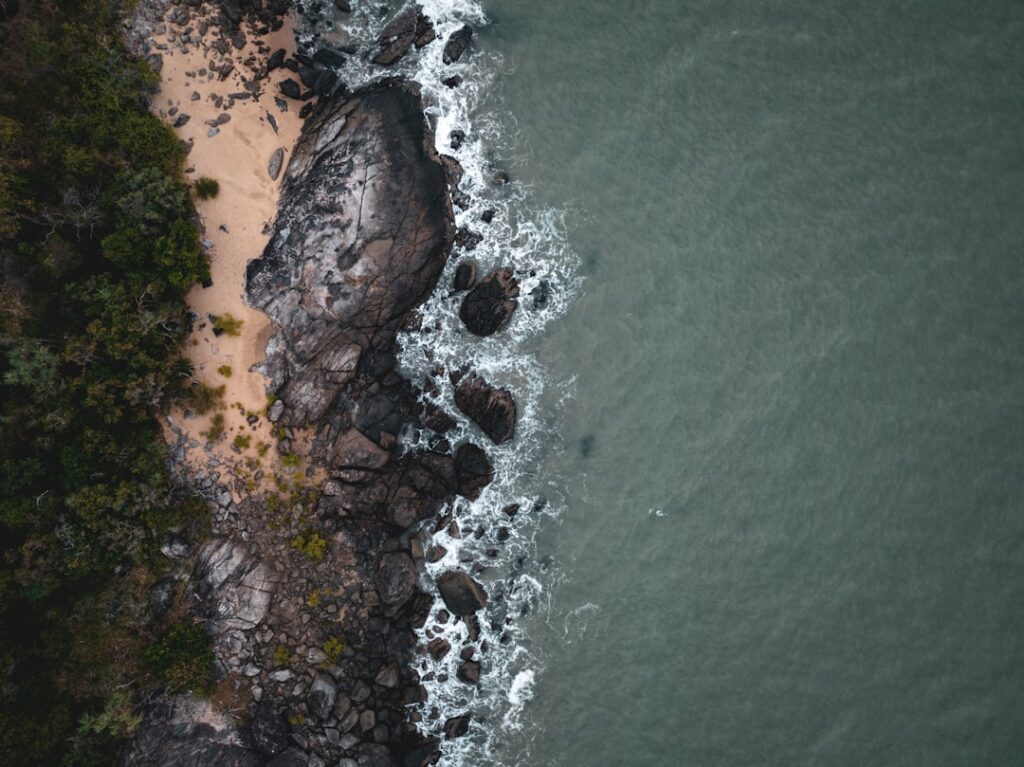
Far North Queensland, Australia’s Hidden Reefs, Rainforest & Ancient Cultures (2025)
At 5:30 AM in the Daintree Rainforest, the world’s oldest tropical rainforest at 180 million years, you’ll hear the haunting call of cassowaries echoing through mist-shrouded canopy. The air carries the sweet scent of blooming orchids mixed with damp earth, while electric-blue Ulysses butterflies flutter past ancient fan palms. This UNESCO World Heritage site contains plant species that existed when dinosaurs roamed, offering a living connection to prehistoric Earth that you simply won’t find anywhere else on the planet.
Why Far North Queensland, Australia Stands Out

Row of coconut trees, Far North Queensland, Australia
- Historic Architecture: The 1876 Cairns School of Arts building showcases Queenslander architecture with its distinctive raised structure and wide verandas designed for tropical living.
- Cultural Scene: The annual Cairns Indigenous Art Fair each July showcases 40+ Aboriginal and Torres Strait Islander art centers in Australia’s most significant First Nations art event.
- Local Specialties: Don’t leave without trying barramundi cooked in banana leaves with native lemon myrtle at a waterfront restaurant overlooking the Coral Sea.
Pro Tip: Visit during May or September shoulder seasons when the weather is perfect (25-28°C), stinger-free swimming conditions prevail, and you’ll avoid both the wet season downpours and peak winter crowds. Book reef tours 2-3 weeks in advance during these months.
Map of Far North Queensland, Australia
Use these interactive maps to explore Far North Queensland, Australia and plan your route:
📍 View Far North Queensland, Australia on OpenStreetMap
🗺️ Open Far North Queensland, Australia in Google Maps
Planning Your Trip: Practical Essentials
Getting There and Around
- By Air: Cairns Airport (CNS) serves international flights from Asia and domestic routes from all major Australian cities. Qantas, Jetstar, and Virgin Australia operate regular services. Airport shuttle to city center costs $15 AUD or taxi $25-35 AUD. Book flights at Skyscanner for best deals.
- By Train: The Spirit of Queensland runs from Brisbane to Cairns (25 hours) with premium RailBed seats offering lie-flat comfort. Book 3 months ahead for 30% discounts. Reserve tickets at Trainline or the national railway website.
- By Car: The scenic Captain Cook Highway from Cairns to Port Douglas offers breathtaking coastal views. Rental cars average $45-65 AUD/day. Free parking is scarce in Cairns CBD – use secure parking stations ($15-25/day). Compare car rentals at RentalCars.com.
- Local Transport: Sunbus services cover Cairns and northern beaches ($3.20 AUD per trip). The Cairns Red Explorer hop-on hop-off bus ($40 AUD/day) stops at 13 key attractions. For Daintree and Tablelands, guided tours often provide better value than public transport.
Best Time to Visit
Far North Queensland’s tropical climate means timing matters significantly for optimal experiences. The dry season (May-October) offers ideal reef and rainforest conditions, while the wet season (November-April) brings spectacular waterfalls but potential cyclone activity.
| Season | Weather | Highlights |
|---|---|---|
| Dry Season (May–Oct) | 22-29°C, low humidity, minimal rainfall | Perfect reef visibility, stinger-free swimming, crowded attractions |
| Wet Season (Nov–Apr) | 24-31°C, high humidity, heavy rainfall | Lush landscapes, spectacular waterfalls, fewer tourists, marine stingers present |
| Shoulder (Apr–May/Sep–Oct) | 25-28°C, moderate humidity, occasional showers | Best value, comfortable weather, transitioning marine conditions |
Budgeting for Far North Queensland, Australia

A scuba diver and a turtle on a coral reef, Far North Queensland, Australia
| Category | Budget | Mid-range | Luxury |
|---|---|---|---|
| Accommodation | $35-65 AUD (hostels/backpackers) | $120-220 AUD (4-star hotels) | $300-600+ AUD (5-star resorts) |
| Meals | $8-15 AUD (food courts/markets) | $25-45 AUD (restaurants) | $75-150 AUD (fine dining) |
| Transport | $10-15 AUD (public transport) | $45-65 AUD (rental car) | $150-300 AUD (private transfers) |
| Activities | $0-50 AUD (beaches/hiking) | $180-250 AUD (reef tours) | $450-800 AUD (private charters) |
| Daily Total | $55-135 AUD | $250-380 AUD | $975-1850 AUD |
Top Attractions and Must-See Sights
| Attraction | Description | Hours | Entry Fee |
|---|---|---|---|
| Great Barrier Reef | The world’s largest coral reef system with 1,500 fish species and 400 types of coral | Tour dependent (typically 7am-5pm) | $220-350 AUD (full-day tour) |
| Daintree Rainforest | Oldest tropical rainforest on Earth with unique wildlife including cassowaries and tree kangaroos | 24/7 (guided tours 8am-4pm) | Free (park entry) / $150 AUD (guided tour) |
| Kuranda Scenic Railway | Historic 1891 railway through breathtaking Barron Gorge with stunning waterfall views | Departs 8:30am & 9:30am daily | $85 AUD (one way) / $120 AUD (return) |
| Tjapukai Aboriginal Cultural Park | Immersive experience with traditional dance, didgeridoo performances and bush tucker talks | 9am-5pm daily | $65 AUD (day pass) |
3-Day Itinerary: Far North Queensland, Australia’s Highlights & Hidden Gems
Day 1: Reef & Rainforest Immersion
- Morning: 7:30 AM Quicksilver catamaran from Port Douglas ($245 AUD) to Agincourt Reef’s pristine outer reefs. Snorkel beside giant clams and parrotfish at three different reef sites. Pro tip: Book the guided snorkel tour ($35 extra) for marine biologist insights.
- Afternoon: 1:00 PM buffet lunch onboard featuring Queensland tiger prawns, then glass-bottom boat tour revealing coral gardens teeming with reef sharks and turtles. Return to Port Douglas by 4:30 PM.
- Evening: 6:30 PM dinner at Harrisons by Spencer Patrick (Port Douglas) – their signature barramundi with wattleseed crust ($42 AUD) showcases native Australian ingredients perfectly.
Day 2: Ancient Cultures & Sky-high Adventures
- Morning: 8:00 AM Skyrail Rainforest Cableway ($90 AUD) glides 7.5km over pristine canopy to Kuranda. Look for brilliant blue Ulysses butterflies and listen for the distinctive calls of catbirds. The Red Peak station offers a 175-meter boardwalk through middle-level rainforest.
- Afternoon: 12:30 PM lunch at Kuranda’s Frog’s Restaurant famous for their wild river barramundi ($36 AUD), then explore Heritage Markets for authentic Aboriginal art. Don’t miss the Butterfly Sanctuary’s 1,500 tropical butterflies.
- Evening: 5:15 PM return via historic Kuranda Scenic Railway, marveling at Barron Falls during golden hour. 7:30 PM dinner at Ochre Restaurant (Cairns) sampling their kangaroo with bush tomato chutney ($38 AUD).
Day 3: Daintree Wilderness & Cape Tribulation
- Morning: 7:00 AM rental car drive north ($55 AUD/day) crossing the Daintree River via cable ferry ($30 AUD return). Join 9:30 AM guided walk at Mossman Gorge Centre ($35 AUD) learning about Kuku Yalanji connection to country.
- Afternoon: 12:30 PM lunch at Thornton Beach Kiosk – their mud crab rolls ($24 AUD) are legendary. Then hike the Dubuji Boardwalk through mangrove forests to Myall Beach, watching for crocodile warning signs.
- Evening: 4:00 PM Daintree Ice Cream Company tasting exotic tropical fruits like sapote and black sapote ($8.50 AUD). Return to Cairns for final dinner at Waterbar & Grill Steakhouse overlooking the marina.
Cultural Insights & Etiquette
- Language: English is primary, but learning a few Aboriginal words shows respect: “yakka” (work), “bunyip” (mythical creature), “warrigal” (wild dingo)
- Customs: Always seek permission before photographing Aboriginal people or sacred sites. When visiting Indigenous communities, follow local guidance about restricted areas.
- Tipping: Not expected but appreciated for exceptional service (5-10% in restaurants). Round up taxi fares to nearest dollar.
- Dress Code: Casual resort wear predominates, but cover shoulders and knees when visiting Indigenous cultural sites. Reef shoes essential for coral areas.
- Business Hours: Generally 9am-5pm weekdays, with shopping extended until 9pm Thursday and Friday nights. Many attractions open 7 days.
Where to Eat: Far North Queensland, Australia’s Best Bites
Far North Queensland’s culinary scene reflects its tropical location and cultural diversity, with fresh seafood taking center stage alongside innovative native Australian ingredients. From casual fish and chip shops to award-winning fine dining, you’ll discover why this region is Australia’s tropical food bowl.
Must-Try Local Specialties
- Barramundi: Australia’s premier native fish, best grilled with lemon myrtle or baked in banana leaves at Dundee’s Restaurant on the Cairns waterfront
- Mud Crab: Sweet, delicate flesh from local mangrove swamps, served chilled with mango salsa at Nautilus Restaurant in Port Douglas
- Macadamia Nuts: Native to the region, try them roasted with rainforest honey from the Kuranda markets or in crusts on local seafood
Restaurant Recommendations by Budget
| Type | Restaurant | Specialty | Price Range |
|---|---|---|---|
| Budget | Muddy’s Cafe (Cairns Esplanade) | Fish tacos with slaw and lime aioli | $12-22 AUD |
| Mid-range | Waterbar & Grill Steakhouse (Cairns Marina) | Grilled barramundi with native spices | $28-45 AUD |
| Fine dining | Flames of the Forest (Port Douglas rainforest) | 7-course tasting menu with Aboriginal storytelling | $195 AUD |
Where to Stay
Accommodation ranges from Cairns city center hostels perfect for reef access to luxurious Port Douglas resorts and Daintree eco-lodges immersed in nature. Booking 3-4 months in advance secures the best locations and rates, especially for peak season (June-September). Compare prices and book at Booking.com or Airbnb for apartments.
Best Neighborhoods for Accommodation
- Cairns City Centre: Walking distance to reef departure terminals, night markets, and Esplanade restaurants. Ideal for first-time visitors and those without cars.
- Port Douglas: Upscale resort town with Four Mile Beach, sophisticated dining, and closer reef access. Perfect for couples and luxury travelers.
- Northern Beaches (Palm Cove): Relaxed village atmosphere with beautiful beaches, fewer crowds. Best for families and those seeking tranquility.

White flower in bloom, Far North Queensland, Australia
FAQs: Your Far North Queensland, Australia Questions Answered
1. Is Far North Queensland, Australia safe at night?
Cairns and tourist areas are generally safe, but take normal urban precautions after dark. In natural areas, never swim in rivers or estuaries due to crocodiles, and use provided stinger nets at beaches during stinger season (November-May). Always heed warning signs in national parks.
2. What currency is used and are credit cards accepted?
Australian dollars (AUD) are used everywhere. Credit cards (Visa/MasterCard) are widely accepted, though American Express has limited acceptance. Carry $50-100 AUD cash for markets, small vendors, and the Daintree River ferry. ATMs are readily available in urban areas.
3. How do I get from the airport to the city center?
Cairns Airport is just 7km from the city center. Sun Palm Airport Shuttle costs $15 AUD per person, taxis average $25-35 AUD, and Uber is available. The journey takes 10-15 minutes depending on traffic. Book airport transfers at GetYourGuide for convenience.
4. Do I need to speak the local language?
English is universally spoken. You’ll encounter Aboriginal languages in cultural contexts, but no translation needed for tourism. Helpful phrases include “G’day” (hello) and “No worries” (you’re welcome/it’s fine). Many tour operators offer multilingual guides for major Asian and European languages.
5. What’s the appropriate dress code?
Lightweight casual clothing suits the tropical climate. Pack swimwear, sun-protective clothing, reef shoes, and a light rain jacket. For fine dining, smart casual (collared shirts, dresses) is appropriate. When visiting Indigenous cultural sites, modest clothing covering shoulders and knees shows respect.
Final Thoughts: Far North Queensland, Australia Awaits
Far North Queensland delivers one of travel’s rarest combinations: two UNESCO World Heritage sites side-by-side, where ancient rainforest meets the world’s largest coral reef. Beyond the iconic postcard images, you’ll discover a region where Aboriginal culture thrives alongside modern Australian life, where every meal features seafood caught that morning, and where nature still dominates in the most spectacular ways. Savvy travelers know to allocate at least five days to properly experience both reef and rainforest, with an extra day for the Atherton Tablelands’ volcanic lakes and waterfalls. Don’t make the common mistake of rushing – this is a destination that rewards slow travel and immersive experiences. Your most lasting memories will likely be the unexpected moments: spotting a cassowary crossing the road in the Daintree, hearing coral crackle during a night snorkel, or watching sunset paint the Mossman Gorge in golden light. Book your reef tour for early in your stay – if weather cancels it, you’ll have flexibility to reschedule.

