
Erg Chebbi, Morocco’s Stunning Dunes, Stars & Saharan Silence (2025)
While crowds flock to the more accessible Erg Chigaga, Erg Chebbi delivers a more profound, cinematic desert experience without the long, arduous 4×4 journey. Here, just a 15-minute camel ride from the village of Merzouga, you’ll find yourself surrounded by towering, apricot-hued dunes that rise up to 150 meters—some of the highest in North Africa. This is the Sahara of your imagination, where the silence is so deep you can hear the sand shifting underfoot.
Why Erg Chebbi, Morocco Stands Out

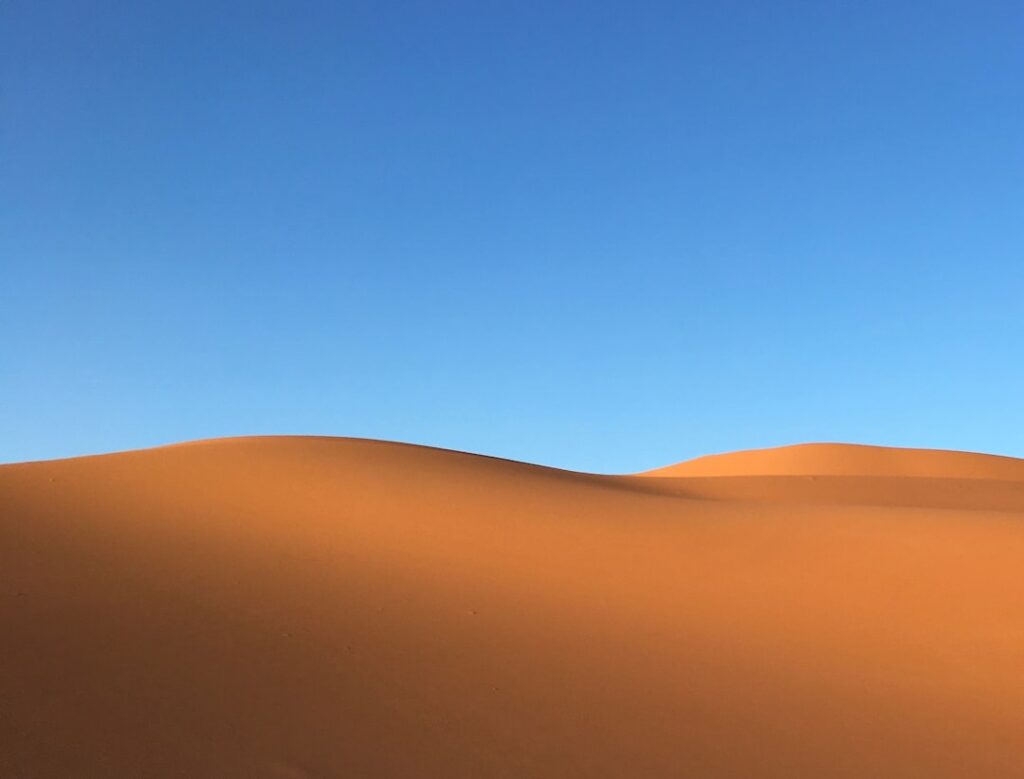
Brown desert under blue sky, Erg Chebbi, Morocco
- Historic Architecture: The ancient ksar (fortified village) of Rissani, dating back to the 8th century as the cradle of the Alaouite dynasty, serves as the historic gateway to the dunes.
- Cultural Scene: The annual International Nomads Festival in April transforms Merzouga with Gnawa music, camel races, and traditional Saharan storytelling under the stars.
- Local Specialties: You must try Medfouna, the “Berber pizza” – a savory, stuffed flatbread baked in the desert sand, typically filled with spiced meat, onions, and almonds.
Pro Tip: The absolute best time for photography and comfortable exploration is during the shoulder months of October-November and March-April. Aim to arrive at a desert camp by 4:30 PM; this gives you just enough time to climb a dune for a sunset that peaks around 5:45 PM, without the punishing midday heat.
Map of Erg Chebbi, Morocco
Use these interactive maps to explore Erg Chebbi, Morocco and plan your route:
📍 View Erg Chebbi, Morocco on OpenStreetMap
🗺️ Open Erg Chebbi, Morocco in Google Maps
Planning Your Trip: Practical Essentials
Getting There and Around
- By Air: The nearest major airport is in Ouarzazate (OZZ), a 5-hour drive away, or Fez (FEZ), about a 7-hour drive. Most travelers fly into Marrakech (RAK) and take a scenic 10-hour drive or bus. Book flights at Skyscanner for best deals.
- By Train: There is no direct train to Merzouga. The closest major rail station is in Fez or Marrakech. From there, you’ll need a bus or private transfer. Reserve tickets at Trainline or the national railway website.
- By Car: The N13 highway leads from Errachidia to Merzouga. A 4×4 is not necessary for reaching the village, but is essential for exploring deeper into the desert. Rental agencies in major cities offer one-way rentals. Compare car rentals at RentalCars.com.
- Local Transport: In Merzouga, transport is by foot, hotel shuttle, or pre-arranged 4×4. The standard journey into the dunes is by camel from a designated meeting point arranged by your camp. Check official city transport websites for passes and schedules.
Best Time to Visit
Timing is everything in the desert. The ideal window balances pleasant daytime temperatures with cool, starry nights, avoiding the extreme heat of summer and the occasional cold snaps of winter.
| Season | Weather | Highlights |
|---|---|---|
| Summer (Jun–Aug) | Extremely hot (95-115°F / 35-46°C), intense sun, cool nights. | Fewer tourists, incredibly clear night skies, but daytime activities are limited to early morning and late evening. |
| Winter (Dec–Feb) | Chilly days (50-65°F / 10-18°C), very cold nights (can drop below freezing). | Pleasant for midday hiking, but you’ll need a heavy blanket or sleeping bag for overnight desert camps. |
| Shoulder (Apr–May/Sep–Oct) | Perfect desert weather (70-85°F / 21-29°C), warm days, cool nights. | The golden season for all activities—camel trekking, dune hiking, and stargazing—with minimal climate discomfort. |
Budgeting for Erg Chebbi, Morocco

A lone bird is flying over a sand dune, Erg Chebbi, Morocco
| Category | Budget | Mid-range | Luxury |
|---|---|---|---|
| Accommodation | 150-300 MAD/night (basic auberge in Merzouga) | 800-1500 MAD/night (standard desert camp with private tent) | 2000+ MAD/night (luxury camp with ensuite bathroom, AC/heating) |
| Meals | 40-60 MAD (tagine at a local cafe) | 120-200 MAD (set menu at a good hotel restaurant) | 300+ MAD (multi-course dinner at a premium camp) |
| Transport | 80 MAD (CTM bus from Errachidia) | 400-600 MAD/day (shared 4×4 tour) | 1200+ MAD/day (private 4×4 with driver/guide) |
| Activities | Free (dune hiking, stargazing) | 200-400 MAD (1-hour camel trek) | 600+ MAD (private sunset tour with champagne) |
| Daily Total | 300-500 MAD | 1500-2500 MAD | 4000+ MAD |
Top Attractions and Must-See Sights
| Attraction | Description | Hours | Entry Fee |
|---|---|---|---|
| Erg Chebbi Dunes | Trek across the iconic sea of golden sand dunes, some reaching 150m high, for unparalleled sunrise/sunset views. | 24/7 (best at dawn/dusk) | Free (access from Merzouga) |
| Camel Trek to Desert Camp | The quintessential Sahara experience: a gentle ride into the heart of the dunes to spend a night under the stars. | Departures ~4 PM for sunset | 200-600 MAD (varies by camp & duration) |
| Khamlia Village (Gnawa Music) | Visit this small village of Gnawa descendants for an authentic, soulful musical performance with traditional instruments. | Performances often at 5 PM | 50-100 MAD (donation expected) |
| Fossil Sites & Mines | Explore the ancient seabed around Merzouga, where you can see (and sometimes purchase) 400-million-year-old fossils. | Daylight hours | Free to look; fossils for purchase |
3-Day Itinerary: Erg Chebbi, Morocco’s Highlights & Hidden Gems
Day 1: Arrival & First Dune Contact
- Morning: Arrive in Merzouga from your overnight journey. Check into your auberge, like Hotel Kasbah Mohayut, and hydrate. Your best bet is to rest immediately to avoid the midday heat.
- Afternoon: At 4 PM, meet your guide for a 1-hour introductory camel trek (approx. 250 MAD) to a vantage point for sunset. Watch the dunes turn from gold to deep orange. Return to Merzouga for dinner at Restaurant Nasser for a hearty chicken tagine (80 MAD).
- Evening: Take a short walk to the edge of town for your first taste of the Sahara’s profound silence and incredibly starry sky—no tour needed.
Day 2: Deep Desert Immersion
- Morning: After an early breakfast, take a 4×4 tour (400 MAD shared) to Khamlia Village for a 10 AM Gnawa music session. Feel the trance-inducing rhythms in an intimate setting.
- Afternoon: Visit a nomadic family for mint tea to learn about Saharan life. Return to Merzouga, pack an overnight bag, and at 4:30 PM, depart on a camel trek to your pre-booked desert camp.
- Evening: Arrive at camp, climb the nearest dune for sunset, enjoy a communal Berber dinner around a fire, and listen to drumming before a night of unparalleled stargazing from your tent.
Day 3: Sunrise & Departure
- Morning: Wake before dawn for a short climb to watch the sunrise over the dunes—it’s a cooler, even more serene experience than sunset. Enjoy breakfast at camp before a camel ride back to Merzouga (~9 AM).
- Afternoon: If time allows, hire a local guide (150 MAD) for a 2-hour fossil-hunting walk on the desert’s rocky plateau. Have a final lunch at Cafe Restaurant Sand, trying the Berber omelette.
- Evening: Depart Merzouga for your next destination, or if staying, savor a quiet evening reflecting on the vastness you’ve just experienced.
Cultural Insights & Etiquette
- Language: Arabic and Tamazight (Berber) are spoken. Key phrases: “Salaam Alaikum” (Hello), “Shukran” (Thank you), “La, shukran” (No, thank you). French is widely understood in tourism.
- Customs: Always use your right hand for eating and handing/receiving items. When invited for tea, it’s polite to accept at least the first glass. Public displays of affection are frowned upon.
- Tipping: Expected for guides, camel handlers, and musicians. For a camel trek, tip your guide 20-50 MAD. In restaurants, rounding up the bill or leaving 10% is appreciated.
- Dress Code: Dress modestly out of respect. Lightweight, loose-fitting clothing that covers shoulders and knees is ideal for sun protection and cultural sensitivity, even in the desert.
- Business Hours: Shops may close for several hours in the afternoon (1-4 PM). Friday is the holy day, so some services may be limited. Ramadan significantly alters daytime activity and dining.
Where to Eat: Erg Chebbi, Morocco’s Best Bites
Dining here is hearty and functional, focused on fuel for desert exploration. You’ll find most meals are tagine-based, served in your hotel or camp. For independent eating, a handful of simple cafes line Merzouga’s main street.
Must-Try Local Specialties
- Medfouna: The legendary “desert pizza.” The best are made in the village of Rissani, a 45-minute drive away. Ask your hotel to arrange a tasting with a local family.
- Berber Tagine: The classic slow-cooked stew, often with lamb, prunes, and almonds. The version cooked over charcoal at desert camps has a unique, smoky flavor.
- Mint Tea: More than a drink, it’s a ceremony. The strong, sweet green tea with fresh mint is offered everywhere as a sign of hospitality—always accept the first glass.
Restaurant Recommendations by Budget
| Type | Restaurant | Specialty | Price Range |
|---|---|---|---|
| Budget | Cafe Restaurant Sand (Merzouga center) | Simple tagines, omelettes, and great rooftop views | 40-70 MAD |
| Mid-range | Restaurant Nasser (Merzouga) | Reliable, varied menu with good vegetarian options | 80-120 MAD |
| Fine dining | Your Luxury Desert Camp (Erg Chebbi) | Multi-course dinners with wine, served under the stars | Included in camp rate (300+ MAD value) |
Where to Stay
Your choice defines your experience: a hotel in Merzouga for convenience and lower cost, or a desert camp for immersion. Luxury camps offer ensuite bathrooms and real beds, while standard camps provide basic shared facilities and thicker mattresses. Compare prices and book at Booking.com or Airbnb for apartments.
Best Neighborhoods for Accommodation
- Merzouga Village: The logistical hub with auberges, shops, and cafes. It’s practical, but you’re not “in” the dunes. Best for budget travelers and those with their own transport.
- Erg Chebbi Desert Camps (Standard): Located a 30-60 minute camel ride into the dunes. Offers the authentic overnight experience with shared facilities. Ideal for adventurous travelers seeking value.
- Erg Chebbi Luxury Camps: Situated deeper in the dunes for maximum tranquility, featuring private tents with beds and ensuite bathrooms. The choice for comfort-seeking romantics and those celebrating a special occasion.

Aerial view of a desert landscape with sand dunes., Erg Chebbi, Morocco
FAQs: Your Erg Chebbi, Morocco Questions Answered
1. Is Erg Chebbi, Morocco safe at night?
Yes, it is exceptionally safe. The desert itself poses the main risks—getting lost or dehydrated. Always inform someone of your hiking plans. In Merzouga village, standard travel precautions apply, but violent crime is very rare. The biggest nighttime hazard in the desert is the cold, so pack accordingly.
2. What currency is used and are credit cards accepted?
The Moroccan Dirham (MAD) is the currency. You must bring ample cash (Euros or USD can be exchanged in larger cities). Credit cards are rarely accepted in Merzouga or at desert camps. ATMs are scarce and unreliable in the region.
3. How do I get from the airport to the desert?
There is no direct transfer. From Marrakech or Fez airports, you’ll need a pre-booked private transfer (approx. 200-300 EUR one-way for a car, 10 hours), a rental car, or a bus to Errachidia/Rissani followed by a taxi to Merzouga. Book airport transfers at GetYourGuide for convenience.
4. Do I need to speak the local language?
No. Basic French or English is sufficient for tourism interactions. Hotel and camp staff speak functional English. Learning a few Arabic greetings (Salaam Alaikum, Shukran) is greatly appreciated and will enhance your interactions.
5. What’s the appropriate dress code?
Modest, loose, breathable clothing is key. For both sun protection and cultural respect, cover shoulders and knees. A lightweight scarf is invaluable for shielding from sun and sand. Sturdy, closed-toe shoes are essential for dune hiking, but you’ll likely go barefoot in the soft sand around camp.
Final Thoughts: Erg Chebbi, Morocco Awaits
Erg Chebbi is less a checklist of sights and more an experience for the senses. It’s about feeling the fine sand between your fingers, hearing the absolute quiet that follows a desert wind

