
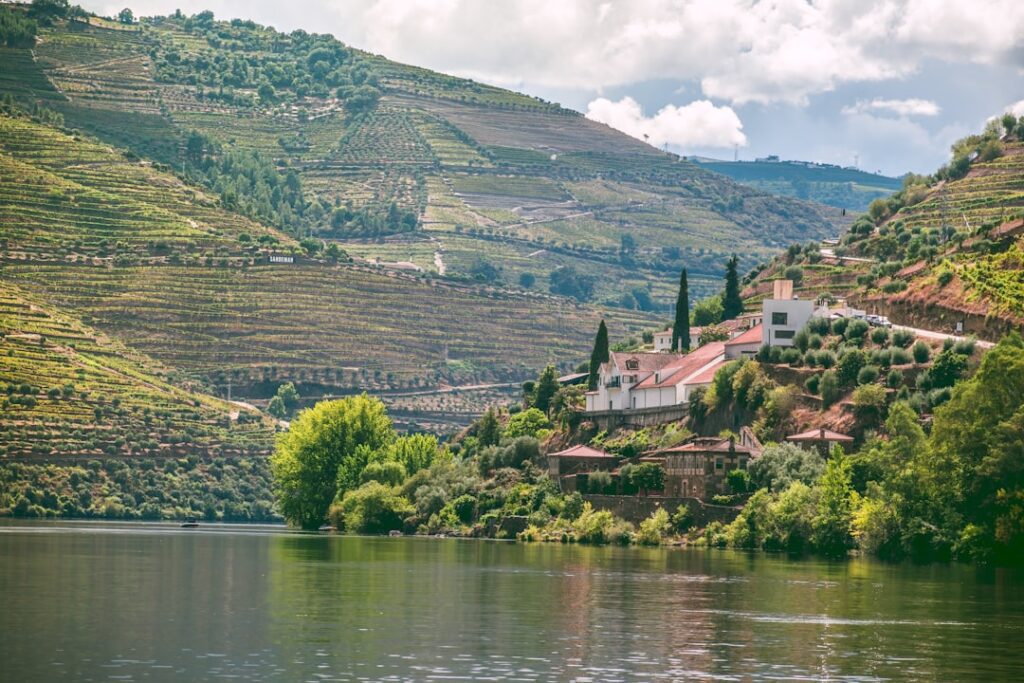
Douro Valley, Portugal: Essential Terraced Vineyards, Port Wine & River Cruises (2025)
What if you could explore the world’s first officially designated wine region, established in 1756, where every bend in the river reveals another breathtaking vista? Douro Valley proves that some of Europe’s most spectacular landscapes come with exceptional wine pairings. Here, you’ll discover terraced vineyards climbing impossibly steep slopes, family-owned quintas producing world-class port for generations, and river cruises that feel like sailing through a living painting. While many travelers rush to Lisbon’s beaches, savvy visitors find Douro’s 600,000 acres of UNESCO-protected wine country offer an authentic Portuguese experience that’s both luxurious and remarkably accessible.
Why Douro Valley, Portugal Stands Out

A small boat traveling down a river next to a city, Douro Valley, Portugal
- Historic Architecture: The Mateus Palace (c. 1745) features stunning Baroque architecture and gardens that appear on the famous Mateus Rosé wine bottles.
- Cultural Scene: The annual Grape Harvest Festival in September transforms the valley with traditional grape stomping, folk music, and wine tastings at local quintas.
- Local Specialties: Don’t leave without trying a glass of 20-year-old Tawny Port paired with local Serra da Estrela cheese at a riverside tasting room.
Pro Tip: Visit during September’s harvest season for the most authentic experience, but book accommodations 6 months in advance. For fewer crowds, late April offers perfect weather with blooming almond trees and available reservations at top quintas.
Map of Douro Valley, Portugal
Use these interactive maps to explore Douro Valley, Portugal and plan your route:
📍 View Douro Valley, Portugal on OpenStreetMap
🗺️ Open Douro Valley, Portugal in Google Maps
Planning Your Trip: Practical Essentials
Getting There and Around
- By Air: Porto Airport (OPO) serves as the main gateway, with TAP Portugal and Ryanair offering direct European flights. Book flights at Skyscanner for best deals.
- By Train: The historic Linha do Douro railway offers stunning riverside views from Porto to Pocinho. Reserve tickets at Trainline or the national railway website.
- By Car: The N222 between Pinhão and Peso da Régua is considered one of the world’s most beautiful driving routes. Compare car rentals at RentalCars.com.
- Local Transport: River cruises between Porto and Régua operate daily (€25-50), while local buses connect smaller villages but run infrequently.
Best Time to Visit
The Douro Valley transforms dramatically with each season, offering different experiences for wine enthusiasts, photographers, and relaxation seekers. Your ideal timing depends on whether you prioritize perfect weather, harvest excitement, or budget-friendly travel.
| Season | Weather | Highlights |
|---|---|---|
| Summer (Jun–Aug) | 25-35°C, dry and sunny | Vineyards at peak greenery, all attractions open, crowded and expensive |
| Winter (Dec–Feb) | 5-15°C, occasional rain | Dramatic foggy landscapes, intimate wine tastings, 40% lower prices |
| Shoulder (Apr–May/Sep–Oct) | 15-25°C, mild and pleasant | Harvest activities in September, wildflowers in spring, ideal conditions |
Budgeting for Douro Valley, Portugal

A view of a lake and mountains from a hillside, Douro Valley, Portugal
| Category | Budget | Mid-range | Luxury |
|---|---|---|---|
| Accommodation | €40-70 per night (guesthouses) | €100-200 per night (boutique hotels) | €300-600 per night (wine estate suites) |
| Meals | €15-25 (local tascas) | €30-50 (restaurant with wine) | €80-150 (gourmet dining) |
| Transport | €10-20 (public transport) | €40-60 (rental car) | €150+ (private driver) |
| Activities | €15-30 (basic tastings) | €50-80 (guided tours) | €120+ (private boat & tasting) |
| Daily Total | €80-145 | €220-390 | €650+ |
Top Attractions and Must-See Sights
| Attraction | Description | Hours | Entry Fee |
|---|---|---|---|
| Quinta do Crasto | Stunning 17th-century wine estate with infinity pool overlooking the river | 10:00-18:00 daily | €25-50 tastings |
| Pinhão Train Station | Historic station featuring 25 blue azulejo tiles depicting vineyard life | 24 hours | Free |
| Quinta da Pacheca | Sleep in giant wine barrels and enjoy exceptional wine tastings | 10:00-19:00 | €20-35 tastings |
| Douro Museum | Comprehensive history of the region’s wine culture and river life | 10:00-18:00 Tue-Sun | €6 |
3-Day Itinerary: Douro Valley, Portugal’s Highlights & Hidden Gems
Day 1: River Views & Historic Quintas
- Morning: 7:30 AM scenic drive along N222 from Peso da Régua to Pinhão, stopping at Miradouro São Leonardo de Galafura viewpoint for sunrise photos over the valley.
- Afternoon: 12:30 PM wine tasting and lunch at Quinta do Vallado (€45), featuring their award-winning Touriga Nacional and traditional Portuguese cozido stew.
- Evening: 6:00 PM sunset river cruise from Pinhão (€35) followed by dinner at DOC Restaurant, Chef Rui Paula’s Michelin-starred establishment perched above the Douro.
Day 2: Wine Education & Local Culture
- Morning: 9:00 AM port wine blending workshop at Quinta da Roêda (€55) – you’ll create and bottle your own custom port blend to take home.
- Afternoon: Explore Lamego’s stunning Sanctuary of Our Lady of Remedies staircase and sample local presunto at Tasquinha da Sé.
- Evening: Traditional fado music performance at Cais da Villa in Peso da Régua, accompanied by local petiscos (tapas) and Douro red wines.
Day 3: Hidden Valleys & Artisanal Discoveries
- Morning: Drive to remote Côa Valley (1.5 hours) for prehistoric rock art tours (€12) and olive oil tasting at a family-run lagar.
- Afternoon: Picnic lunch at Quinta do Panascal, walking their self-guided audio tour through stunning vineyards overlooking the Távora River.
- Evening: Final dinner at Castas e Pratos in Régua, a converted train carriage restaurant serving innovative Portuguese cuisine with over 300 local wines.
Cultural Insights & Etiquette
- Language: Learn “bom dia” (good morning), “obrigado/obrigada” (thank you), and “saúde” (cheers) – locals appreciate the effort
- Customs: Always accept offered food or drink; refusing is considered rude in Portuguese hospitality culture
- Tipping: Round up restaurant bills 5-10%; port lodge guides expect €2-5 per person for excellent service
- Dress Code: Smart casual for wine tastings; comfortable walking shoes essential for vineyard terraces
- Business Hours: Shops close 1:00-3:00 PM for lunch; most museums closed Mondays; wine estates require advance booking
Where to Eat: Douro Valley, Portugal’s Best Bites
Douro’s cuisine reflects its terroir – robust, rustic dishes designed to complement the region’s powerful wines. You’ll discover family-run tascas serving generations-old recipes alongside Michelin-starred restaurants reinterpreting traditional flavors.
Must-Try Local Specialties
- Posta Mirandesa: Thick grilled steak from local cattle, best at Tasca da Quinta in Favaios
- Bacalhau à Brás: Shredded salt cod with eggs and potatoes, perfected at Restaurante Lua in Pinhão
- Alheira: Game sausage invented by Portuguese Jews, authentic versions at Taberna do Júlio in Peso da Régua
Restaurant Recommendations by Budget
| Type | Restaurant | Specialty | Price Range |
|---|---|---|---|
| Budget | Adega do Sossego, São João da Pesqueira | Traditional petiscos with house wine | €15-25 |
| Mid-range | Restaurante O Lagar, Celeirós | Wood-fired meats and local cheeses | €30-50 |
| Fine dining | Restaurante Castas e Pratos, Peso da Régua | Modern Portuguese with wine pairings | €80-120 |
Where to Stay
Accommodation ranges from rustic rural tourism to luxurious wine estate hotels. Staying at a quinta (wine estate) offers the most authentic experience, while village hotels provide better access to restaurants and services. Compare prices and book at Booking.com or Airbnb for apartments.
Best Neighborhoods for Accommodation
- Pinhão: Central river location with multiple quintas, ideal for first-time visitors wanting easy access to cruises
- Peso da Régua: Transportation hub with more restaurant options, perfect for travelers without rental cars
- Remote Quintas: Isolated wine estates between villages, offering ultimate tranquility and vineyard views

A river running through a lush green hillside, Douro Valley, Portugal
FAQs: Your Douro Valley, Portugal Questions Answered
1. Is Douro Valley, Portugal safe at night?
Extremely safe – the valley has very low crime rates. However, driving narrow, winding roads after dark requires extra caution, and some remote quintas have limited lighting.
2. What currency is used and are credit cards accepted?
Portugal uses the Euro. Credit cards are widely accepted, but carry €50-100 cash for small villages, farmer’s markets, and tips at family-run establishments.
3. How do I get from the airport to the city center?
From Porto Airport, take the metro to Campanhã station (€2.50, 45 minutes), then transfer to regional trains to Douro Valley. Book airport transfers at GetYourGuide for convenience.
4. Do I need to speak the local language?
English is widely spoken at tourist facilities and larger quintas. In remote villages, you’ll find limited English – learn basic Portuguese phrases for a warmer reception.
5. What’s the appropriate dress code?
Smart casual for wine tastings (no shorts or flip-flops), comfortable walking shoes for vineyard tours, and layers for changing temperatures between river level and hilltops.
Final Thoughts: Douro Valley, Portugal Awaits
The Douro Valley offers that rare combination of world-class luxury and authentic rural charm that seasoned travelers cherish. Beyond the spectacular landscapes and exceptional wines, you’ll discover a region where traditions run deep and hospitality feels genuinely warm. Whether you’re toasting with vintage port at sunset, navigating winding roads through endless vineyards, or simply watching fishing boats glide along the river, this UNESCO World Heritage site delivers moments that linger long after you’ve returned home. Your best strategy? Book that quinta stay, reserve a few key tastings in advance, then leave room for spontaneous discoveries – because the Douro’s greatest magic often reveals itself when you least expect it.

