
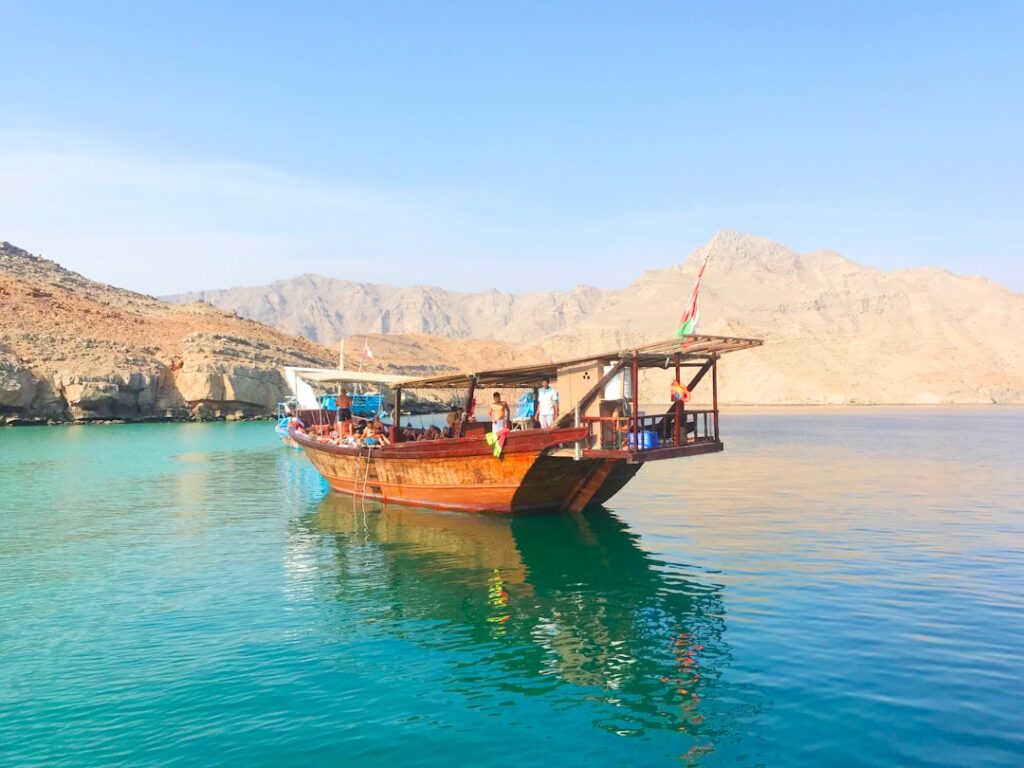
Dhank, Oman’s Hidden Forts, Fossils & Mountain Serenity (2026)
Ask locals about Dhank, and they’ll tell you about the 150-million-year-old oyster fossils embedded in the mountain rock, a secret the surrounding desert has kept since the Jurassic period. Most guidebooks miss this completely, focusing only on the imposing fort. But here, history isn’t just in the castles; it’s literally underfoot, offering a silent, ancient narrative that transforms a simple hike into a journey through deep time.
Why Dhank, Oman Stands Out

White concrete building near green trees during daytime, Dhank, Oman
- Historic Architecture: Dhank Fort, a 17th-century sentinel built from mudbrick and stone, offers panoramic views that once guarded vital trade routes through the Hajar Mountains.
- Cultural Scene: The annual Date Harvest Festival in nearby Wilayat Al Rustaq (accessible from Dhank) showcases the heart of Omani agrarian life with traditional music, camel races, and date tasting.
- Local Specialties: Don’t miss Shuwa, a celebratory dish of marinated lamb slow-cooked in an underground sand oven for up to 48 hours, infusing it with smoky, tender flavor.
Pro Tip: Visit between October and March for ideal 20-28°C daytime temperatures. For the most dramatic experience, time your visit to Dhank Fort for late afternoon; you’ll avoid the midday heat and catch the golden hour light bathing the mountains in amber hues, with far fewer visitors than at popular sunrise slots.
Map of Dhank, Oman
Use these interactive maps to explore Dhank, Oman and plan your route:
📍 View Dhank, Oman on OpenStreetMap
🗺️ Open Dhank, Oman in Google Maps
Planning Your Trip: Practical Essentials
Getting There and Around
- By Air: Muscat International Airport (MCT) is the main gateway, 200km (a 2.5-hour drive) from Dhank. Airlines like Oman Air, SalamAir, and major international carriers serve it. Your best bet is to pre-book a rental car for the scenic drive. Book flights at Skyscanner for best deals.
- By Train: Oman does not have a passenger rail network, so train travel is not an option for reaching Dhank.
- By Car: Driving is essential. From Muscat, take Route 15 towards Ibri, then follow signs to Dhank. The roads are well-maintained but mountainous. Parking is readily available and free at all major sites. Compare car rentals at RentalCars.com.
- Local Transport: There is no formal public transport within Dhank. Taxis can be hired for the day by negotiation (expect around 20-30 OMR for a half-day tour). For true freedom, a rental car is non-negotiable.
Best Time to Visit
The climate dictates your Dhank experience. The sweet spot is the cool winter months, but each season has its own character for the prepared traveler.
| Season | Weather | Highlights |
|---|---|---|
| Summer (Jun–Aug) | Extremely hot, 35-45°C. Intense sun, very low humidity. | Near-zero tourist crowds. Accommodation prices are at their lowest. Only suitable for very early morning or late evening outings. |
| Winter (Dec–Feb) | Pleasant and cool, 15-25°C. Clear, sunny days and chilly nights. | Perfect for hiking, fort exploration, and all-day outdoor activities. Peak season for domestic tourism, so book accommodation in advance. |
| Shoulder (Apr–May/Sep–Oct) | Warm to hot, 25-35°C. Evenings start to cool in October. | A good balance of manageable weather and thinner crowds. September can still be very hot, but October is ideal for early travelers. |
Budgeting for Dhank, Oman

Close-up of elegant arches at the Sultan Qaboos Grand Mosque in Muscat, Oman., Dhank, Oman
| Category | Budget | Mid-range | Luxury |
|---|---|---|---|
| Accommodation | 15-25 OMR/night (local guesthouse) | 30-50 OMR/night (3-4 star hotel or nice apartment) | 70+ OMR/night (exclusive resort or luxury villa) |
| Meals | 3-5 OMR/day (street shawarma, local cafes) | 8-15 OMR/day (restaurant meals, coffee shops) | 25+ OMR/day (fine dining, multi-course meals) |
| Transport | 10 OMR/day (shared taxi day rate, fuel) | 15-20 OMR/day (compact rental car + fuel) | 40+ OMR/day (4×4 rental with driver/guide) |
| Activities | 0-2 OMR (free fort visits, independent hiking) | 5-10 OMR (guided fossil tour, entry fees) | 50+ OMR (private guided day trips, specialized tours) |
| Daily Total | 28-42 OMR | 58-95 OMR | 185+ OMR |
Top Attractions and Must-See Sights
| Attraction | Description | Hours | Entry Fee |
|---|---|---|---|
| Dhank Fort (Hisn Dhank) | A majestic 17th-century mudbrick fortress offering 360-degree views of the date plantations and dramatic mountain valleys below. | Sat-Thu: 8 AM – 2 PM (Check locally as hours can vary) | 0.5 OMR |
| Fossil Valley (Wadi Al Mijlas) | An open-air geological museum where you can spot ancient oyster and marine fossils embedded in the limestone, evidence of Oman’s submerged past. | Open 24 hours (visit daylight hours) | Free |
| Al Muntarib Castle | A smaller, beautifully restored watchtower castle in a nearby village, providing an intimate look at traditional Omani military architecture. | Daylight hours; exterior always accessible | Free (exterior) |
| Local Souq (Market) | The weekly market is a hub of activity where farmers sell fresh dates, vegetables, and livestock, offering a genuine slice of local life. | Typically Friday mornings; times vary | Free to browse |
3-Day Itinerary: Dhank, Oman’s Highlights & Hidden Gems
Day 1: Forts & Fossil Beds
- Morning (7-9 AM): Start early at Dhank Fort to beat the heat. Climb to the highest tower for breathtaking views over the Al Dhahirah plains. The morning light is perfect for photography.
- Afternoon (12-3 PM): Drive 15 minutes to Wadi Al Mijlas (Fossil Valley). Pack a picnic lunch. Spend a couple of hours exploring the rocky slopes; look for the distinctive circular oyster fossils. For a proper lunch, head back to town for mixed grills at Al Diwan Restaurant.
- Evening (6-8 PM): Enjoy a relaxed dinner at Dank Restaurant, a local favorite known for its generous portions of Mandi (spiced rice with meat). As night falls, find a clear spot to stargaze—the lack of light pollution makes for incredible skies.
Day 2: Mountain Villages & Cultural Immersion
- Morning (8 AM): Take a scenic drive to the mountain village of Al Muntarib (approx. 20 mins). Explore the castle and wander the old falaj (irrigation channel) systems. Chat with local shopkeepers—they’re often happy to share stories.
- Afternoon (1 PM): Have lunch at a simple local eatery like Bin Ateeq in Dhank, trying their Omani chicken curry. Afterwards, if it’s a Friday, visit the lively souq. Otherwise, visit a local date plantation (ask politely at a farm; a small tip of 1-2 OMR is appreciated).
- Evening (6 PM): For a special experience, book an evening with a local family for a traditional Shuwa dinner (arrange through your hotel or a local guide 24 hours in advance). It’s a culinary and cultural highlight.
Day 3: Scenic Drives & Departure
- Morning (8 AM): Take a final, spectacular drive along the mountain roads towards Ibri. Stop at any scenic overlooks for photos of the layered mountain ranges. Your goal is the ancient Beehive Tombs near Ibri, a 45-minute drive from Dhank.
- Afternoon (12 PM): Explore the 5000-year-old Bronze Age tombs, then have a farewell lunch in Ibri at Al Forsan Restaurant, famous for its grilled meats and fresh bread.
- Evening (3 PM+): Begin your journey back to Muscat or towards your next destination in Oman, filled with memories of mountains, history, and profound quiet.
Cultural Insights & Etiquette
- Language: Arabic is official. English is understood in hotels and by some shopkeepers. Learn “As-salamu alaykum” (hello), “Shukran” (thank you), and “Kayf halak?” (how are you?).
- Customs: Always use your right hand for eating, greeting, and giving/receiving items. Public displays of affection are frowned upon. When visiting a mosque (if non-Muslims are allowed), dress very conservatively and remove shoes.
- Tipping: Not mandatory but appreciated. In restaurants, 5-10% is generous if service charge isn’t included. For guides, 3-5 OMR per day is standard.
- Dress Code: Modesty is key. Men should avoid shorts in public centers. Women should cover shoulders and knees; loose-fitting clothing is best. A scarf is useful for visiting religious sites.
- Business Hours: Government offices: 7:30 AM – 2:30 PM (Sat-Wed). Shops: often 9 AM – 1 PM, reopen 4 PM – 9 PM, closed Friday mornings. Everything slows down during Ramadan.
Where to Eat: Dhank, Oman’s Best Bites
Dining in Dhank is about hearty, traditional Omani cuisine. You won’t find international chains here, but rather family-run establishments serving recipes passed down for generations. Meals are social, often shared, and feature rice, meat, and spices as the stars.
Must-Try Local Specialties
- Shuwa: The king of Omani dishes. Lamb marinated with Omani spices, wrapped in banana leaves, and slow-cooked in a sand oven for up to two days. Best tried by pre-arrangement with a local family or during Eid festivities.
- Mandi: Fragrant rice dish with tender, falling-off-the-bone meat (usually chicken or lamb), steamed in a pot underground with spices. Dank Restaurant does a superb version.
- Halwa: A sticky, sweet gelatinous dessert made from rosewater, saffron, nuts, and sugar. It’s a symbol of Omani hospitality, often served with bitter Omani coffee (Qahwa). Buy some from the local souq to take home.
Restaurant Recommendations by Budget
| Type | Restaurant | Specialty | Price Range |
|---|---|---|---|
| Budget | Al Diwan Restaurant (Dhank center) | Freshly baked Khubz (bread) with mixed grills and hummus. | 2-4 OMR per person |
| Mid-range | Dank Restaurant (Main road, Dhank) | Authentic Mandi and large platters of grilled meats, perfect for sharing. | 4-8 OMR per person |
| Fine dining | Golden Tulip Hotel Restaurant (Ibri, 45 mins drive) | International buffet with Omani specialties in a more formal setting. | 10-15 OMR per person |
Where to Stay
Accommodation in Dhank itself is limited to a few local guesthouses and one main hotel, offering authentic simplicity. For more variety, savvy travelers often stay in the larger town of Ibri, a 45-minute drive away, which has a wider range of options. Compare prices and book at Booking.com or Airbnb for apartments.
Best Neighborhoods for Accommodation
- Dhank Town Center: The most convenient location for exploring the fort and local market on foot. Offers basic guesthouses and local hotels. Ideal for travelers seeking an immersive, no-frills experience close to the main sights.
- Ibri City: A larger town with several 3-star hotels (like the Ibri Hotel), more restaurant choices, and supermarkets. Perfect for those who prefer more amenities and are using Dhank as a day-trip destination.
- Mountain Foothills (Villas/Apartments): For a secluded, luxurious stay, look for privately rented villas or apartments in the foothills between Dhank and Ibri. This suits families or groups wanting privacy and stunning mountain views.

Explore Al Alam Palace, Dhank, Oman
FAQs: Your Dhank, Oman Questions Answered
1. Is Dhank, Oman safe at night?
Yes, Dhank is exceptionally safe. Oman has very low crime rates. You can walk around the town center at night without concern. Standard precautions apply: be aware of your surroundings, and driving on mountain roads at night requires extra caution due to wandering animals and sharp bends.
2. What currency is used and are credit cards accepted?
The currency is the Omani Rial (OMR). 1 OMR ≈ $2.60 USD. Credit cards (Visa/Mastercard) are accepted at the main hotel and some larger restaurants in Ibri. However, in Dhank’s local eateries, guesthouses, and the souq, cash is king. Always carry sufficient Omani Rials in smaller denominations.
3. How do I get from the airport to the city center?
From Muscat International Airport (MCT), you must drive. The most practical option is to pick up a pre-booked rental car at the airport for the 2.5-hour journey. Taxis are exorbitantly expensive for this distance (could be 80-100 OMR one-way). For convenience, you can book a private airport transfer at GetYourGuide, but a rental car will be far more cost-effective for your entire stay.
4. Do I need to speak the local language?
No, but it helps. English is not widely spoken in Dhank outside the main hotel. However, Omanis are famously hospitable and will try to communicate through gestures and smiles. Learning a few basic Arabic phrases will greatly enhance your interactions and is seen as a sign of respect.
5. What’s the appropriate dress code?
Modest, loose-fitting clothing is essential. For

