
Biei, Japan’s Amazing Rolling Hills, Artful Farms & Panoramic Bliss (2026)
Just after dawn in July, the Patchwork Road of Biei reveals its magic. The low morning sun casts long, dramatic shadows across a vast, undulating quilt of emerald potato fields, golden wheat, and vibrant lavender. The air carries the crisp, clean scent of soil and distant blooms, broken only by the hum of a farmer’s tractor. This is Hokkaido’s living canvas, a 140-square-kilometer masterpiece of agricultural artistry where the landscape itself is the primary attraction.
Why Biei, Japan Stands Out

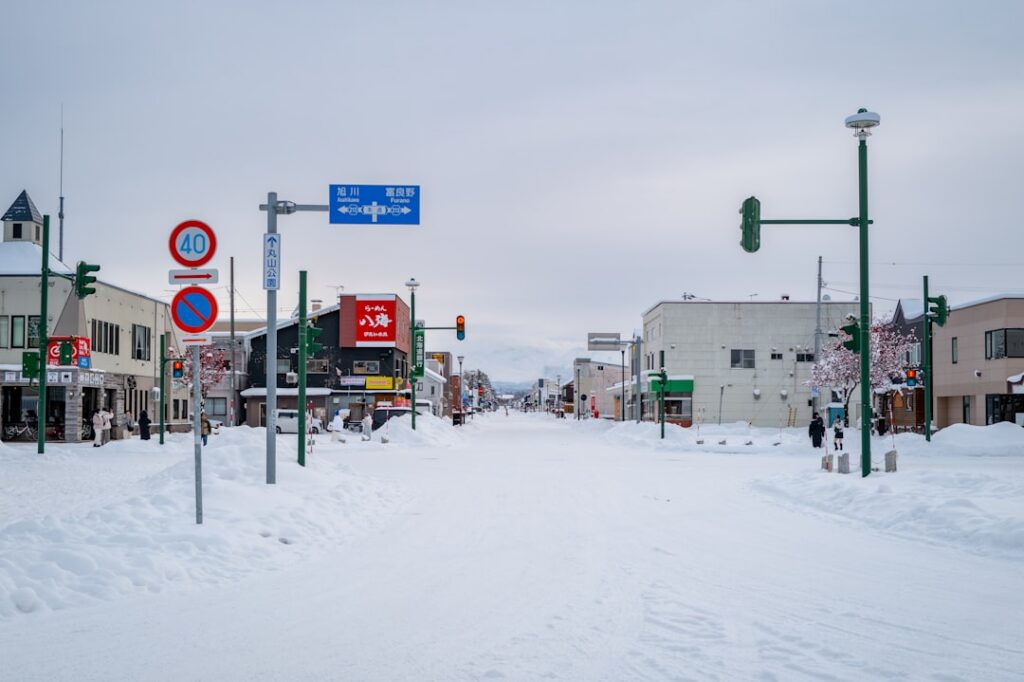
Snowy street scene viewed through a window., Biei, Japan
- Historic Architecture: The Biei Church (Shirogane Chapel), built in 1984, is a stunning modernist wooden structure designed by architect Tadao Ando, perfectly framed by the Daisetsuzan mountain range.
- Cultural Scene: The Biei Senka Festival in late July transforms the town with vibrant parades, traditional Bon Odori dances, and spectacular fireworks over the rolling hills.
- Local Specialties: You must try Biei Jersey Milk soft-serve ice cream, renowned across Japan for its unparalleled creaminess, sourced directly from local dairy farms.
Pro Tip: For the iconic photo of the lone trees like Ken & Mary and the Seven Star Trees without the tour buses, arrive between 5:30 AM and 7:00 AM. The soft morning light is perfect, and you’ll have the panoramic views all to yourself.
Map of Biei, Japan
Use these interactive maps to explore Biei, Japan and plan your route:
📍 View Biei, Japan on OpenStreetMap
🗺️ Open Biei, Japan in Google Maps
Planning Your Trip: Practical Essentials
Getting There and Around
- By Air: Fly into Asahikawa Airport (AKJ), a 30-minute drive from Biei, served by ANA from Tokyo-Haneda. Alternatively, New Chitose Airport (CTS) near Sapporo is a 2-hour drive or train/bus ride away. Book flights at Skyscanner for best deals.
- By Train: Take the JR Furano Line from Asahikawa Station (25 minutes, ~¥740) or from Sapporo via Lavender Express limited trains in summer (2 hours). The scenic ride is part of the experience. Reserve tickets at Trainline or the national railway website.
- By Car: Renting a car is highly recommended. The National Route 237 and 452 offer stunning drives. Major rental agencies are at the airports. Compare car rentals at RentalCars.com.
- Local Transport: The “Twinkle Bus” operates seasonal routes to major sights (July-Aug, ~¥500/ride). Outside summer, public transport is sparse; taxis or a rental car are your best bet.
Best Time to Visit
Biei transforms dramatically with the seasons. Summer (late June to August) is peak for flowers, while autumn (mid-September to October) offers fiery foliage. Winter is a serene, snowy wonderland, but many rural roads close.
| Season | Weather | Highlights |
|---|---|---|
| Summer (Jun–Aug) | 15°C to 25°C (59°F-77°F), mild and sunny | Lavender & flower fields in full bloom, vibrant green hills, all attractions open. Very crowded in late July. |
| Winter (Dec–Feb) | -5°C to -15°C (23°F to 5°F), heavy snowfall | Stark, beautiful snowy landscapes, frozen Blue Pond, onsen visits. Limited access to rural sights; requires 4WD. |
| Shoulder (Apr–May/Sep–Oct) | 5°C to 18°C (41°F-64°F), crisp and clear | Fewer crowds, golden autumn colors or fresh spring greens, ideal for photography and peaceful drives. |
Budgeting for Biei, Japan

A building covered in snow with a purple flag, Biei, Japan
| Category | Budget | Mid-range | Luxury |
|---|---|---|---|
| Accommodation | ¥5,000-¥8,000/night (hostel/minshuku) | ¥15,000-¥25,000/night (hotel/ryokan) | ¥40,000+/night (luxury resort like Shirogane Onsen) |
| Meals | ¥2,500/day (convenience store, simple ramen) | ¥5,000/day (local restaurants, set meals) | ¥10,000+/day (kaiseki dining, premium beef) |
| Transport | ¥1,500/day (Twinkle Bus pass) | ¥6,000/day (rental car + fuel) | ¥15,000/day (private taxi tour) |
| Activities | ¥0-¥1,000 (scenic drives, hiking) | ¥2,000-¥5,000 (museum entry, farm visits) | ¥8,000+ (private photography tour, gourmet experiences) |
| Daily Total | ¥9,000-¥12,500 | ¥28,000-¥41,000 | ¥73,000+ |
Top Attractions and Must-See Sights
| Attraction | Description | Hours | Entry Fee |
|---|---|---|---|
| Shikisai-no-Oka | A breathtaking 15-hectare flower garden with vibrant, striped hillsides and alpaca encounters. | 8:30 AM – 5:00 PM (Apr-Oct) | ¥500 (plus ¥300-¥500 for buggy/cart ride) |
| Shirogane Blue Pond | An ethereal, milky-blue pond created by mineral runoff, with skeletal white trees rising from its surface. | 24/7, best light at dawn | Free (Parking ¥500) |
| Patchwork Road & Panorama Road | Two scenic driving routes through the iconic rolling farmlands, dotted with famous lone trees. | 24/7 (roads open) | Free |
| Hokusei Hill Observatory | The single best panoramic view of Biei’s patchwork fields and the Daisetsuzan mountain range. | 24/7 | Free |
3-Day Itinerary: Biei, Japan’s Highlights & Hidden Gems
Day 1: The Iconic Landscapes
- Morning (7:00 AM): Start at the Shirogane Blue Pond for the magical morning light. Your best bet is to beat the crowds for a serene experience. Parking is ¥500.
- Afternoon (12:00 PM): Drive the Patchwork Road, stopping at the Seven Star Tree and Parent & Child Trees. For lunch, head to Biei Potato Village (じゃが丸) for their famous potato croquettes and creamy corn soup (set meal ~¥1,200).
- Evening (6:00 PM): Catch the sunset from Hokusei Hill Observatory. For dinner, savor Hokkaido’s famous Genghis Khan (mutton BBQ) at Kumagera in nearby Asahikawa (reservations recommended, ~¥3,500 per person).
Day 2: Flowers, Farms & Local Flavors
- Morning (9:00 AM): Explore Shikisai-no-Oka (¥500 entry). Take the buggy ride (¥500) to the top for the best views and visit the alpacas.
- Afternoon (1:00 PM): Visit Farm Tomita Lavender Fields (free entry) in neighboring Furano. Don’t miss their lavender soft serve (¥350). For a late lunch, try the exceptional dairy-forward curry at Furano Delice (~¥1,500).
- Evening (5:30 PM): Return to Biei for a relaxing soak at Shirogane Onsen (¥800). Enjoy a multi-course dinner at your ryokan or try the exquisite Biei beef at Restaurant Asperges (course from ¥6,000).
Day 3: Art, Culture & Scenic Drives
- Morning (8:30 AM): Drive the Panorama Road, seeking out the Ken & Mary Tree and Mild Seven Hill. Stop at the Biei Viewing Hill Art Museum (¥500) for landscape paintings of the area.
- Afternoon (12:30 PM): Have lunch at Kitchen Oguni, a charming log house restaurant known for its hearty Hokkaido stews and fresh-baked bread (~¥1,800). Then, visit the minimalist Biei Church (Shirogane Chapel) for quiet reflection.
- Evening (6:00 PM): For your final evening, enjoy a casual but superb meal of Hokkaido ramen at Ramen Saimi in Biei Station building (~¥900). Pick up souvenirs of local cheese and wine at the station’s farmer’s market.
Cultural Insights & Etiquette
- Language: Key phrases: “Sumimasen” (Excuse me), “Arigatou gozaimasu” (Thank you). English is limited in rural areas; a translation app is very useful.
- Customs: Always remove your shoes when entering a home, ryokan, or some traditional restaurants. Be respectful when photographing private farms—stay on public roads.
- Tipping: Tipping is not practiced in Japan. Excellent service is standard. Leaving cash can cause confusion.
- Dress Code: Casual and comfortable for exploring, but neat. Bring layers for changeable weather. Have a small towel for onsen visits.
- Business Hours: Many restaurants close by 8:00 PM. Museums and attractions often close at 5:00 PM. Always check seasonal hours, especially outside summer.
Where to Eat: Biei, Japan’s Best Bites
Biei’s cuisine is a celebration of Hokkaido’s bounty: rich dairy, tender beef, fresh vegetables, and potatoes. Dining is often hearty and farm-to-table.
Must-Try Local Specialties
- Biei Jersey Milk Soft Serve: Unbelievably creamy and rich. Find the best at roadside stands like “Popura Farm” or directly at dairy farms along Patchwork Road.
- Biei Beef: A premium, marbled wagyu from cattle raised on the local grasses and clean air. Best enjoyed as a steak or sukiyaki.
- Potato Croquettes (Korokke): Made with Biei’s famous potatoes, these crispy, fluffy croquettes are a perfect snack. “Biei Potato Village” is the go-to spot.
Restaurant Recommendations by Budget
| Type | Restaurant | Specialty | Price Range |
|---|---|---|---|
| Budget | Ramen Saimi (Biei Station) | Rich, miso-based Hokkaido ramen | ¥700-¥1,000 |
| Mid-range | Kitchen Oguni (Near Panorama Road) | Hearty stews, fresh bread, set lunches | ¥1,500-¥2,500 |
| Fine dining | Restaurant Asperges (Biei Town) | French-inspired courses featuring Biei beef and local produce | ¥6,000-¥12,000 |
Where to Stay
Accommodation ranges from simple guesthouses (minshuku) to luxurious hot spring resorts. Staying in central Biei Town offers convenience, while Shirogane Onsen area provides a serene, nature-immersed experience. Compare prices and book at Booking.com or Airbnb for apartments.
Best Neighborhoods for Accommodation
- Biei Town Center: Close to the station, restaurants, and shops. Ideal for those without a car using the Twinkle Bus. Offers business hotels and minshuku.
- Shirogane Onsen Area: A secluded forested area near the Blue Pond. Perfect for a relaxing ryokan stay with natural hot springs. Requires a car or taxi.
- Along Route 237 (Towards Furano): Scenic farmland locations with charming pensions and guesthouses. You’ll need your own transport but wake up to incredible views.

A large rocky mountain, Biei, Japan
FAQs: Your Biei, Japan Questions Answered
1. Is Biei, Japan safe at night?
Extremely safe. Violent crime is exceptionally rare. The primary concern at night is navigating dark, unlit rural roads if you’re driving or cycling—exercise caution and use high beams appropriately.
2. What currency is used and are credit cards accepted?
The Japanese Yen (JPY) is used. While credit cards are accepted at larger hotels and some restaurants in town, many rural farms, small stalls, and minshuku are cash-only. Savvy travelers always carry sufficient cash.
3. How do I get from the airport to the city center?
From Asahikawa Airport (AKJ), take a taxi directly to Biei (30 mins, ~¥8,000) or a bus to Asahikawa Station, then transfer to the JR train. From New Chitose (CTS), take the JR Limited Express to Sapporo, then transfer to the Lavender Express for Asahikawa/Biei (total ~3 hours, ~¥6,000). Book airport transfers at GetYourGuide for convenience.
4. Do I need to speak the local language?
It’s not essential but very helpful. Basic phrases are appreciated. In rural Biei, English menus and signs are less common. Use a translation app like Google Translate (download the offline pack) for menus and communication.
5. What’s the appropriate dress code?
Comfortable, layered outdoor clothing is key. Sturdy walking shoes are a must for exploring fields and viewpoints. If visiting an onsen, remember that tattoos can be frowned upon at public baths—check your ryokan’s policy or use private baths.
Final Thoughts: Biei, Japan Awaits
Biei offers a different kind of Japanese travel—one defined not by neon and temples, but by vast, open skies, meticulously tended earth, and a profound sense of tranquility. It’s a destination for the senses and the soul

