
Belo Sur Tsiribihina, Madagascar: Incredible River Crossings, Baobabs & Frontier Spirit (2026)
As the sun sets over the Tsiribihina River, the ferry horn sounds for the final crossing of the day, a deep bellow that echoes past wooden pirogues and children fishing from red-clay banks. This isn’t just a river; it’s Madagascar’s historic highway, and Belo Sur Tsiribihina is its beating heart—a dusty, vibrant frontier town where the paved road ends and adventure on the famed Route Nationale 8 truly begins. Most travelers use it as a transit point, but those who linger for even a day discover a place where time moves to the rhythm of the river and the call of the wild west.
Why Belo Sur Tsiribihina, Madagascar Stands Out

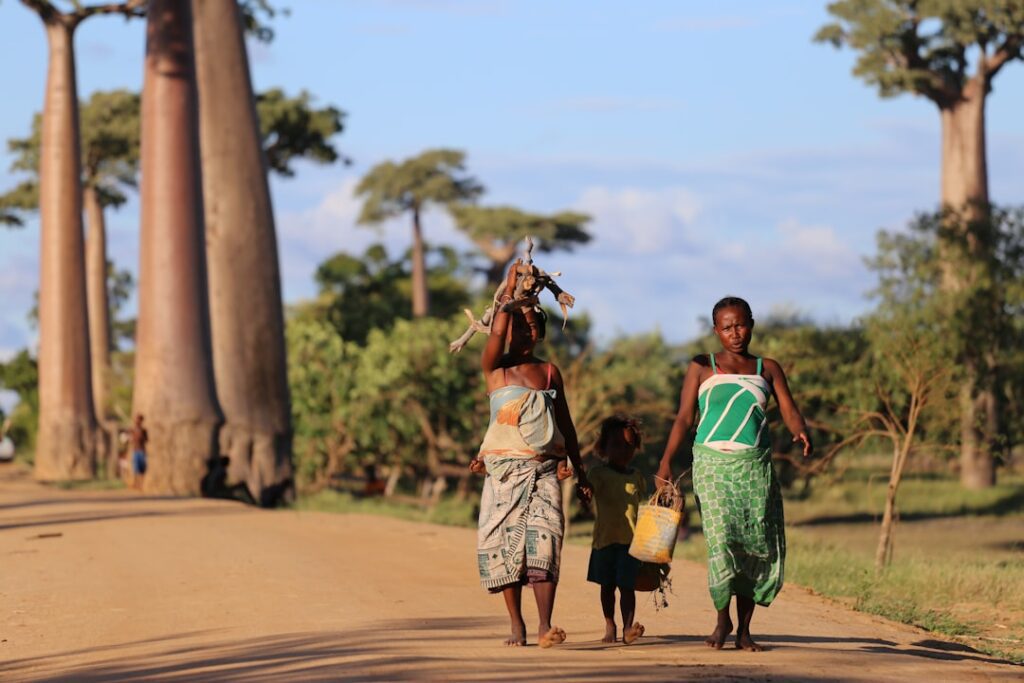
A group of people walking on a dirt road with tall trees with Avenue of the…, Belo Sur Tsiribihina, Madagascar
- Historic Architecture: The town’s central market, a sprawling network of wooden stalls and thatched roofs built incrementally over decades, is a living monument to local commerce and community gathering.
- Cultural Scene: The weekly Zebu cattle market is a spectacle of negotiation and tradition, where herdsmen from remote villages converge in a cloud of dust and cultural exchange.
- Local Specialties: You must try Romazava, Madagascar’s national beef stew, here prepared with greens foraged from the riverside and served with a mound of vary (rice).
Pro Tip: The absolute best time to visit is during the dry season from April to October. Not only are the roads passable, but the river level is perfect for pirogue trips. Aim to arrive on a Tuesday or Wednesday to experience the build-up to the major Thursday market, when the town is at its most vibrant.
Map of Belo Sur Tsiribihina, Madagascar
Use these interactive maps to explore Belo Sur Tsiribihina, Madagascar and plan your route:
📍 View Belo Sur Tsiribihina, Madagascar on OpenStreetMap
🗺️ Open Belo Sur Tsiribihina, Madagascar in Google Maps
Planning Your Trip: Practical Essentials
Getting There and Around
- By Air: The nearest major airport is in Morondava (MOQ), about a 4-5 hour drive away on rough roads. Tsaradia (Air Madagascar) operates flights from Antananarivo. From the airport, you’ll need a pre-arranged 4×4 transfer. Book flights at Skyscanner for best deals.
- By Train: There are no passenger train services to Belo Sur Tsiribihina. The famous Fianarantsoa-Côte Est (FCE) train is on the opposite side of the island. All travel here is by road or river.
- By Car: The journey from Antananarivo is a serious 2-3 day 4×4 expedition along RN1 and RN34. From Morondava, it’s a bumpy but spectacular ride east on RN8. A 4×4 is non-negotiable. Compare car rentals (with driver highly recommended) at RentalCars.com.
- Local Transport: Within town, you’ll walk. For excursions, your options are 4×4 hire, motorcycle taxi (pousse-pousse), or the most authentic: a wooden pirogue on the river. Negotiate prices firmly but fairly before departure.
Best Time to Visit
Timing is everything in western Madagascar. Your experience hinges on the seasons, dictating road conditions, river navigability, and the sheer comfort of your exploration.
| Season | Weather | Highlights |
|---|---|---|
| Dry Season (Apr–Oct) | Warm, sunny days (25-30°C/77-86°F), cool nights, virtually no rain. | Optimal for 4×4 travel, river trips, and visiting the Tsingy de Bemaraha. Peak season for tourists, so book ahead. |
| Wet Season (Nov–Mar) | Hot, humid (30-35°C/86-95°F), with heavy afternoon rains and cyclones possible Jan-Feb. | Lush green landscapes, but many roads (including RN8) become impassable, and the Tsingy park is closed. Very few tourists. |
| Shoulder (Mar/Apr & Oct/Nov) | Transitional; temperatures are high, with sporadic rain at the start/end of the wet season. | A gamble. You might get good conditions and lower prices, or get caught in early/late rains that disrupt travel. |
Budgeting for Belo Sur Tsiribihina, Madagascar

Avenue of the Baobabs, Madagascar during day, Belo Sur Tsiribihina, Madagascar
| Category | Budget | Mid-range | Luxury |
|---|---|---|---|
| Accommodation | 15,000-30,000 MGA/night (basic bungalow, shared bath) | 50,000-80,000 MGA/night (private bungalow with fan, private bath) | 100,000+ MGA/night (rare; best available lodge with AC, pool) |
| Meals | 5,000-10,000 MGA (street food, market meals) | 15,000-25,000 MGA (restaurant set menu) | 30,000+ MGA (multi-course dinner at top lodge) |
| Transport | Walking, shared taxi-brousse (very basic) | Pirogue rental (30,000-50,000 MGA/half-day), private 4×4 day trips (200,000+ MGA) | Private 4×4 with driver/guide for multi-day expedition |
| Activities | Market browsing, river walks, village visits (small donation) | Guided pirogue safari (from 80,000 MGA), half-day 4×4 tour to nearby baobabs | Multi-day private Tsiribihina River descent or bespoke cultural tour |
| Daily Total | 40,000-60,000 MGA ($9-$13) | 150,000-250,000 MGA ($33-$55) | 400,000+ MGA ($88+) |
Top Attractions and Must-See Sights
| Attraction | Description | Hours | Entry Fee |
|---|---|---|---|
| The Tsiribihina River | The lifeblood of the region, best experienced on a slow pirogue journey to spot birds, lemurs, and local riverside life. | Daylight hours | Pirogue hire from 30,000 MGA |
| Belo Sur Tsiribihina Market | The sprawling, vibrant heart of the town, where you can find everything from spices and produce to local crafts and household goods. | Daily, peak on Thu | Free |
| Zebu Cattle Market | A quintessential Malagasy experience; witness the trading of these prized humped cattle, central to local wealth and culture. | Thursdays (early morning) | Free |
| Nearby Baobab Forests | Venture just outside town to find majestic baobabs standing sentinel in the landscape, less crowded than the famous Avenue near Morondava. | Always accessible | Free (guide recommended, ~20,000 MGA) |
3-Day Itinerary: Belo Sur Tsiribihina, Madagascar’s Highlights & Hidden Gems
Day 1: Immersion in River Town Life
- Morning (7-9 AM): Start early with the town’s best coffee and fresh *mofo gasy* (Malagasy doughnuts) from a stall near the market. Then, wander the market itself as it wakes up, watching vendors arrange piles of fragrant vanilla, crimson lychees, and strange tubers.
- Afternoon (12-3 PM): Enjoy a simple lunch of *ravitoto* (pork with cassava leaves) at a local *hotely*. Then, hire a pirogue and guide (approx. 50,000 MGA for 2 hours) for a gentle trip on the Tsiribihina, keeping an eye out for Madagascar kingfishers and fishermen casting nets.
- Evening (6-8 PM): Watch the spectacular sunset from the riverbank, where the sky turns to fire. For dinner, head to **Chez Lala** for a reliable and delicious plate of zebu steak with rice and *lasary* (tomato and onion relish).
Day 2: Culture & The Countryside
- Morning (6 AM): If it’s Thursday, don’t miss the Zebu market. If not, arrange a 4×4 or moto-taxi (around 40,000 MGA round-trip) to visit a nearby **Sakalava village**. Always go with a local guide to ensure respectful interaction; a small donation of rice or school supplies is appreciated.
- Afternoon (12-3 PM): Return to town for lunch at your guesthouse. Then, visit the **local woodcarvers’ workshops**. Belo Sur is known for its skilled artisans who create detailed sculptures from precious woods like palisander and ebony.
- Evening (6-8 PM): Take a leisurely stroll along the main street as the heat dissipates. For a treat, see if **Hotel-Restaurant du Tsiribihina** is serving fresh fish from the river. Enjoy a **Three Horses Beer (THB)** as your day winds down.
Day 3: Baobabs & The Great Outdoors
- Morning (7 AM): Charter a 4×4 for a half-day excursion (from 200,000 MGA) to explore the **baobab-dotted countryside**. Your driver will know spots where these “upside-down trees” create a magical, silent forest. Visit the famous “**Baobab Amoureux**” (Two intertwined baobabs), a 45-minute drive away.
- Afternoon (12-3 PM): Have a picnic lunch under the shade of a giant baobab. On your return, ask your driver to stop at a local **sugar cane press** to see *betsabetsa* (a local fermented cane drink) being made and taste the fresh juice.
- Evening (6-8 PM): Your final evening calls for reflection. Enjoy a farewell dinner, perhaps trying **Akoho sy Voanio** (chicken in coconut milk). Sit by the river one last time, listening to the sounds of the Malagasy night.
Cultural Insights & Etiquette
- Language: Malagasy is the primary language. French is widely spoken in tourist areas. Key phrases: “Manao ahoana” (Hello), “Misaotra” (Thank you), “Azafady” (Please/Excuse me).
- Customs: The **fady** (taboos) are taken seriously. Always ask permission before photographing people, villages, or tombs. Pointing with your index finger is considered rude; use an open hand instead.
- Tipping: Not obligatory but greatly appreciated. For guides, 5-10% of the tour cost is standard. For restaurant staff, rounding up the bill is fine. Small gifts (pens, notebooks) for village children are welcome if coordinated through a guide.
- Dress Code: Modesty is key. Cover shoulders and knees, especially when visiting villages or local markets. Swimwear is for the beach or pool only.
- Business Hours: Shops and services generally operate from 8 AM to 5 PM, with a long lunch break. The market is busiest in the early morning and late afternoon. Many businesses close on Sunday.
Where to Eat: Belo Sur Tsiribihina, Madagascar’s Best Bites
Dining here is about hearty, honest Malagasy cuisine. You won’t find fine dining, but you will find flavor. Meals are centered around a large portion of rice (*vary*) accompanied by a *laoka* (side dish) of meat, fish, or vegetables. Most guesthouses offer half-board, which is often your most convenient and reliable option.
Must-Try Local Specialties
- Romazava: A hearty stew of zebu meat (or pork) with *brèdes mafana* (a local leafy green) and tomatoes. The defining ingredient is *anantsonga*, giving it a distinctive, slightly bitter flavor. Best tried at a local *hotely* or your guesthouse.
- Ravitoto sy Henakisoa: Smashed cassava leaves cooked with pork, resulting in a rich, dark green, flavorful dish. A staple that showcases the importance of tubers in the Malagasy diet.
- Fresh River Fish: The Tsiribihina provides. Look for *tilapia* or *capitaine*, often grilled whole or cooked in a light tomato sauce (*sauce tomate*). **Hotel-Restaurant du Tsiribihina** often has the day’s catch.
Restaurant Recommendations by Budget
| Type | Restaurant | Specialty | Price Range |
|---|---|---|---|
| Budget | Market Stalls & Local Hotely | Rice with various *laoka* (stew, beans, greens) | 3,000-8,000 MGA |
| Mid-range | Chez Lala (Town Center) | Grilled Zebu Steak, French-Malagasy dishes | 12,000-20,000 MGA |
| Fine dining | Relais du Tsiribihina (Lodge Restaurant) | The best available multi-course meals, often with European influences | 25,000-40,000 MGA |
Where to Stay
Accommodation ranges from very basic bungalows to a couple of comfortable, established lodges. Most are located along or near the riverbank. Electricity can be generator-dependent and Wi-Fi is a rare luxury. Booking in advance is wise during peak season (July-September). Compare prices and book at Booking.com or Airbnb for apartments (though traditional Airbnbs are scarce here).
Best Neighborhoods for Accommodation
- Riverside: The prime location. You’ll pay more, but waking up to river views and easy access to pirogues is worth it. This is where lodges like **Relais du Tsiribihina** are found. Best for travelers wanting comfort and scenery.
- Town Center: Closer to the market, shops, and local life. Accommodation here is often more basic but puts you right in the thick of daily activity. Ideal for budget travelers and those who want authentic immersion.
- Outskirts: A few guesthouses are situated a short walk from the center, offering more peace and space. A good compromise if you want quiet but don’t require luxury.

Silhouette of trees during sunset, Belo Sur Tsiribihina, Madagascar

