
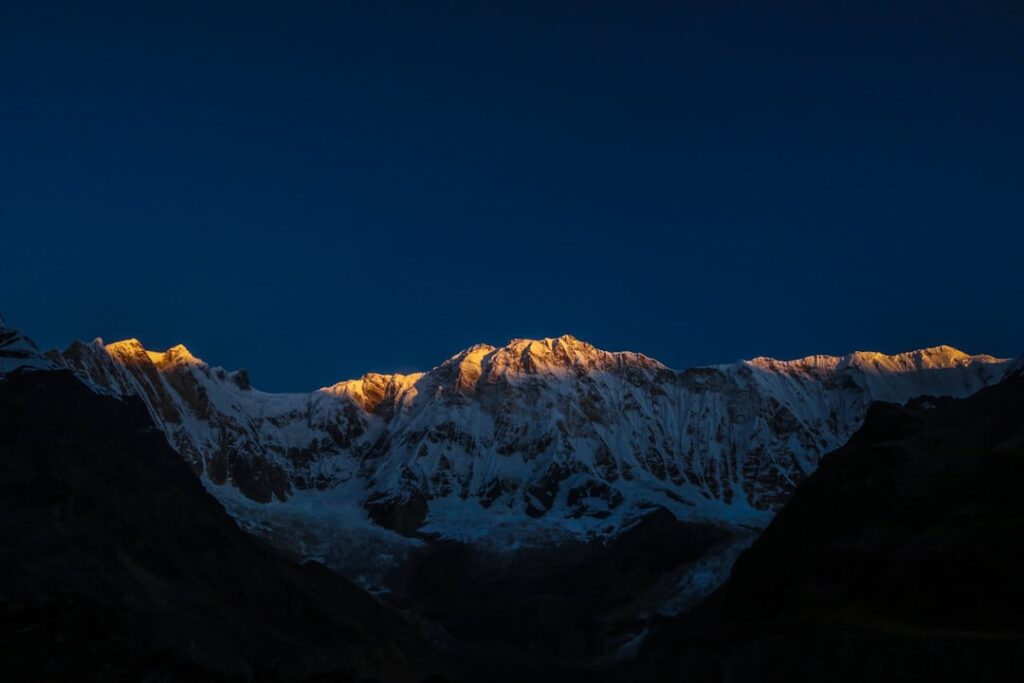
Annapurna Circuit, Nepal’s Hidden Peaks, Passes & Pilgrimage Trails (2025)
What if you could walk from subtropical jungle to a high-altitude desert, crossing a 5,416-meter mountain pass, all within a single trek? The Annapurna Circuit proves this is possible, offering one of the world’s most dramatic and accessible trans-Himalayan journeys. While the road has changed parts of the trail, savvy trekkers discover that the 12- to 18-day circuit remains a profound adventure, weaving through ancient villages, across suspension bridges, and into the heart of Nepal’s most stunning landscapes.
Why Annapurna Circuit, Nepal Stands Out

Person standing beside white and black high mountain during daytime, Annapurna Circuit, Nepal
- Historic Architecture: The 16th-century Braga Monastery in Manang, one of the oldest in Nepal, houses an incredible collection of Buddhist scriptures and a stunning statue of the Buddha.
- Cultural Scene: The Tiji Festival in Upper Mustang, a three-day “chasing of the demons” ritual with elaborate costumes and masked dances, is a profound cultural immersion.
- Local Specialties: You must try a steaming bowl of Thukpa, a hearty noodle soup packed with vegetables and sometimes yak meat, perfect for replenishing energy after a long day’s walk.
Pro Tip: To avoid the monsoon clouds and enjoy crystal-clear mountain views, target the post-monsoon window of late September to November. For solitude and blooming rhododendrons, the pre-monsoon period of March to early May is your best bet, though afternoons can be hazier.
Map of Annapurna Circuit, Nepal
Use these interactive maps to explore Annapurna Circuit, Nepal and plan your route:
📍 View Annapurna Circuit, Nepal on OpenStreetMap
🗺️ Open Annapurna Circuit, Nepal in Google Maps
Planning Your Trip: Practical Essentials
Getting There and Around
- By Air: All journeys start at Tribhuvan International Airport (KTM) in Kathmandu. From there, you’ll take a 6-7 hour tourist bus (NPR 800-1000) or a 25-minute scenic flight (approx. $120) to Pokhara. The trek traditionally begins with a drive from Pokhara to Besisahar or Bhulbhule. Book flights at Skyscanner for best deals.
- By Train: Nepal has no international or long-distance tourist rail network. Travelers arrive via air or overland bus from India.
- By Car: Self-driving is not recommended for tourists. The standard approach is to hire a private jeep from Pokhara to the trailhead (Besisahar, approx. $80-100 for a 4×4). Compare car rentals at RentalCars.com for exploring before or after the trek.
- Local Transport: On the trek itself, transport is your own two feet! For sections where the road exists, local buses and shared jeeps operate (e.g., from Muktinath to Jomsom or Tatopani to Beni). These are cheap (NPR 500-1500) but can be very crowded and bumpy.
Best Time to Visit
The trekking seasons are sharply defined by the Himalayan climate. Your experience hinges on choosing the right window for your priorities: perfect views, floral displays, or ultimate solitude.
| Season | Weather | Highlights |
|---|---|---|
| Autumn (Sep–Nov) | Clear skies, stable weather. Day: 10-20°C, Night: -5 to 5°C at high altitudes. | The premier season with stunning mountain visibility, bustling teahouses, and festive atmosphere. Expect the most fellow trekkers. |
| Winter (Dec–Feb) | Very cold, especially at night (down to -15°C at Thorong La). Days can be clear and sunny. | Extreme solitude and crisp, clear air. The pass can be treacherous with snow and ice; only for very experienced, well-equipped trekkers. |
| Spring (Mar–May) | Warming days, hazier afternoons. Rhododendrons bloom spectacularly in lower forests. Pre-monsoon showers possible in May. | Beautiful flora, good temperatures, and fewer crowds than autumn. Mountain views are often clearest in the morning. |
Budgeting for Annapurna Circuit, Nepal

A view of a mountain range with a lake in the foreground, Annapurna Circuit, Nepal
| Category | Budget | Mid-range | Luxury |
|---|---|---|---|
| Accommodation | NPR 200-500/night (basic teahouse dorm) | NPR 500-1000/night (private room) | NPR 2000+/night (best lodges in key villages like Manang) |
| Meals | NPR 400-700/day (dal bhat, noodles) | NPR 800-1200/day (meals, snacks, tea) | NPR 1500+/day (western dishes, desserts, coffee) |
| Transport | NPR 800 (bus Kathmandu-Pokhara) + local buses | Tourist bus/flights + occasional shared jeep | Private jeep transfers, scenic flights |
| Activities | TIMS & ACAP Permits: NPR 5000 total | Permits + side hikes (Ice Lake, Tilicho Lake) | Permits + guided side trips, helicopter tour from Jomsom |
| Daily Total | NPR 1500-2500/day | NPR 3000-5000/day | NPR 7000+/day |
Top Attractions and Must-See Sights
| Attraction | Description | Hours | Entry Fee |
|---|---|---|---|
| Thorong La Pass (5,416m) | The circuit’s highest point and spiritual climax, offering breathtaking 360-degree Himalayan vistas after a challenging pre-dawn ascent. | Cross during daylight (start by 4-5 AM) | Included in trek |
| Tilicho Lake (4,919m) | One of the world’s highest lakes, a stunning turquoise gem set in a severe glacial valley; a demanding but rewarding 2-3 day side trip from Manang. | Daylight hours | No fee, but guide recommended |
| Muktinath Temple | A sacred site for both Hindus and Buddhists, featuring 108 water spouts and eternal flames fueled by natural gas seepage. | Sunrise to Sunset | Donation expected |
| Natural Hot Springs at Tatopani | The perfect reward for tired muscles after descending from the high pass; soak in soothing, mineral-rich pools by the Kali Gandaki river. | Early morning or evening | NPR 100-200 |
3-Day Itinerary: Annapurna Circuit, Nepal’s Highlights & Hidden Gems
Note: This is a condensed highlight reel for the classic 12-18 day trek, focusing on key stages.
Day 1: Acclimatization & Ancient Culture in Manang
- Morning (7-9 AM): Acclimatization hike to the Gangapurna Lake viewpoint. Watch the sun illuminate the massive glacier and its terminal lake. The short, steep climb helps your body adjust to the 3,540m altitude.
- Afternoon (12-3 PM): Explore the ancient Braga Monastery. Peek into its dimly lit chambers filled with ancient statues and thankas. For lunch, head to the Yeti Hotel for their famous apple pie and a hearty yak steak.
- Evening (6-8 PM): Attend the free altitude sickness lecture at the Himalayan Rescue Association clinic—a potentially life-saving local resource. Dinner at the Mountain Lake Hotel for their garlic soup, believed to help with acclimatization.
Day 2: Conquering Thorong La
- Morning (4 AM – 12 PM): The big pass day. Start walking from Thorong Phedi (4,540m) or High Camp (4,850m) with headlamps. The 3-5 hour ascent to the pass is strenuous; pace yourself. Celebrate at the summit with photos by the stone cairns and prayer flags, but don’t linger too long in the cold.
- Afternoon (12-4 PM): The long, knee-jarring 1,600m descent to Muktinath (3,800m). Stop for a simple lunch of instant noodles and tea at the first teahouse in Charabu. The landscape transforms dramatically into the arid, Tibetan plateau.
- Evening (6-8 PM): A well-earned rest in Muktinath. Enjoy a celebratory dinner of dal bhat (free refills!) at the Bob Marley Hotel and collapse into bed early.
Day 3: From Desert to Forest
- Morning (8-11 AM): Visit the sacred Muktinath Temple complex. Observe pilgrims bathing under the 108 spouts. Then, take a shared jeep (NPR 1500) for the thrilling ride down the Kali Gandaki gorge, the world’s deepest, to Tatopani.
- Afternoon (12-3 PM): Soak your weary muscles in Tatopani’s legendary hot springs right by the river. For lunch, grab a fresh veggie burger and banana lassi at the Paradise Guest House garden.
- Evening (6-8 PM): Your final trekking dinner. Relish the now-subtropical climate at the Super View Restaurant for their excellent chicken curry and a cold beer, reminiscing on the journey from the high Himalayas to here.
Cultural Insights & Etiquette
- Language: Learn a few Nepali phrases: “Namaste” (hello/respect), “Dhanyabad” (thank you), “Kasto cha?” (how are you?). Teahouse owners appreciate the effort.
- Customs: Always walk clockwise around mani walls, chortens, and stupas. Never point your feet at people or sacred objects. Use your right hand for giving and receiving.
- Tipping: For guides (expect $20-25/day) and porters ($15-20/day), tip at the end. In teahouses, rounding up the bill is a simple gesture of thanks.
- Dress Code: Modesty is key, especially in villages. Shoulders and knees should be covered. When visiting monasteries, remove your shoes and hats.
- Business Hours: Teahouses operate from dawn until the last guest goes to bed (often by 9 PM). Small village shops keep irregular hours.
Where to Eat: Annapurna Circuit, Nepal’s Best Bites
Dining on the Circuit is all about hearty, carb-heavy “teahouse food” designed for fuel. Menus are remarkably similar from village to village, but quality varies. The universal rule: “Dal Bhat Power, 24 Hour!”—the lentil, rice, and vegetable combo that offers unlimited refills.
Must-Try Local Specialties
- Dal Bhat: The trekker’s staple. The best versions have a variety of seasonal vegetables, a spicy pickle (achar), and sometimes a papad. It’s available everywhere, but locals swear by the homestyle version at small family-run places like Lodge du Nilgiri in Chame.
- Thukpa & Thenthuk: Tibetan noodle soups. Thukpa has boiled noodles; Thenthuk has hand-pulled noodles. For the most authentic, try the Tibetan-run Yak Hotel in Manang.
- Apple Products (Marpha): The village of Marpha is famous for its apple orchards. Don’t miss the apple pie, apple brandy (raksi), or dried apple rings. Hotel Sun and Moon has the best pie on the trail.
Restaurant Recommendations by Budget
| Type | Restaurant/Teahouse | Specialty | Price Range |
|---|---|---|---|
| Budget | Any Local “Bhatti” | Simple, filling Dal Bhat | NPR 400-600 (with refills) |
| Mid-range | Yeti Hotel, Manang | Apple pie, yak steak, good coffee | NPR 300-800 per dish |
| Fine dining* | Ker & Downey Lodges (Manang, etc.) | Multi-course meals, imported cheeses, wine list | NPR 1500-3000+ per meal |
*”Fine dining” is relative on a Himalayan trek! These are premium lodges with exceptional food for the setting.
Where to Stay
Accommodation is in basic teahouses or lodges—a room with twin beds, a thin mattress, and a shared toilet. Higher budgets get attached bathrooms and sometimes a heater. In peak season, rooms fill up by mid-afternoon, so aim to finish walking by 2-3 PM. Compare prices and book at Booking.com for lodges in Pokhara and Kathmandu.
Best Neighborhoods for Accommodation
- Manang (3,540m): The main acclimatization stop. Offers the widest range of lodges, from very basic to quite comfortable (like the Yeti or Mountain Lake). A bustling, scenic village with bakeries and gear shops. Suits everyone.
- Muktinath (3,800m): After crossing the pass, you’ll be exhausted. Larger lodges like the Bob Marley or the North Pole Hotel offer good food and warm beds. Perfect for a single recovery night.
- Tatopani (1,190m): The classic post-trek relaxation spot. Lodges like Paradise or the Hot Spring Lodge are set around the pools. Ideal for trekkers wanting to soak and reflect in a warm, garden-like setting.

A mountain covered in clouds and snow on a cloudy day, Annapurna Circuit, Nepal
FAQs: Your Annapurna Circuit, Nepal Questions Answered
1. Is Annapurna Circuit, Nepal safe at night?
Yes, the trail and villages are generally very safe. The main risks are not personal security but environmental: altitude sickness, falls, or cold exposure. Always use a headlamp if walking after dark, inform your teahouse owner if you’re going out, and keep valuables secured. Women trekking solo report feeling safe, but using common sense is always advised.
2. What currency is used and are credit cards accepted?
The Nepali Rupee (NPR) is the currency. You must carry enough cash for the entire trek, as there are no ATMs between Chame and Jomsom. Exchange money in Kathmandu or Pokhara. Credit cards are useless on the trail. Budget for NPR 1500-3000 per day per person for food, lodging, and snacks, plus extra for emergencies, souvenirs, and transport.
3. How do I get from the airport to the start of the trek?
From Kathmandu Airport (KTM), take a taxi (NPR 800-1000) to your Thamel

