
Ha’il, Saudi Arabia’s Essential Rock Art, Fortresses & Desert Hospitality (2025)
While crowds flock to Riyadh’s modern towers, Ha’il reveals a different Saudi Arabia where ancient caravan routes still whisper stories. At dawn, the rising sun illuminates 10,000-year-old rock carvings at Jubbah that depict hunting scenes from civilizations long vanished. The scent of cardamom coffee drifts from traditional mud-brick houses as falcon trainers prepare their birds. This isn’t just history preserved in museums—it’s living heritage where Bedouin traditions continue uninterrupted, offering what many travelers describe as Arabia’s most authentic cultural encounter.
Why Ha’il, Saudi Arabia Stands Out

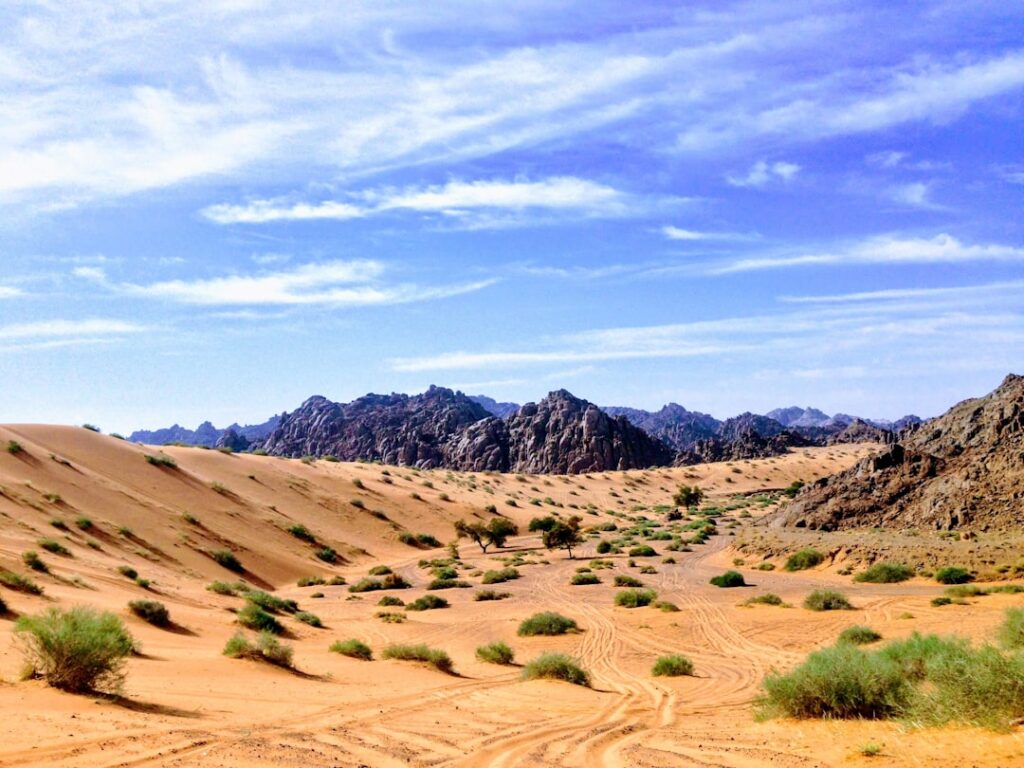
Blue sky over desert during daytime, Ha’il, Saudi Arabia
- Historic Architecture: A’arif Fort (built 1840) offers panoramic city views from its strategic hilltop location, showcasing traditional Najdi architecture.
- Cultural Scene: The annual Ha’il Desert Festival features camel races, traditional poetry competitions, and falconry displays each winter.
- Local Specialties: Jareesh—a savory cracked wheat dish slow-cooked with lamb and yogurt—defines local comfort food.
Pro Tip: Visit between October and March when temperatures hover around 68°F (20°C) and time your fortress visits for early morning or late afternoon to avoid both crowds and midday heat.
Map of Ha’il, Saudi Arabia
Use these interactive maps to explore Ha’il, Saudi Arabia and plan your route:
📍 View Ha’il, Saudi Arabia on OpenStreetMap
🗺️ Open Ha’il, Saudi Arabia in Google Maps
Planning Your Trip: Practical Essentials
Getting There and Around
- By Air: Ha’il Regional Airport (HAS) connects to major Saudi cities via Saudia and Flynas. Taxis to city center cost 50-70 SAR ($13-19). Book flights at Skyscanner for best deals.
- By Train: SAR’s North-South Railway links Ha’il to Riyadh (4 hours) and Al-Qassim. First class costs approximately 150 SAR ($40). Reserve tickets at Trainline or the national railway website.
- By Car: Highway 65 connects to Riyadh (4-hour drive). Rental cars average 120 SAR/day ($32). Compare car rentals at RentalCars.com.
- Local Transport: Taxis are primary transport (15-30 SAR per ride). No ride-sharing apps currently operate, but hotel concierges can arrange reliable drivers.
Best Time to Visit
Ha’il’s desert climate means extreme summer heat but pleasant winters, making October through April the ideal window for exploration when cultural events peak and outdoor activities become enjoyable.
| Season | Weather | Highlights |
|---|---|---|
| Summer (Jun–Aug) | 95-110°F (35-43°C), very dry | Indoor museums, evening markets, air-conditioned attractions; minimal crowds but limited outdoor activities |
| Winter (Dec–Feb) | 50-68°F (10-20°C), cool nights | Desert Festival, comfortable fortress exploring, ideal camping weather; peak cultural season |
| Shoulder (Apr–May/Sep–Oct) | 70-85°F (21-29°C), mild | Perfect rock art viewing, affordable accommodations, pleasant desert tours; optimal balance of weather and crowds |
Budgeting for Ha’il, Saudi Arabia

People walking on brown sand under blue sky during daytime, Ha’il, Saudi Arabia
| Category | Budget | Mid-range | Luxury |
|---|---|---|---|
| Accommodation | 150-250 SAR ($40-67) | 300-500 SAR ($80-133) | 600-900 SAR ($160-240) |
| Meals | 40-60 SAR ($11-16) | 80-120 SAR ($21-32) | 150-250 SAR ($40-67) |
| Transport | 50 SAR ($13) taxi | 100 SAR ($27) rental car | 200 SAR ($53) private driver |
| Activities | Free attractions | 50-100 SAR ($13-27) | 200+ SAR ($53+) guided tours |
| Daily Total | 290-410 SAR ($77-109) | 530-820 SAR ($141-219) | 1150-1450 SAR ($307-387) |
Top Attractions and Must-See Sights
| Attraction | Description | Hours | Entry Fee |
|---|---|---|---|
| Jubbah Rock Art UNESCO Site | 10,000-year-old petroglyphs depicting ancient hunting scenes and early Arabic script | 9 AM-5 PM daily | Free |
| A’arif Fort | 19th-century mud-brick fortress offering panoramic city views and historical exhibitions | 8 AM-12 PM, 4-10 PM | 10 SAR ($2.70) |
| Barzan Palace | Restored traditional palace showcasing Najdi architecture and Ha’il emirate history | 9 AM-9 PM | 15 SAR ($4) |
| Ha’il Museum | Comprehensive collection spanning prehistoric artifacts to modern Saudi development | 8 AM-8 PM (closed Mondays) | 20 SAR ($5.30) |
3-Day Itinerary: Ha’il, Saudi Arabia’s Highlights & Hidden Gems
Day 1: Ancient History & City Fortresses
- Morning: Start at 7:30 AM at A’arif Fort to catch morning light perfect for photography and avoid crowds. The climb reveals why this was the city’s primary defensive position for centuries.
- Afternoon: Explore Barzan Palace’s intricate wooden doors and wind towers at noon, then lunch at Al-Masmak Restaurant for authentic jareesh (45 SAR).
- Evening: Sunset stroll through Ha’il Date Market followed by dinner at Al-Saeed Restaurant known for their mandi (spiced rice with lamb, 85 SAR).
Day 2: Rock Art & Desert Exploration
- Morning: Hire a 4×4 (250 SAR including driver) at 6 AM for the 90-minute drive to Jubbah UNESCO site—early arrival avoids heat and provides optimal lighting for photographing the ancient carvings.
- Afternoon: Picnic lunch amid the rock formations before visiting the small Jubbah Museum (free) to understand the archaeological context.
- Evening: Return to Ha’il for traditional Bedouin-style dinner at Al-Nakheel Tent Restaurant with floor seating and live music (120 SAR).
Day 3: Cultural Immersion & Local Markets
- Morning: Visit Ha’il Museum at 9 AM (20 SAR entry) to see the famous “Ha’il Stone” with early Thamudic inscriptions, then explore the adjacent traditional crafts quarter.
- Afternoon: Lunch at Al-Faisaliah Restaurant for their specialty madghoot (slow-cooked chicken, 65 SAR) before bargaining for dates and traditional textiles at Ha’il Souq.
- Evening: Attend a cultural performance if available at Prince Abdulaziz bin Musaed Eco Park, followed by farewell dinner at Al-Orjouwan Restaurant overlooking the city.
Cultural Insights & Etiquette
- Language: Arabic predominates; learn “as-salamu alaykum” (hello), “shukran” (thank you), and “kam ath-thaman?” (how much?)—hotel staff typically speak English
- Customs: Always accept offered Arabic coffee or tea as refusal may offend; use right hand for eating and handing items; public displays of affection are inappropriate
- Tipping: Not mandatory but appreciated—round up taxi fares, 10-15% at restaurants if service charge not included, 10-20 SAR for guides
- Dress Code: Women should wear abayas in public (available for purchase locally); men should avoid shorts in conservative areas; modest clothing expected everywhere
- Business Hours: Shops typically open 9 AM-1 PM, reopen 4-9 PM; closed during prayer times (approximately 20-30 minutes); Friday mornings quiet until afternoon prayers
Where to Eat: Ha’il, Saudi Arabia’s Best Bites
Ha’il’s cuisine reflects its Bedouin heritage with slow-cooked meats, wheat dishes, and dates featuring prominently. Family-run restaurants often provide the most authentic experiences, while newer establishments cater to diverse tastes. Don’t miss the opportunity to try camel meat prepared in traditional ways—it’s surprisingly tender and flavorful when cooked properly.
Must-Try Local Specialties
- Jareesh: Cracked wheat slow-cooked with lamb or chicken until creamy, typically served with ghee and onions—best at Al-Masmak Restaurant
- Mandi: Fragrant rice and meat dish steam-cooked in underground pits creating incredibly tender results—Al-Saeed Restaurant’s version is legendary
- Madghoot: Chicken marinated in hawaij spices then slow-cooked until falling off the bone—Al-Faisaliah Restaurant prepares it traditionally
Restaurant Recommendations by Budget
| Type | Restaurant | Specialty | Price Range |
|---|---|---|---|
| Budget | Al-Masmak (City Center) | Traditional jareesh and flatbread | 25-50 SAR ($7-13) |
| Mid-range | Al-Saeed (King Abdullah Road) | Mandi and grilled meats | 70-120 SAR ($19-32) |
| Fine dining | Al-Orjouwan (Ha’il Hills) | Modern Saudi cuisine with views | 150-250 SAR ($40-67) |
Where to Stay
Accommodation ranges from international chains to locally-owned hotels, with the city center offering best access to attractions while quieter options exist on the outskirts. Book well in advance during festival season (January-February). Compare prices and book at Booking.com or Airbnb for apartments.
Best Neighborhoods for Accommodation
- City Center: Walking distance to major forts and markets, but can be noisy; ideal for first-time visitors wanting convenience
- King Abdullah District: Modern area with shopping malls and international hotels; better for families and those preferring contemporary amenities
- Ha’il Hills: Quieter residential area with views and villa-style accommodations; perfect for longer stays and travelers with rental cars

A lone tree in the middle of a desert, Ha’il, Saudi Arabia
FAQs: Your Ha’il, Saudi Arabia Questions Answered
1. Is Ha’il, Saudi Arabia safe at night?
Extremely safe—low crime rates mean you can comfortably explore well-lit areas after dark. However, some attractions close at sunset, so focus on restaurants and markets for evening activities. Women traveling alone should take normal precautions and dress conservatively.
2. What currency is used and are credit cards accepted?
Saudi Riyal (SAR) is the currency (approximately 3.75 SAR to $1). Major hotels and restaurants accept credit cards, but smaller shops and taxis require cash. ATMs are widely available in city centers.
3. How do I get from the airport to the city center?
Official airport taxis cost 50-70 SAR ($13-19) for the 20-minute ride. No public buses serve the airport. Some hotels offer shuttle services—confirm when booking. Book airport transfers at GetYourGuide for convenience.
4. Do I need to speak the local language?
Not essential—English is widely spoken in hotels, major restaurants, and tourist sites. Learning basic Arabic greetings enhances interactions with locals, particularly in markets and smaller establishments.
5. What’s the appropriate dress code?
Women should wear abayas in public (available for purchase throughout the city). Men should wear long pants and avoid sleeveless shirts in conservative areas. Beachwear is only appropriate at gender-segregated private facilities.
Final Thoughts: Ha’il, Saudi Arabia Awaits
Ha’il offers what many travelers seek but rarely find: cultural authenticity untouched by mass tourism. Between exploring ancient rock art that predates the pyramids, wandering through mud-brick fortresses that guarded caravan routes, and sharing cardamom coffee with local hosts, you’ll discover a Saudi Arabia that exists beyond modern cities. The region’s true magic lies in its living traditions—where falconry isn’t a demonstration for tourists but a daily practice, and desert hospitality remains a deeply ingrained value. For your most memorable experience, time your visit to coincide with the Ha’il Desert Festival each winter, when the entire region transforms into a celebration of Bedouin heritage that even many Saudis haven’t witnessed.
{“@context”: “https://schema.org”, “@type”: “FAQPage”, “mainEntity”: [{“@type”: “Question”, “name”: “What is the best time to visit Hau2019il?”, “acceptedAnswer”: {“@type”: “Answer”, “text”: “The best time to visit Hau2019il depends on your preferences. Generally, the dry season offers the most pleasant weather for sightseeing and outdoor activities.”}}, {“@type”: “Question”, “name”: “How many days do I need in Hau2019il?”, “acceptedAnswer”: {“@type”: “Answer”, “text”: “Most travelers spend 3-5 days in Hau2019il to see the main attractions. A week allows for a more relaxed pace and day trips.”}}, {“@type”: “Question”, “name”: “Is Hau2019il expensive to visit?”, “acceptedAnswer”: {“@type”: “Answer”, “text”: “Hau2019il can be visited on various budgets. Accommodation ranges from hostels to luxury hotels, and local restaurants offer affordable dining.”}}]}
Related Guides
Explore more destinations similar to Ha’il:

