
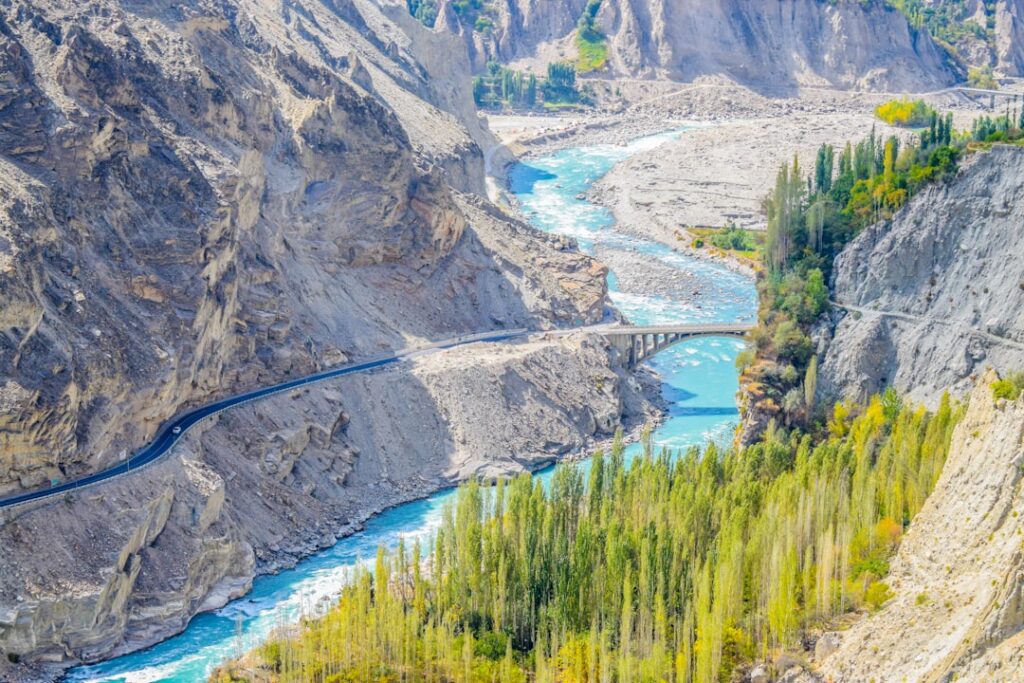
Hunza Valley, Pakistan’s Hidden Peaks, Fortresses & Apricot Blossoms (2025)
Hunza Valley, Pakistan isn’t just a destination—it’s a living painting where earth meets sky. The scent of apricot orchards mingles with woodsmoke as snow-crowned Rakaposhi pierces the blue canvas above, while ancient watchtowers stand guard over terraced fields. This is where Himalayan grandeur meets centuries of Silk Road heritage in one breathtaking panorama.
Why Hunza Valley, Pakistan Stands Out

Man swimming on body of water, Hunza Valley, Pakistan
- Historic Architecture: Baltit Fort (13th century) – A UNESCO-protected masterpiece perched dramatically above Karimabad, showcasing 700 years of Himalayan kingdom architecture
- Cultural Scene: Navroz Festival (March 21st) – Celebrate the Persian New Year with traditional music, polo matches, and colorful local dances marking spring’s arrival
- Local Specialties: Chapshuro – Hearty meat-filled bread baked in stone ovens, a staple of Hunza cuisine perfect for mountain climates
Pro Tip: Visit during late September to early October for the clearest mountain views after monsoon season ends, with the added bonus of autumn foliage and the apricot harvest festival in Altit village.
Map of Hunza Valley, Pakistan
Use these interactive maps to explore Hunza Valley, Pakistan and plan your route:
📍 View Hunza Valley, Pakistan on OpenStreetMap
🗺️ Open Hunza Valley, Pakistan in Google Maps
Planning Your Trip: Practical Essentials
Getting There and Around
- By Air: Fly to Islamabad International Airport (ISB) via Pakistan International Airlines, then take a 14-hour scenic drive or book domestic flights to Gilgit Airport (GIL). Book flights at Skyscanner for best deals.
- By Train: No direct rail service to Hunza; nearest major station is Rawalpindi Railway Station, then continue by road via Karakoram Highway. Reserve tickets at Trainline or the national railway website.
- By Car: Karakoram Highway from Islamabad offers spectacular views; hire a 4×4 with driver (Rs 15,000-20,000/day) for mountain roads. Compare car rentals at RentalCars.com.
- Local Transport: Shared jeeps between villages (Rs 200-500), or hire private vehicles; no scheduled bus service within valley. Check official city transport websites for passes and schedules.
Best Time to Visit
Hunza’s climate varies dramatically by season, with spring and autumn offering ideal conditions for trekking and sightseeing, while winter provides snow adventures and summer brings lush landscapes.
| Season | Weather | Highlights |
|---|---|---|
| Summer (Jun–Aug) | 15-25°C, sunny days, occasional rain | All passes open, trekking season peak, crowded with domestic tourists |
| Winter (Dec–Feb) | -5 to 10°C, heavy snow at higher elevations | Snow sports, frozen Attabad Lake, minimal crowds but some road closures |
| Shoulder (Apr–May/Sep–Oct) | 10-20°C, clear skies, mild temperatures | Best photography conditions, apricot blossoms or harvest, ideal for all activities |
Budgeting for Hunza Valley, Pakistan

A mountain range with snow, Hunza Valley, Pakistan
| Category | Budget | Mid-range | Luxury |
|---|---|---|---|
| Accommodation | Rs 2,000-4,000 (guesthouses) | Rs 6,000-12,000 (hotels) | Rs 15,000-25,000 (resorts) |
| Meals | Rs 500-800 (local eateries) | Rs 1,000-2,000 (restaurants) | Rs 2,500-4,000 (fine dining) |
| Transport | Rs 500 (shared jeeps) | Rs 3,000 (private car half-day) | Rs 8,000 (full-day 4×4 with driver) |
| Activities | Free hiking, village walks | Rs 500-1,000 (fort entries, guided walks) | Rs 3,000-5,000 (private guides, special tours) |
| Daily Total | Rs 3,000-5,000 | Rs 10,000-15,000 | Rs 25,000-35,000 |
Top Attractions and Must-See Sights
| Attraction | Description | Hours | Entry Fee |
|---|---|---|---|
| Baltit Fort | 700-year-old fortification with panoramic valley views and museum of Hunza history | 9 AM-5:30 PM | Rs 1,200 |
| Attabad Lake | Turquoise glacial lake formed in 2010, perfect for boat rides and photography | Sunrise to sunset | Free (boats Rs 2,000) |
| Eagle’s Nest | Viewpoint offering spectacular sunrise over Rakaposhi and surrounding peaks | 24 hours | Free |
| Altit Fort | Older than Baltit Fort with magnificent woodwork and organic gardens | 9 AM-5 PM | Rs 800 |
3-Day Itinerary: Hunza Valley, Pakistan’s Highlights & Hidden Gems
Day 1: Karimabad Heritage & Valley Views
- Morning: 7-9 AM sunrise photography at Eagle’s Nest viewpoint. Arrive by 6:30 AM for the best light on Rakaposhi peak (Rs 500 jeep ride from Karimabad).
- Afternoon: 12-3 PM explore Baltit Fort and lunch at Cafe de Hunza (try their walnut cake with local apricot juice). Visit the onsite museum showcasing royal artifacts.
- Evening: 6-8 PM stroll through Karimabad bazaar for handicrafts followed by dinner at Mountain Cup Restaurant (their chapshuro and Hunza soup are exceptional).
Day 2: Lakes & Ancient Villages
- Morning: 8 AM boat ride on Attabad Lake (Rs 2,000 private boat for 45 minutes) – the turquoise waters against stark mountains create unforgettable photos.
- Afternoon: Altit Fort and surrounding 1,100-year-old village with guided walk through ancient irrigation channels. Lunch at Altit Fort Cafe with terrace views.
- Evening: Traditional music performance at Hunza Cultural Museum (Rs 500) followed by dinner at Darbar Hotel’s rooftop restaurant.
Day 3: Mountain Passes & Local Life
- Morning: 4WD to Khunjerab Pass (Rs 8,000 round trip, 4 hours) – stand at Pakistan-China border at 4,693 meters, watch for Marco Polo sheep.
- Afternoon: Visit Ganish village, oldest settlement in Hunza with four ancient mosques. Lunch at Ganish Guesthouse featuring home-cooked local dishes.
- Evening: Final apricot orchard walk in Karimabad followed by farewell dinner at Hunza Embassy Restaurant specializing in regional cuisine.
Cultural Insights & Etiquette
- Language: Burushaski and Wakhi locally, but Urdu and basic English understood in tourist areas; learn “Assalam-o-Alaikum” (hello) and “Shukria” (thank you)
- Customs: Remove shoes before entering homes/mosques; always accept offered tea as hospitality gesture; ask permission before photographing locals
- Tipping: 10% in restaurants if service charge not included; Rs 200-500 for guides; small gifts from your home country appreciated
- Dress Code: Modest clothing recommended; women should cover shoulders/knees; pack layers for changing mountain weather
- Business Hours: Shops 9 AM-7 PM with afternoon breaks; closed Friday prayers (12-2 PM); major attractions open daily
Where to Eat: Hunza Valley, Pakistan’s Best Bites
Hunza cuisine reflects its mountain environment with emphasis on whole grains, dried fruits, and minimal meat, creating a unique culinary tradition focused on longevity and nutrition.
Must-Try Local Specialties
- Chapshuro: Flaky bread stuffed with minced meat, onions and local spices; best at Mountain Cup Restaurant in Karimabad
- Hunza Bread: Whole grain bread baked in stone ovens using traditional methods; try fresh morning batches at local bakeries in Altit
- Apricot Products: From fresh fruit (June-July) to dried apricots, jams, and oil; visit Karimabad Bazaar for authentic homemade varieties
Restaurant Recommendations by Budget
| Type | Restaurant | Specialty | Price Range |
|---|---|---|---|
| Budget | Karimabad Street Food Stalls | Fresh chapshuro and local breads | Rs 300-600 |
| Mid-range | Cafe de Hunza, Karimabad | International with local twists, great views | Rs 800-1,500 |
| Fine dining | Serena Hotel Restaurant | Upscale regional cuisine with presentation | Rs 2,000-3,500 |
Where to Stay
Accommodation ranges from basic guesthouses to luxury resorts, with Karimabad offering the most options and best views. Compare prices and book at Booking.com or Airbnb for apartments.
Best Neighborhoods for Accommodation
- Karimabad: Central location with fort views, best restaurants, and shopping; ideal for first-time visitors and photographers
- Altit: Quieter atmosphere near older fort, organic gardens, and traditional village life; perfect for cultural immersion
- Eagle’s Nest Area: Higher elevation with spectacular sunrise views but limited amenities; best for serious photographers and solitude seekers

A body of water between rocky mountains, Hunza Valley, Pakistan
FAQs: Your Hunza Valley, Pakistan Questions Answered
1. Is Hunza Valley, Pakistan safe at night?
Hunza Valley is exceptionally safe with very low crime rates. The local Hunzakut people are known for their honesty and hospitality. However, always exercise normal precautions, avoid isolated areas after dark, and use flashlights on unlit village paths.
2. What currency is used and are credit cards accepted?
Pakistani Rupee (Rs) is the currency. Carry ample cash as credit cards are rarely accepted outside major hotels in Karimabad. ATMs are available but can be unreliable, so withdraw sufficient funds in Gilgit or Islamabad before arriving.
3. How do I get from the airport to the city center?
From Gilgit Airport (GIL), pre-booked taxis cost Rs 4,000-5,000 for the 2-hour drive to Hunza. Shared vans are cheaper (Rs 800/person) but less convenient. Book airport transfers at GetYourGuide for convenience.
4. Do I need to speak the local language?
English is spoken in tourist areas, hotels, and major restaurants. Learning a few phrases in Burushaski or Urdu will be appreciated by locals. Most signs are in both Urdu and English at major attractions.
5. What’s the appropriate dress code?
Modest clothing is recommended—cover shoulders and knees, especially when visiting villages and religious sites. Pack layers: light clothing for sunny days, warm layers for cool evenings, and waterproof jackets for unexpected mountain weather changes.
Final Thoughts: Hunza Valley, Pakistan Awaits
Hunza Valley offers that rare combination of breathtaking natural beauty, rich cultural heritage, and genuine warmth from local communities that creates truly transformative travel experiences. From the moment you witness sunrise over Rakaposhi to exploring ancient forts and sharing tea with Hunzakut families, this destination delivers memories that linger long after departure. With careful planning for altitude and seasonal considerations, Hunza stands as one of South Asia’s most rewarding destinations for adventurous travelers seeking authentic mountain culture and unparalleled Himalayan vistas.
Keywords
Hunza Valley, Pakistan travel guide, Hunza Valley, Pakistan attractions, things to do in Hunza Valley, Pakistan, Hunza Valley, Pakistan itinerary, Hunza Valley, Pakistan restaurants, Hunza Valley, Pakistan hotels, visit Hunza Valley, Pakistan, Hunza Valley, Pakistan tourism, Hunza Valley, Pakistan vacation, Hunza Valley, Pakistan trip planning
Related Guides
Explore more destinations similar to Hunza Valley:
- Zurich, Switzerland’s Best Precision, Panoramas & Lakeside Luxury (2026)
- Sichuan’s Conservation, China’s Hidden Pandas, Peaks & Ancient Temples (2026)
- Suwon, South Korea’s Hidden UNESCO Fortresses, Royal Cuisine & Tech Hub Energy (2026)
- Sichuan’s 2025 Secret, China: Best Monasteries, Mountains & Mouth-Numbing Peppers (2026)

