
Jeonju, South Korea’s Best Hanok Villages, Bibimbap & Traditional Culture (2025)
Jeonju, South Korea isn’t just a destination—it’s a living museum where Joseon Dynasty traditions breathe through modern streets. The scent of sizzling bibimbap and fermented soybeans wafts through 800 hanok roofs, while artisans’ hammers tap out rhythms in hidden workshops. This is Korea’s cultural heart preserved in motion.
Why Jeonju, South Korea Stands Out

A couple of women walking down a street next to a building, Jeonju, South Korea
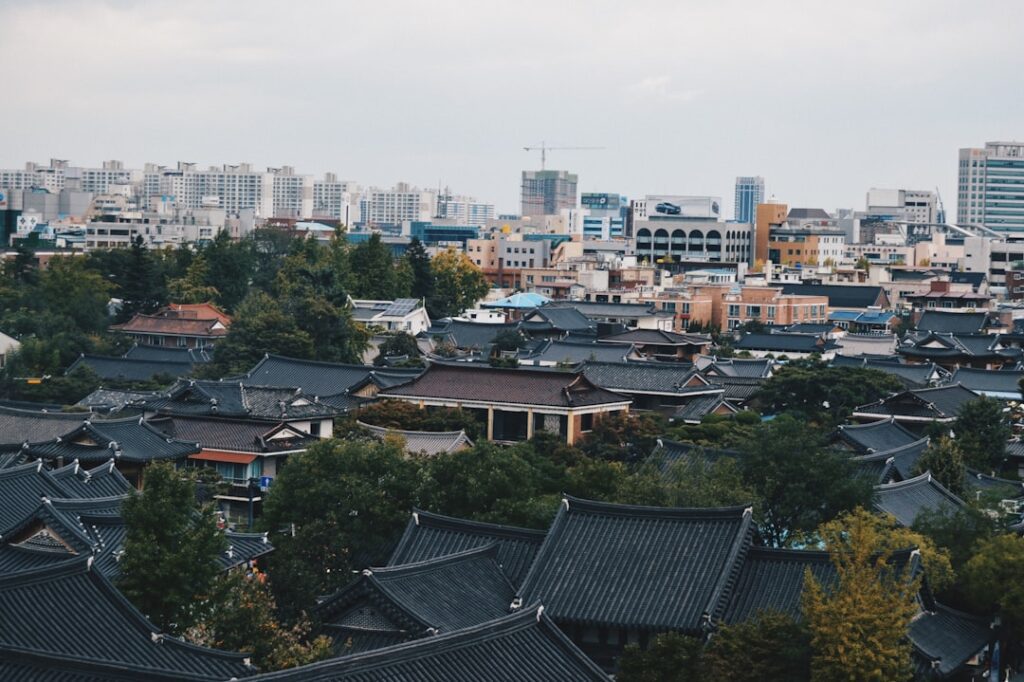
- Historic Architecture: Jeonju Hanok Village features over 800 traditional Korean houses dating from the Joseon Dynasty (1392-1910), offering the country’s most concentrated hanok experience
- Cultural Scene: The Jeonju Hanji Culture Festival celebrates Korea’s traditional paper craftsmanship with hands-on workshops and exhibitions each October
- Local Specialties: Jeonju bibimbap, the city’s signature dish featuring 30+ local ingredients including specially fermented soybeans and bean sprouts
Pro Tip: Visit hanok guesthouses on weekdays (Monday-Thursday) between September-November for 40% lower rates and minimal crowds—spring brings festival crowds while summer is humid and packed with domestic tourists.
Map of Jeonju, South Korea
Use these interactive maps to explore Jeonju, South Korea and plan your route:
📍 View Jeonju, South Korea on OpenStreetMap
🗺️ Open Jeonju, South Korea in Google Maps
Planning Your Trip: Practical Essentials
Getting There and Around
- By Air: Gunsan Airport (70km away) with limited international flights; most visitors fly to Incheon/Seoul then take KTX. Book flights at Skyscanner for best deals.
- By Train: KTX from Seoul (1h40m, ₩45,000), frequent services from major cities. Reserve tickets at Trainline or the national railway website.
- By Car: Honam Expressway connects to major cities; parking difficult in hanok village (use peripheral lots ₩2,000/hour). Compare car rentals at RentalCars.com.
- Local Transport: Buses cover entire city (₩1,300/ride), taxis affordable (₩3,800 base), walking ideal for hanok village. Check official city transport websites for passes and schedules.
Best Time to Visit
Spring and autumn offer ideal conditions with mild weather and cultural festivals, while summer brings humidity and crowds, and winter provides quiet exploration with occasional snow.
| Season | Weather | Highlights |
|---|---|---|
| Summer (Jun–Aug) | 25-32°C, humid, monsoon rains July | Jeonju International Film Festival, vibrant night markets, crowded attractions |
| Winter (Dec–Feb) | -5 to 5°C, occasional snow | Quiet hanok stays, heated floors, Christmas lights, 50% fewer tourists |
| Shoulder (Apr–May/Sep–Oct) | 15-22°C, mild and dry | Perfect walking weather, autumn foliage, hanji festival, ideal photography |
Budgeting for Jeonju, South Korea

The roof of a building with trees in the background, Jeonju, South Korea
| Category | Budget | Mid-range | Luxury |
|---|---|---|---|
| Accommodation | ₩40,000-70,000 (hostels/guesthouses) | ₩100,000-180,000 (hanok stays) | ₩250,000+ (premium hanok) |
| Meals | ₩6,000-10,000 (street food/markets) | ₩15,000-25,000 (restaurants) | ₩50,000+ (fine dining) |
| Transport | ₩5,000 (bus daily pass) | ₩20,000 (taxis) | ₩80,000 (private driver) |
| Activities | ₩0-10,000 (temples/walks) | ₩15,000-30,000 (museums/classes) | ₩50,000+ (private tours) |
| Daily Total | ₩51,000-95,000 | ₩150,000-255,000 | ₩430,000+ |
Top Attractions and Must-See Sights
| Attraction | Description | Hours | Entry Fee |
|---|---|---|---|
| Jeonju Hanok Village | Largest traditional Korean village with 800+ hanoks, craft workshops, and tea houses | 24/7 (shops 10AM-9PM) | Free |
| Gyeonggijeon Shrine | 14th-century shrine housing portrait of King Tae-jo, founder of Joseon Dynasty | 9AM-6PM | ₩3,000 |
| Jeondong Catholic Church | Romanesque cathedral built 1908-1914 on site of Korea’s first Catholic martyrdoms | 7AM-9PM | Free |
| Omokdae Pavilion | Historic viewpoint where General Lee Sung-gye celebrated victory before founding Joseon | 24/7 | Free |
3-Day Itinerary: Jeonju, South Korea’s Highlights & Hidden Gems
Day 1: Hanok Village Immersion
- Morning: 7:30 AM sunrise photography at Omokdae Pavilion for crowd-free views over 800 tiled roofs. Historical fact: This is where General Lee Sung-gye celebrated his 1380 victory before founding the Joseon Dynasty.
- Afternoon: 12:30 PM hanbok rental (₩15,000/4 hours) and traditional craft workshops at Jeonju Traditional Culture Center followed by lunch at Gajok Hwegwan (family restaurant since 1982) for authentic Jeonju bibimbap (₩12,000).
- Evening: 6:30 PM guided night walking tour (₩20,000) through illuminated hanok alleyways followed by dinner at Hyangyo Jip for kongnamul gukbap (bean sprout rice soup, ₩8,000).
Day 2: Cultural Crafts & Cuisine
- Morning: 8:30 AM traditional Korean paper (hanji) crafting workshop at Jeonju Hanji Museum (₩25,000) – learn how this durable paper has been made since the Three Kingdoms period.
- Afternoon: 1:00 PM exploration of Jeondong Catholic Church and Gyeonggijeon Shrine followed by lunch at Pungnam Jip for their famous makgeolli (rice wine) paired with jeon (Korean pancakes, ₩15,000).
- Evening: 7:00 PM Korean traditional liquor tasting experience at Jeonju Traditional Wine Museum sampling 5 varieties including iconic ihwaju (₩18,000).
Day 3: Markets & Modern Contrasts
- Morning: 8:00 AM bus (₩1,300) to Nambu Market for breakfast street food tour sampling hotteok (sweet pancakes), tteokbokki, and fresh kimchi (total ₩10,000). Highlight: Watch ajummas (middle-aged women) make kimchi using century-old family recipes.
- Afternoon: 1:30 PM traditional tea ceremony at Gyodong Tea House (₩12,000) and lunch at Hanok Village Jip for bossam (pork wraps, ₩14,000).
- Evening: 6:00 PM final recommendation: sunset from Jeonjuhyanggyo Confucian School followed by farewell dinner at Gogung for bibimbap in brass bowls (₩15,000).
Cultural Insights & Etiquette
- Language: Basic Korean phrases appreciated: “Annyeonghaseyo” (Hello), “Gamsahamnida” (Thank you), “Bibimbap juseyo” (Bibimbap please)
- Customs: Remove shoes before entering homes/hanoks, receive items with both hands, moderate volume in public spaces
- Tipping: Not practiced in Korea – considered rude in most situations except luxury hotel staff (₩5,000-10,000 discreetly)
- Dress Code: Modest clothing for temples (cover shoulders/knees), comfortable walking shoes essential for hanok village’s uneven paths
- Business Hours: Shops 10AM-8PM, restaurants 11AM-9PM, banks 9AM-4PM, most museums closed Mondays
Where to Eat: Jeonju, South Korea’s Best Bites
Jeonju is considered Korea’s culinary capital, where traditional royal cuisine meets vibrant street food culture. The city’s location in Korea’s agricultural heartland provides exceptional ingredients that define its distinctive flavors.
Must-Try Local Specialties
- Jeonju Bibimbap: The city’s signature dish featuring 30+ ingredients including specially grown bean sprouts, fernbrake, and jeonju-style gochujang. Best at Gajok Hwegwan (established 1982) in hanok village.
- Kongnamul Gukbap: Hearty bean sprout soup with rice, particularly comforting during colder months. Find authentic versions at Hyangyo Jip near Jeondong Church.
- Chocopie: Jeonju’s factory produces Korea’s favorite snack cake – visit the Orion Chocopie Factory for fresh samples and unique flavors.
Restaurant Recommendations by Budget
| Type | Restaurant | Specialty | Price Range |
|---|---|---|---|
| Budget | Nambu Market Food Alley | Street food including hotteok, tteokbokki, odeng | ₩2,000-7,000 |
| Mid-range | Gogung (Hanok Village) | Traditional bibimbap served in brass bowls | ₩12,000-18,000 |
| Fine dining | Jeonju Gaeksa (Historic Center) | Royal Korean court cuisine multi-course meals | ₩45,000-80,000 |
Where to Stay
Accommodation ranges from traditional hanok stays to modern hotels, with the hanok village offering the most atmospheric options. Compare prices and book at Booking.com or Airbnb for apartments.
Best Neighborhoods for Accommodation
- Hanok Village: Traditional Korean houses with ondol heated floors, walking distance to all major sights, can have thin walls and shared bathrooms
- Jeonju Station Area: Modern hotels with easy transport access, more amenities, 15-minute bus ride to historic center
- Pungnam-dong: Blend of traditional and modern, local restaurants, quieter than main tourist areas while still central

Two white birds sitting on top of a wooden table, Jeonju, South Korea
FAQs: Your Jeonju, South Korea Questions Answered
1. Is Jeonju, South Korea safe at night?
Extremely safe – Jeonju has very low crime rates. The hanok village remains active until 10PM with well-lit main paths, though smaller alleys become quiet. Standard precautions apply: avoid isolated areas and keep valuables secure.
2. What currency is used and are credit cards accepted?
South Korean Won (₩) is the currency. Credit cards widely accepted in established restaurants and shops, but carry ₩50,000-100,000 cash for market stalls, small vendors, and hanok guesthouse deposits. ATMs available at convenience stores.
3. How do I get from the airport to the city center?
From Gunsan Airport: Express bus to Jeonju Terminal (70 minutes, ₩8,000). From Incheon/Seoul: KTX train to Jeonju Station (1h40m from Seoul, ₩45,000). Book airport transfers at GetYourGuide for convenience.
4. Do I need to speak the local language?
Not essential – basic English understood in tourist areas. Learn simple Korean phrases for markets. Download Papago translation app for menus/signs. Younger Koreans often speak some English.
5. What’s the appropriate dress code?
Comfortable walking shoes essential for hanok village’s uneven paths. Modest clothing (covered shoulders/knees) for temples. Seasonal layers – summers hot/humid, winters cold. Hanbok rental popular for photos.
Final Thoughts: Jeonju, South Korea Awaits
Jeonju offers what few destinations can: a perfectly preserved historical experience that feels genuinely alive rather than museum-sterile. Between the sizzle of bibimbap in stone bowls, the rustle of hanbok skirts on cobblestones, and the warmth of traditional hospitality, this city captures Korea’s soul in ways that larger cities cannot. For travelers seeking cultural depth beyond K-pop and technology, Jeonju delivers Korea’s authentic heart—one that continues beating strongly through its food, crafts, and centuries-old traditions.
Keywords
Jeonju, South Korea travel guide, Jeonju, South Korea attractions, things to do in Jeonju, South Korea, Jeonju, South Korea itinerary, Jeonju, South Korea restaurants, Jeonju, South Korea hotels, visit Jeonju, South Korea, Jeonju, South Korea tourism, Jeonju, South Korea vacation, Jeonju, South Korea trip planning
Related Guides
Explore more destinations similar to Jeonju:
- Koh Tachai, Thailand’s Best Pristine Reefs, Powder Sand & Protected Paradise (2026)
- Stunning kigoma Secrets’s Hidden Best Places to Visit (2025)
- Juanjuí, Peru’s Best Coffee, Waterfalls & Amazonian Gateway (2026)
- Geraldton, Australia’s Best Sunsets, Shipwrecks & Wildflower Wonders (2025)
{“@context”: “https://schema.org”, “@type”: “FAQPage”, “mainEntity”: [{“@type”: “Question”, “name”: “What is the best time to visit Jeonju?”, “acceptedAnswer”: {“@type”: “Answer”, “text”: “The best time to visit Jeonju depends on your preferences. Generally, the dry season offers the most pleasant weather for sightseeing and outdoor activities.”}}, {“@type”: “Question”, “name”: “How many days do I need in Jeonju?”, “acceptedAnswer”: {“@type”: “Answer”, “text”: “Most travelers spend 3-5 days in Jeonju to see the main attractions. A week allows for a more relaxed pace and day trips.”}}, {“@type”: “Question”, “name”: “Is Jeonju expensive to visit?”, “acceptedAnswer”: {“@type”: “Answer”, “text”: “Jeonju can be visited on various budgets. Accommodation ranges from hostels to luxury hotels, and local restaurants offer affordable dining.”}}]}

