
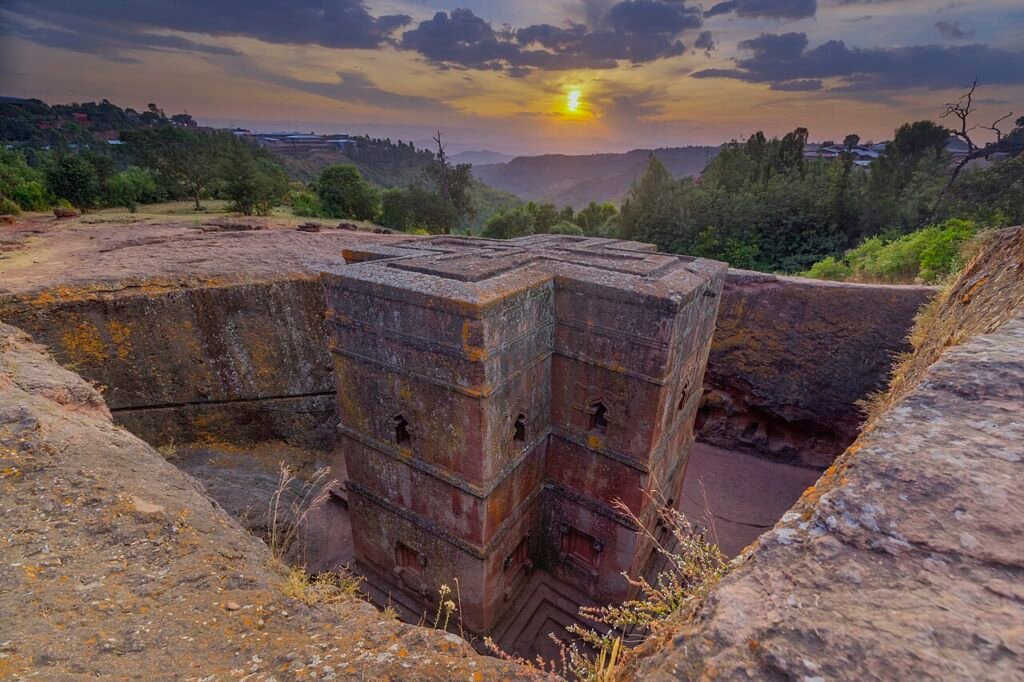
Lalībela, Ethiopia (2026)
While a single entry to the Sistine Chapel sets you back $23, and the Vatican Museums another $20, you’ll step into the living heart of Ethiopian history in Lalībela for about the same price—and stay for days. The $50 ticket grants you access to eleven rock-hewn churches, each carved from the earth itself, and it’s valid for three days. Add a room, three local meals, and a full day of exploration, and you’ll still walk away with change. That’s a hard deal to beat.
The Honest Budget Breakdown
| Expense | Bare Bones | Comfort Budget | Splurge Day |
|---|---|---|---|
| Accommodation | $5 – Dorm bed at a local guesthouse near the market | $15 – Private room with hot water at a family-run favorite | $45 – En-suite suite at a hilltop boutique lodge |
| Food | $3 – Injera and shiro from a street kiosk | $8 – Feast at a local café with three dishes and tea | $15 – Kitfo (seasoned raw beef) at a restaurant with a view |
| Transport | $1 – Walking everywhere; the town is small | $3 – Bajaj rides for long hops | $10 – Private car with driver for the day |
| Activities | $0 – Free viewpoints and market wandering | $25 – One-third of your multi-day church ticket (valid 3 days) | $60 – Full church ticket plus an official guide for a day |
| Daily Total | $9 | $51 | $130 |
Your honest daily number will land between $15–$35 when you stretch the iconic ticket over three days. That’s why savvy visitors call Lalībela the most soulful value in Africa.
7 Free Things to Do in Lalībela, Ethiopia
- Sunrise from the Eastern Slope: Walk up the rocky path behind the Church of Bet Medhane Alem at dawn. You’ll watch the soft light catch the carved roofs, and for a few quiet moments—before the tour groups arrive—you’ll have the entire UNESCO wonder almost to yourself. Locals say the view here is the closest thing to standing on a cloud.
- Explore the Asheten Maryam Peak: A challenging two-hour hike from the village leads you to this hilltop monastery (no entry fee to the grounds, though donations are welcome). Travelers often discover a 360-degree panorama of the highlands, and you’ll likely pass shepherds who’ll wave you over to share roasted grains. Bring water and start by 7:00 AM to catch the coolest conditions.
- Wander the Friday Market: Every Friday, the main square transforms into a bustling highland bazaar. You’ll see farmers selling spiced butter, handwoven cotton, and ancient-looking tools. It’s entirely free to browse, and you’ll be welcomed with more smiles than sales pitches. The most authentic stalls cluster near the Blue Sheep Café, just past the church ticket office.
- The Yimrahane Kristos Connection: Tucked inside a cave on the slopes above the village, this 12th-century church is a short walk from the main complex—through a eucalyptus grove that locals call “the quiet forest.” Nobody will charge you to approach the outer walls, and the shade alone is worth the trip. You’ll find a stone basin filled with cold, spring-fed water; locals believe it brings luck to travelers who splash it on their faces.
- Drink Coffee at a Home Roastery: Follow the smell of roasted beans to any home near the Blue Cross church. For the price of a conversation (often zero), you’ll be offered a small cup of jebena-brewed coffee, served with homemade popcorn. This is your chance to ask about daily life; you’ll discover that a simple “Amesege’nallo” (thank you) opens more doors than any guidebook phrase.
- Sunset from the Tana Heights Hill: At the edge of town, behind the Seven Olives Hotel, a worn path climbs to a rocky outcrop. You’ll see the full village below, with the churches glowing amber in the fading light. Locals recommend pairing this with a can of Rift Valley lager, which costs about $0.60 at the small kiosk at the trailhead.
- Visit the Traditional Huts in the Bet Golgotha Enclosure: While the church here is included in your paid ticket, you can freely walk the outer courtyard and observe the tukul-style round huts, built as homes for the priests. You’ll notice the thatched roofs and mud-brick walls that echo ancient architectural forms—an open-air museum without a price tag.

View over Lalibela, Ethiopia, Lalībela, Ethiopia
Cheap Eats: Where Locals Actually Eat
Your most filling and affordable meals will come from the food houses that travelers rarely see on tourist maps. Head to Almaz’s Kitchen, a six-table room beside the petrol station on Suhul Road, where a generous plate of shiro and injera costs just $1.50. Almaz herself will greet you, and she always brings an extra scoop of spicy lentils to first-time visitors.
For a slightly bigger spread, Yetebele’s Restaurant on the main road offers a rotating daily menu (open 11:00 AM–8:30 PM). You’ll choose from beef tibs, vegetable stew, or freshly fried fish, always served with fluffy injera and a side of greens. Expect to pay around $3 for a full plate, with a bottle of mineral water running $0.35. Travelers often note that the portions are big enough to share.
If you’re craving something between street food and a sit-down meal, don’t miss the fresh juice stands near the bus station. For $0.80, you’ll get a massive glass of avocado juice, or mixed papaya and mango, blended with a touch of honey. Locals recommend sitting at the low benches outside—the best spot to watch bajaj drivers negotiate fares, turning your snack into a mini cultural show.
Finally, make sure to try the falafel stall on Ajam’s Corner (a local nickname for the junction near the St. George Church gate). For just $0.70, you’ll get a warm wrap stuffed with spiced lentils, fresh tomato, onion, and a drizzle of Ethiopian hot sauce. The vendor, Binyam, proudly tells everyone that he adds extra cabbage “because you, my guest, are my family today.”
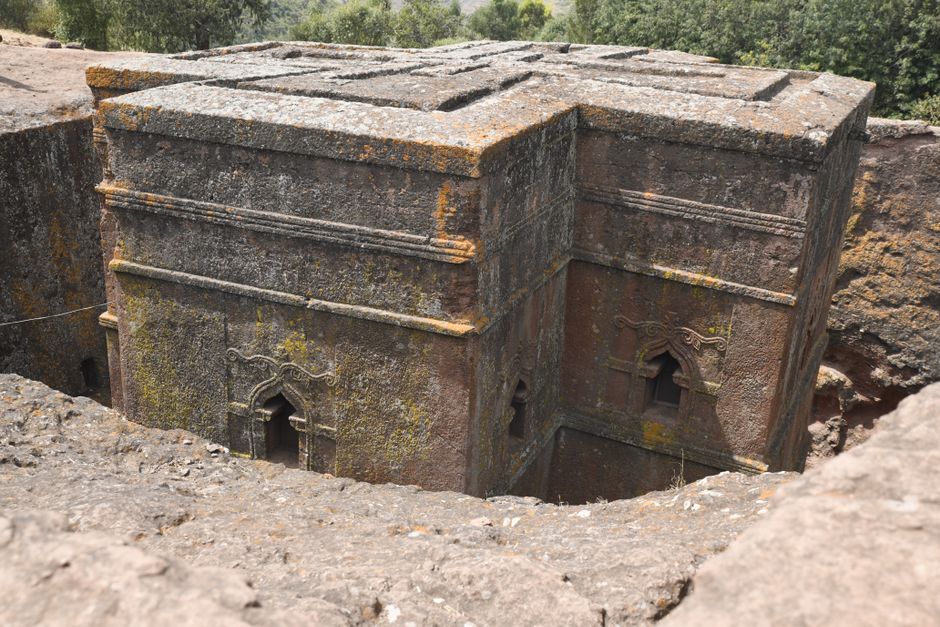
Aerial view of an ancient rock-hewn church in Ethiopia, Lalībela, Ethiopia
Getting There Without Going Broke
- Cheapest Route: The absolute budget option is the all-day bus from Addis Ababa to Lalībela via Dessie. Company Seth Buses runs daily departures at 6:00 AM from the Meskel Square terminal, costing about $14 for the exhausting 14–16 hour trip. It’s long, but you’ll ride through the dramatic Ethiopian highlands and meet at least a dozen locals who will share roasted corn and stories with you. For an easier ride, the morning bus from Bahir Dar (around $10, 10 hours) is another favored choice for overland travelers.
- Pro Tip: Book your bus ticket at least two days ahead, particularly from late September to early November (tourist season). The Seth station will let you reserve a seat near the front, where the ride is bumpier but you’ll avoid the back-row dust. If you’re flexible, depart midweek—Tuesday and Wednesday buses are half-empty, meaning you can often claim two seats to stretch out.
- From the Airport: Lalībela Airport (LLI) lies about 25 kilometers from town. The airport shuttle minibus meets every arriving flight and charges a fixed $3 per person—just follow the crowd and insist on the “local price.” Alternatively, a private taxi will cost you $15–$20; it’s worth it only if you arrive late and want direct drop-off at your guesthouse. Seasonal travelers also recommend sharing the taxi with three or four people to bring it down to $5 each.
Compare flights at Skyscanner
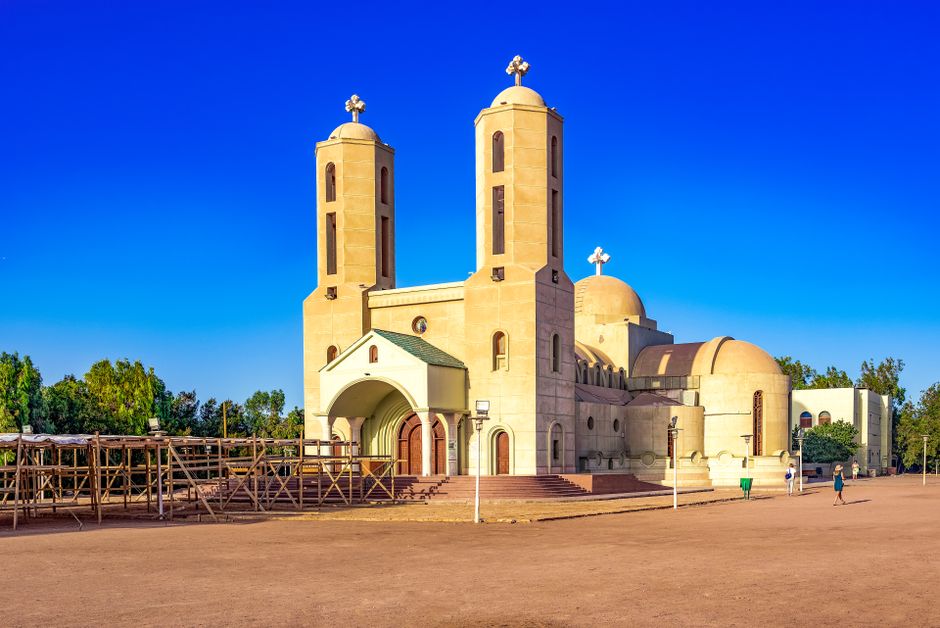
Ethiopian Orthodox church with distinct twin towers under a clear blue sky., Lalībela, Ethiopia
Budget Accommodation Guide
You’ll find the cheapest beds in the compact area between the church ticket office and the town market, where a dozen family-run guesthouses compete for backpackers. For a bare-bones sleep, Meskel Guesthouse offers dorm rooms at $5 per night (no hot water, but spotless mattresses and a shared terrace with outstanding morning views). If you’re after a bit more comfort without breaking the bank, Blue Sky Hotel (just off the main road) will give you a private twin room with hot water and wifi for $15; its rooftop café is a favorite for tourists watching the mist lift off the mountains.
For a memorable splurge—still far cheaper than a European equivalent—the family-run Tukul Village Lodge (on the hillside behind the Post Office) charges $40–$60 for traditional round huts with en-suite bathrooms. Locals recommend this spot for its evening fire pit and the home-cooked three-course dinner included in the rate. Whichever you choose, book ahead for December and January, when occupancy hits 95%; you’ll secure better deals on Booking.com or by direct email, as many guesthouses don’t list on big portals. If you’re after a live-in experience, Airbnb sometimes offers a “local homestay” option for as little as $10 a night, including breakfast and a coffee ceremony.
Money-Saving Tips Specific to Lalībela, Ethiopia
- Buy the three-day church ticket once, but plan it smart: The $50 ticket includes all eleven churches and lasts 72 hours. Seasoned travelers use it to their advantage: enter the main complex at 8:00 AM right when it opens, tour two to three churches, then exit and spend the afternoon hiking or resting. Your ticket gets stamped, so keep it in a waterproof pouch and bring your passport photo—officials require it for the ticket, and the photocopy costs you $0.25.
- Skip the “mandatory” guide—until you need one: Official guides start at $15 per day, but you can see the main churches unguided. If you want deep explanations, join a group at the ticket office and split the guide fee among 4–6 people; you’ll pay as little as $3 each. Alternatively, savvy visitors download the free “Lalībela Ora” audio guide from the UNESCO website (works offline), and pair it with a printed map from your guesthouse.
- Eat like a local at the “injera bakeries”: Between 4:30 and 5:30 PM, tiny family kitchens on the side streets begin making fresh injera for the evening rush. A huge stretch of injera costs $0.20, and you can buy stews to scoop with it for another $0.60. You’ll get a full dinner for around $1, and travelers often discover they prefer this option to the tourist restaurants—it’s authentic, warm, and the owners will likely invite you into their home to stay for tea.
- Use the “bajaj-sharing” rule for transport: The three-wheeled

