
Volcanoes National Park, Rwanda for Adventurers: 7 Trails That Put the Alps to Shame (2026)
You’re gasping at 4,507 meters, your heart hammering against your ribs as the volcanic ash crunches beneath your boots. The wind whips freezing mist across your face, but you’ve never felt more alive. Below you, the misty Virunga mountains stretch into a patchwork of emerald rainforest and ancient lava fields. This isn’t a scene from a documentary—it’s a typical morning in Volcanoes National Park, Rwanda, where every trail leads to an adrenaline-soaked story you’ll be telling for years.
The Main Event: Summiting Mount Bisoke
Your first true taste of adventure in Rwanda starts at the Kinigi headquarters at 6:00 AM sharp. You’ll sign the register, meet your armed ranger escort, and set off on the trail for Mount Bisoke—a dormant volcano that last erupted in 1957. This is a 6-8 hour round trip that covers 15 kilometers and climbs over 700 meters. The difficulty sits squarely between “I’ve done a few hikes” and “I run ultramarathons,” making it the perfect challenge for adventurous souls. The permit costs $400 per person for foreign non-residents, and you’ll need to book it at least two weeks in advance through the Rwanda Development Board or your tour operator.
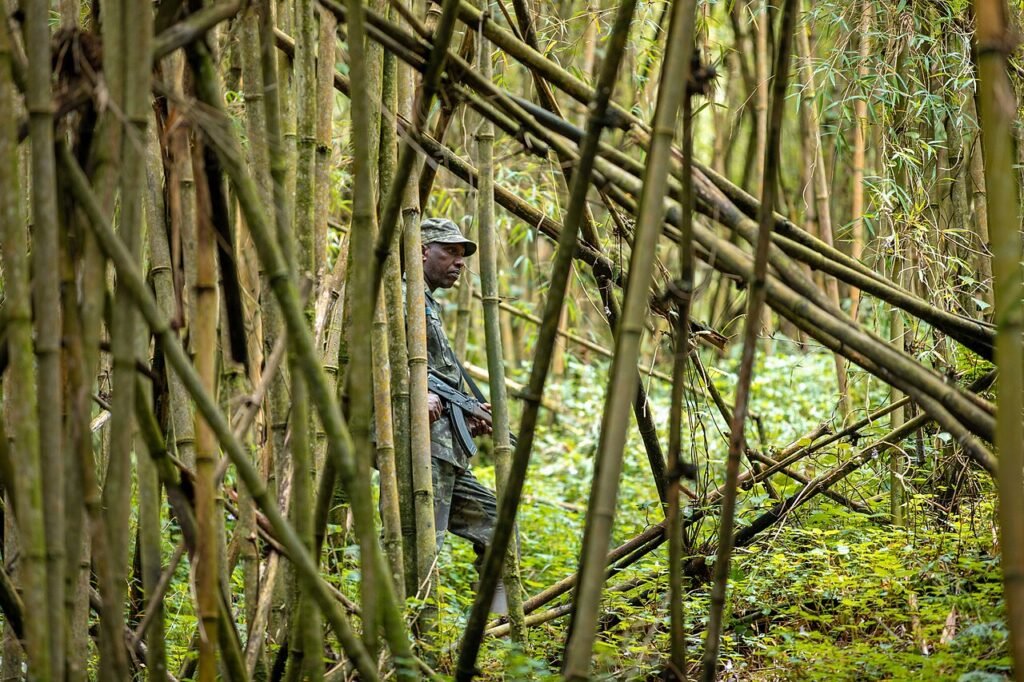
The path starts in farmland and quickly plunges into dense bamboo forest, where the air grows thick with mist and the calls of rare birds echo around you. After about two hours, you’ll break above the bamboo line into a surreal landscape of giant lobelias and moss-draped rock. The final stretch is a steep scramble over volcanic boulders that demands full-body effort—this is where you’ll need your gloves and a bit of grit. At the summit, you’ll peer into the crater lake that boils with a haunting turquoise glow, and travelers often discover that the view of the entire Virunga chain from here is worth every burning muscle. Insider tip: start at the crack of dawn to avoid the afternoon clouds rolling in—you’ll want the crystal-clear visibility for those summit photos.
Activity #1: Gorilla Trekking — The Ultimate Primal Adrenaline
No adventure trip to Volcanoes National Park is complete without locking eyes with a mountain gorilla. This is the activity that put Rwanda on the adventure map, and for good reason. You’ll start your day at 7:00 AM at the Kinigi park headquarters, where guides split you into groups of eight and assign you a gorilla family. The trek itself is a wildcard: some groups find their gorillas within 30 minutes of hiking through cultivated fields and forest edge, while others spend three hours hacking through thick bamboo with a machete-wielding guide. The difficulty varies, but the payoff is always staggering.
When you finally meet the family, you’ll have exactly one hour to observe. Travelers often describe the encounter as “life-altering” — watching a silverback beat his chest at 200 kilograms in front of you, or a baby gorilla tumbling through the undergrowth, creates a rush that no rollercoaster can replicate. The permit costs $1,500 for foreign tourists—non-negotiable, but worth every cent. You’ll book through the Rwanda Development Board, or your hotel can arrange it. Your best bet is to request the Sabyinyo or Amahoro family, both known for being more accustomed to humans. Pack a light daypack with water and snacks, and anticipate muddy conditions—gaiters are your friend here.
Activity #2: The Dian Fossey Hike — History Muscle Through the Mist
If you’re a traveler who wants your adrenaline mixed with legend, the Dian Fossey hiking trail is your perfect choice. This challenging half-day scramble leads to the site where the famous primatologist lived and was tragically murdered in 1985. The trail climbs from the base of Mount Bisoke through a thick tangle of Hagenia woodland and giant lobelias, gaining nearly 1,000 meters in elevation over just 6 kilometers. Your pack will feel heavy, your lungs will burn from the altitude, and you’ll frequently stop to catch your breath—but that’s precisely the point.

Mountain gorilla (Gorilla beringei beringei) female yawning, Volcanoes National Park, Rwanda
Deep in the forest, you’ll reach the Karisoke Research Center ruins and Fossey’s simple grave, which lies surrounded by the very gorillas she dedicated her life to protecting. The site is a somber, humbling place that punches you in the gut emotionally. The permit costs $175 for visitors, and you’ll need a guide plus a porter—the latter costs $20 and is your best local investment, as they’ll carry your daypack and provide an extra hand for the steep, slippery sections. Start by 7:30 AM to beat the midday heat, and bring a waterproof jacket because this trail loves to surprise you with sudden downpours. Locals recommend doing this hike on your last day, as it’s a cerebral, reflective counterpoint to the peak physicality of the crater summits.
Refuel: Where Adventurers Eat
After a day of scrambling over volcanic rock and chasing gorillas, your body will demand serious fuel. In the nearby town of Musanze (about 10 km from the park gates), visitors flock to **The Gourmet**—a local favorite that serves hearty Rwandan dishes with a global twist. You’ll demolish their “Adventurer’s Platter” (grilled tilapia, sweet potato fries, and sautéed greens) for about $15, and the vibe is as energetic as your day hikes.
For a more traditional experience, head to **Juju’s Kitchen** at the Virunga Lodge. This spot is renowned among guides for its buffet of Ugali, beans, and simmered goat stew, all priced around $12 per plate. It’s the perfect way to refuel after the Dian Fossey trek, and you’ll often find rangers eating here—a sign the food is authentic. If you’re craving a cold beer and thin-crust pizza, **La Palme** in Musanze is your spot. Locals recommend their “Volcano Pizza” with spicy salami, and the outdoor seating overlooks the mountains, making it an ideal post-sunset celebration. Budget around $10-15 per meal, and remember to tip 10% as is customary.
Base Camp: Where to Stay
Your adventure base matters, and you’ll want a spot that understands dawn wake-up calls and dirty boots. **Kinigi Guest House** sits right at the park gates and is the budget warrior’s dream. For $80 per night for a double room, you get clean, simple rooms, hot showers, and a hearty breakfast cooked at 5:30 AM if you ask nicely. Travelers often choose this spot for its proximity—you’ll literally walk two minutes to the park office for your morning permit check-in.

A group of buildings surrounded by trees, Volcanoes National Park, Rwanda
For a touch more comfort, **Virunga Lodge** offers luxurious bandas perched on a hillside with jaw-dropping views of the Virunga volcanoes. Rooms start at $300 per night, but the early-bird breakfast is legendary, and they’ll pack you a picnic lunch for your climbs. The lodge also stables gear and dries muddy boots overnight, which seasoned trekkers appreciate. Mid-range adventurers, check out **Hotel La Palme** for $150 a night—it has a pool, garage for your rental car, and a 24-hour front desk for those pre-trek breakfast trays. Book ahead via Booking.com to secure the best rates.
Gear & Prep Checklist
- Sturdy waterproof hiking boots—specifically ankle-height to protect against deep mud and volcanic rock; break them in before you go.
- Lightweight trekking poles—your knees will bless you on the steep descents from Bisoke and Karisimbi.
- Rain gear—quality Gore-Tex jacket and pants; weather changes in minutes at altitude.
- Fitness requirement: be able to hike 10+ kilometers with a 5-kg pack and 600+ meters of elevation gain. Do some stairmaster sessions for two weeks before your trip.
- Safety consideration: altitude sickness is real above 3,500 meters. Carry acetazolamide (Diamox) as a prophylactic and inform your guide of any symptoms.
Getting There & Around
- Flights: Kigali International Airport (KGL) is your gateway. You’ll fly in from major hubs like Addis Ababa, Nairobi, or Brussels with RwandAir. Book at Skyscanner for the best deals.
- Local Transport: From Kigali, a private taxi to the park costs around $80-100 (2.5 hours). Cheaper, adventurous option: hop on one of the Ikaze or Stella Car rentals (a shared minibus) to Musanze for $5, then take a moto-taxi to your lodge for $2. Arrange pickups the night before with your accommodation.
- Best Season: June to September and December to February are the driest months, offering the clearest trails and best gorilla trekking conditions. Avoid the heavy rains of March-May and October-November.
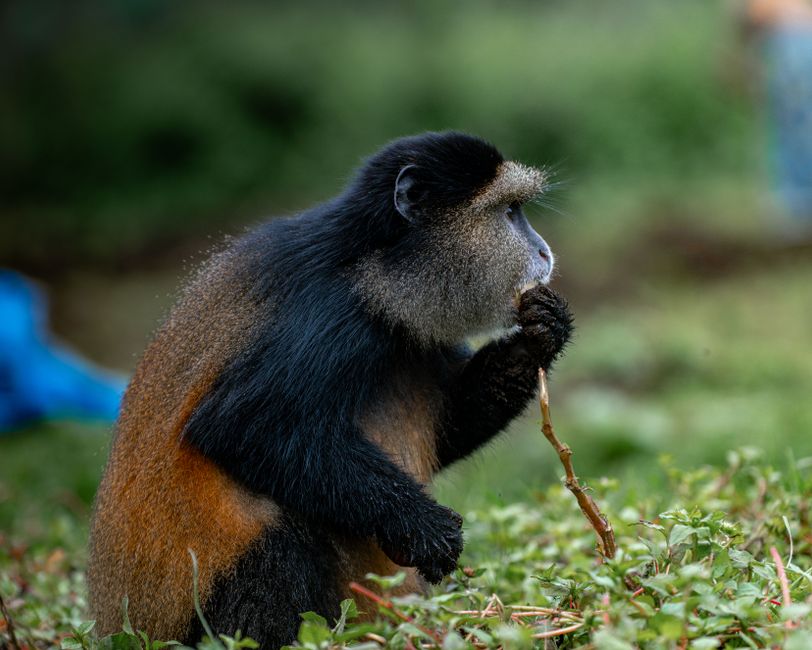
Close-up of a golden monkey eating a stick in its lush, green habitat., Volcanoes National Park, Rwanda
Is Volcanoes National Park, Rwanda Worth It?
Honest answer: if you’re a serious adventurer who thrives on physical challenge and once-in-a-lifetime wildlife, absolutely yes. This is one of the few parks on Earth where you can climb an active volcanic range and come face-to-face with critically endangered gorillas in the same morning. The permits are expensive, certainly—with the $1,500 gorilla permit standing out as the world’s priciest wildlife ticket. But the revenue funds critical conservation, and the experience crushes anything at Yellowstone or the Galápagos for raw, primal intensity.
Who might not love it? Travelers who prefer comfort and predictability. The hiking is genuinely tough, the terrain is relentlessly muddy, and the luxury “glamping” style of other African safaris is scarce here. But if you’re comfortable with discomfort, and you view rain and exhaustion as badges of honor, then pack your gear, book your permits, and prepare for the adventure of your life. Rwanda’s Volcanoes National Park isn’t a sightseeing trip—it’s a rite of passage for the wild-hearted.

