
Tsaranoro, Madagascar Weekend: Cliff Ascent (2026)
You wake to the sound of a distant lemur calling through the mist, a low, rhythmic bark that rolls across the Tsaranoro Massif like a wooden drum. The air smells of damp earth, wild mint, and the first woodsmoke of the day from a village hearth. As you step onto the veranda, the towering granite cliffs—sheer, rose-tinted, impossibly vertical—catch the first gold light of dawn. Your coffee arrives steaming, sweet with local vanilla, and you think: this is the Madagascar that most tourists never see.
Quick Facts Before You Go
- Best Months: April to October. The dry season brings crisp, clear mornings perfect for climbing and hiking; the sun scorches the rice terraces by midday. From November to March, rain turns the red laterite paths into sticky mud and the views vanish behind thick cloud.
- Currency: Malagasy Ariary (MGA). Around 4,300 Ariary to 1 USD—always carry cash, as the nearest ATM is in Ambalavao, 45 minutes away.
- Language: Malagasy and French. English is sparse, so learn a few greetings—Manao ahoana (hello) and misaotra (thank you) go a long way.
- Budget: Realistic daily cost is 80,000–120,000 MGA ($20–$30) for budget stays and local food, or 150,000–250,000 MGA ($35–$60) if you want lodge comfort and guided treks.
- Getting There: Fly into Antananarivo (TNR), then take a 10-hour private 4×4 or a share-a-ride taxi-brousse through the highlands. Alternatively, catch a short domestic flight to Fianarantsoa and drive 60km south. Book your international flight at Skyscanner.
Day 1: Settle Into the Shadow of the Massif
Friday afternoon. You roll down the window as the road leaves the eucalyptus groves and the black granite wall of Tsaranoro suddenly fills the horizon. The village is a scatter of red-earth houses with thatched roofs, banana trees, and laughing children chasing your car. You check into a simple gite high on the ridge, where the deck overlooks an endless patchwork of emerald rice paddies. The afternoon slows to a walking pace, and you feel the pressure of the city drain from your shoulders with every step.
- Morning (8–11am): If you arrive the previous night, start with a gentle village walk. Locals recommend the 3km circuit from Tsaranoro village to the Sakalava camp, passing a 19th-century royal tomb and a sacred fig tree wrapped in white cloth. You’ll meet farmers heading to their fields with zebu carts; a guide from the community cooperative costs about 15,000 MGA per hour and is worth every Ariary.
- Lunch: Stop at Chez Mamy, a tin-roofed family table set under a mango tree. The signature dish is romazava—a hearty beef and leafy-greens stew with ginger and garlic—served with a mountain of steamed rice. One generous plate costs 8,000 MGA. Add a fresh tamarind juice, and you’ll understand why the locals smile when you order a second bowl.
- Afternoon (1–5pm): After lunch, you’ll be ready for the viewpoint hike up Pic Clem. The trail begins behind the Tsaranoro Gold Hotel and switchbacks through rocky scrub for about 90 minutes. At the summit (2,120m), you’ll see the entire amphitheater of the Andringitra Range, including the famous spire of Pic Boby. Plan to descend by 3pm to catch the golden light on the cliff faces. If you prefer vertical drama, book a half-day introduction to rock climbing with the local guides at Camp Tsaranoro (six pitches on the southern flank, starting at 45,000 MGA including all gear).
- Evening: As dusk paints the granite pink, wander back to your lodge and order the house-special zebu steak with a green peppercorn sauce at La Table du Massif. It costs 18,000 MGA and is cooked over an open fire, smoky and tender. After dinner, grab a blanket and join the other travelers on the communal deck, where a guide points out the constellations—the Southern Cross hangs low and sharp, and the silence is so deep you’ll hear the river below.

De Andringitra bergen, Tsaranoro, Madagascar
Day 2: The Roof of the Highlands
Saturday dawns cool and pearly. This is the day you’ve been waiting for—the one that puts Tsaranoro on the adventure map. You’re up before sunrise, downing a quick coffee and a stack of mofo gasy (sweet rice cakes) from the village stall, because the trail waits for no one. The first rays of sun hit the summit of Tsaranoro Peak as you begin your ascent, and for hours the world is nothing but rock, sky, and the rhythmic crunch of your boots on granite.
- Morning: Start with a proper local breakfast at Le Relais de la Montagne—a bowl of warm rice porridge (vary sosoa) with a drizzle of dark honey from the nearby forest, plus a strong cup of coffee. Total cost: 5,000 MGA. Then meet your guide at 7am for the full-day trek to the summit of Tsaranoro Peak (2,416m). The route is a 7-hour return journey with 900m of ascent, and while it’s not technical, you’ll use your hands on a few exposed scrambles. A certified guide costs 60,000 MGA for the day, which includes park fees and a simple packed lunch—well worth the security of knowing the exact path through the mist.
- Midday: At the summit, you’ll be rewarded with a 360-degree panorama that takes in the surreal lunar landscapes of the Andringitra Plateau and, on a clear day, the Indian Ocean haze to the east. Insider tip: most tour groups leave at 9am, so savvy visitors start by 7am to have the peak entirely to themselves. You’ll share the summit only with a family of ring-tailed lemurs that patrol the rocky benches, utterly indifferent to your awe.
- Afternoon: On the way down, your guide will point out the hidden paths to the nearby village of Andranomiditra, where a tiny market sets up every Saturday afternoon. Wander the stalls selling hand-woven raffia bags, wild pepper, and slabs of dark honeycomb wrapped in banana leaves. You’ll find a small cooperative of women who dye silk using natural indigo—a small scarf costs 12,000 MGA and makes the most beautiful souvenir. Take a moment to chat; their grandmothers taught them the craft during the French colonial era, and each pattern tells a story of the mountains.
- Final Evening: For your last dinner, you’ll head back toward the lodge but take a detour to Le Jardin Tropical, a hidden, lantern-lit courtyard restaurant. Here, you must order the lemur-watched fish carpaccio when available—though don’t expect lemurs at your table; the name comes from the nearby forest population. More reliably, the vary amin’anana (rice with a rich mix of greens, peanuts, and a hint of coconut) will make you wonder why you ever ate anywhere else. A full dinner with local Betsileo wine costs around 25,000 MGA per person. Afterward, stroll back under a sky so saturated with stars you’ll half expect to trip over the Milky Way.
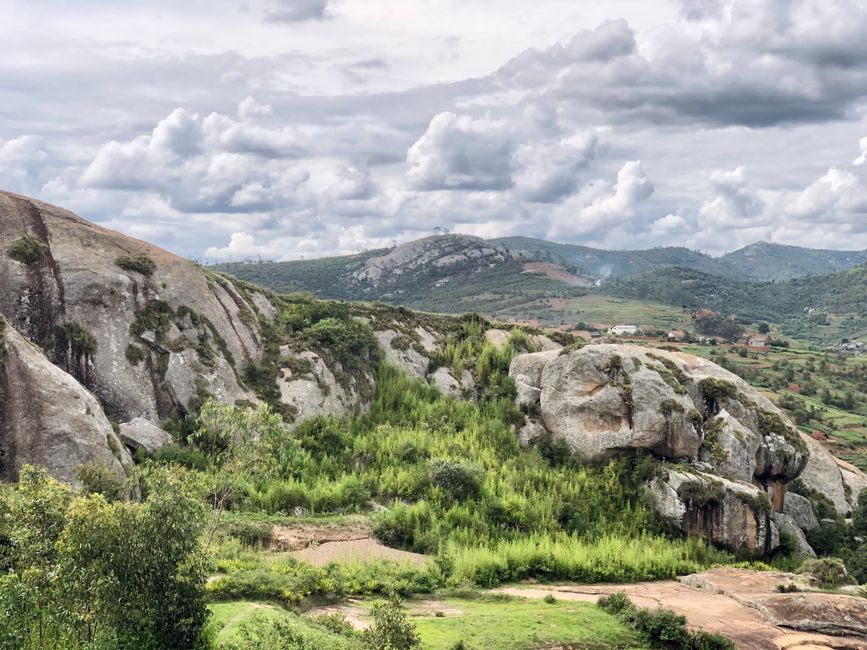
Breathtaking view of rocky terrain and lush greenery under a cloudy sky in …, Tsaranoro, Madagascar
The Food You Can’t Miss
Tsaranoro isn’t a culinary hotspot in the way Antananarivo or Nosy Be are—it’s better. This is where you taste the real Madagascar, shaped by the highland Betsileo people and the bounty of the forest. The centerpiece of every meal is rice, steamed until fluffy and served with a stew, a grilled fish, or a pile of local greens. You’ll learn to love laoka, the collective term for the flavorful side dishes that accompany the grain. The local specialty is hen’omby ritra, a slow-braised zebu cooked in its own juices with onion and tomato, often saved for Sundays and ceremonies. In the village, a plate with rice and laoka costs 4,000–6,000 MGA from a street-side hotely, and locals will eye you approvingly as you master the art of eating with your right hand.
For street food, seek out the mofo sakay—a deep-fried dough ball stuffed with a fiery mix of green chili, chicken, and tomato. The best ones come from a small cart that sets up outside the Sunday market in Ambalavao, but in Tsaranoro you’ll find a version at the roadside shop near the school. They cost just 500 MGA each, and you’ll want at least three. Another don’t-miss is the honey: the forest around the massif is home to wild bee colonies, and the honey—amber-colored, fragrant with eucalyptus and vanilla orchids—is sold in jars at the village cooperative for 10,000 MGA. Spread it thick on fresh bread with a squeeze of lime, and you’ll have a dessert that rivals any Parisian patisserie.
For a proper sit-down meal, La Table du Massif is your best bet. The menu changes with what’s available, but locals recommend the zebu confit with a wild mushroom sauce, or the whole river trout caught from the Namana River, grilled over coconut coals. Prices range from 14,000 to 20,000 MGA for mains. Travelers often discover that the sambusa—triangular pastries filled with spiced meat or vegetables—served as a starter here are the best in the entire highlands, better than anything you’ll find on the coast.
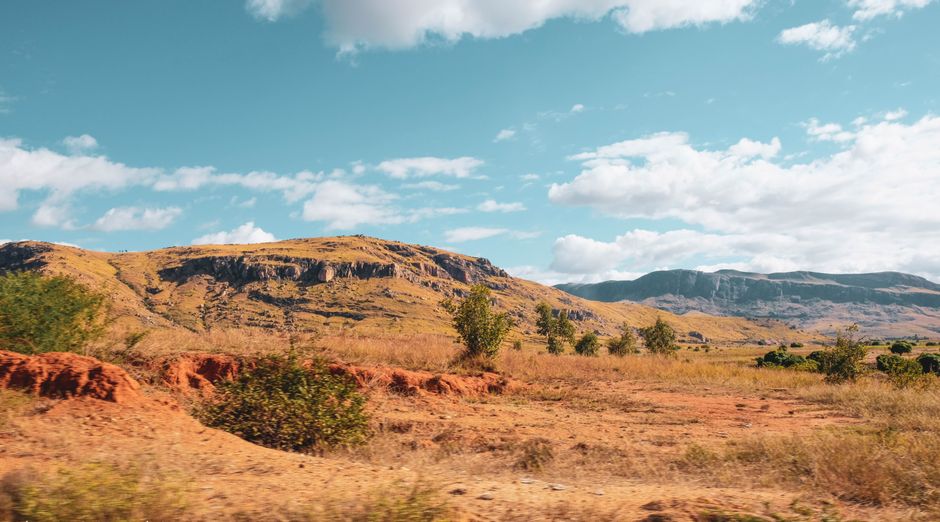
Explore the vast landscapes and vibrant colors of the Andringitra mountain …, Tsaranoro, Madagascar
Where to Stay for the Weekend
Your choice of basecamp shapes your entire Tsaranoro experience. For the classic postcard view of the cliffs, stay in a lodge on the eastern ridge, where your balcony faces the rock wall directly. The Tsaranoro Gold Hotel is the most established option, with a range of bungalows carved from local stone. Rooms run from 45,000 MGA (budget, shared bathroom) to 150,000 MGA (en-suite with balcony). The restaurant serves dependable local and French dishes, and the staff can organize every guide and trek you need. Book ahead via Booking.com—if you see availability for the weekend, grab it immediately.
For a more immersive, community-run stay, look for the family-run guesthouses in the village itself, which you’ll find listed on Airbnb. These are basic—think a mattress with clean linens, a bucket shower, and a shared latrine—but you’ll eat with the family and wake to the sound of women pounding rice in wooden mortars. A double room costs 25,000–35,000 MGA per night, and all proceeds stay in the village. Locals recommend staying here at least one night for the full cultural immersion, especially if you want to join a traditional dinner with rum and storytelling.
Finally, for hikers who want zero walk to the trailhead, the Camp Tsaranoro is the closest to the classic climbing routes. Run by a cooperative of local guides, it offers tented camping (10,000 MGA per person) and a few permanent tent-bungalows (40,000 MGA for a double). The best part is the evening campfire, where climbers from around the world swap tales of their ascents of the “Madagascar Dolomites.” No matter where you stay, you’ll be before the buzz of the internet—most accommodations have patchy or non-existent Wi-Fi, which, for a weekend break, is a gift.
Before You Go: Practical Tips
- Getting Around: Your own rental car is ideal, but a 4×4 is a must for the gravel roads—expect to pay 150,000–200,000 MGA per day with a driver from Antananarivo. Alternatively, from Ambalavao, take a shared taxi-brousse to the Tsaranoro turnoff (about 5,000 MGA per person and 45 minutes along the cliff road), then walk or hitch the final 5km. For treks, you’ll need a guide—the official rate is 60,000 MGA per day for a group of up to four, set by the Andringitra National Park authority.
- What to Pack: Layers are essential—even in July, the highland mornings start at 5°C and warm to 22°C. Bring a sturdy pair of trekking boots with good ankle support; the granite scrambles are polished smooth by decades of footsteps. A headlamp for early Start descents, and a reusable water bottle with purification tablets—you’ll cross several mountain streams, but don’t risk the untreated water. Don’t forget earplugs: the geckos chorusing at night are charming for the first 20 minutes, then less so.
- Common Tourist Mistakes: The biggest error travelers make is underestimating the sun. At 2,000 meters altitude, the UV is fierce even on cloudy days—apply a high-SPF sunscreen and wear a wide-brimmed hat. Another: carrying large denomination notes and expecting change. Villages and local markets often can’t break a 20,000 Ariary note (about $

