
Bocaranga, Central African Republic Weekend: Markets (2026)
The first thing that hits you is the smoke—not the choking kind, but the sweet, earthy perfume of shea wood and roasting maize threading through the morning air. You hear the rhythmic thud of pestles grinding millet in courtyards, the clip-clop of a donkey cart, and the liquid call to prayer from the central mosque weaving over the tin roofs. In Bocaranga, a frontier town of about 40,000 souls in the Ouham-Pendé prefecture, the weekend doesn’t begin with a brunch reservation. It begins with the slap of fresh dough on a hot griddle and the laughter of traders hauling plastic basins of mangoes to the Sunday market. By Friday afternoon, the dusty main avenue—potholed, rutted, alive—transforms into a vibrant corridor of commerce, conversation, and unexpectedly delicious street food.
Quick Facts Before You Go
- Best Months: November through February, when the harmattan winds sweep down from the Sahara, bringing dry, cooler days (mid-70s to low 80s °F). The rainy season (June–September) turns roads into muddy rivers and makes many outlying villages unreachable. Travelers who come in March and April will find sweltering heat but sparse crowds.
- Currency: Central African CFA franc (XAF). As of this writing, roughly 600 XAF to 1 USD, or about 650 XAF to 1 EUR. You’ll need cash—there are no ATMs in Bocaranga. Bring sufficient CFA from Bangui or Berbérati.
- Language: French is the official language; Sango is the lingua franca spoken by nearly everyone. English is rarely understood, so learn basic greetings in Sango (“mbï tî yâ” for “good morning”) and carry a phrasebook. Locals appreciate any attempt, and a smile goes a long way.
- Budget: A realistic daily budget is 25,000–40,000 XAF (about $40–$65 USD). This covers a simple guesthouse room, three meals, moto-taxi rides, and a couple of activities. Those wanting more comfort—private bungalows, bottled water, and guide services—should plan for 60,000–80,000 XAF per day.
- Getting There: Fly into Bangui M’Poko International Airport (BGF) from Addis Ababa with Ethiopian Airlines or from Casablanca with Royal Air Maroc—flight time from Addis is about 2.5 hours. From Bangui, you have two options: a scenic but bumpy 12-hour bush taxi ride north (approx. 15,000 XAF per seat) or, for a faster and far more comfortable option, chartered light aircraft to the Bocaranga airstrip (about 1.5 hours, typically $800–$1,200 one-way for a group). Check flight deals at Skyscanner
Day 1: The Heartbeat of the Market & the Winding High Street
You start the morning not with an alarm, but with the soft murmur of prayer and the clang of a blacksmith’s hammer echoing from the workshop behind your guesthouse. The air is cool and thick with the smell of peanut sauce simmering on charcoal braziers. Your plan for the day is simple: surrender to the rhythm of Bocaranga’s central market, follow your nose, and end up at a riverside grill as the sun turns the Pendé River to copper.

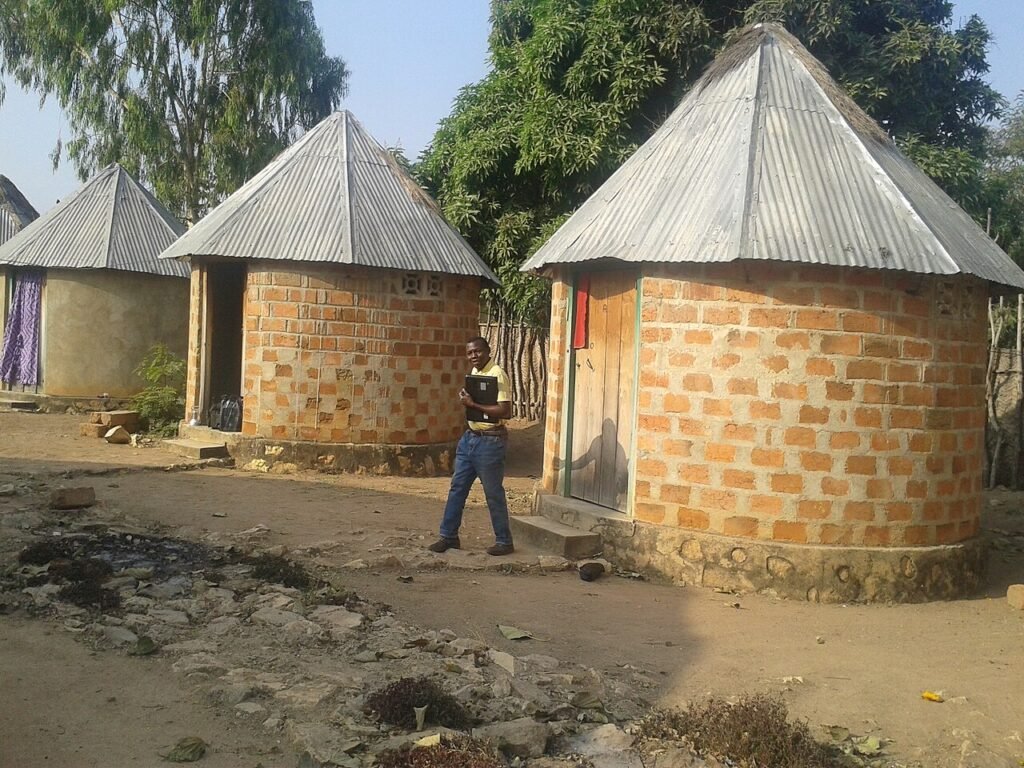
View of the Central African Republic taken during ISS Expedition 23., Bocaranga, Central African Republic
- Morning (8-11am): Head straight to the Grand Marché de Bocaranga, located just off the main avenue near the mosque. This is the beating heart of the town, especially on Saturday mornings when farmers flood in from the surrounding villages. You’ll wander through a maze of stalls heaped with glossy purple eggplants, pigeon peas, cassava tubers, and the sharp, sweet scent of smoked fish from the river. Don’t miss the women’s section where you can buy shea butter by the scoop—locals recommend asking for the dark, unrefined kind, which is prized for skin and hair. Entry is free, but bring small bills and a sturdy wrapper (a pagne cloth) to tie your purchases in, just like the locals do. Tip: hire a 12-year-old guide with a bicycle for 500 XAF—they’ll help you navigate and translate.
- Lunch: At midday, find your way to Chez Mariam, a palm-shaded courtyard off Rue du Commandant. Mariam, a formidable woman with an infectious laugh, serves the most legendary maboké in the entire prefecture—fish (usually capitaine or tilapia) wrapped in aromatic wild basil and green ndolé leaves, steamed inside a large banana leaf until falling-apart tender. A generous portion with fufu or rice costs just 1,500 XAF. Order the “spécial” and she’ll add a side of grilled plantains and pili-pili sauce. Your taste buds will thank you.
- Afternoon (1-5pm): After lunch, hire a moto-taxi (an older Yamaha motorcycle, roughly 1,000 XAF per ride) and head southwest to the Mission Catholique Sainte-Anne, a striking red-brick church built in the 1950s by French missionaries. The grounds are a peaceful oasis of mango trees and bougainvillea, and travelers often discover the modest school run by nuns who have been here for decades. Next, walk to the riverbank just behind the church—you’ll find fishermen hauling in nets, and if you’re lucky, locals will show you the ancient fish traps woven from liana vines, a technique passed down for generations. Keep your eyes open for kingfishers and the massive, prehistoric-looking Goliath heron stalking the shallows.
- Evening: As the sun dips low around 5:30pm, make your way to the Maison des Jeunes (youth center) where an impromptu football match often draws a lively crowd. Then, for dinner, walk to the riverside grills at the end of Avenue de la Pendé. Here, you choose your meat live—a skinned goat hanging on a hook is the honest alternative. The vendors will take your cuts, salt them generously, and grill them over glowing shea coals, serving with hot cassava flour and a fiery onion-tomato salsa. Two skewers of kabidja (goat) with a side of grilled plantain will set you back about 2,500 XAF. Eat with your hands, listen to the river murmuring over the stones, and watch the stars emerge. Be sure to carry a headlamp; this is not a lit-up tourism zone.
Day 2: Riverbanks, Ancient Sacred Sites & the Whisper of the Forest
Your second day shifts tone from market chaos to contemplative calm. The mornings here are a gentle gift—the sun rises over the Pendé with a pink and gold softness that makes you forget you’re in a country often described in alarming headlines. Today, you’ll trade noise for nature, and then dive back into the town’s soul one last time.
Tranquil view of the Bukavu waterfront with modern architecture and lake in…, Bocaranga, Central African Republic
- Morning (7-10am): Join the early risers at the small café Le Petit Bangui on the main avenue, where the owner, Emmanuel, brews sweet, milky coffee and serves mboum—a local porridge made from fermented millet, topped with fresh coconut and powdered sugar. It’s a hearty, sour-sweet breakfast beloved by locals, and at 500 XAF a bowl, it’s a steal. After your fuel-up, head out of town on foot or by moto-taxi toward the village of Gueté (around 6 km, 1,500 XAF). On the edge of the village lies a sacred grove where the Nzakara people hold annual ceremonies to honor their ancestors. Visitors are welcome quietly; you’ll see centuries-old silk-cotton trees draped with white cloth offerings. Locals recommend bringing a small gift—a handful of kola nuts or a few coins—to place at the base of the largest tree, a gesture of respect that your guide will translate.
- Midday (11am–1pm): Back in Bocaranga, your main attraction is the vibrant Monday Muslim quarter, home to the town’s oldest mosque, a beautiful 1920s structure of mud brick and timber, its minaret decorated with geometric patterns. Insider tip: arrive just before the midday prayer (around 12:30pm) to enjoy the serene atmosphere and watch the faithful gather—you’ll see women in brilliant boubous and men in fine embroidered djellabas. Non-Muslims are welcome in the courtyard, but don’t enter the prayer hall. The neighborhood itself is a maze of tiny shops selling aromatic spices, imported perfumes, and colorful fabrics from Nigeria—perfect for picking up gifts. Haggling is expected; a good rule is to start at half the asking price and settle around 70%.
- Afternoon (2-5pm): Explore the artisan quarter near the old French colonial grain mill, now a crumbling yet atmospheric landmark. Here, you’ll find a collective of woodcarvers and weavers. Spend time with Mahamat, a master carver who crafts ornate walking sticks and small animal figures from ebony. He’ll let you watch his process if you’re curious. A small piece costs $5–$15 USD equivalent (roughly 3,000–9,000 XAF). Afterward, take a short moto ride to the spring of Kouna, a clear, cold natural pool at the foot of a granite hill, where locals swim and collect drinking water. The 15-minute dip is refreshing, but respect the custom of swimming fully clothed in a sarong or t-shirt.
- Final Evening: For your last night, treat yourself to a special meal at the Hôtel Bar-Restaurant La Pêcherie, a charming but rustic lodge right on the riverbank. This isn’t fine dining, but it’s the most atmospheric spot in town, with candlelit tables under a massive thatched pergola. The specialty is a whole grilled tilapia stuffed with ginger and garlic (about 5,000 XAF per person), served with a spicy cassava leaf sauce (gombo) and fried sweet potatoes. Arrive early—by sunset, the terrace fills with locals, UN workers, and travelers sharing stories over bottles of cold Mocaf beer. The sound of the river and the chorus of frogs make for a perfect farewell chorus.
The Food You Can’t Miss
Bocaranga’s food scene is not about Michelin stars—it’s about the soul of the soil and river. Travelers quickly discover that the centerpiece of every meal is cassava, either as fufu (a smooth, doughy ball) or gozo (coarse, refried granules). It’s an acquired texture but a beloved staple. The true masterpiece, however, is the maboké, a parcel of leaves and fish or meat steamed under hot stones. You’ll find the best version at Chez Mariam, but try the one sold as street food on Sunday mornings at the junction near the mosque—wrapped in old newspaper, it costs only 1,000 XAF and is perfect for a hike.

Stunning aerial shot of Basílica Catedral Nuestra Señora de la Altagracia i…, Bocaranga, Central African Republic
Another must-try is kanda: roasted groundnuts and sesame crushed into a spicy paste, eaten as a snack with fresh lime and sliced cucumbers. The local women sell this from enamel basins near the market; a small bowl goes for 500 XAF. For those with a sweet tooth, don’t miss crêpes filled with pure shea-butter and sugar—a decadent treat at 300 XAF each, best eaten warm from the griddle as a late-afternoon pick-me-up.
Where to Stay for the Weekend
Accommodation in Bocaranga is humble but genuinely warm. The most reliable choices are in the town center, within walking distance of the market and eating joints. For a truly local experience, try the Centre des Jeunes et de la Culture guesthouse, which offers clean, basic rooms with shared bathrooms for 8,000 XAF per night—this is where visiting teachers and NGO staff often stay. It’s a great spot for meeting travelers and swapping intelligence about road conditions.
For slightly more comfort, the Hôtel Relais de la Pendé (on the main avenue) has private bungalows with mosquito nets, fans, and attached toilets for 15,000–20,000 XAF per night. The on-site restaurant is reliable, and the manager, Madame Jeanne, is a font of information about the area. Travelers who want riverside views should book at La Pêcherie (same name as the restaurant), where double rooms with verandas overlooking the water cost around 25,000 XAF—do ask for a corner bungalow for the best sunset angle.
There are no hosts on Airbnb for Bocaranga, so your best bet is to book via local agencies operating out of Bangui, or use Booking.com for the few listed properties in the wider region. For a true home-stay experience, you can contact the pastor of the Evangelical Church, who often arranges family stays for visitors—unforgettable but not for the faint of heart (expect to share a room with goats stabled below).
Before You Go: Practical Tips
- Getting Around: Your primary transport is the moto-taxi, literally everywhere, costing 500–1,000 XAF for short hops within town. For longer journeys to nearby villages like Gueté or Bossemélé, you’ll pay 2,000–3,000 XAF—negotiate before hopping on. There are also occasional bâchés (covered pick-up trucks) running as bush taxis; prices vary, but a short 10 km ride is usually 1,500 XAF. Walking is perfectly safe in daylight, though locals recommend skipping nighttime stroll

