
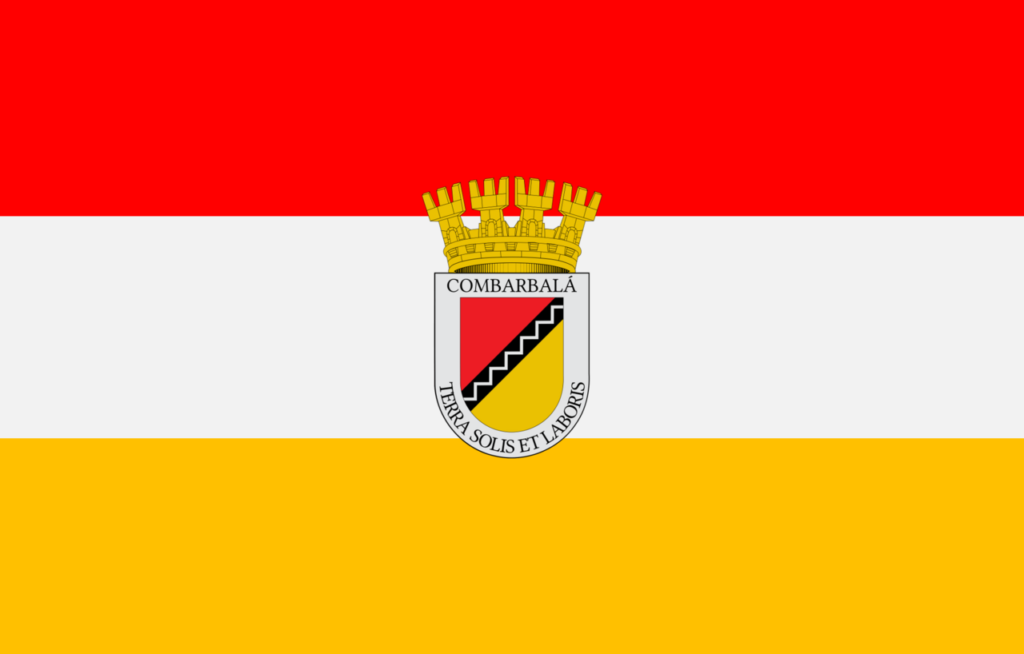
Where the Stones Speak: Combarbalá, Chile, and the Valley That Reaches for the Stars (2026)
In 1752, a Spanish captain named Juan de la Vega led a small expedition into the arid folds of the Limarí Valley, chasing rumors of silver veins hidden beneath the russet soil. According to local legend, when de la Vega finally crested the hill where the town now sits, he found Diaguita people polishing a translucent green stone that caught the afternoon light like captured sunlight. He scratched his name into the adobe wall of the first chapel built there—a wall that still stands today, known as the “Muro del Fundador.” That stone was combarbalita, and the story of this gemstone—together with the town’s other precious resource, its impossibly clear sky—would define Combarbalá for the next two and a half centuries.
The Story Behind Combarbalá, Chile
Long before the Spanish arrived, the Diaguita people carved this valley into a series of terraced farms, using irrigation canals that still water the fruit trees and vineyards you’ll see today. They mined copper and turquoise, but their real treasure was a rare chalcedony unique to this region: combarbalita, a stone whose color shifts from pale green to deep amber depending on the light. When the Spanish crown granted the area for development in 1787, the town became a mining outpost, but it wasn’t gold or silver that sustained it—it was this humble, beautiful stone, which local artisans have transformed into earrings, pendants, and carvings for generations.
The 19th century brought a different kind of fortune: astronomy. As travelers and explorers passed through the Andes, they noticed that Combarbalá’s elevation—about 900 meters—combined with the bone-dry Atacama air and nearly total absence of cloud cover created a natural observatory. By the 1990s, international scientific consortia began building world-class telescopes in the surrounding hills, and in 2006, the town officially rebranded itself as the “City of the Stars.” Today, you’ll find a community that has learned to look upward: paved roads lead to the Observatorio Musso, and local families host stargazing sessions in their own backyards, draping blankets over folding chairs and pointing out constellations in a sky so thick with stars it feels like a satellite view.
Neighborhood by Neighborhood
El Centro Histórico
Your first hour in Combarbalá will likely be spent in the compact, sun-slanted Plaza de Armas, where the squat 18th-century Church of San Pedro casts a long shadow over hand-laid cobblestones. The Muro del Fundador hides in the courtyard behind the church—look for the faded “J.d.l.V.” carved near the base, a detail most tourists walk past without noticing. The plaza is ringed by low-slung colonial buildings with thick adobe walls painted in earthen hues: terracotta, ochre, and the occasional shocking turquoise door. You’ll find the municipal museum tucked into a corner of the plaza, a two-room space where a caretaker named Don Luis will gladly show you Diaguita ceramics and a scale model of the town as it was in 1850. On weekday mornings, vendors set up plastic tables selling homemade empanadas and freshly squeezed papaya juice; by late afternoon, older men gather on the park benches to play dominoes, their boards echoing with quiet clicks. This is the town’s living room, and your best bet is to sit here for at least one hour, sipping a coffee at Café Central (prices range from $2,000 to $3,500 CLP) and watching the slow rhythm of provincial life.
Barrio Sur & the Artisan Alley
Head one block south from the plaza along Avenida Vicuña Mackenna, and you’ll enter the neighborhood that makes Combarbalá famous among glitter-conscious travelers: a cluster of workshops and storefronts dedicated to combarbalita. Locals call this stretch “La Calle de los Artesanos,” and it functions as the town’s beating creative heart. Each shop—there are roughly a dozen—has a glass counter displaying polished stones, carved animals, chess sets, and jewelry with prices that range from $5,000 CLP for a simple pendant to $150,000 CLP for a museum-quality carved puma. Don’t be shy about asking to watch the artisans work. In the back of the family-run Taller Don Ernesto, you’ll often find 74-year-old Ernesto Fuenzalida grinding a rough stone into a smooth cabochon, his hands stained a faint amber color. The key tip: buy directly from workshops rather than souvenir shops—you’ll pay half as much, and the artisans will happily explain how each stone’s unique banding reflects the region’s volcanic history. The neighborhood itself is quiet residential, with narrow lanes where you’ll see washing lines strung between cacti and the occasional goat bleating from a walled patio.
Alto Combarbalá & the Lookout Trail
For the town’s best views, climb the steep, winding road east of the plaza toward the Cerro de la Cruz, a hillside neighborhood of whitewashed houses with tin roofs. The 20-minute uphill walk will leave you breathless—not just from the altitude, but from the panorama that unfolds: the entire valley lies before you, a patchwork of emerald orchards, rust-colored cliffs, and the silver thread of the Combarbalá River. At the summit, a simple white cross stands next to a wooden mirador, and on clear days you can see the snow-capped Andes to the east and the Pacific smog-line near the coast. This neighborhood is where you’ll encounter the “other” Combarbalá—domestic life beyond the plaza. Families sit on low walls in the early evening, watching the sky turn orange and then purple. You’ll find a handful of family-run pensions here, like the cheerful Hostal El Mirador (around $18,000 CLP per night with breakfast), where the owner, Señora Marta, will insist you sample her son’s homemade chicha (fermented apple cider). Plan to arrive at the mirador around 7 PM to watch the sunset, and bring a flashlight for the descent.

Camino Increible, Quilitapia, Región deCoquimbo, Chile, Combarbalá, Chile
The Local Table: What Combarbaleños Actually Eat
Combarbalá’s cuisine is a love letter to the Martian-like terrain: hearty, earthy, and built around what survives in an arid climate. Locals will tell you the true signature dish is papas de Combarbalá, a small, purple-skinned potato that is so intensely flavorful that it has become a regional obsession. These potatoes, which grow only in this microclimate, are typically boiled whole and served with a smoky pebre made from local aji peppers, or mashed into a thick stew with goat meat. The goat, raised on scrubland herbs, is the second pillar of local food—try guiso de cabrito, a rich stew that simmers with carrots, onion, and a generous splash of white wine, often served at lunch with rice and a surprising side of fried green bananas (a legacy of Peruvian influence).
For the full experience, time your visit for Saturday morning, when the Feria Municipal springs to life just two blocks west of the Plaza. From 8 AM to 1 PM, local farmers spread their harvests on wooden tables: the famous potatoes, corn, olives, and sweet citrus from valley orchards. At the far end of the market, a trio of women grill empanadas over charcoal drums—look for the stall belonging to Doña Carmen, who has been flipping these golden pastries since 1987. You’ll pay about $1,500 CLP for a cheese-and-onion empanada or $2,200 CLP for one stuffed with goat and raisins. For a proper sit-down meal, follow the locals to El Fogón de la Abuela, a no-frills family restaurant on Baquedano Street where a three-course lunch of the day (including a drink and a small dessert) costs $7,000 CLP and is served strictly between 1 and 3 PM. The owner, “Abuela” Rosa, has a habit of wandering between tables to ensure you’re eating enough—accept her offer of extra pebre; you’ll thank her later.
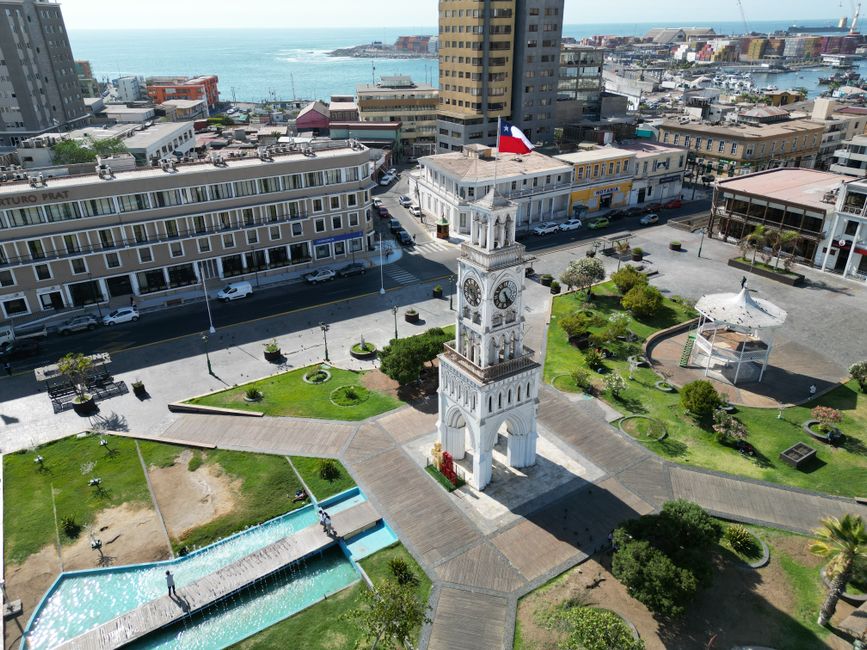
A stunning aerial view of the Clock Tower in Plaza Prat, Combarbalá, Chile
Art, Music & Nightlife
The creative energy of Combarbalá flows through two channels: the tactile art of stone-cutting and the acoustic art of song. Several artisan guilds formed in the 1990s now hold open-studio days every third Saturday of the month, when you can wander from workshop to workshop, watching demonstrations and sipping homemade pisco sour. The town’s pride is the annual Fiesta de la Combarbalita, held the first weekend of January, when the plaza transforms into a craft fair, and local carvers race to finish a sculpture in under four hours—a spectacle you would be remiss to miss. Music here in the valley leans into the traditional tonada, a guitar-driven folk song style that came from the Chilean countryside. While you’re unlikely to find a dedicated concert hall, Tuesday and Friday nights at Bar El Encuentro (opposite the church) feature live guitar and accordion sessions starting around 10 PM, where old-timers trade verses, and travelers who can manage a verse in Spanish are treated like celebrities. The bar is tiny—maybe 10 tables—but it’s the closest thing the town has to a nightlife scene, and the conversations you’ll have over a $3,500 CLP liter of Cristal beer will be some of your most memorable.
For a different kind of after-dark experience, sign up for an astronomy evening at Observatorio Musso, located just 4 kilometers outside town on a dirt road that your hostal can direct you to. The observatory, run by the Musso family since 2006, offers night sessions every night except full moons (check their website for exact dates), with tickets around $15,000 CLP adult. You’ll gaze through a 16-inch telescope at Jupiter’s moons, the rings of Saturn, and the soft haze of the Andromeda Galaxy, all while a son of the family narrates with the wonder of a man who has never lost his awe. Travelers often discover that this intimate experience—10 to 15 people max—far surpasses the massive, sterile tours at the big international observatories.
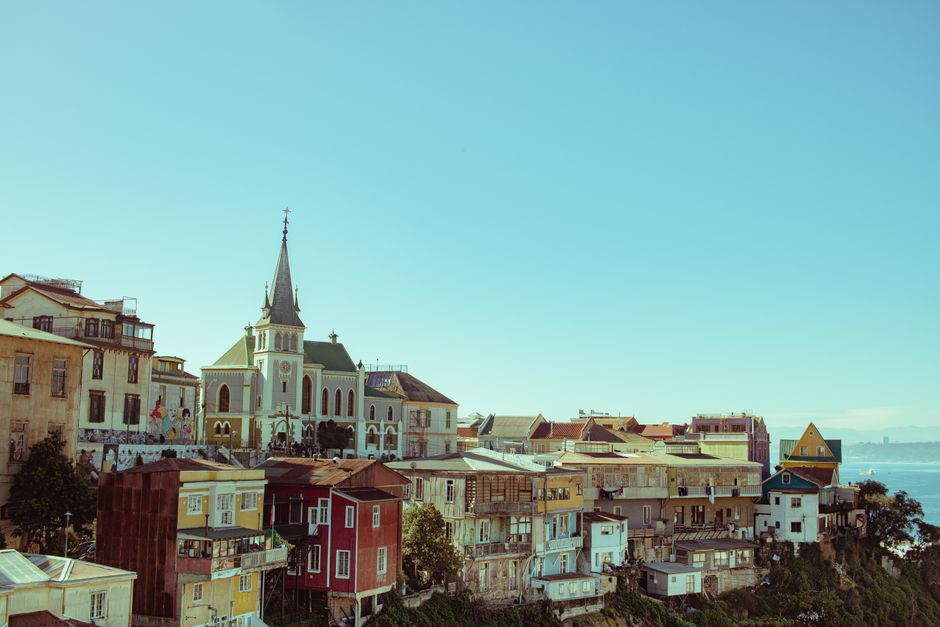
A beautiful view of Valparaíso’s colorful houses and sea under a clear sky, Combarbalá, Chile
Practical Guide
- Getting There: The nearest airport is La Serena Airport (LSC), served by LATAM and SKY from Santiago (about 1 hour flight, $80–150 USD round trip). Book at Skyscanner. From La Serena’s terminal, take a bus operated by Kenly or Buses Andino to Ovalla (2.5 hours, $8 USD), then transfer to a local combi to Combarbalá (45 minutes, $3 USD). Direct buses from Santiago run twice daily (travel time 7 hours, $20 USD).
- Getting Around: Everything in town is walkable—the entire Centro is barely 6 blocks across. For the observatory or artisan workshops on the outskirts, you’ll rely on local taxis ($3,000 CLP per trip) or your hostal’s shuttle. Renting a bicycle from the office next to the museum costs $5,000 CLP for the day but expect worn mountain bikes suitable for dirt paths.
- Where to Stay: In El Centro, try Hostal Los Chincoles ($25 USD/night, basic but clean, run by a retired teacher who gives impromptu history tours). For more charm, Alto Combarbalá’s Hostal El Mirador ($35 USD/night with breakfast and killer views). If you want a rural base, the Eco Lodge Piedra de Fuego ($60 USD/night, includes stargazing deck) is 6 km outside town. Compare options at Booking.com.
- Best Time: April through November are the “astronomy months” with nearly cloudless skies and cool days (50–70°F). December through March is warmer (80s°F) but features the Fiesta de la Combarbalita in January and

