
Kudowa-Zdrój, Poland Weekend: Healing Waters (2026)
The Tuesday-morning quiet of the spa park feels like a held breath. You hear the hiss of mineral water filling a ceramic cup at the pump room, then the soft clink of glass against stone as an elderly local raises a toast to her lungs. The air carries a faint, iron-rich tang – the same metallic whisper that seeps from the earth beneath your feet. This is Kudowa-Zdrój, a small spa town tucked against the Czech border where the Sudetes mountains rise like fossilized waves, and where visitors come to sip healing waters, wander among mushroom-shaped sandstone giants, and stand before a wall of human bones.
Quick Facts Before You Go
- Best Months: May–June and September–October, when the weather is mild, the summer crowds have thinned, and the fall colors turn the Table Mountains into a painter’s palette. July and August bring rain and bus tours; winter can be charming but slippery.
- Currency: Polish Złoty (PLN). Roughly 4.0 PLN to $1 USD, 4.3 PLN to €1. Cards are accepted in most places, but keep cash for park entrance fees and small vendors.
- Language: Polish, with some German and Czech heard in the streets. English is spoken in hotels, the tourist information center, and most restaurants catering to visitors – but a few phrases of Polish will earn you warm smiles.
- Budget: You can comfortably manage a weekend on 450–650 PLN ($110–160) per person for food, entry fees, and local transport. Add 300–500 PLN for accommodation if you’re not staying budget.
- Getting There: Nearest major airports are Wrocław (Copernicus Airport, ~1.5 hours by car) and Prague (Václav Havel, ~2 hours). Direct flights from London take about 2.5 hours. Book at Skyscanner.
Day 1: Mineral Sips, Bone Chapels & the Souvenir of Quiet
You wake to the soft chime of the parish church bell and the smell of rain-scrubbed cobblestones drifting through your window. Your plan is simple: ease into the spa rhythm, tackle the famous cemetery chapel before lunch, and then lose yourself in the Table Mountains’ otherworldly rock labyrinth. Kudowa is not a showy town – it’s a place that rewards slow walking and small discoveries.
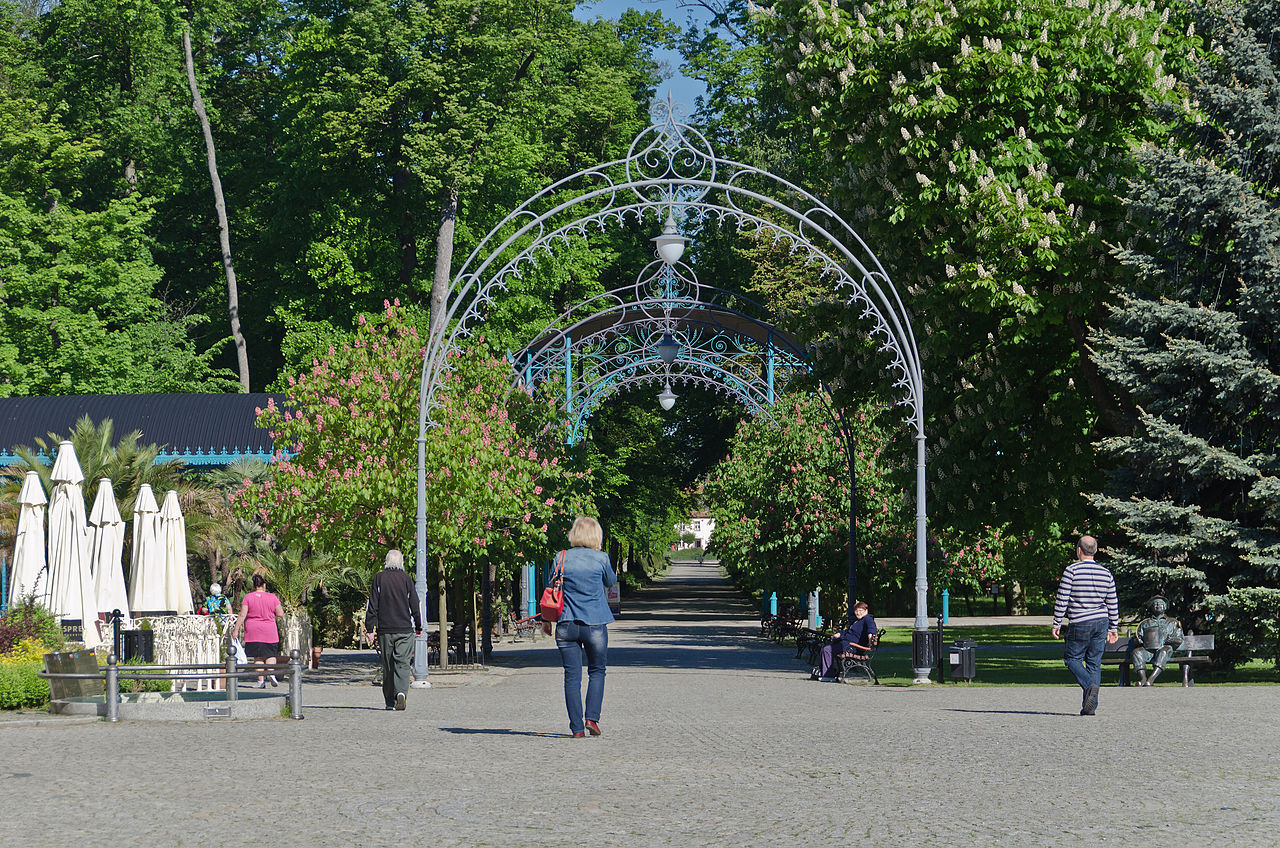
Spa park in Kudowa-Zdrój, Kudowa-Zdrój, Poland
- Morning (8–11am): Start at the Pijalnia Wód Mineralnych (mineral water pump room) in the Spa Park, next to the Grand Sanatorium building. For just 1.5 PLN you’ll buy a small ceramic cup and fill it from three taps – each with a different type of healing water, from the salty “Kudowa Zdrój” to the iron-rich “Hermes” that stains the cup with rust. To your left, you’ll see the white colonnade where locals gather for their morning “water walks.” Then follow the park’s gravel paths past century-old chestnut trees to the little footbridge over the Czermnica stream – keep your eyes peeled for the resident gray heron. From 9am, the park benches are prime spots for reading or nibbling a pączek from the bakery Cukiernia Zdrojowa (ul. Piastowska 12, ~4 PLN).
- Lunch: Head to Karczma Czermna (ul. Słoneczna 24, tel. +48 74 866 12 33), a rustic inn halfway between the spa park and the chapel. You’ll order the żurek w chlebie – sour rye soup served in a hollowed bread bowl with white sausage and egg (18 PLN) – then split a plate of pierogi ruskie (12 PLN) with potatoes, cheese, and onion. The interior is all dark wood and hunting trophies, but the service is quick and the portions generous. Savvy visitors grab a table by the window for views of the forested ridge.
- Afternoon (1–5pm): The must-see is the Kaplica Czaszek (Chapel of Skulls), a ten-minute walk up ul. Słoneczna to the Czermna district. Built between 1776 and 1804 by the Czech parish priest Václav Tomášek, this small Baroque chapel holds the remains of 20,000 people – victims of the Thirty Years’ War, Silesian Wars, plague, and cholera – arranged into decorative pyramids on the walls and ceiling (entrance 10 PLN, free with a donation box). You’ll likely stand in silence with a dozen other travelers, taken aback by the sheer quantity of femurs and craniums. From there, walk 15 minutes east to the border crossing at Pstrążna and the start of the Skalne Grzyby (Stone Mushrooms) trail – a network of paths winding through giant, mushroom-shaped sandstone formations that scientists say eroded over 15 million years. Plan to walk the 4.5 km loop (about 1.5 hours, free) – it’s easy terrain with a few short climbs. Head back to town by 4:30pm.
- Evening: For dinner, book a table at Restauracja Słoneczna (ul. Zdrojowa 12) – the terrace overlooks the park’s rose garden, and the kitchen serves solid Polish comfort food. The kaczka po śląsku (roast duck with apple sauce and dumplings) is 38 PLN and worth every bite. Afterward, take a night stroll down the promenade; most visitors miss how the town’s thermal lit fountains glow after dark. Your best bet for a nightcap is the Zdrojowa Czekolada café, where you can order a thick, bitter hot chocolate (8 PLN) and listen to the low hum of the evening post.
Day 2: Table Mountain Rocks, Czech Pit Stops & a Farewell Feast

Scenic view of a historic church with a clock tower in Grodzisk Wielkopolski, Kudowa-Zdrój, Poland
- Morning (8–11am): You’ll want an early start to beat the tour buses. Walk to the bus stop at ul. Parkowa and take the yellow “Kudowa – Karłów” bus (departs every 40 minutes, 12 PLN one-way, buy from the driver). In 25 minutes you’ll arrive at the main entrance of Szczeliniec Wielki, the highest peak of the Table Mountains (919 m). Entrance fee is 15 PLN, and you’ll join a guided group (mandatory, groups leave every few minutes, tour takes ~1.5 hours). The path is a narrow staircase carved into the rock labrynth, and you’ll emerge at the top to a panoramic view that stretches over the Czech border. In clear weather, you can see the Sudetes all the way to the Śnieżnik massif. Locals recommend bringing a thermos of coffee and a snack – there’s a wooden shelter at the summit where you can sit in silence while the wind does its work.
- Midday: For a lighter adventure after the climb, detour to the Skalne Grzyby – the stone mushrooms you missed yesterday if you didn’t finish the loop. The trailhead is a 10-minute walk from the Szczeliniec parking lot, and you can do a shorter 2 km loop in 45 minutes. Insider tip: go between 10:30 and 11:30, when the tour groups are still at the summit, and you’ll have the formations almost to yourself. Your best bet is to take the trail from the parking lot toward the “Głaz Świętego Marcina” (St. Martin’s Boulder) – the largest of the mushroom shapes – and then loop back.
- Afternoon (1–5pm): Head back to Kudowa center and continue your day across the border. Follow ul. Nad Potokiem until you reach the pedestrian crossing at Pstrążna (marked “CZ – Kudowa Słoneczne”), then walk 20 minutes along the road to the small Czech town of Náchod. Here you’ll find a bohemian surprise – Náchod Castle, a Renaissance-to-Baroque stronghold with a frescoed interior that took 150 years to complete (entrance 80 CZK/~15 PLN, open until 4:30pm). You’ll be walking through rooms that once belonged to the Piccolomini family, and you can climb the castle tower for a bird’s-eye view over the Czech border towns. Back in Kudowa by 4pm, pop into the Kudowa-Anna park to dip your hands in the iron-rich “Anna” spring, then stop by the small Spa Museum (ul. Zdrojowa 6, 8 PLN) to learn how 19th-century guests took their cures.
- Final Evening: Your farewell dinner should feel like a celebration – you’ll want to try Restauracja Perła Południa (ul. 1 Maja 147), just outside the town center. It’s family-run, and you’ll see a mix of locals and in-the-know travelers feasting on their signature rolada z karkówki – a rolled pork neck stuffed with mushrooms, served with fried potatoes and pickled beets (42 PLN). For an after-dinner stroll, follow the quiet lane to the park’s Japanese garden, added in 2009 as a gift from the town’s twin city in Japan. Under the white lanterns, it’s the most serene place to end your weekend in Kudowa.
The Food You Can’t Miss
Kudowa is not a culinary destination in the same way that Kraków or Warsaw are – but its small plate culture is hearty, seasonal, and honest. You’ll find Czech influences woven into the menu: Old Polish-style smoked cheeses, sauerkraut-based soups, and dumplings that straddle both national styles. Your first introduction will likely be at the pharmacy-turned-café Witamin (ul. Nadpotokowa 37), where a bowl of chłodnik (cold beet soup, 12 PLN) is light, sour, and perfect for a warm afternoon. Locals recommend asking for a side of krówki – that soft, milky fudge that makes you chew with your eyes closed (3 PLN for a small bag).
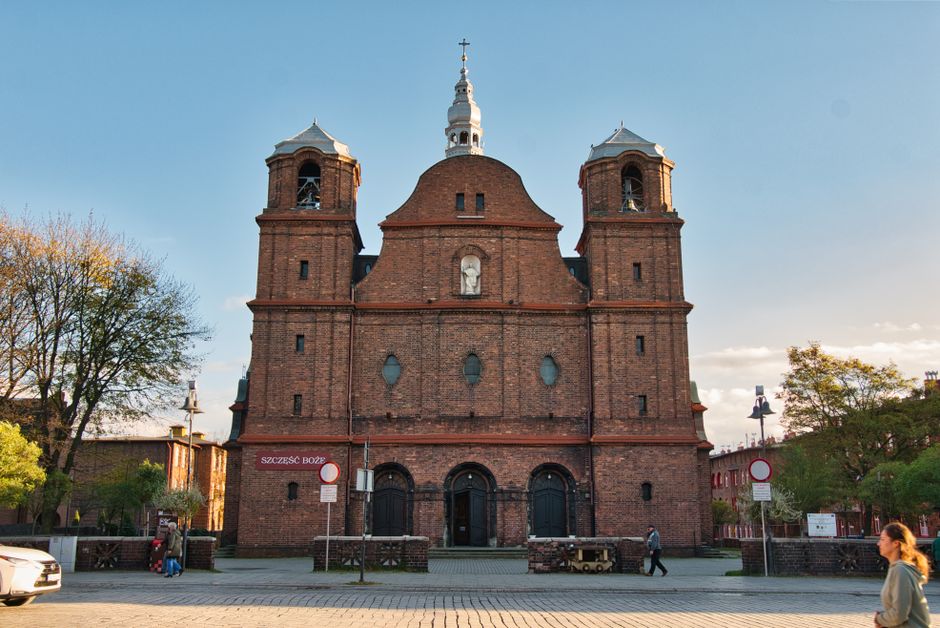
Explore the architectural beauty of a historic brick church in Katowice, Poland., Kudowa-Zdrój, Poland
For street fuel, head to the Gościniec stall in the market square near the Church of St. Catherine; they serve the best zapiekanka – a long, toasted baguette half with mushrooms, cheese, and garlic sauce (15 PLN). Travelers often discover that one of these sandwiches, eaten on a park bench with the smell of linden blossoms, is as memorable as any museum. If you want a sit-down experience, Restauracja Słoneczna remains the standout for both dinner and breakfast – their jajecznica na maśle (scrambled eggs on buttered toast with chives, 14 PLN) is deceptively simple and utterly satisfying.
Don’t leave without tasting the healing waters in a structured way: buy a ticket at the pump room (1.5 PLN per cup) and do the full circuit – first the iron tap (which will stain your teeth for a moment), then the magnesium tap (slightly salty), and finally the carbon-rich “Kudowa Zdrój” (the most palatable). Seasoned travelers play a game of rating them in the guestbook at the exit; the purple pen votes belong to the underground “Marcelina” spring, which locals swear cures everything from allergies to existential dread.
Where to Stay for the Weekend
You have three characterful neighborhoods to choose from, each with a different atmosphere. The Spa Park zone (around ul. Zdrowa and ul. Parkowa) is the classic choice – turn-of-the-century villas converted into pensions, wrapped in chestnut foliage, and stumbling distance from the pump room. Here you’ll find Willa Folklor, a creaky, charming guesthouse with rooms from 240 PLN per night and a breakfast spread that includes fresh curd cheese, honey, and herbal syrups. It books out weeks in advance, so reserve early.
Czermna district – where the Chapel of Skulls stands – offers a more atmospheric, slightly eerie vibe. You’ll be surrounded by old stone walls and patched cobblestones, and evenings are silent except for the wind. Dom Przy Skale (ul. Słoneczna 79) rents simple but spotless rooms from 190 PLN, and your host, a retired schoolteacher, will give you a guided fold-out map of secret walking trails. If you’re seeking more modern comforts, the edge of the main village near the market square has a handful of newer apartments – Apartamenty Zdrojowe on ul. Tytoniowa offers stylish studios with kitchens from 280 PLN, and you’ll be surrounded by butcher shops, bakeries, and the lively Saturday morning market. No matter where you stay, you’ll find that Kudowa’s hospitality runs quiet and genuine – your host will likely leave a carafe of tap water on the nightstand and an extra blanket “just in case.”
For booking flexibility, check options on Booking.com or Airbnb – though most visitors do better with local pensions found through the official town tourism site.
Before You Go: Practical Tips
- Getting Around: You can cover the entire town on foot in 20 minutes – your best bet is to walk. For the Table Mountains, the public bus is reliable (yellow #100 or #101 from the station at

