
Chimborazo, Ecuador for Adventurers: 7 Trails That Put the Alps to Shame (2026)
Your lungs burn as you push through the thin air at 5,000 meters. The wind whips ice crystals across your cheeks, but you barely notice. Ahead, the nearly full moon illuminates a snow-capped giant that seems close enough to touch – except you’re already standing on its shoulder. This is Chimborazo, the closest point on Earth to the sun, and you’re about to discover why serious adventurers trade Colorado’s fourteeners for Ecuador’s high-altitude playground.
The Main Event: Summit Attempt – Touching the Sky
For true adrenaline junkies, the main draw is the summit of Chimborazo itself. At 6,263 meters (20,549 feet), it’s not the tallest peak in the Andes – that’s Aconcagua – but due to the Earth’s equatorial bulge, its summit is the farthest point from the planet’s center. You’ll literally be closer to space than anywhere else on Earth. Most summit attempts start from the Carrel Refuge at 4,800 meters (15,748 feet). You’ll need to acclimate for at least two days in Riobamba (2,750 meters) or at the refuge. Climbing agencies in Riobamba, such as Chimborazo Climbing or Andean Summit Expeditions, offer guided summit packages. Expect to pay $180–$250 per person for a two-day climb that includes a guide, meals, and basic gear (crampons, ice axe, boots). The actual ascent begins around midnight – you’ll headlamp your way up steep snow and glacial ice, reaching the Whymper summit by sunrise around 7:00 AM. The descent is a brutal slog back down, often taking 5–7 hours. Insider tip: Book a summit attempt between June and August for the most stable weather. Late December to February is also possible but windier. Seasoned travelers know that attempting the summit without a guide is not recommended due to crevasses and altitude; local guides have intimate knowledge of the mountain’s changing conditions.
Activity #1: Volcano Bike Descent – The World’s Highest Ride
If you want maximum adrenaline without the extreme altitude risk, the Chimborazo bike descent is your best bet. You’ll start at the Carrel Refuge parking lot at 4,800 meters, where the air is thin and your legs scream from the cold. With a sturdy mountain bike and full suspension, you’ll drop from snowline through paramo grasslands, past wild llamas and vicuñas, all the way down to the town of Riobamba at 2,750 meters – a heart-pounding 2,050-meter vertical drop over 45 kilometers of dirt and gravel roads. Several operators in Riobamba offer guided descents: Biking Dutchman and Chimborazo Bike Tours provide quality bikes, helmets, and a support vehicle for $60–$80 per person. The descent takes 3–5 hours depending on stops and your riding skill. Most tours depart around 7:00 AM to beat afternoon winds. Local guides recommend wearing layers; the temperature can swing from freezing at the top to 20°C (68°F) in the valley. Bring sunscreen and sunglasses – the equatorial sun is brutal even through clouds. You’ll stop at the refuge for a hot drink, then fly down winding switchbacks. The most thrilling section is the “Death Road” stretch near the community of Carihuairazo – steep, loose rocks, and panoramic views. Savvy visitors book with a tour that includes lunch at a traditional hacienda restaurant; the locro de papa (potato soup) is legendary.
Activity #2: Laguna de Colta – High-Altitude Paddling
After all that adrenaline, you’ll want a half-day of peaceful yet active exploration. Just 30 minutes south of Riobamba lies Laguna de Colta, a high-altitude lake at 3,300 meters surrounded by reeds and grazing llamas. Travelers often discover that kayaking here feels surreal – the water is mirror-flat, reflecting the distant glaciers of Chimborazo. You can rent kayaks at the lakeside kiosk for $10 per hour (no reservation needed). Pedal boats are also available for $8 per hour. The best time to go is early morning (7:00–9:00 AM) when the wind is calm and the light is golden. After your paddle, hike the 2-kilometer trail around the lake – it’s easy, flat, and takes about 40 minutes. You’ll spot countless bird species: Andean coots, yellow-billed pintails, and occasional flamingos. Locals recommend having lunch at the nearby Hacienda La Candelaria – a restored colonial estate known for its trout ceviche ($8) and views of the lake. Entry to the lake area is free; the park ranger may ask for a small donation of $1–$2. Bring your own snacks and plenty of water – the altitude can dehydrate you quickly.
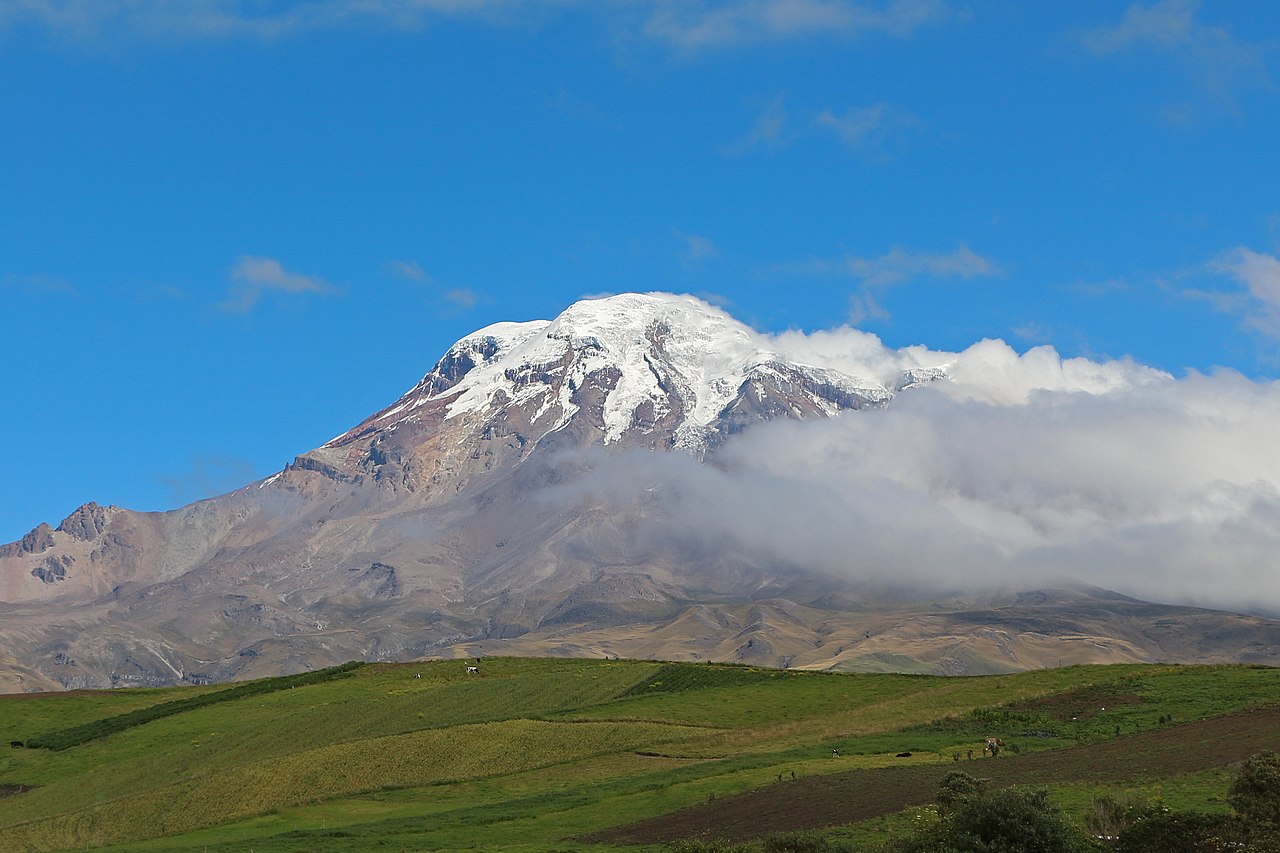
Volcano Chimborazo (6268m), Ecuador, Chimborazo, Ecuador
Refuel: Where Adventurers Eat
After a day of high-altitude exertion, your body craves real food. Riobamba is the gateway town and has excellent dining options favored by guides and climbers.
El Mesón de la Catedral – Located on the main square (5 de Junio 21-30), this spot is a climber’s gathering place. The cuy asado (roasted guinea pig) is a local specialty (though not for the faint-hearted), but most visitors go for the llapingacho (fried potato patties with cheese, avocado, and chorizo) for $5. Open daily 8:00 AM–9:00 PM. Their hot chocolate is made with real dark chocolate – perfect for rewarming.
La Marquesina – A cheerful pizzeria and craft beer bar on Calle Espejo 24-30. After a hard day, you’ll welcome their wood-fired pizzas (margherita $7, local cheese and mushroom $9) and cold IPAs ($3.50). Locals recommend the pizza de la casa with chorizo and spicy chimichurri. Open for lunch and dinner until 10 PM.
Heladería El Rey – For sheer indulgence, head to this ice cream shop at Avenida 9 de Octubre 18-15. Their unique flavors include higo con quesillo (fig with fresh cheese) and chirimoya (custard apple). A double scoop is $2.50. Perfect for celebrating after a summit.
Mercado de Riobamba – For a budget-friendly, authentic experience, the central market has dozens of stalls serving encebollado (fish stew) and seco de chivo (goat stew) for $3–$4. It’s loud, colorful, and exactly what you need before or after a trek. Open from 6:00 AM to 5:00 PM daily.
Base Camp: Where to Stay
Active travelers need accommodations that cater to early starts, gear storage, and hearty breakfasts. Here are your best options.
Hostal Chimborazo – Just three blocks from the Riobamba bus station (Orozco 23-45), this hostel is the go-to for budget climbers. Dorm beds from $10; private rooms from $25. They offer secure luggage storage (useful if you’re heading to the refuge), an early breakfast from 5:00 AM ($3 extra), and can arrange gear rental. The rooftop terrace has views of the volcano. Book on Booking.com
Hotel Hacienda La Andaluza – A step up in comfort, this boutique hotel on Avenida Daniel León Borja 34-12 offers spacious rooms with heating (necessary at this altitude). Doubles from $60 per night. Their restaurant serves a superb caldo de salchicha (sausage soup) for breakfast, and the staff will pack boxed lunches for early climbs. They have a gear-washing station and a sauna – a luxury after a cold day. Also on Booking.com.
Refugio Carrel (Whymper Refuge) – For the ultimate “base camp” experience, you can spend the night at 4,800 meters. Dormitory beds cost $15 per person (bring your own sleeping bag; renting is $5). There’s a communal kitchen where you can cook simple meals, or buy instant soup/tea. The refuge has no running water – you melt snow. The solitude and sunrise are unforgettable. Reserve through Chimborazo Climbing in Riobamba. No booking.com link needed – contact directly at +593 99 876 5432 (example).

A snow covered mountain under a night sky, Chimborazo, Ecuador
Gear & Prep Checklist
- Mountaineering boots – must be double-plastic or 6000m-rated; rental from Riobamba $10/day.
- Layered clothing system – base layer (merino), fleece, insulated jacket, waterproof shell; temps range from -15°C at summit to 20°C in the valley.
- High SPF sunscreen (SPF50+) and glacier sunglasses – the equatorial UV is extreme even in winter.
- Altitude acclimatization – spend at least two nights in Riobamba before any serious ascent; do a day hike above 4,000m first.
- Safety: Altitude sickness affects everyone; descending immediately is the only cure. You’ll find clinics in Riobamba. Always carry a personal locator beacon (rent from your guiding company).
Getting There & Around
- Flights: The nearest international airport is Mariscal Sucre Airport (UIO) in Quito, about 4 hours north by bus. You can also fly into José Joaquín de Olmedo Airport (GYE) in Guayaquil (3 hours west). Book flights at Skyscanner
- Local Transport: From Riobamba’s bus terminal (Terminal Terrestre), frequent buses ($1.50) run to the Chimborazo reserve entrance (30 minutes). From there, you’ll need to hitchhike or arrange a pickup from your guide – many tour companies include transport. Alternatively, rent a 4×4 in Riobamba for $40–$50/day.
- Best Season: The prime months for climbing and biking are June through August (dry season) and December through February (low rainfall but windier). Avoid March–May when rains turn trails into mud and clouds obscure the summit.

Mountain coated with snow, Chimborazo, Ecuador
Is Chimborazo, Ecuador Worth It?
If you’re after raw, unfiltered adventure and don’t mind altitude challenges, Chimborazo is absolutely worth it. The combination of world-record geography (closest to the sun), physical demands, and relative affordability (a full guided summit costs less than half of a similar trip to Kilimanjaro) makes it a standout for adventurous travelers. However, if you prefer groomed trails and mountain huts with flush toilets, you might find it a bit raw – the refuges are basic, the weather is fickle, and the altitude is no joke. This destination is best for experienced trekkers, mountaineers, and cyclists who are comfortable with discomfort. If you succeed in summiting, you’ll have touched a point farther from the Earth’s core than any other place on the planet – and that’s a story you’ll tell for a lifetime. For the rest of us, even the bike descent or a day hike up to the refuge provides a thrill that rivals any top-tier adventure destination in the world. Go for the altitude, stay for the otherworldly landscapes, and leave with a new respect for the roof of the world.

