
Turkmenabat, Turkmenistan: Silk Road Secrets, Desert Survivors & Amu Darya Sunsets (2026)
Turkmenabat ranks among Central Asia’s best-kept secrets for travelers seeking authentic Silk Road encounters without the crowds of Samarkand or Bukhara. While those UNESCO-listed cities charge $40+ for entry to major madrassas, here you’ll find a 2,500-year-old living history along the Amu Darya River, the legendary Repetek Desert ecosystem just an hour away, and Soviet-era brutalist architecture that tells stories you won’t read in guidebooks. Only about 1,300 Western tourists visit annually. You’ll feel like an explorer, not a tourist.
Why Turkmenabat, Turkmenistan Stands Out
- Historic Architecture: The 1906-built Russian Orthodox Church of St. Nicholas stands as a rare surviving tsarist-era landmark in a city shaped by Soviet planners and 1948 earthquake reconstruction.
- Cultural Scene: The annual Turkmen Carpet Festival every May showcases hand-knotted masterpieces from local tribes, with weavers demonstrating techniques passed down through 2,000 generations.
- Local Specialties: Gutap – flaky fried pies stuffed with pumpkin, spinach, or meat – are a Turkmenabat street-food staple you’ll find at morning bazaars for pennies.
Pro Tip: Visit between mid-September and early November when daytime temperatures hover around 22-28°C and the Amu Darya riverbanks are lush. Avoid July-August when thermometers hit 45°C and the desert wind turns the city into a convection oven. Fridays are quiet – many museums close for midday prayer.
Map of Turkmenabat, Turkmenistan
Use these interactive maps to explore Turkmenabat, Turkmenistan and plan your route:
📍 View Turkmenabat, Turkmenistan on OpenStreetMap
🗺️ Open Turkmenabat, Turkmenistan in Google Maps
Planning Your Trip: Practical Essentials

Photo of dairy cattle on a small private dairy farm in Lebap Province, Turkmenabat, Turkmenistan
Getting There and Around
- By Air: Turkmenabat International Airport (CRZ) receives daily flights from Ashgabat via Turkmenistan Airlines (1 hour 20 minutes, around 200 manat or $57 one-way). Book flights at Skyscanner for best deals. A taxi from the airport to the city center costs about 20-30 manat ($6-9).
- By Train: The daily Ashgabat-Turkmenabat train runs overnight (12 hours, sleeper car about 60 manat/$17). The station is at Cosmonautlar Sayyly, a 10-minute walk from the central bazaar. Reserve tickets at Trainline or through your hotel concierge.
- By Car: The M37 highway connects Turkmenabat to Ashgabat (580 km, about 7 hours) and to the Uzbekistan border at Farap (15 km east). Road conditions vary – potholes and livestock crossings are common. Compare car rentals at RentalCars.com, but note international agencies are rare; book via local companies like Ayan Travel.
- Local Transport: Soviet-era marshrutka minibuses crisscross the city for 1-2 manat ($0.30-0.60). Route 7 runs from the bazaar to the riverfront. Taxis are abundant – negotiate before getting in: 10 manat ($3) for any trip within central Turkmenabat.
Best Time to Visit
| Season | Weather | Highlights |
|---|---|---|
| Summer (Jun-Aug) | 35-45°C, bone-dry, blinding sun | Nearly empty streets by noon; early-morning bazaar visits essential; Repetek Desert tours possible only from 6-9 AM. Low hotel prices but risk of heat exhaustion. |
| Winter (Dec-Feb) | -5 to 10°C, occasional snow flurries, grey skies | Cozy tea houses are magnets for locals; Soviet-era heating in hotels can be erratic. Fewer tourists – you’ll have museums to yourself. The Amu Darya sometimes freezes near the banks. |
| Shoulder (Apr-May/Sep-Oct) | 18-30°C, pleasant evenings, occasional dust storms | Perfect for desert excursions, river walks, and photography. The Turkmen Carpet Festival (May) and Republic Day (Oct 27) bring parades and folk performances. Your best bet for comfort. |
Budgeting for Turkmenabat, Turkmenistan

Elegant white government building with ornate lamp posts in Ashgabat., Turkmenabat, Turkmenistan
Note: Turkmenistan has a dual exchange rate – the official rate is about 3.5 manat per USD, but the black-market rate can reach 17-19 manat per USD. Bring crisp US dollars in small denominations and exchange carefully.
Top Attractions and Must-See Sights
| Attraction | Description | Hours | Entry Fee |
|---|---|---|---|
| Repetek Biosphere Reserve | UNESCO-listed desert ecosystem 70 km south – home to the rare endangered goitered gazelle and the world’s deepest desert sand dunes. You can climb the 50-meter observation tower for 360° desert views. | 8 AM-5 PM (guided tours only, book 24 hrs ahead) | 30 manat ($9) per person + guide fee 50 manat ($14) |
| Amu Darya River Promenade | A 2-km landscaped walkway along Central Asia’s longest river (2,540 km). Locals come at sunset to fly kites and drink hot green tea from samovars – travelers discover the best photo ops from the pedestrian bridge at 6 PM. | 24/7 (best light at sunset, 5:30-7 PM) | Free |
| Turkmenabat Regional Museum | Houses 8,000 artifacts including 2,000-year-old Sogdian pottery, Silk Road coins, and a reconstructed 19th-century Turkmen yurt. The Soviet-era building itself is a brutalist masterpiece. | 9 AM-5 PM, closed Sundays | 15 manat ($4) |
| Bazaar (Central Market) | Sprawling covered market where you’ll find everything from fresh pomegranates and camel wool carpets to Soviet-era watches. The spice section is a sensory overload – locals recommend trying dried mulberries and pistachios from the vendor at stall 43. | 6 AM-2 PM daily (busiest 7-9 AM) | Free entry |
3-Day Itinerary: Highlights & Hidden Gems of Turkmenabat, Turkmenistan
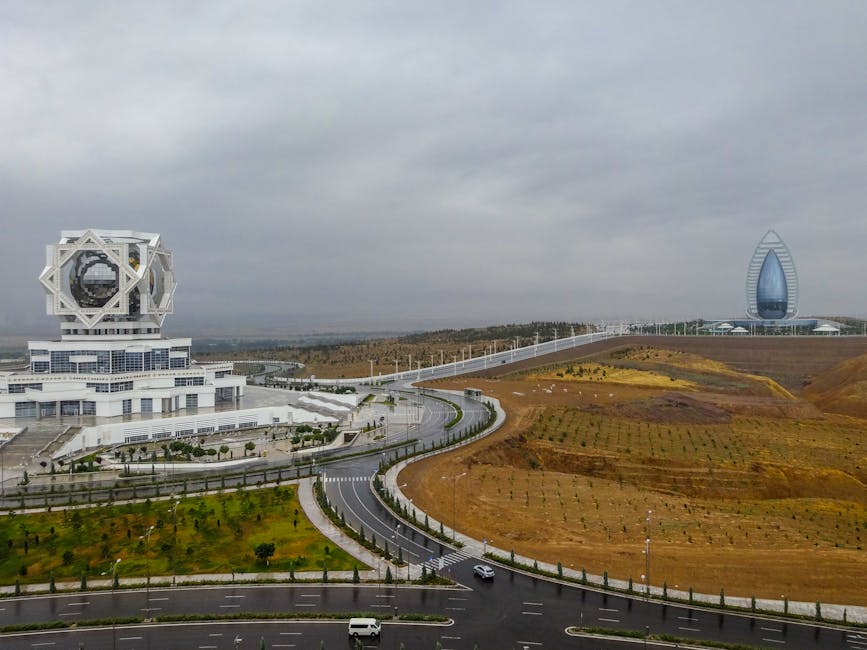
Aerial view of the Wedding Palace and Yyldyz Hotel in Ashgabat, Turkmenistan., Turkmenabat, Turkmenistan
Day 1: Riverfront & Soviet Heritage
- Morning: Start at the Central Bazaar (6:30 AM) – arrive hungry. Grab a fresh gutap (2 manat) from the old woman at the north entrance and a glass of chal (fermented camel milk, 1 manat) for a local energy kick. Stroll the spice aisle – you’ll see vendors selling medicinal herbs used by Turkmen nomads for centuries. Insider tip: The best carpets are at the far south end, where weavers sell directly.
- Afternoon: Visit the Turkmenabat Regional Museum (15 manat, 2 hours). Your guide will point out the 8th-century Zoroastrian ossuary – a bone container used in ancient funerary rituals. Then walk 10 minutes to lunch at Café Amu Darya (Bitarap Turkmenistan Street, 45 manat for a full meal). Order the manty (steamed lamb dumplings) and plov (rice pilaf with carrot and mutton) – the recipe hasn’t changed since Soviet times.
- Evening: Walk the Amu Darya Promenade from 5:30 PM. You’ll see local families picnicking, children flying hand-painted kites, and fishermen casting nets from wooden boats. At 7 PM, cross the pedestrian bridge to the south bank for the golden-hour view of the city skyline. Dinner at Restaurant Serdar (Gurbansoltan Eje Avenue, 60-80 manat) – try the shashlik (lamb skewers) grilled over desert saxaul wood, served with homemade flatbread.
Day 2: Desert & Silk Road Echoes
- Morning: Book a private tour to Repetek Biosphere Reserve (depart 6 AM, 80 manat including transport and guide). The 45-minute drive through the Karakum Desert – “Black Sands” in Turkmen – reveals shifting dunes that change color from ochre to deep amber. At the reserve, climb the 50-meter observation tower (120 steps) for a panorama that stretches to Uzbekistan on a clear day. You’ll likely spot goitered gazelles and desert monitor lizards.
- Afternoon: Lunch at the reserve’s small canteen (15 manat for chorba – lamb soup with chickpeas). Return to Turkmenabat by 2 PM and visit the Russian Orthodox Church of St. Nicholas (Mikrorayon 3, free entry). Built in 1906 during tsarist expansion, its weathered blue domes and hand-painted icons survived both Soviet atheism and the 1948 earthquake. The caretaker, an 82-year-old Russian woman named Valentina, may offer you tea and show you the original 1904 bell.
- Evening: Explore the Soviet-era mosaics on the wall of the old Cinema “Mir” (Garaşsyzlyk Square). Dinner at Chaikhana Turkmen (Seyitnazar Seydi Street, 30-40 manat) – this tea house is where locals gather for green tea, dried fruits, and conversation. Order ishlekli (fried pastry with pumpkin) and dograma (a bread-and-mutton soup).
Day 3: Borderland Bazaars & Farewell Feast
- Morning: Take a taxi (15 manat, 20 minutes) to Farap, the village on the Uzbekistan border. Here you’ll find a smaller, quieter bazaar where Turkmen and Uzbek traders exchange goods. Buy a traditional telpek (sheepskin hat) for 50-80 manat – locals recommend checking the stitching quality first. The Amu Darya bridge at Farap is a photo-worthy spot where you can see the river’s muddy currents.
- Afternoon: Return to Turkmenabat for lunch at Bowl of Plov (Magtymguly Street, 25 manat) – a hole-in-the-wall that serves arguably the best plov in the city. The owner, a former Soviet chef named Rashid, adds quail eggs and dried apricots to his recipe. Afterwards, visit the Turkmen Carpet Museum (Garaşsyzlyk Square, 10 manat, open 9 AM-4 PM Saturday-Thursday). The oldest carpet here dates to 1830 – you can watch weavers at work using the same patterns as their ancestors.
- Evening: Farewell dinner at Restaurant Altyn Asyr (Bitarap Turkmenistan Street, 90-120 manat for a feast) – the city’s finest. Order kebap (minced lamb skewers), a whole balyk (grilled Amu Darya carp), and finish with firni (rice pudding with rosewater). The live music from 8 PM features dutar (two-stringed lute) players and traditional dance performances.
Cultural Insights & Etiquette
- Language: Turkmen is the official language (Turkic family, similar to Turkish and Azerbaijani). Russian is widely spoken among older generations – your best bet for communication. Learn “Salam” (hello), “Hormatly” (thank you), and “Bagyshlaň” (excuse me). English is rare outside business hotels.
- Customs: Remove shoes before entering homes and some tea houses. Always accept tea if offered – it’s rude to refuse. Avoid pointing your feet at anyone (they’re considered impure). Travelers often discover that nodding your head means “no” in Turkmen culture – a side-to-side head wobble means “I don’t understand.”
- Tipping: Not expected but appreciated – 10-15% at nicer restaurants, 5-10 manat for guided tours. Taxi drivers don’t expect tips, but rounding up to the nearest 5 manat is polite.
- Dress Code: Conservative is safest. Men should wear long trousers (shorts are frowned upon in public). Women should cover shoulders and knees – a headscarf is required for entering mosques and the Orthodox church. Savvy visitors pack a light scarf for last-minute coverage.
- Business Hours: Shops 8 AM-6 PM Saturday-Thursday. Government offices 9 AM-5 PM Sunday-Thursday. Most businesses close for lunch 12:30-2 PM. Friday is a half-day, closing at noon for Friday prayers.
</ul

