
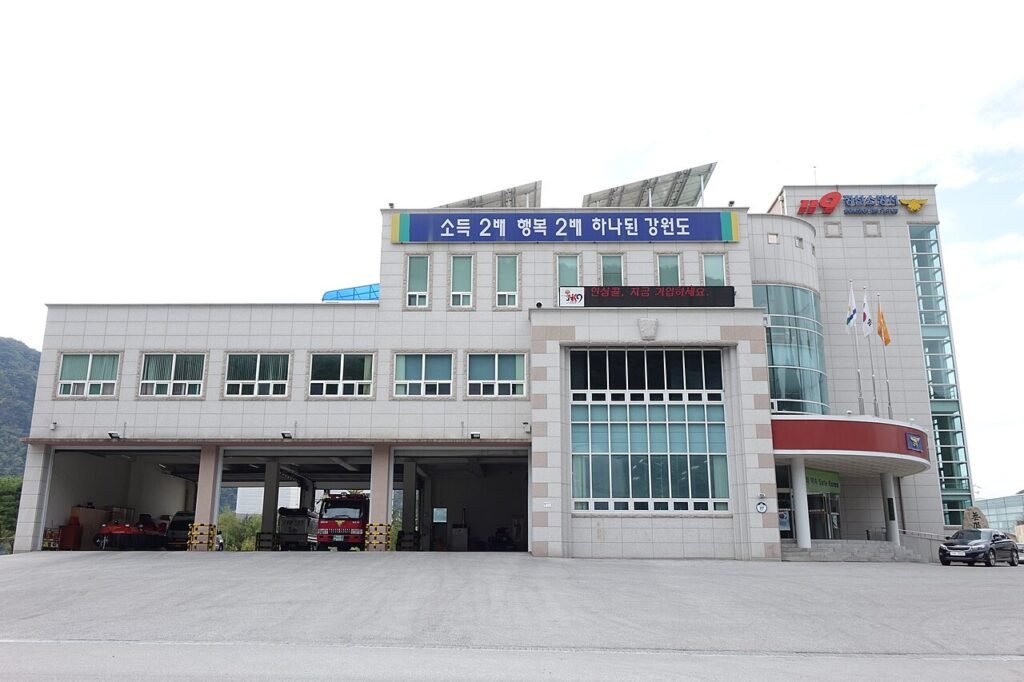
Jeongseon, South Korea Weekend: Coal Mining History (2026)
The air smells of pine and burnt coal, and somewhere a scratchy recording of “Arirang”—Korea’s timeless folk song—drifts from a market stall selling dried persimmons. You’ve stepped off the train at Jeongseon Station, where the mountains rise so steeply they seem to swallow the sky. The first thing you notice is the silence: a deep, valley-hollow quiet that makes the gravel crunch under your feet sound like thunder. This isn’t the neon-lit Korea of Seoul or Busan. This is the Taebaek range’s hidden heart, where coal miners once dug tunnels into the earth and locals have preserved a culture as stubborn as the granite beneath.
Quick Facts Before You Go
- Best Months: April to October (spring flowers and autumn foliage transform the valleys). Winter is quiet and cold but offers skiing at nearby resorts.
- Currency: South Korean Won (KRW). Roughly 1,350 KRW to 1 USD, 1,500 to 1 EUR. ATMs widely available in town but not at mountain attractions.
- Language: Korean. English is spoken minimally outside tourist spots—download Papago or Google Translate for help. Signs at major attractions have English.
- Budget: 80,000–120,000 KRW per day (excluding accommodation). Meals run 8,000–15,000 KRW; museum entry 5,000–15,000 KRW.
- Getting There: Fly into Seoul’s Incheon Airport (2.5 hours), then take the KTX train to Jecheon (1 hr) and transfer to a local train to Jeongseon (1.5 hr)—total about 4 hours. Bus from Seoul Express Terminal to Jeongseon (3 hr, 22,000 KRW). Book at Skyscanner.
Day 1: Descending into the Coal Mine and Up to the Clouds
You start the morning in Jeongseon-eup, the small downtown core where life moves at the pace of a slow river. Locals nod as you pass, and a grandmother sells steaming rice cake from a cart. The air is crisp and smells faintly of soy sauce from a nearby jeongol (hot pot) restaurant. Your first stop is the Samtan Art Mine, a former coal mining complex turned into a museum and cultural space—a poignant monument to the region’s industrial past that ended abruptly in the 1990s.
- Morning (8–11am): Visit Samtan Art Mine (23, Gohan-ro, Gohan-eup). Entry 15,000 KRW includes the underground tunnel tour, which snakes 1,300 meters into the mountain. Wear a helmet—you’ll see original mining carts, tools, and a hauntingly realistic miner’s lunch box. Travelers often describe the moment the lights dim inside as a lesson in gratitude. Plan 2 hours.
- Lunch: Head to Makguksu Jip (15, Market-gil, Jeongseon-eup), a tiny no-frills joint famous for its makguksu—buckwheat noodles in chilled broth, topped with radish and sesame. One bowl costs 7,000 KRW. Locals recommend adding a splash of vinegar and mustard. Follow with a gimjang (seasoned cabbage) pancake for 4,000 KRW.
- Afternoon (1–5pm): Take the Jeongseon Gondola (Hyeongobiung Observation Deck) from the base near the Arari Village. Round-trip 14,000 KRW. The 20-minute ride climbs 1,200 meters, offering sweeping views of the Taebaek Range. At the top, you can walk the Skywalk—a glass-floored platform jutting over the valley. Savvy visitors go on weekdays to avoid crowds. Afterward, stroll through Arari Village, a reconstructed mining settlement where actors in period costumes demonstrate coal sorting and sing live Arirang ballads. Entry 5,000 KRW.
- Evening: Dinner at Hwajeong Sikdang (8, Bukcheon-gil, Jeongseon-eup) for dak galbi (spicy stir-fried chicken) with a side of kongnamul (bean sprout soup). A set for two is 24,000 KRW. The owner, Mrs. Park, has been cooking here since 1988 and will insist you try a free shot of makgeolli (rice wine). Afterward, walk to the Jeongseon Arang-ro Street, where lanterns glow and elderly women play hwagyeong (traditional flower cards) under heated pavilions.

Aesan-ro, Jeongseon-eup, Jeongseon-gun, Gangwon-do, South Korea, Jeongseon, South Korea
Day 2: Arirang Echoes and Mountain Trails
Day two dawns with a layer of mist over the peaks—a photographer’s dream. You opt for a light breakfast before tackling a scenic hike, knowing that Jeongseon’s real magic lies in its unfiltered nature. The Arirang theme continues, but today you’ll hear it live, not from a speaker.
- Morning (8–11am): Rise early for Hanok Son Kalguksu (12, Jungang-ro, Jeongseon-eup), a warm, wood-paneled cafe that serves kong guksu (cold soy milk noodles) for 7,000 KRW. Locals pair it with kimchi jeon (kimchi pancake) for an extra 5,000 KRW. Then drive (or take a taxi, 10,000 KRW) to Seokgyegok Valley, a 5-km hike along a crystalline stream dotted with waterfalls. The trailhead is free, and midweek you may have the whole valley to yourself.
- Midday (11:30am–1pm): Return to town for the Jeongseon Market (5-day cycle market, open days 2, 7, 12, 17, 22, 27 each month). On non-market days, the permanent stalls are open. Savor sundae (blood sausage) skewers (3,000 KRW each) and hotteok (sweet pancakes) with seeds (1,500 KRW). Insider tip: arrive by 10am for the most vibrant energy—after noon the vendors start packing.
- Afternoon (1–4pm): Drive 20 minutes to Hwaam Cave (74, Saebyeol-gil, Gohan-eup), a former gold mine turned into a whimsical walkway lit with colored lights. Entry 9,000 KRW. The cave stays a constant 12°C year-round, so bring a light jacket. The 1.5-km path features informational panels about mining history, and you can pan for pyrite (fool’s gold) at the exit—a fun souvenir for 3,000 KRW. Most tourists miss the short trail behind the cave that leads to a panoramic viewpoint over the town.
- Final Evening: For a farewell dinner, book a table at Jeongseon Hanu Maeul (151, Gohan-ro, Gohan-eup), a restaurant specializing in Korean beef from local Hanwoo cattle. Order the Hanwoo bulgogi set (28,000 KRW) served with fresh lettuce wraps, ssamjang, and multiple banchan. The dining hall has floor seating and a stone stove that keeps you warm. End with a bowl of sikhye (sweet rice punch) for 3,000 KRW.
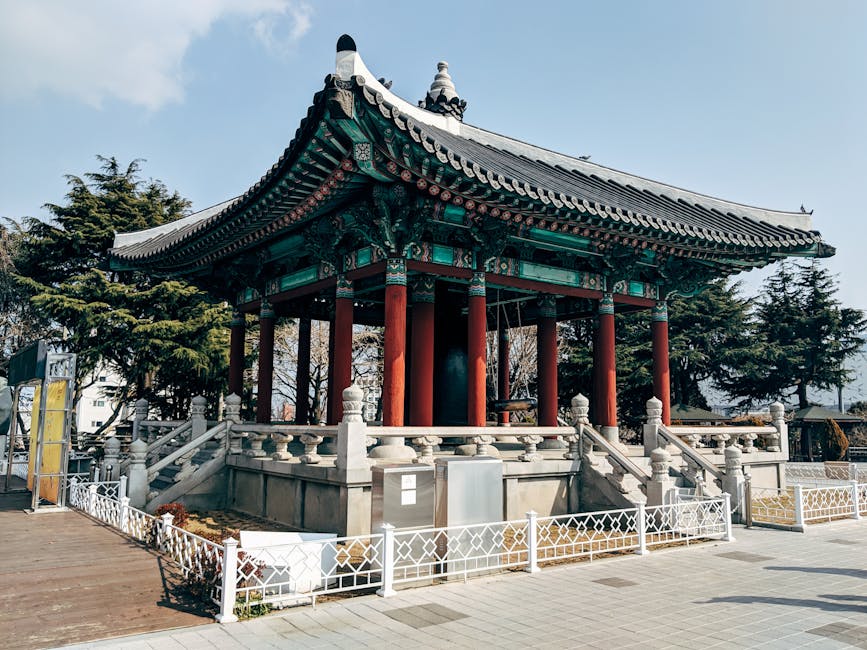
Beautiful traditional Korean pavilion architecture in Busan, Jeongseon, South Korea
The Food You Can’t Miss
Jeongseon’s cuisine is rooted in the mountains—simple, hearty, and unpretentious. The star is memil guksu (buckwheat noodles), served cold in a tangy broth or hot in a soybean paste stew. You’ll find it everywhere, but the best version is at Makguksu Jip (mentioned above), where the noodles are made fresh each morning. Another must-try is gamja jeon (potato pancake), crispy on the outside, soft inside, often sold at market stalls for 3,000–5,000 KRW. The potato starch comes from high-altitude farms that give it a nutty flavor.
For street food, head to the Jeongseon Market around 11am and grab a plate of memil mukk (buckwheat jelly) slathered in soy sauce and red pepper—three skewers for 2,000 KRW. At night, the same stalls transform into pojangmacha (tented street food carts) where you can sip soju with eomuk (fish cake skewers, 1,500 KRW). Locals recommend the fried chicken cart on the corner of Jungang-ro—half a chicken, 10,000 KRW, served with pickled radish.
For a proper sit-down dinner, Yongmun Sikdang (32, Market-gil) has been serving jeongseon hanjeongsik (traditional set meal) since 1967. For 15,000 KRW you get a dozen small dishes: grilled mackerel, braised tofu, seasoned fernbrake, and a pot of soybean paste stew. The owner’s mother used to feed the miners here, and the walls are lined with black-and-white photos of the coal-mine era.

Explore this distinctive camera-shaped cafe nestled in the picturesque moun…, Jeongseon, South Korea
Where to Stay for the Weekend
For convenience, stay in Jeongseon-eup (the downtown area) near the bus terminal and market. Guesthouses like Jeongseon Sarangchae Pension (from 40,000 KRW per night) offer simple, clean rooms with ondol (heated floors) and free Wi-Fi. If you prefer mountain views, book a cabin in Gohan-eup, near the Samtan Art Mine. Gohan Resort starts at 80,000 KRW for a double and includes a breakfast of jjuk (rice porridge) with side dishes. For a unique experience, stay at Arari Hanok Stay (from 120,000 KRW) inside the Arari Village—a restored traditional Korean house with a private garden. You’ll wake to the sound of Arirang playing softly and a view of the gondola rising into mist. Find the best deals on Booking.com or check out Airbnb for private mountain hideaways.
Before You Go: Practical Tips
- Getting Around: Public buses are infrequent and can be confusing. Your best bet is to rent a car from Wonju or Jecheon (30,000–50,000 KRW per day) for flexibility. Taxis are affordable: a 10-minute ride costs about 5,000 KRW. Download the KakaoT app for easy booking.
- What to Pack: Hiking shoes with good grip (trails can be rocky), a light jacket for caves and cool evenings, a reusable water bottle (tap water is safe), and an extra battery pack—mountain reception drains battery fast.
- Common Tourist Mistakes: Assuming cash isn’t needed—market stalls and small restaurants rarely accept cards. Bring at least 50,000 KRW in cash. Also, many visitors try to squeeze in both the gondola and the cave in one day; savvy travelers split them across the weekend to avoid rushing.
- Money-Saving Tip: Purchase the Jeongseon Passport (15,000 KRW) at the tourist office next to Jeongseon Station—it gives you discounts of up to 30% at Samtan Art Mine, Hwaam Cave, and the gondola. One pass covers two people. You’ll save roughly 12,000 KRW if you visit all three.

