
# Juayúa, El Salvador for Adventurers: 8 Waterfall Rappels That Rival Costa Rica’s Best
The rope bites into your gloves as you lean back, feet planted against the mossy basalt. Below, the roar of Cascada de los Enamorados drowns out everything but your heartbeat. Seventy feet of vertical basalt separates you from the emerald plunge pool, and you’ve got 200 more feet of descent ahead. Welcome to Juayúa—where every waterfall is a doorway into the vertical world.
## The Main Event: Waterfall Rappelling at Los Chorros de la Calera
You’ll find your adrenaline fix about 20 minutes east of Juayúa’s cobblestone center, where the Río Calera carves through a series of seven cascades ranging from 30 to 120 feet. Local outfitters run guided descents that combine rappelling, natural waterslides, and cliff jumping into a single monster session. Your best bet is to start at 7:00 AM, when the morning light filters through the canopy and the crowds haven’t yet arrived.
The full circuit, offered by **Exploratour El Salvador** (you can book directly via their WhatsApp at +503 7700-8888), runs three to four hours and costs $45 per person, including all gear, guides, and transport from Juayúa. Difficulty lands at a solid “Moderate”—you’ll need basic rappelling comfort and some upper-body endurance, but no technical experience is required. What to bring: quick-dry clothing, water sandals with ankle straps (not flip-flops), a GoPro chest mount, and a small dry bag for your phone.
Insider tip: Most tourists start at the bottom and work up. Savvy visitors do the opposite. Ask your guide to begin at the uppermost cascade, where you’ll rappel down a sheer 90-foot face into a pool you wouldn’t believe exists—then ride the current through a natural chute to the next drop. The sequence feels like a liquid roller coaster, and you’ll finish with a 25-foot cliff jump into the deepest pool on the river. Seasoned travelers bring a change of clothes and leave them in the van; you’ll be soaked head to toe.
## 7 Things to Do in Juayúa, El Salvador
## Activity #1: Hike to the Summit of Volcán de Izalco

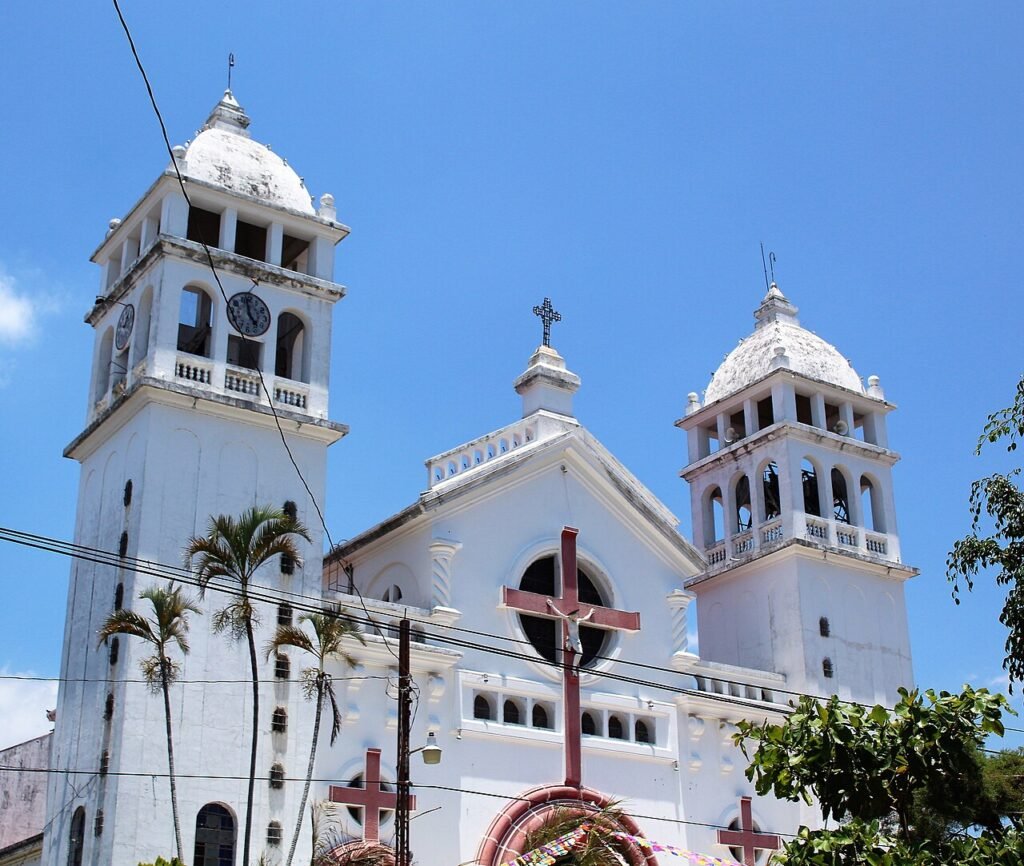
This is a photo of an monument in El Salvador identified by the ID, Juayúa, El Salvador
You haven’t really earned your adventure cred until you’ve stood on the rim of El Salvador’s youngest volcano. Volcán de Izalco, known as the “Lighthouse of the Pacific” because its eruptions once guided ships at night, rises 1,950 meters from the coastal plain. Travelers who make the summit are rewarded with a view that stretches from the Pacific Ocean to the highlands of Guatemala on a clear day.
The hike begins from the Cerro Verde National Park entrance, about 40 minutes from Juayúa. You’ll need to book a guided tour—independent hiking is not permitted—and your best bet is to arrange it through **EcoTours El Salvador** (you can email them at info@ecotourselsalvador.com or call +503 2243-1234). The cost is $30 per person for the guided ascent, which includes transport from Juayúa, a certified guide, and park entry fees. Depart at 5:00 AM sharp to avoid the midday heat and catch the sunrise from the crater rim.
The trail climbs 1,200 vertical feet over 2.5 miles of volcanic scree. You’ll pass through cloud forest at the base, then emerge into a lunar landscape of black basalt and sulfurous vents. The final 500 meters are tough—you’ll be scrambling over loose pumice at a 30-degree angle, and your quads will burn. Plan to bring at least 2 liters of water, high-energy snacks, a windbreaker (the summit is always windy), and sunscreen that doesn’t quit. The entire round trip takes five to six hours, and you’ll be back in Juayúa in time for lunch at the food festival.
Historical note: Izalco erupted continuously from 1770 to 1958, earning its nickname and creating the perfectly conical shape you’ll see from the summit. Locals still speak of the 1926 eruption that buried the nearby town of San Matías under ash. You’ll feel the ground’s latent heat beneath your boots.
## Activity #2: Mountain Biking the Ruta de las Flores
If you prefer two wheels and a different kind of adrenaline, the Ruta de las Flores offers one of Central America’s most scenic mountain bike routes. The 35-kilometer road connects Juayúa to the colonial towns of Salcoatitán, Nahuizalco, and Apaneca, winding through coffee fincas, pine forests, and cloud-shrouded ridges. Travelers often discover that the best way to experience the route is on a hardtail mountain bike, rolling past waterfalls and roadside pupusa stands at your own pace.
You can rent a bike from **Bicis Ruta de las Flores** at 2a Calle Oriente #12 in Juayúa for $25 per day for a basic hardtail or $40 for a full-suspension model. They’ll provide a helmet, a lock, and a basic repair kit, and they’ll point you toward the best side trails between towns. Start by 7:00 AM to beat the traffic—the road is narrow and shared with buses—and plan to stop for coffee at Finca La Malta in Salcoatitán around kilometer 18.
The route features rolling climbs and descents, with the steepest section just outside Apaneca where you’ll gain 300 meters in under 2 kilometers. Most cyclists complete the full route in four to six hours, including stops. Your best bet is to ride from Juayúa to Apaneca and then have a shuttle bring you back—most rental shops offer this for an additional $10 per bike. Bring a light rain jacket; the afternoon clouds can roll in fast, and you’ll be above 1,000 meters for most of the ride.

A wooden gate in the middle of a forest, Juayúa, El Salvador
Seasoned travelers prefer this route over the more famous Pan-American Highway segment through the region because the traffic is lighter, the scenery is more varied, and you can stop at literally dozens of miradores (viewpoints) along the way. Don’t rush it. The best views come after the corners you can’t see from the road.
## Refuel: Where Adventurers Eat
After a day of rappelling, hiking, or biking, your body needs fuel—and Juayúa’s food scene delivers in spectacular fashion. The town is famous for its weekend food festival, the **Feria Gastronómica**, which takes over the central plaza every Saturday and Sunday from 5:00 PM to 10:00 PM. Locals recommend you start with the **pupusas de loroco** at stand #7, run by Doña Marta for 18 years ($1 each). The loroco flower, a local vine, adds a nutty, floral note you won’t find anywhere else.
If you’re craving a post-adventure beer, head to **Cervecería La Ruta** on 1a Avenida Sur, a craft brewery that opened in 2019. Their **Chorros Pale Ale**, named for the waterfalls you just rappelled, costs $3.50 a pint and pairs dangerously well with their pulled pork tacos ($6 for three). The back patio overlooks the Río Juayúa, and you’ll hear the waterfalls from your table.
For breakfast before an early start, **Café La Casa de la Abuela** opens at 5:30 AM—earlier than anything else in town. Their **desayuno típico** (eggs, beans, cheese, plantains, fresh tortillas, and coffee grown on the family’s own finca) costs $4 and will stick to your ribs through even the hardest hike. Arrive by 5:45 AM to get a table; by 6:15 the place is packed with local guides and early-rising travelers.
## Base Camp: Where to Stay
Adventurers need a base that’s close to the action, secure for gear storage, and willing to serve early breakfast. Your best bet in Juayúa is **Hotel Juayúa** on Calle Principal, just two blocks from the food festival plaza. Rooms start at $45 per night for a clean, simple double, and the staff will store your mountain bike in a locked room overnight. They serve breakfast from 6:00 AM, but if you’re leaving before dawn, they’ll pack you a to-go bag of coffee and tamales for $3 extra.
**Casa de las Flores** is a boutique option with four rooms centered around a courtyard garden. At $75 per night, it’s pricier, but you get a private hot shower (glorious after a wet rappelling day), a gear-drying rack outside each room, and a host who knows every trail guide in the region. The owner, María, is a former park ranger who can book you directly with Exploratour for a 10% discount. Book at [Booking.com](https://www.booking.com).

A large waterfall with lots of water coming out of it, Juayúa, El Salvador
For budget-conscious travelers, **Hostal El Viajero** on 2a Calle Poniente offers dorm beds at $12 per night and private rooms at $25. It’s basic—think concrete floors and shared bathrooms—but the rooftop hammocks and communal kitchen make it a favorite among solo adventurers. Travelers often meet their next hiking partner here over a shared bag of coffee.
## Gear & Prep Checklist
- Quick-dry synthetic clothing (long-sleeved shirt for sun protection, shorts that dry in 15 minutes)—cotton is your enemy here
- Approach sandals with ankle straps (Chacos or similar)—you’ll walk over slick rock between rappels, and flip-flops will send you to the emergency room
- Three liters of water capacity—the elevation and humidity combine to dehydrate you fast; a hydration bladder plus a backup bottle is ideal
- Fitness preparation: You should be comfortable with 30 minutes of sustained stair climbing (simulating the volcano scree) and able to do 10 pull-ups (for rappel control)
- Safety consideration: Flash flooding on rivers is a real risk between May and October. Always check with your guide about river conditions before rappelling or tubing. If you see the water turning brown and rising, get to high ground immediately.
## Getting There & Around
- Flights: Fly into San Salvador International Airport (SAL), about 85 kilometers east of Juayúa. Book at Skyscanner. From the airport, take a direct shuttle with **Geksa Transport** for $15—they depart every hour from 6 AM to 6 PM and drop you at Juayúa’s main plaza in 90 minutes.
- Local Transport: Once in town, everything is walkable—Juayúa’s center is six blocks by eight blocks. For outlying activities, use the colorful “ruta” micro-buses that run along the Ruta de las Flores ($0.50 per ride). Your hotel can call a private driver for $15–$20 round trip to any trailhead or rappelling site.
- Best Season: November through April—the dry season—offers the best conditions for rappelling, hiking, and biking. The waterfalls are still flowing (the region’s volcanic soil holds moisture), but the trails won’t be muddy and the rivers won’t be dangerous. Mid-December is peak, with the coffee harvest and Christmas lights turning the town into a festival.
## Is Juayúa, El Salvador Worth It?
Honestly? Juayúa is one of Central America’s most underrated adventure hubs. Travelers who’ve done the well-worn circuit through Costa Rica, Panama, and Colombia often arrive here with moderate expectations and leave astonished. The waterfall rappelling rivals anything in La Fortuna or Manuel Antonio at half the price and a fraction of the crowds. The volcano hike is more dramatic and less touristy than Volcán Arenal. And the food festival is a genuinely unique cultural experience—a weekly gathering where the entire town cooks and eats together in the plaza.
Who might not love it? If you require luxury infrastructure, English spoken everywhere, or a dedicated adventure tourism office, you’ll find Juayúa rough around the edges. Most guides speak functional English but prefer Spanish, and the trail signage is minimal. This is a destination for self-reliant travelers who are comfortable with a little ambiguity. If that describes you, you’ll leave Juayúa with mud on your boots, coffee on your breath, and a new standard for what adventure looks like.
Your best bet: Give yourself three full days—one for rappelling, one for the volcano hike, and one for a relaxed bike ride and food festival on the weekend. You’ll discover that El Salvador’s smallest destinations pack the biggest punch.
**Final recommendation:** Skip the overpriced Costa Rica waterfall tours and come to Juayúa. Your wallet will thank you, your quads will be tested, and you’ll eat the best pupusas of your life.

