
Oecussi, Timor-Leste (2026)
In 1515, Portuguese explorers anchored off the north coast of Timor, stepping ashore near what is now the enclave of Oecussi. They built a fort, slapped a cross on the beach, and unwittingly planted the seed of a colonial drama that would last nearly 500 years. Today, the weathered walls of that same fortress still stand in Pante Makassar, silent witnesses to a history of sandalwood, warfare, and stubborn survival. Travelers who find their way here discover a place so isolated that time seems to have taken a detour — and that is precisely its magic.
The Story Behind Oecussi, Timor-Leste
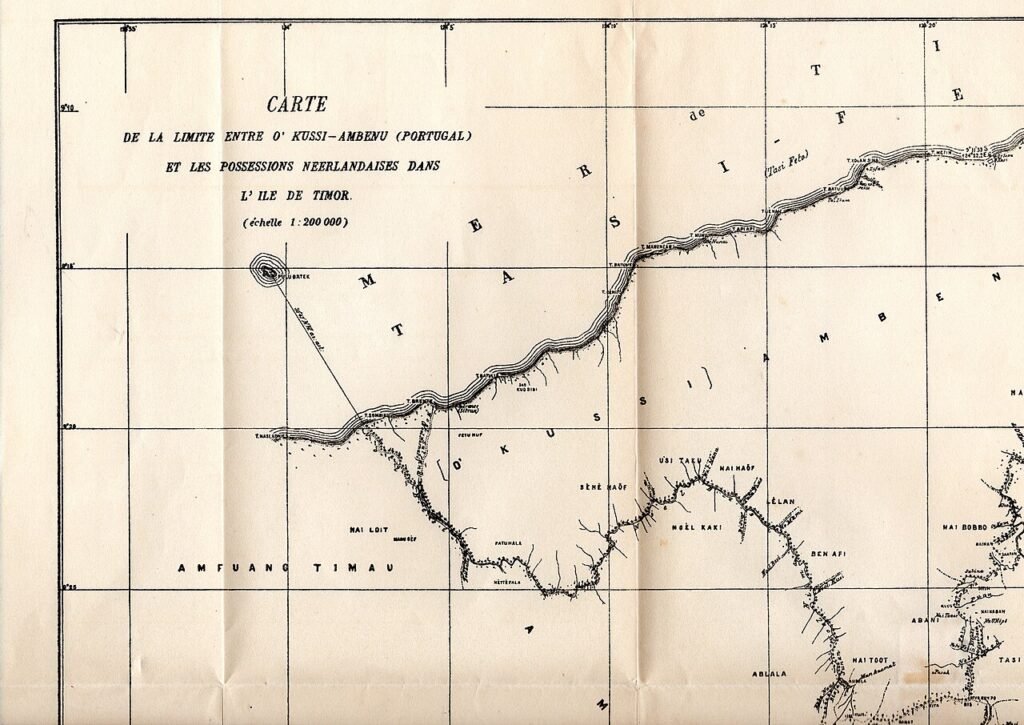
You’ll find Oecussi not where you expect Timor-Leste to be, but tucked into the western half of the island — a political orphan inside Indonesian West Timor. This is no accident. In 1859, the Portuguese and Dutch carved up Timor like a disputed pie, and the Portuguese clung to their original foothold: Oecussi. For centuries, this enclave served as the first European settlement in the region, a tiny Catholic outpost in a sea of animist and Muslim territories. In 1769, the Portuguese governor moved the capital to Dili, leaving Oecussi to slumber. But its role didn’t end there.
In 1975, when Indonesia invaded East Timor, Oecussi became a flashpoint. Indonesian troops poured in, and the enclave suffered some of the worst atrocities — villages burned, families scattered. The 1999 independence referendum saw Oecussi voters overwhelmingly choose freedom — over 90% in favor — and finally, in 2002, the enclave was reunited with Timor-Leste. Yet the scars remain. You’ll hear stories from old men in worn-out hats, see bullet holes in church walls, and feel a quiet resilience in every smile. This is a place that survived by sheer will.
Today, Oecussi is the country’s most remote region, reachable only by air or a bumpy road through Indonesian territory. Locals call it Oecusse, and they speak a distinct dialect of Tetun — “Tetun Terik.” The landscape is a dramatic mashup: brooding limestone mountains, turquoise bays, and fields of corn and cassava. Your best bet for appreciating its weight is to stand on the shore where the Portuguese first landed and let the silence do the talking.
Neighborhood by Neighborhood
Pante Makassar
This is the main town, Oecussi’s sleepy heart. Your first impression will be one of extreme laid-back: a grid of dusty streets, low concrete buildings painted in soft pastels, and the occasional goat crossing the road. The central square, Praça do Município, is dominated by the whitewashed cathedral and the old municipal market. You’ll want to head straight for the Portuguese Fort — Fortaleza de Pante Makassar — built in the 17th century and now crumbling but photogenic. Wander its ramparts at sunset; the orange light on the coral walls is unforgettable. Nearby, the Mercado Municipal buzzes from 6 a.m. to noon — grab a coffee (thick, sweet, Timor-style) and watch women in tais woven saris haggle over bananas and dried fish. The town’s main drag, Rua 12 de Novembro, has a handful of warungs (food stalls) where you can eat ikan sabuko (spicy grilled fish for about $2). Most tourists overlook Pante Makassar as just a transit hub — the secret is to slow down, sit at a café, and let the afternoon unfold.
Citrana
An hour’s drive west of town — or a bumpy ojek ride for $5 — Citrana is where Oecussi shows off its coastline. This is a fishing village of thatched huts and white sand beaches that look straight out of a Robinson Crusoe fantasy. But don’t expect resorts; Citrana is raw, wild, and utterly peaceful. You’ll find a handful of homestays (ask for Rumah Pak Antonio — $10/night, no electricity after 10 p.m.). The main attraction is snorkeling off the reef: the water is gin-clear, and you’ll see parrotfish, sea turtles, and coral gardens that rival Komodo — without the crowds. Locals recommend swimming early morning (6–8 a.m.) when the water is calmest. Bring your own mask; there’s no rental shop. The other draw is the Ribeira de Oecussi — a seasonal river that empties into the sea, surrounded by mangrove forest. Seasoned travelers prefer Citrana over Pante Makassar for the solitude; plan to spend at least two nights here.
Napun
Inland, climbing into the cool highlands at about 800 meters, you’ll discover the village of Napun. It’s a 45-minute drive from Pante Makassar on a road that turns to red mud after rain — hire a 4×4 (around $40 for the day). Napun feels like a different country: terraced rice paddies, coffee bushes, and a thickly forested mountain backdrop. The air is fresh, the pace even slower. Your best bet is to visit on a Sunday, when the community gathers for Mass at the tiny stone church — travelers are welcomed with shy smiles and sometimes offered a cup of bitter local coffee. You can hike from Napun to the nearby Monte Kaci (1,200 m) for a panoramic view of the enclave and, on clear days, the ocean. Locals make a living from coffee and vanilla — you can buy a bag of roasted beans for $3 from Dona Maria’s porch. The character here is intimate and agricultural; you’ll hear nothing but wind and roosters at night. It’s the perfect counterpoint to the coastal humidity.
The Local Table: What Oecussi Locals Actually Eat
Food in Oecussi is about survival and simplicity — but that doesn’t mean it’s boring. The staples are corn (often ground into porridge called batar da’an), cassava, and fish. You’ll find that the culinary influences are pure Timorese, with little Portuguese trace except for the bread. Breakfast is almost always paun — a dense white roll — with strong black coffee and maybe a fried egg. Lunch is the main meal, and it’s built around the catch of the day. The most iconic dish you must seek out is ikan pepes: fish marinated in turmeric, shallots, and chili, then wrapped in banana leaves and grilled over coals. At the Mercado Municipal in Pante Makassar, look for Ibu Lina’s stall (open 10 a.m.–2 p.m.), where she serves ikan pepes with steamed rice and a side of sambal for $1.50. The fish is tender, smoky, and lip-tingling from the chili.
Dinner is often a communal affair: visitors are welcomed to join families for katupa — pressed rice cakes served with curried vegetables or a spoonful of jackfruit stew. You’ll notice that meals are eaten with the right hand only, and everyone shares from the same platter. Don’t be shy — this is how you’ll connect with locals. Another specialty you’ll encounter is lolon — sticky rice simmered in coconut milk with sugar and salt, wrapped in palm leaves. It’s a snack more than a dish, but travelers soon become addicted to its sweet-salty chewiness. You’ll find it sold by children near the main road in Pante Makassar for 25 cents each.
For a deeper experience, head to the village of Oe-Sala on the first Saturday of the month, when the women hold a festa at the community hall. They cook enormous pots of babuko (spicy jackfruit stew) and kari tau (curried tofu). The cost is a $2 donation; you’ll leave with a full belly and stories to tell. The locals are proud of their cuisine, and they’ll love teaching you how to peel a cassava with a machete. Savvy visitors always bring a small gift — sugar, rice, or cigarettes — as a thank-you.
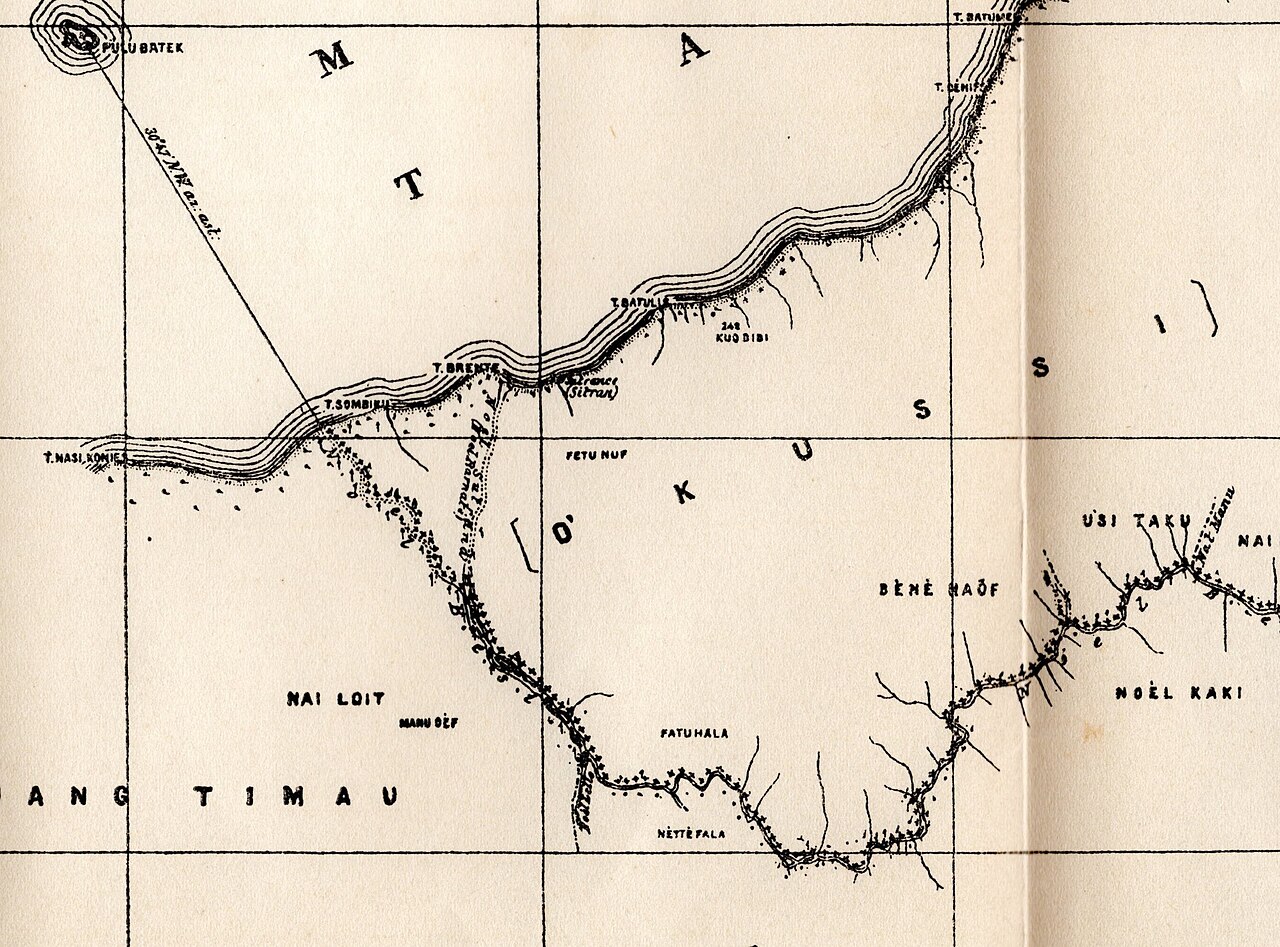
Karte von Oe-Cusse Ambeno; Ausschnitt mit der Insel Fatu Sinai/Pulau Batek …, Oecussi, Timor-Leste
Art, Music & Nightlife
Nightlife in Oecussi is virtually non-existent — the towns are dark by 9 p.m., and the only regular sound is the surf and the chatter of geckos. But the creative scene, though quiet, runs deep. The most vibrant expression is tais weaving, a tradition passed down through generations of women in villages like Bobometo and Passabe. You can visit a weaving cooperative in Pante Makassar (ask at the Oecusse Tourism Office on Rua 12 de Novembro, open Mon–Fri 8 a.m.–4 p.m.) and watch the process: cotton spun by hand, dyed with indigo and turmeric, then woven on backstrap looms into intricate geometric patterns. A scarf costs $15–$25; a full sarong runs $40. This is not just a souvenir — it’s a lifeline for women who often support entire families.
Music is tied to ceremony and celebration. If you’re lucky enough to visit during Easter or the Festa de São Paulo (January 25), you’ll witness tebe — a circular dance where men and women lock arms and shuffle to the beat of drums and gongs. The streets of Pante Makassar come alive with colorful costumes, singing, and plenty of palm wine. For a more contemporary taste, the local band Rai Husar plays acoustic covers of Timorese folk songs every Saturday evening at Oecusse Lodge from 7 p.m. to 9 p.m. Order a cerveja (Tahitian brand, $1.50) and listen to the guitarist pick out melodies of longing and resilience. It won’t keep you out late — but it will give you a glimpse into the soul of this forgotten enclave.
Practical Guide
- Getting There: Most travelers fly from Dili to Oecussi on Air Timor (small Cessna Caravan, 45 minutes, $80 one-way). Flights depart twice daily (check schedule). Driving from Dili takes 8–10 hours via a winding road through Indonesia — you’ll need a visa to enter Indonesia (even in transit) and a valid Timorese visa for re-entry. Book your flight at Skyscanner
- Getting Around: In town, ojek (motorcycle taxis) are the norm — $1 per trip within Pante Makassar. For longer distances, hire a shared mikrolet (minibus) — e.g., from Pante Makassar to Citrana $2 per person, but only once or twice a day (departs 7 a.m. and 2 p.m. from the terminal). Private car rental: $30–$40/day with driver.
- Where to Stay: In Pante Makassar, Oecusse Lodge is the best option ($25–$35/night, clean rooms, WiFi, restaurant). In Citrana, Rumah Pak Antonio ($10/night, basic but right on the beach). Book ahead through Booking.com
- Best Time: May to October — the dry season. Avoid December to March (heavy rains, landslides possible on mountain roads). The coolest months are July and August (low 20s°C at night).
- Budget: $30–$50 per day per person. Accommodation $10–$35, meals $5–$10, transport $5–$10, plus drinks and tips. Bring cash — there is no ATM. There is one bank (Mandiri Bank, Rua 12 de Novembro) that may give a cash advance on credit cards, but don’t count on it.
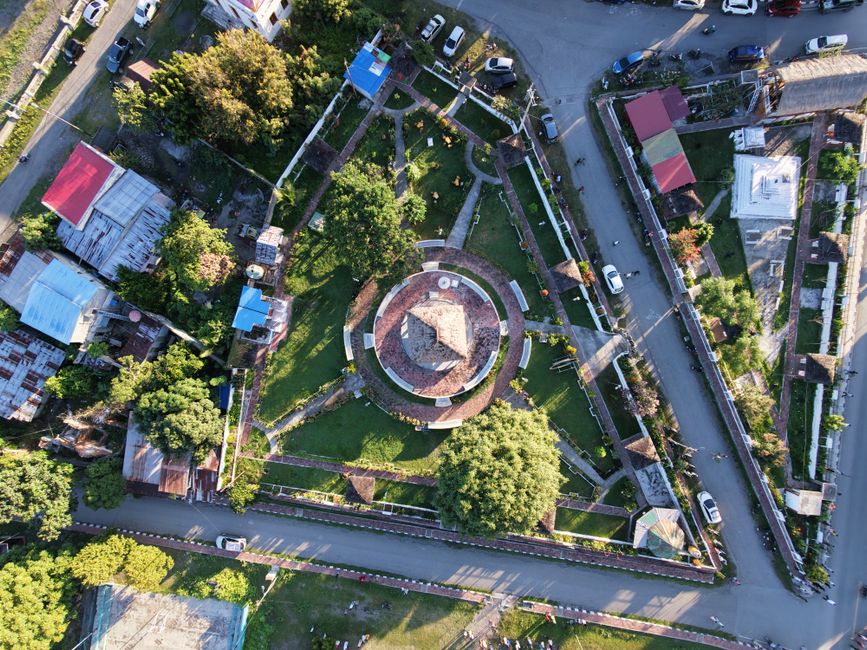
A stunning aerial shot capturing the geometric layout of the Governor’s Pal…, Oecussi, Timor-Leste
What Surprises First-Time Visitors
The biggest shock is the silence. You’ll step off the plane into a world without traffic noise, without hawkers, without the hum of tourism. The only sounds are roosters, dogs, and the rustle of palm trees. Many travelers arrive expecting a “Portuguese enclave” with colonial architecture and cafes; instead, they find a place where life is still largely subsistence-based, where electricity cuts out daily, and where WiFi is a dubious luxury. But that’s precisely the point. Visitors who embrace the pace — reading a book on the beach, walking the market twice — leave transformed.
Another surprise is the warmth of the people. In larger Timorese towns, foreigners are common enough; in Oecussi, you’ll be a minor celebrity. Children will wave, old women will invite you into their homes for coffee. You’ll quickly learn a few words of Tetun Terik: bondia (good morning) and obrigado (thank you). The hospitality is genuine and overwhelming — expect to be fed even if you just stopped to ask directions. Locals are deeply proud of their enclave and eager to share its stories.
Finally, the visa logistics catch many off guard. Oecussi is part of Timor-Leste, but the only practical road route goes through Indonesian West Timor. If you drive, you’ll need both an Indonesian visa (usually visa-on-arrival at the border, $25) and a Timorese visa (which you can get on arrival at Dili airport, $30). If you fly, you only need the Timorese visa. But if you attempt to cross the land border without the right paperwork, you’ll be turned back. Plan carefully: check visa requirements with the Timorese embassy before you go.
Your Oecussi, Timor-Leste Questions
Is it safe to travel to Oecussi alone? Absolutely. Oecussi is one of the safest places in Southeast Asia. Violent crime is virtually unheard of; the biggest risk is petty theft if you leave valuables unattended on the beach. Solo travelers — especially women — report feeling completely at ease, though you should use the same common sense you would anywhere. Your biggest challenge will be the lack of English: learning a few phrases of Tetun or Indonesian will go a long way. The local population is small and close-knit; visitors are treated with respect and curiosity.
Can I visit Oecussi as a day trip from Dili? Technically yes, but you shouldn’t. The flight takes 45 minutes, but the schedules are unpredictable and often delayed. A day trip would allow you maybe two hours on the ground — hardly enough to see Pante Makassar, let alone Citrana or the highlands. Travelers who try this end up regretful. Instead, plan a minimum of three full days: fly in, spend two nights in Pante Makassar, hire a car to Citrana and Napun, then fly back. That gives you enough time to absorb the atmosphere and visit the Portuguese fort, the market, and a local beach.
What should I pack for Oecussi? The essentials: light clothing for humid coastal heat, but bring a fleece or hoodie for highland evenings (Napun gets cool). A waterproof jacket if you’re traveling May–November (possible afternoon thunderstorms even in dry season). Sturdy walking shoes for the rough streets and mountain paths. Your own snorkel mask (no rentals). A headlamp — power cuts are frequent. Most importantly, bring all the cash you’ll need in US dollars (the official currency, but small bills are essential — no one breaks $100s). A portable charger for your phone is a lifesaver. And leave your expectations at home — Oecussi will rewrite them for you.
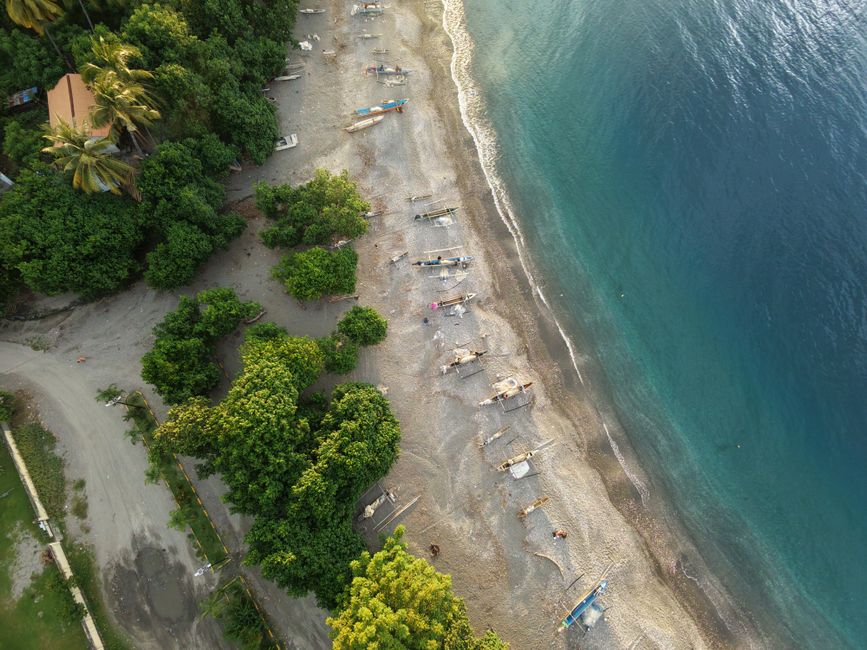
A stunning aerial view of a beach in Timor-Leste with fishing boats and lus…, Oecussi, Timor-Leste

