
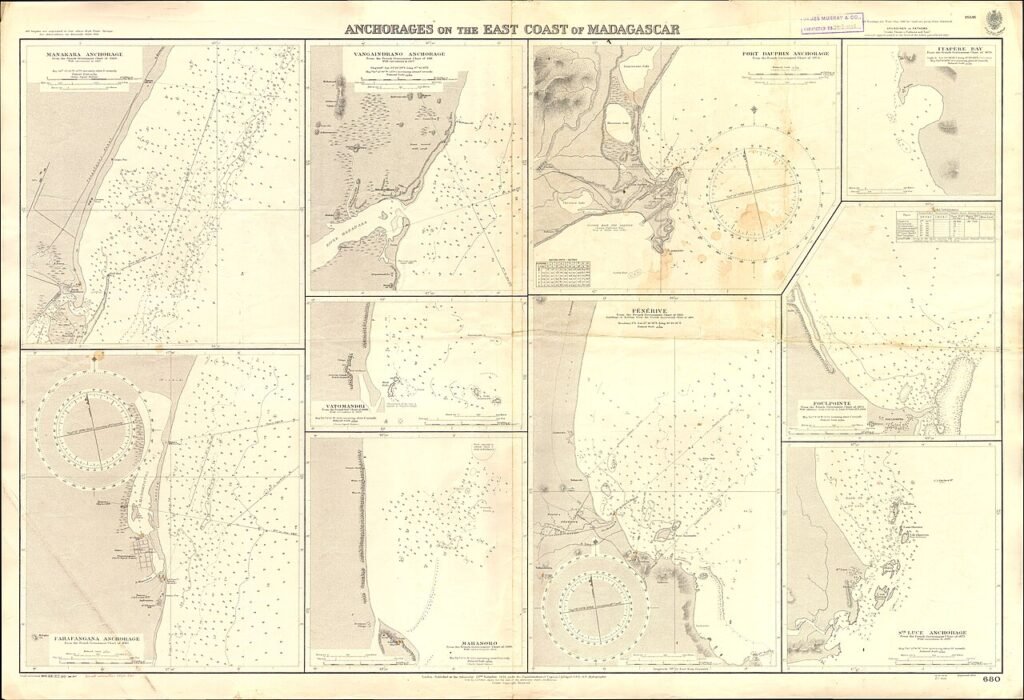
Farafangana, Madagascar Weekend: Vanilla, Zebu & The Hidden Beaches of the Southeast (2026)
You step off the dusty taxi into the thick, humid air of Farafangana, and the first thing that hits you—before the chorus of honking *bush taxis* and the chatter of market women—is the sweet, almost cloying scent of vanilla. It clings to the breeze from the surrounding plantations, mingling with the salty tang of the Indian Ocean just a few blocks away. Within an hour, you’ll be sipping fresh coconut water from a street vendor, watching fishermen haul in their catch, and wondering why this sleepy southeastern town isn’t on every Madagascar itinerary.
Quick Facts Before You Go
- Best Months: April to October – the dry season. November to March brings heavy rains, which can turn roads into mud, but also makes the vanilla fields lush and green.
- Currency: Malagasy ariary (MGA). $1 ≈ 4,500 ariary (as of late 2025). Bring cash – ATMs are rare and unreliable.
- Language: Malagasy is the lingua franca, with French widely spoken in government and business. English is rarely understood beyond basic greetings. Learn simple French phrases like *“bonjour”* and *“merci”* – it will open doors.
- Budget: $30–$50 per day for a mid-range traveler, including meals, local transport, and a modest guesthouse. Add $10–$20 for a nicer hotel.
- Getting There: Fly into Farafangana Airport (WFU) from Antananarivo via Air Madagascar. Flights take about 1.5 hours, but schedules are fickle – book at Skyscanner and always reconfirm. Alternatively, a rugged 12-hour drive from Tana via RN7 and RN12 (4×4 recommended) is an adventure in itself.
Day 1: The Market’s Pulse & A Coastal Welcome
You wake to the sound of roosters and distant waves – not a bad alarm clock. After a quick breakfast of *mofo gasy* (rice flour donuts) and strong Malagasy coffee at your guesthouse, you head straight for the heart of town: the Grand Marché. By 8 a.m., the market is already steaming with life. Piles of vanilla pods fill the air with perfume, pyramids of pink peppercorns glisten, and women in bright *lambas* sell everything from live chickens to second-hand clothes. Take your time – haggle with a smile, and don’t miss the seafood section where silvery *barracuda* and blood-red *langoustines* are laid out on banana leaves.
- Morning (8–11am): Explore the Grand Marché de Farafangana. Free to wander; budget 5,000–15,000 ariary for small purchases like a bunch of vanilla beans (negotiate!). Locals recommend heading to the spice section early before tour groups arrive – most tourists overlook the woven basket displays that are a specialty of the local Antemoro people.
- Lunch: Chez Maman Joséphine, a no-frills eatery on Rue de l’Indépendance. Order the *romazava* (beef and greens stew) with *vary sosoa* (fluffy rice). A full plate costs about 6,000 ariary. You’ll see government workers and market vendors eating here – always a good sign.
- Afternoon (1–5pm): First, walk to the old colonial wharf, a crumbling concrete pier where locals fish and kids jump into warm emerald water. From there, hire a *pousse-pousse* (rickshaw) for 3,000 ariary to drive you 2 km north to the **Plage d’Ankarana** – a quiet, palm-fringed beach with near-zero development. Bring a towel and a book; you’ll have the sand almost to yourself. Travelers often discover that the best spot is a small cove behind the collapsed wooden jetty – perfect for a swim.
- Evening: Dinner at **Le Palmier** on Rue du Port. This open-air seafood restaurant is a local institution. Order the *langouste grillée* (grilled lobster) with garlic butter – 25,000–35,000 ariary depending on size. The atmosphere is casual and buzzing; you’ll hear a mix of French, Malagasy, and occasional English. After dinner, wander to the **Esplanade** near the waterfront, where street vendors sell *samoussas* and *mofo sakay* (spicy rice cakes) – grab one for 500 ariary and watch the moon rise over the fishing boats.
This is an image with the theme “Africa on the Move or Transport” from: Mad…, Farafangana, Madagascar
Day 2: Waterfalls & Vanilla Countryside
Day two trades the market for the wild. Hire a private taxi-brousse (4×4) at the stand near the market for about 100,000 ariary for a half-day trip. Your destination: the **Chutes de Manambato**, a three-tiered waterfall hidden in the rainforest 25 km northwest of town. The road is bumpy red dirt, but the reward is a series of emerald pools perfect for a mid-morning dip. Most tourists never make it this far – you’ll likely have the falls to yourself.
- Morning (8–11am): Visit the Manambato Waterfalls. Entry fee is 5,000 ariary per person. The hike from the parking area is 20 minutes through vanilla plantations and eucalyptus groves – ask your driver to point out the vanilla vines twisting up the trees. Bring water shoes; the rocks are slippery.
- Midday: On the way back, stop at the village of **Andemby** to visit a working vanilla plantation. Many farmers welcome curious visitors for a small tip (around 5,000 ariary). You’ll see the green beans being cured, and you can buy direct from the source for half the price you’d pay in town. Insider tip: avoid midday from 11:30 to 1:30 – that’s when the farmers take a siesta, and the heat is intense.
- Afternoon (2–5pm): Return to Farafangana and explore the **Quartier Antemoro**, the old artisan quarter around Rue du Marché. This maze of narrow alleys is where local weavers make the famous *lamba akotofahana* – intricately patterned silk and raffia textiles. Watch a demonstration at **Atelier Tsiory** (free, but a purchase is appreciated) – a large shawl will cost 30,000–60,000 ariary. Savvy visitors know to ask for seconds – slightly imperfect pieces sell for half price.
- Final Evening: Your last dinner deserves something special. Reserve a table at **La Table d’Andriamora**, a family-run restaurant in a restored colonial house on Rue de la Gare. The specialty is *vary amin’anana* (rice with greens and tiny dried shrimp) followed by *koba akondro* (steamed banana-and-peanut cake). Expect to pay 12,000–20,000 ariary for a full meal. The owner often shares stories of the town’s history over a glass of *trembo* (palm wine) – a perfect farewell.
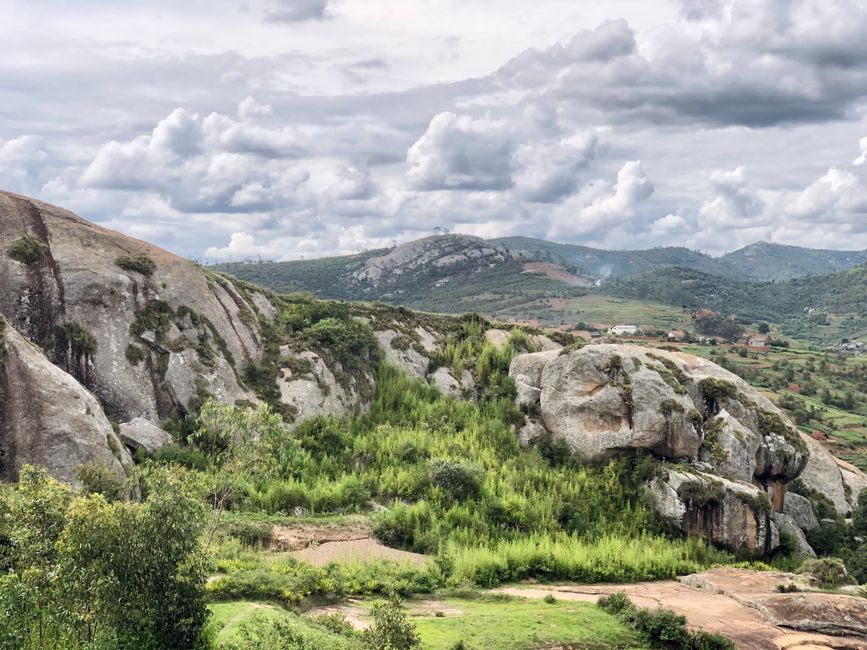
Breathtaking view of rocky terrain and lush greenery under a cloudy sky in …, Farafangana, Madagascar
The Food You Can’t Miss
Farafangana’s cuisine is a love letter to the Indian Ocean – fresh, spicy, and bathed in coconut. The star ingredient is vanilla, and you’ll find it used in surprising ways: sprinkled over grilled fish, stirred into coffee, even blended into rice pudding. Start your street-food journey at the **Marché de Nuit** (sets up around 7 p.m. behind the main market). Here, vendors grill *kabary* (skewers of marinated zebu heart) over charcoal. Three skewers cost about 3,000 ariary, and they’re perfect dipped in *sakay* – a fiery chili paste. Locals recommend washing them down with a bottle of *Three Horses Beer*, Madagascar’s national lager (1,500 ariary).
For a sit-down meal that captures the region’s soul, head to **Restaurant La Vanille** on Rue des Artisans. It’s a humble place of just six tables, but the owner, Madame Bako, has been cooking for 30 years. Her *Lasary* (a spicy tomato-and-mango pickle) is legendary, and you must try the *akoho misy sakamalao* – chicken simmered in coconut milk, ginger, and curry leaves, served with *vary sosoa*. A full plate will cost you about 8,000 ariary. Ask for extra vanilla sauce – it’s not on the menu but regulars know to request it.
Don’t leave without tasting the *mofo akondro* – sweet banana fritters sold by children outside the market for 500 ariary each. The secret is the local honey drizzled on top. Travelers often discover that the best batch comes from a woman named Tantine who sets up her fryer at 4:30 p.m. sharp near the Grand Marché’s west gate. Follow the smell of caramelizing bananas – your sweet tooth will thank you.

Vibrant view of Antananarivo’s architectural blend during sunset, Farafangana, Madagascar
Where to Stay for the Weekend
Le Voyageur (mid-range): The most reliable option. Clean, fan-cooled rooms with mosquito nets, a decent restaurant, and a small garden. Double rooms from 60,000 ariary (about $13) per night. It’s popular with NGO workers and overland travelers, so book ahead. Check availability on Booking.com.
Villa Vanille (boutique): A newly converted colonial house on Rue de l’Indépendance, with three rooms decorated in local textiles and antique furniture. Rates start at 120,000 ariary ($26) per night, including a homemade breakfast of vanilla yoghurt and fresh tropical fruit. The owner, a French expat, speaks fluent English and can arrange guides for off-the-beaten-path excursions. Airbnb often lists this property as a “unique stay.”
Auberge de la Plage (budget): A basic but friendly guesthouse right on Ankarana Beach, 2 km north of town. Dorm beds from 15,000 ariary ($3.30); private rooms from 35,000 ariary. The trade-off is isolation – you’ll need to take a pousse-pousse into town for meals (2,000–3,000 ariary). Perfect for travelers who want to fall asleep to the sound of waves and wake up for a sunrise swim.
Before You Go: Practical Tips
- Getting Around: Your best bet is *pousse-pousse* – the ubiquitous bicycle rickshaw – for short trips within town. Always negotiate the fare beforehand; a ride across the center should be no more than 2,000 ariary. For longer distances (beach, waterfalls), hire a *taxi-brousse* (shared minibus) from the stand near the market – a seat to Manambato costs about 10,000 ariary one way. If you’re in a group, consider renting a 4×4 for the day (around 150,000 ariary).
- What to Pack: Lightweight long trousers (for mosquito protection and modesty in villages), a headlamp (power outages are common), a reusable water bottle (refill at guesthouses – tap water is not safe), and a sarong or *lamba* (use as a towel, scarf, or beach blanket). Don’t forget a small padlock – it’s useful for securing your bag on public transport.
- Common Tourist Mistakes: First, assuming that credit cards are accepted – they are almost never used. Bring more cash than you think you need, and stash it in a money belt. Second, ignoring local customs: when entering a village or a home, greet everyone with *“Salama!”* and a slight nod. Taking photos without permission is considered rude, especially of elders or sacred sites.
- Money-Saving Tip: Eat where the locals eat – street stalls and small *gargotes* (hole-in-the-wall eateries) serve enormous portions of rice and stew for 3,000–5,000 ariary. A full meal at a tourist-oriented restaurant can be three times that. Also, buy your vanilla not at the market but directly from the farmers in Andemby – you’ll pay half the price for superior quality beans (about 20,000 ariary for a bundle of 10).

