
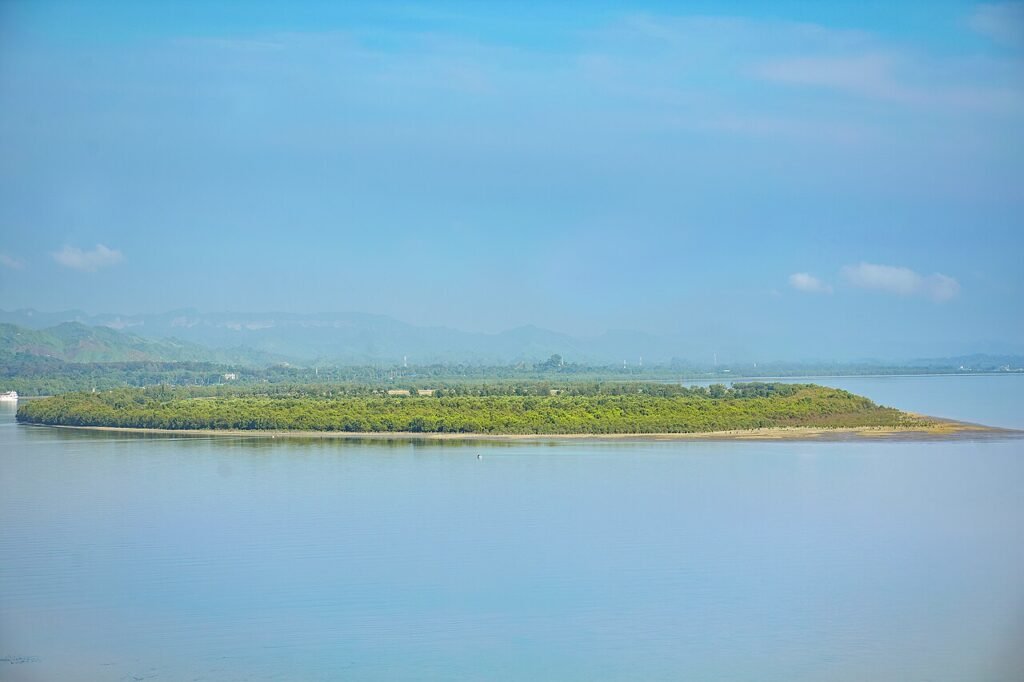
Where the Waves Whisper Centuries: Cox’s Bazar’s Endless Shore and Untold Stories (2026)
In 1799, as British surveyor John Crawford traced the coastline of what is now southeastern Bangladesh, he recorded a startling fact in his logbook: the beach stretched uninterrupted for 120 kilometers, making it the longest natural sea beach on Earth. What he couldn’t have foreseen was that this same shore would one day welcome travelers from across the world, yet remain a place where the rhythms of the tide still govern daily life, and where the ghosts of Buddhist monks, Mughal traders, and Portuguese pirates linger in the salt air.
The Story Behind Cox’s Bazar
Cox’s Bazar’s history is a palimpsest of ancient kingdoms and colonial ambitions. In the 8th and 9th centuries, the region was a frontier of the Buddhist Arakan kingdom (modern-day Rakhine State, Myanmar). Monks established monasteries in the hills of Ramu, leaving behind temples whose stucco carvings still depict Garudas and lotus flowers. When Mughal emperor Shah Shuja traveled through these forests in 1660 on his way to Arakan, he noted the “extraordinary profusion of wild elephants.” The name “Cox” came later—in 1798, Captain Hiram Cox, a British officer of the East India Company, was posted here to settle a dispute between the local rakyats and the Arakanese refugees. He built a small bungalow at what locals called Panwa (shells) and began a market. After his death, the settlement was renamed Cox’s Bazar in his honor.
During the British Raj, the town grew as a minor port for the salt trade and a winter retreat for colonial officers. The 1947 Partition scarred the area—Hindus fled to India, and Muslim refugees from Burma (Myanmar) poured in. After Bangladesh gained independence in 1971, the government recognized the beach’s tourism potential. In the 1990s, the first concrete hotels along Kolatoli Beach changed the skyline. Yet the most transformative moment came in August 2017, when hundreds of thousands of Rohingya refugees crossed the border into the Ukhia and Teknaf upazilas just south of Cox’s Bazar. The camps, now a city of canvas and bamboo, are a stark counterpoint to the resort-lined shore, and travelers are reminded daily that this is a place where history isn’t just written—it’s lived.
Neighborhood by Neighborhood

Marine coral, St. Martin’s Island, Cox’s Bazar, Bangladesh, Cox’s Bazar, Bangladesh
Laboni Point: The Beating Heart of the Beach
Laboni Point is where most first-time visitors land. At the northern tip of the main beach, it buzzes from dawn until late evening with the cacophony of hawkers selling coconut water, local children flying kites shaped like eagles, and families paddling in the gentle surf. The beach here is wide and firm, perfect for walking—you’ll often see pairs of women in colorful hijabs strolling beside tourists in swimwear, a microcosm of Bangladeshi modesty meeting global casualness. The street running parallel to the shore, Beach Road, is lined with souvenir stalls selling seashell jewelry, coral fragments (often illegally gathered, so buy responsibly), and miniature wooden rickshaws. At sunset, the sky ignites in shades of mango and violet, and you can rent a plastic chair for 20 BDT ($0.20) and watch the fishing boats bob on the horizon. The real center of gravity, however, is the Laboni Beach Market—a warren of alleys where you can buy dried fish (shutki), local spices, and pitha (rice cakes) from vendors who have worked the same spot for generations.
Sugandha Beach: Quiet Resorts and Local Life
Walk south from Laboni for 15 minutes, and the crowds thin. Sugandha Beach is the domain of mid-range hotels like Hotel Royal Tulip and the newer Ocean Paradise, but its character is more residential. Here, the concrete wall that shields Laboni from erosion gives way to a softer coastline of casuarina trees and thatched-roof bamboo cafes. Locals come here to fish at low tide with handlines, and you’ll spot fishermen casting nets under the late afternoon sun. The neighborhood behind Sugandha—the actual residential blocks—feels like small-town Bangladesh: rickshaws clatter down narrow lanes past spice shops, tea stalls, and a single cinema hall that plays Bangla action films. One hidden gem is the Ramu Buddhist Temple Road (a 10-minute rickshaw ride inland), where a cluster of viharas houses monks in saffron robes. The main temple, built in 1895, features a 60-foot statue of Buddha surrounded by murals depicting Jataka tales. The contrast between the serene pagoda and the boisterous beach is one you’ll remember long after you leave.
Inani Beach: Solitude and Stone Coral
Roughly 15 kilometers south of Cox’s Bazar town, Inani Beach is a different world. The sand here is coarser, flecked with black minerals, and the tide line is strewn with round stones worn smooth by centuries of water—locals call them “coral pebbles,” though they are actually shale. This is where travelers come to escape the holiday noise. During weekdays, you may have stretches of the beach entirely to yourself. The road to Inani, the Marine Drive, is one of Bangladesh’s most scenic routes—winding through hills covered in banana and betel nut plantations, with sudden views of the Bay of Bengal below. At the Inani Beach proper, there are only a handful of basic guesthouses and a single official tourist complex (the Inani Beach Resort). The real treat is the Himchari National Park just north of Inani, where a short 20-minute climb through a bamboo forest leads to a waterfall and a lookout point where you can see the entire crescent of the beach—a vista that makes all the bumpy rickshaw ride worth it. Visit between November and February for the clearest skies and calmest seas.
The Local Table: What Denizens Actually Eat
Cox’s Bazar’s food story is a love letter to the Bay of Bengal. Fish is not just an ingredient; it’s the currency of daily life. Walk through the Bazaar Market near Laboni Point at 6 a.m., and you’ll see crates of silver pomfret, red snapper, and jumbo prawns arriving from the fishing trawlers. Locals buy their catch whole and take it to the Maccher Kapor (fish-shutki stalls) where dried shrimp, loittya (Bombay duck), and churi (ribbonfish) are displayed like treasures. The most iconic dish you must seek out is Mezbani Beef—a fiery, slow-cooked curry of beef shank with a paste of crushed mustard seed, turmeric, and copious green chilies. It is traditionally cooked in massive cauldrons at community feasts (mezban), but in town the best version is served at Poushee Restaurant (38, Beach Road, open 11 a.m.–10 p.m.). Order a plate (350 BDT, about $3.50) alongside a mound of steaming bhuna khichuri (spiced rice and lentils) and a side of pickled mangoes. For a lighter option, buy a paper cone of phuchka (crispy semolina balls filled with spiced tamarind water) from the cart that sets up at the corner of Hotel Sonar Bangla every evening at 5 p.m.
Savvy visitors also know that the real breakfast happens at dawn along the beach. Fishermen sell chotpoti (spicy chickpeas) and beguni (battered and fried eggplant slices) from buckets for 30 BDT. Pair it with a metal cup of cha—tea boiled with milk, sugar, and ginger—from the mobile tea stall that clangs a bell at 6:15 a.m. sharp. Dessert comes in the form of patishapta, a rice-flour crepe stuffed with coconut and jaggery, made by the matriarchs in the lanes behind Sugandha market. The rhythm of eating here mirrors the tides: early, fresh, and unpretentious.

A bunch of boats that are sitting in the water, Cox’s Bazar, Bangladesh
Art, Music & Nightlife
Cox’s Bazar has no booming nightclubs or late-night bars—alcohol is legal only in licensed hotel restaurants—but the creative pulse is strong. Every January, the Bangladesh Tourism Board hosts the Beach Festival (usually the second weekend) with traditional Lathi Khela (martial arts stick dancing), Baul mystic music sung with a one-stringed ektara, and boat races on the river. The real art scene happens in the village of Ramu, 10 kilometers inland, where Buddhist rong-bhumi (painting schools) have been producing intricate Thangka scrolls for centuries on cotton and silk. You can visit the workshop of Master U Wise Aung (ask for directions at the Ramu temple office), who will show you the mineral pigments he grinds from lapis lazuli and cinnabar. He accepts orders for custom pieces—a 3-foot Thangka of the Buddha costs around 8,000 BDT ($80) and takes two weeks to complete.
Nightlife here is about ambience, not volume. The best way to spend an evening is to rent a bhit (a low stool) from one of the beachfront cafes like The Boat Club at Ocean Paradise Hotel. They serve fresh watermelon juice (150 BDT) and grilled seafood skewers (450 BDT) while a lone musician plays the flute—a haunting, slow melody that blends with the sound of the waves. The cafe’s lights go dim by 10 p.m., and guests drift back to hotels or take a moonlight walk along the shore. In season (November–March), you’ll occasionally find an outdoor Jatra (folk theater) performance near Laboni Point, a rowdy, two-hour melodrama full of villains and slapstick that travellers rarely stumble upon but always remember.

A busy city street with lots of traffic, Cox’s Bazar, Bangladesh
Practical Guide
- Getting There: Cox’s Bazar Airport (CXB) receives daily flights from Dhaka (55 minutes) and Chattogram (25 minutes) via Biman Bangladesh Airlines, US-Bangla Airlines, and Novoair. Round-trip fares from Dhaka start around 8,000 BDT ($80) if booked two weeks in advance. Book at Skyscanner. Alternatively, air-conditioned buses (Green Line, Shohagh) run from Dhaka’s Sayedabad Terminal; the trip takes 10–12 hours and costs 1,200–1,800 BDT.
- Getting Around: Within town, rickshaws cost 20–50 BDT for short hops. CNG auto-rickshaws are faster for longer distances (up to 100 BDT). For Inani or Himchari, hire a CNG for the day (1,500–2,000 BDT). Taxis (private cars) are available from the airport but negotiate first. Walking the beach is free and always your best bet.
- Where to Stay: For budget, try Cox Today in Laboni (1,200 BDT/night). Mid-range: Ocean Paradise Hotel & Resort in Sugandha (3,500 BDT/night) with a sea-view pool. Luxury: Long Beach Hotel in Kolatoli (6,000 BDT/night). Check Booking.com for deals.
- Best Time: November through March is ideal—dry, sunny, and temperatures hover at 25°C (77°F). Avoid June–October (monsoon rains and rough seas). April and May are unbearably humid.
- Budget: A moderate daily budget of $30–$50 (3,000–5,000 BDT) covers a decent hotel, three meals, local transport, and a few snacks. Budget backpackers can manage $15 if staying in dorms.
What Surprises First-Time Visitors
Most travelers arrive expecting a crowded beach like Thailand’s Pattaya, but Cox’s Bazar is far more subdued. The first surprise is the sheer length of it—you can walk for hours and still see the same unbroken line of sand. The second is how family-oriented it is. You’ll see grandparents picnicking under umbrellas, toddlers building sandcastles, and groups of university students playing cricket—all in modest dress. There is a deep, unspoken respect for the sea; locals never turn their backs to the waves, and swimming is discouraged after 6 p.m. due to strong undertows. The third surprise is the silence. Step 50 meters away from the main clusters, and you hear only the hiss of the tide and the cry of seagulls—a kind of acoustic solitude that’s rare in a beach town of this size.
Another thing that catches visitors off guard is the warmth of interaction. Bangladeshis are famously hospitable, but here it

