
Beyond the Red Bricks: Why Panevėžys Captivates Every Traveler Who Visits (2026)
In 1940, as Soviet tanks rumbled into Lithuania, the actors of Panevėžys Drama Theater defiantly raised their voices in Shakespeare’s Hamlet under the direction of Juozas Miltinis. The performance that night was not merely art—it was a quiet rebellion, a refusal to let silence win. That moment, preserved in the city’s cultural DNA, is the key to understanding Panevėžys: a place where creativity, resilience, and understated pride have shaped every brick and boulevard you’ll walk today.
The Story Behind Panevėžys, Lithuania
Panevėžys first appears in written records in 1503, when Grand Duke Alexander Jagiellon granted it a charter. But the city’s real story begins in the 19th century, when the railway arrived in 1873, transforming a sleepy market town into a bustling industrial hub. You’ll notice this legacy in the red-brick warehouses and factory chimneys that still punctuate the skyline—ghosts of linen mills and breweries that once supplied half the Russian Empire.
Under Tsarist rule, Panevėžys became a center for Jewish culture and trade. By 1900, half of its 30,000 residents were Jewish, and the Old Town hummed with the sounds of Yiddish theaters and market stalls selling everything from herring to handwoven textiles. Travelers today still glimpse echoes of this era in the Art Nouveau facades along Respublikos Street, where Jewish merchants once built their homes. The Holocaust erased that community, but the city’s character—tolerant, industrious, artistically restless—survived.
During the Soviet period, Panevėžys reinvented itself again. The Klaipėda-based “telecom” factory and the television components plant made it a center for precision engineering. Yet the city never lost its creative soul. The Panevėžys Drama Theater, founded in 1921, grew into a national treasure under Miltinis, becoming the longest-running professional theater in Lithuania. Locals will tell you that the stage here isn’t just entertainment—it’s a place where the city debates itself.
Neighborhood by Neighborhood
Senamiestis (Old Town)
You’ll find the heart of Panevėžys in Senamiestis, a compact grid of cobblestone streets laid out in the 16th century. Start at the Town Hall Square (Rotušės aikštė), where a bronze sculpture of a young girl with a bird—Paukštra—sits on a bench, a beloved meeting point. The neo-Gothic St. Peter and Paul Cathedral looms nearby, its twin spires visible from every corner of the district. Wander down Ukmergės Street, where the yellow-washed merchant houses have been converted into cafes and artisan shops. On Saturday mornings, the farmer’s market springs up around the fountain: you can buy fresh cheese, dill-cured cucumbers, and jars of wild berry jam from vendors who have been selling here for three generations. The real secret is the courtyard behind the former Jewish synagogue at 18 Raigardo Street—a quiet, sun-drenched spot where locals gather to read, and where you’ll hear the distant clang of the cathedral bell marking the hour.
Naujamiestis (New Town)
If Senamiestis is the city’s living room, Naujamiestis is its study—quieter, more residential, but brimming with hidden gems. This district grew after the 1873 railway, and you’ll see its influence in the elegant wooden villas along Smėlynės Street, painted in lavender and mint green. These homes belonged to factory owners and merchants, and many have been restored as guesthouses or artists’ studios. The Panevėžys Regional Museum, housed in a former Tsarist-era post office, is your best bet for understanding the city’s industrial past: you’ll see dioramas of 19th-century workshops, a collection of antique sewing machines, and a room devoted to the Jewish community. Just behind the museum, the “Pupučio” park offers a peaceful stroll along the Nevėžis River, where you can rent a rowboat for about 5€ an hour. Locals recommend coming at sunset, when the water turns copper and the trees glow.
Šiaurrytinė (North-Eastern District)
Most tourists overlook Šiaurrytinė, but seasoned travelers know it offers the city’s most unexpected pleasures. This Soviet-era residential zone is not pretty, but it pulses with authentic daily life. The central market (Turgavietė) at Kėdainių Street is an all-sensory experience: babushkas sell sour cream by the liter, men hawk smoked eel from trays, and the smell of dill and fried onions hangs in the air. For a taste of Soviet nostalgia, step into the “Kavinė Prietyla” at 45 Ukmergės Street, a cafeteria unchanged since 1978, where you can get a plate of cepelinai (potato dumplings) and a glass of kompot (stewed fruit drink) for under 4€. The neighborhood also harbors the Panevėžys Television Tower, a 200-meter needle from the 1980s. You can take an elevator to the observation deck (3€, open 10 AM–8 PM) for a 360-degree view of the city’s patchwork—red roofs, green parks, and the silver ribbon of the Nevėžis.
The Local Table: What Denizens Actually Eat
In Panevėžys, eating is an act of memory. The cuisine here is rooted in the soil of Aukštaitija—the region known for potato dishes, forest mushrooms, and sour rye bread. You’ll find that locals still follow the rhythms of the harvest: in June they feast on fresh peas and dill, in autumn they pickle cucumbers by the kilo, and in winter they huddle over bowls of beetroot soup. The defining dish is cepelinariai—giant potato dumplings stuffed with minced meat or curd cheese, drenched in sour cream and cracklings. But the version you must seek out is at Šešios Upės (Six Rivers), a family-run tavern at 12 Kęstučio Street. Here, cook Irena uses potatoes from her brother’s farm and hands-grated them on a late grandmother’s grater. Order the cepelinai su varškės (with curd) and pour on the sour cream—your taste buds will thank the ancestors.

Lithuania, Panevėžys, Lithuania
For a quick bite, navigate to the Aukštaitijos Turgus (market hall) at 3 J. Basanavičiaus Street. The ground floor is a labyrinth of dairy counters, meat stalls, and bakeries. The real prize is the smoked fish from a vendor called “Žuvys buta” (Fish Hut). You’ll see a jolly woman named Inga who has been smoking bream and perch over alder chips for twenty years. Buy one, ask her to slice it, and eat it standing by the counter with a slice of rye bread. Locals wash it down with gira (fermented rye drink) from a barrel—a sweet-tart experience that tastes like childhood for every Panevėžys native.
If you crave dessert, head to Kvepuvys (Sweet Scents), a bakery at 7 Respublikos Street, open since 1954. Their specialty is šaltiniai —a layered sour cream and berry tart that melts in your mouth. The secret, the baker told me, is the use of local blueberries and a pinch of cardamom smuggled from the Soviet-era networks that still operate in whispers.
Art, Music & Nightlife
Panevėžys breathes art. The Panevėžys Drama Theater, at 5 Respublikos Street, remains the city’s creative anchor. Performances run from September to May, with tickets starting at 12€. Even if you don’t understand Lithuanian, attend a show by director Agnius Jankevičius—his physical, movement-driven adaptations of classic plays transcend language. The theater’s foyer doubles as a gallery, with rotating exhibitions of local photographers and painters. For contemporary art, visit the Gallery Gorkyj at 18 Vasario Street, a former Soviet printing house that now hosts avant-garde exhibitions and film screenings on Friday nights (free entry, donations welcome).
Nightlife here is intimate and warm. Most bars cluster around the Old Town, especially along Vytauto Street. Blyninė Panevėžys is no ordinary pancake house—by 10 PM it transforms into a vibrant haunt where students sip mead and musicians play acoustic sets. For something louder, try Kultūra Pub at 11 Respublikos Street, where you’ll find Lithuanian microbrews (try the “Vilkas” stout from the local Kirkilė brewery) and occasional DJs spinning electronica. The biggest annual event is the Panevėžys Summer Festival, held the first week of August, when the entire city takes over the streets for open-air concerts, dance performances, and a massive craft market. Mark your calendar—it’s when the city’s creative soul burns brightest.
Practical Guide
- Getting There: The nearest major airport is Vilnius (VNO), about 120 km south. Direct trains run from Vilnius to Panevėžys (2 hours, 8€). Alternatively, Kaunas Airport (KUN) is 100 km away, served by Ryanair from London, Brussels, and Oslo. Book flights at Skyscanner.
- Getting Around: Panevėžys is best explored on foot—the Old Town is compact. Buses cost 1€ per ride; you can buy tickets at newsstands (Narvesen). Taxis are cheap (3–5€ within the center), but keep the app “Bolt” handy—locals recommend it over hailing on the street.
- Where to Stay: For character, book the Senamiesčio Sodyba (Old Town Residence) at 4 Pušaloto Street—a converted 19th-century merchant house with exposed brick, 65€ per night. Budget travelers prefer the Hostal Šešios Upės (dorm beds from 18€). Check Booking.com.
- Best Time: June through August for the warmest weather (20–25°C) and the Summer Festival. May and September offer fewer crowds and golden light. Winter (December–February) is cold (−5°C average) but magical—the Christmas market in Town Square is worth braving the chill.
- Budget: Expect to spend around 40–50€ per day for mid-range meals, accommodation, and attractions. Students can do 30€ with hostels and market food. Panevėžys is cheaper than Vilnius—you’ll get more for your euro.

A sports stadium with a field, Panevėžys, Lithuania
What Surprises First-Time Visitors
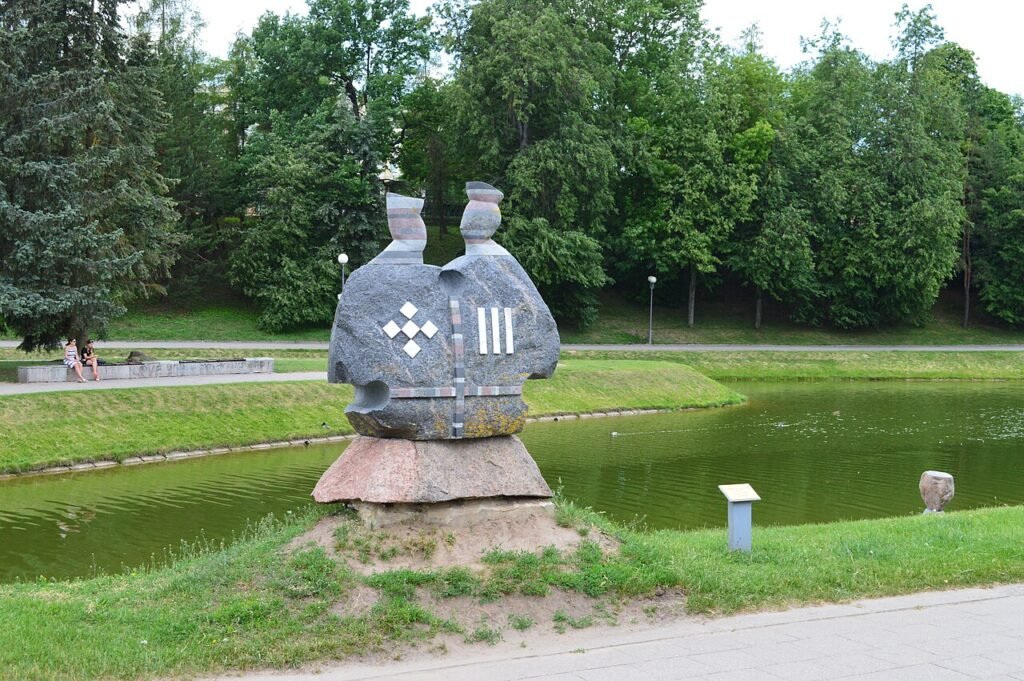
You might come expecting a drab Soviet backwater, but Panevėžys immediately disarms you with its green boulevards and the sheer vitality of its cultural life. The city boasts more public art per capita than any other Lithuanian city: murals on apartment blocks, sculptures tucked into parks, and a whimsical statue of a cat wearing spectacles outside the Central Library. There’s a sense that residents treat their city as a living canvas, constantly adding to it with pride.
Another surprise is the warmth of the locals. Lithuanians are often stereotyped as reserved, but in Panevėžys, strangers will strike up conversations in shops, offer directions in broken English, and occasionally invite you for a stiklinė (a glass of something sharp) in their garden. It’s a city where the old woman selling potatoes at the market will tell you her life story if you smile at her. And if you mention that you’ve visited the theater, doors will open—literally.
Finally, the skyline surprises you. The television tower aside, the tallest building in the city is the red-brick water tower—only 25 meters high. Panevėžys spreads horizontally, welcoming its river and its parks into its embrace. You won’t find towering glass obelisks here; you’ll find space, light, and the sense that time moves at a pace measured by the beating heart of its people, not by the clock of commerce.
Your Panevėžys, Lithuania Questions
Is Panevėžys safe for solo travelers? Absolutely. Like most Lithuanian cities, Panevėžys is very safe, with low crime rates and a strong sense of community. Solo travelers often feel comfortable walking at night through the well-lit Old Town (though you should still use common sense in the Šiaurrytinė district after dark). The city is small enough that you’ll quickly get your bearings, and locals are happy to point you the right way. If you’re a woman traveling alone, you’ll find the same level of safety as in Western Europe—just keep your phone charged and trust your intuition.

An aerial shot of the historic wooden drawbridge at Biržai Castle, Panevėžys, Lithuania
How much time should I spend in Panevėžys? You can see the highlights in a day and a half, but a weekend (two full days) lets you soak up more of the atmosphere. Plan one day for the Old Town and museums, one morning for the market and river walk, and an evening at the theater or a pub. If you’re a photography enthusiast, add an extra half-day to explore the wooden houses and the television tower. Don’t rush—the city’s charm is in its unhurried pace.
What’s the best way to experience the local food scene without speaking Lithuanian? Your best bet is to join a half-day food tour with “Aukštaitijos Gėrybės,” a small company run by chef Rasa Krušinskaitė (booking via Facebook). She’ll take you to the market, teach you to pronounce cepelinai (tsay-peh-lee-nigh), and translate for you at the bakery. Alternatively, simply point and smile at the market—vendors are patient and will often give you a sample. For a safe bet, the cafeteria at the Panevėžys Drama Theater (open before shows) serves a daily lunch of traditional items for 5€—the beetroot soup is unforgettable, and you can eat surrounded by photographs of legendary actors.

